
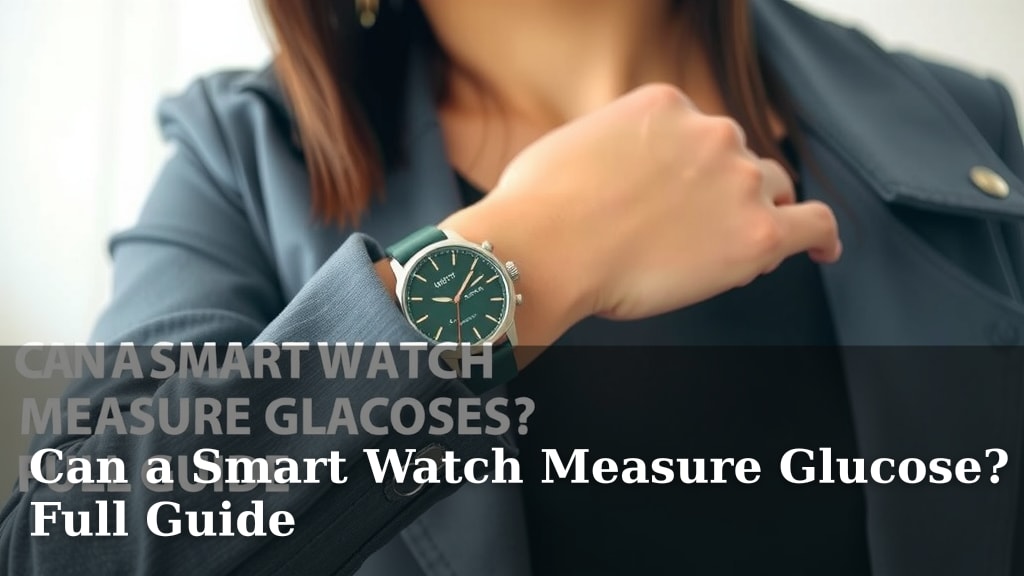
Can a Smart Watch Measure Glucose? Full Guide
Can a smartwatch measure glucose? Currently, no smartwatch on the market can reliably measure your blood glucose levels directly. While many smartwatches track various health metrics, non-invasive glucose monitoring is still a significant technological hurdle. Be wary of any device claiming to do so without proper FDA approval.
Researchers are actively working on this technology. The goal is to create wearable devices that can track glucose without needing a finger prick. This would be a huge step forward for diabetes management. However, we are not quite there yet for everyday consumers.
- No current smartwatch can measure blood glucose non-invasively.
- This technology is still in development stages.
- Beware of devices making unproven claims.
- Future smartwatches may offer this feature.
Let’s take a closer look at the current state of smartwatch glucose monitoring and what the future might hold.
Can Your Smartwatch Really Track Glucose? The Truth
Right now, if you’re looking for a smartwatch that can measure your blood glucose levels without a finger prick, you’re out of luck. The short answer is no. While many smartwatches can track your heart rate, sleep patterns, and even your stress levels, non-invasive glucose monitoring is a technological hurdle that hasn’t been cleared yet for consumer devices. We’re talking about a technology that’s still very much in the lab, not on your wrist. Be very careful about any device that claims otherwise; if it’s not FDA-approved, it’s likely not accurate or reliable.
The Science Behind Non-Invasive Glucose Monitoring
So, why is measuring glucose so tricky for a wearable device? It’s all about how glucose exists in our bodies. Glucose, or sugar, is found in your blood. To measure it directly, you typically need to access that blood, which is why traditional methods involve a small prick of the finger. This drop of blood is then analyzed by a glucose meter or a continuous glucose monitor (CGM).
What Makes It So Difficult for Wearables?
Trying to measure glucose through your skin without breaking it is the big challenge. Scientists are exploring several different technologies:
- Optical Methods: These use light to interact with the skin. Different wavelengths of light can be absorbed or reflected differently by substances in your skin, including glucose. The idea is to detect subtle changes related to glucose concentration. Think of it like shining a special flashlight through your skin.
- Electrochemical Methods: This involves using tiny electrical currents. Some research looks into how glucose might affect electrical signals in the skin. It’s a bit like trying to sense glucose through electrical ‘whispers’.
- Radio Frequency: Another approach is to use radio waves. These waves could potentially interact with glucose molecules in a measurable way. This is a less common avenue but is being researched.
The problem with all these methods in a wearable device is accuracy. Many other substances in your body, like sweat, hydration levels, and even skin thickness, can interfere with these readings. It’s like trying to hear a whisper in a noisy room. Researchers need to find a way to isolate the glucose signal from all the other ‘noise’.
Current Wearable Health Tracking vs. Glucose Monitoring
Your current smartwatch is great at tracking things like your heart rate using photoplethysmography (PPG) sensors. These sensors shine light into your skin and measure how much light is absorbed or reflected by your blood. This works well for blood flow, but glucose doesn’t behave the same way. Unlike blood flow, glucose levels don’t cause such easily detectable physical changes through the skin for current wearable sensors.
Smartwatches and Diabetes Management: The Dream vs. Reality
For people living with diabetes, the idea of a smartwatch that tracks glucose is a dream come true. Imagine checking your glucose levels with a quick glance at your wrist, just like you check the time or your heart rate. This would make managing blood sugar so much easier and less intrusive than current methods.
What Smartwatches *Can* Do for Diabetics Today
While direct glucose monitoring isn’t here yet, smartwatches and wearable tech are still very helpful for people managing diabetes. They can:
- Track Activity: Physical activity significantly impacts blood sugar. Your watch can help you stay motivated to move more.
- Monitor Heart Rate: People with diabetes are at higher risk for heart disease. Keeping an eye on heart rate is important.
- Log Food Intake: Some apps and devices allow you to log meals, helping you understand how different foods affect your glucose levels.
- Remind You to Take Medication: You can set alarms for insulin injections or oral medications.
These features, combined with a traditional glucose meter or a CGM, offer a more complete picture of your health. Many CGMs today can send data to your smartphone, and some can even display alerts on your smartwatch. This is the closest we get to integrated glucose monitoring right now (Cleveland Clinic).
The Future of Wearable Glucose Technology
There’s a lot of excitement and investment in this area. Big tech companies and specialized health startups are all working on it. Researchers are making progress, but there are still many hurdles to overcome.
What Needs to Happen?
For a smartwatch to measure glucose reliably, it needs to be:
- Accurate: Readings must be as precise as current medical devices.
- Consistent: It should provide reliable data over time.
- Non-invasive: No needles or skin punctures.
- Safe: The technology used must be safe for continuous wear.
Many experts believe that a truly non-invasive, accurate glucose-monitoring smartwatch is still several years away. Some research suggests that a combination of technologies might be needed to achieve the necessary accuracy.
Navigating the Market: What to Look Out For
As this technology develops, you’ll likely see more devices claiming to measure glucose. It’s important to be a smart consumer.
Red Flags to Watch For
If a device makes claims that sound too good to be true, they probably are. Here are some warning signs:
- No FDA Approval: This is the biggest red flag. Medical devices, especially those for managing serious conditions like diabetes, undergo rigorous testing and approval processes by the Food and Drug Administration.
- Unverified Claims: Be skeptical of marketing that uses terms like “revolutionary” or “breakthrough” without solid, independent scientific backing.
- No Clinical Data: Look for published studies or data from reputable institutions, not just manufacturer claims.
- Focus on “Wellness” Instead of Medical Accuracy: Some devices might offer very rough estimates for general wellness, but these are not suitable for making medical decisions.
Remember, managing diabetes requires accurate data. Relying on unproven technology could lead to dangerous health decisions. Always discuss any new health tracking device with your doctor.
Can You Connect a CGM to Your Smartwatch?
This is where you can get some real benefit today! While your smartwatch can’t *measure* glucose itself, it can often *display* information from a Continuous Glucose Monitor (CGM). If you use a CGM, you should check if its app is compatible with your smartwatch’s operating system.
How It Works
A CGM uses a tiny sensor inserted just under your skin to measure glucose in your interstitial fluid (the fluid between your cells) every few minutes. This sensor sends data wirelessly to a small transmitter, which then sends it to a receiver or a smartphone app.
Smartwatch Integration Benefits
When this data is sent to your smartphone, many CGM systems offer companion apps that can then push alerts and readings to your smartwatch. This means you can:
- See your glucose levels at a glance without pulling out your phone.
- Receive high or low glucose alerts directly on your wrist, making it easier to respond quickly.
- View trends over time on your watch screen.
This is a fantastic way to make diabetes management more convenient and discreet. It’s not direct smartwatch monitoring, but it’s the next best thing currently available.
Your Checklist for Future Smartwatch Glucose Monitoring
When the day finally arrives that smartwatches *can* reliably measure glucose, here’s what you’ll want to look for:
- FDA Clearance: Ensure it has official approval for medical use.
- Proven Accuracy: Check for independent studies confirming its precision.
- Ease of Use: It should be simple to set up and wear.
- Battery Life: Continuous monitoring needs a good battery.
- Data Security: Your health data must be kept private and secure.
The journey to non-invasive glucose monitoring on your wrist is ongoing. While we wait, staying informed about the actual capabilities of today’s devices is key.
Conclusion
So, can your smartwatch measure glucose right now? The straightforward answer is still no. While exciting research is happening, no device on the market can reliably track your blood sugar without a finger prick. Be very wary of any product making such claims without FDA approval. Your current smartwatch can still be a helpful tool for diabetes management by tracking activity and heart rate. For direct glucose readings, continue to rely on your CGM data, which you can often sync to your watch for convenient alerts. Stay informed and prioritize accuracy for your health.
Frequently Asked Questions
Will a smartwatch ever measure glucose directly?
Researchers are actively working on developing non-invasive glucose monitoring technology for wearables. While promising advancements are being made using optical, electrochemical, and radio frequency methods, it will likely take several more years before a truly accurate and reliable device is available for consumers.
Are there any smartwatches approved by the FDA for glucose monitoring?
Currently, no smartwatches have received FDA approval to measure blood glucose levels directly. Any device claiming to do so without this approval should be approached with extreme caution, as its accuracy and reliability for medical decisions have not been medically validated.
What are the risks of using unapproved glucose-measuring devices?
Relying on unproven technology for glucose monitoring can lead to inaccurate readings. This could result in dangerous health decisions, such as incorrect insulin dosing or dietary choices, potentially leading to severe health complications like hyperglycemia or hypoglycemia.
How can my smartwatch help if it can’t measure glucose?
Even without direct glucose measurement, your smartwatch can support diabetes management. It can help you track physical activity, monitor heart rate, set medication reminders, and log meals. Many CGMs can also send alerts and data directly to your smartwatch for easier monitoring.
What’s the difference between my smartwatch’s heart rate sensor and glucose sensors?
Smartwatch heart rate sensors use photoplethysmography (PPG) to measure blood flow changes. Glucose molecules don’t create the same detectable physical changes through the skin that PPG sensors can reliably measure, making non-invasive glucose tracking a much greater scientific challenge.
![7 Best Gps Tracker Smart Watch [2026]](https://smartwatchbest.com/wp-content/uploads/2026/08/7-best-gps-tracker-smart-watch-2026-featured-768x432.jpg)
![7 Best Apple Compatible Smart Watches [2026]](https://smartwatchbest.com/wp-content/uploads/2026/06/7-best-apple-compatible-smart-watches-2026-featured-768x432.jpg)
![7 Best Smart Watch For Kids With Gps [2026]](https://smartwatchbest.com/wp-content/uploads/2026/09/7-best-smart-watch-for-kids-with-gps-2026-featured-768x432.jpg)
![7 Best Smart Watch Blood Pressure Monitor [2026]](https://smartwatchbest.com/wp-content/uploads/2026/08/7-best-smart-watch-blood-pressure-monitor-2026-featured-768x432.jpg)
![7 Best Smart Watch For Kayaking [2026]](https://smartwatchbest.com/wp-content/uploads/2026/09/7-best-smart-watch-for-kayaking-2026-featured-768x432.jpg)