
How Does a Smart Watch Measure Glucose Levels?
Smartwatches don’t directly measure glucose levels like a finger-prick test does. Instead, many research-backed methods are being developed, focusing on non-invasive techniques. Current smartwatches can track many health metrics, but continuous glucose monitoring is still a work in progress for consumer devices.
While you can’t get a glucose reading from your watch today, the future is promising. Scientists are exploring various technologies, like using light or radio waves. These aim to detect glucose through your skin, potentially offering a painless alternative to traditional methods. We’re seeing exciting advancements, so keep an eye on this space!
- Smartwatches can’t measure glucose directly right now.
- Research is focused on non-invasive methods.
- Technologies like light and radio waves are being tested.
- A painless glucose monitoring option could be available in the future.
Let’s walk through the science behind how smartwatches *could* measure glucose and what’s happening in the world of diabetes tech.
The Science Behind Smartwatches and Glucose Monitoring
You might be wondering if your trusty smartwatch can tell you your blood sugar level. The short answer is no, not yet for everyday use. But don’t lose hope! Researchers are working hard to make this a reality. Many smartwatches today can track your heart rate, sleep, and activity. They are powerful health tools. However, measuring glucose is a much trickier scientific puzzle.
Why is Measuring Glucose So Difficult for Wearables?
Unlike measuring your heart rate, which involves sensing blood flow, glucose is a bit more elusive. It’s a sugar in your bloodstream that your body uses for energy. To know your glucose level, you need to detect its concentration. Current medical devices, like continuous glucose monitors (CGMs), use tiny sensors inserted under the skin. These sensors react to glucose in the interstitial fluid, which is the fluid between your cells. This process is invasive, meaning it requires breaking the skin.
The Challenge of Non-Invasive Measurement
The goal for smartwatches is non-invasive monitoring. This means measuring glucose without needles or skin punctures. This is where the real scientific hurdles lie. How can a watch detect a substance within your body fluids just by resting on your wrist? It’s like trying to guess the exact number of sprinkles on a cake by looking at the outside of the box. It requires advanced technology and clever approaches.
What Makes It So Hard?
- Glucose levels can fluctuate quickly.
- Other substances in your body can interfere with readings.
- The skin on your wrist isn’t a perfect window into your bloodstream.
- Accuracy is extremely important for diabetes management.
Promising Technologies Being Researched
Scientists are exploring several exciting methods. They are trying to find ways to “see” glucose through your skin. These methods aim to be safe, accurate, and convenient for you to use daily.
Optical Methods (Using Light)
One approach uses light. Different substances absorb and reflect light in unique ways. Researchers are investigating how the light properties of glucose might be detected. This could involve shining specific wavelengths of light onto your skin and analyzing the reflected or transmitted light.
How it Might Work
Imagine a tiny, super-sensitive spectrometer built into your watch. It would shine light and then measure exactly what colors come back. Glucose has a specific “light signature.” If your watch can detect this signature, it might be able to estimate your glucose level. Think of it like recognizing a fingerprint, but for glucose. Early studies show promise, but more research is needed to make it reliable.
Radio Frequency and Electromagnetic Waves
Another avenue involves radio frequency (RF) or electromagnetic waves. These waves can pass through tissues. Scientists are exploring if these waves can interact with glucose molecules in a detectable way.
The Potential of RF
This method is a bit like using a very advanced radar system. The watch would send out radio waves and then listen for how they bounce back or change after interacting with your body. Different concentrations of glucose might alter these waves in a measurable pattern. Experts believe this method could be less affected by skin tone or other individual differences than light-based methods. However, the technology is still in its early stages.
Other Research Avenues
There are other innovative ideas too. Some research looks at measuring changes in body temperature or electrical properties that might correlate with glucose levels. Others are exploring how tiny amounts of substances released through your sweat might indicate glucose levels, though this is also very complex.
What Your Smartwatch CAN Do for Health Today
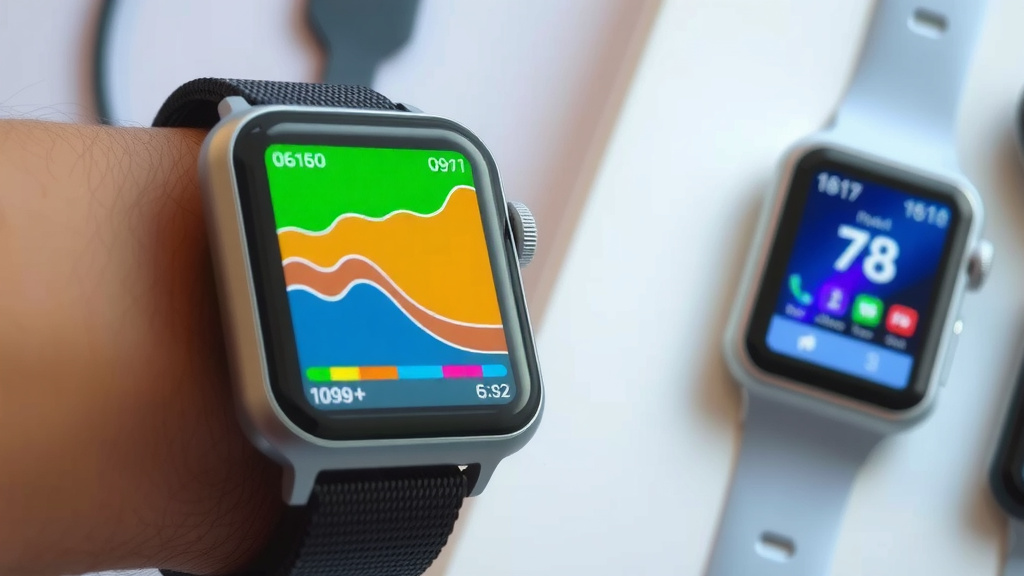
While direct glucose monitoring isn’t here yet, your smartwatch is still a fantastic health companion. It provides a wealth of data that can help you understand your body better.
Tracking Key Health Metrics
Your watch excels at tracking things like your heart rate, sleep patterns, and physical activity. This data can offer clues about your overall health. For example, consistent high resting heart rates might signal stress or a need for more rest. Poor sleep quality can impact many body functions, including how your body handles sugar.
Activity and Your Body
Being more active generally helps your body use glucose more effectively. Seeing your steps and workout minutes can motivate you to keep moving. This, in turn, can indirectly support better blood sugar control, especially for those managing prediabetes or diabetes. Many health organizations suggest regular exercise as a cornerstone of diabetes management (CDC).
When to Seek Professional Advice
Remember, your smartwatch is a tool, not a doctor. If you have concerns about your health or blood sugar, always consult with your healthcare provider. They can provide accurate diagnoses and personalized advice based on your unique needs.
The Future of Glucose Monitoring
The journey to a truly non-invasive glucose-monitoring smartwatch is ongoing. Many companies and research institutions are investing heavily in this area. We are seeing rapid advancements in sensor technology and data analysis.
What to Expect in the Coming Years
It’s possible that in the near future, you might see smartwatches with capabilities to estimate glucose levels. These might not replace traditional methods for everyone, especially those with very specific medical needs. However, they could offer a convenient way for many people to keep a general eye on their glucose trends. Imagine getting an alert if your levels seem unusually high or low without needing to prick your finger. That’s the future many are working towards.
A Checklist for Staying Informed
As this technology develops, here’s what you can do:
- Keep an eye on reputable health tech news.
- Talk to your doctor about new monitoring options.
- Understand that current smartwatches do not measure glucose directly.
- Focus on the health data your watch *can* provide today.
- Be wary of devices making unproven glucose-monitoring claims.
- Remember that accuracy is key for any health monitoring tool.
Conclusion
You now understand that your smartwatch can’t measure glucose levels directly today. Scientists are exploring exciting non-invasive technologies like light and radio waves. These methods aim to offer a painless alternative to current monitoring. While we wait for these advancements, your watch remains a powerful tool for tracking heart rate, sleep, and activity. Use this data to support your overall health. Always consult your doctor for accurate health advice and glucose management.
Frequently Asked Questions
Will smartwatches ever be able to check my glucose?
Research is actively pursuing this goal, and many experts are optimistic. While consumer-ready devices are not available yet, companies and research institutions are investing heavily. It’s likely that future smartwatches will offer some form of glucose estimation.
Can my current smartwatch help with diabetes management?
Your current smartwatch can help indirectly by tracking your activity levels and sleep patterns. Maintaining good physical activity and sleep can positively impact blood sugar control. Discuss this data with your doctor to see how it fits into your overall diabetes management plan.
Are there any smartwatches that claim to measure glucose now?
Be cautious of devices that claim to measure glucose directly without FDA approval or proven scientific backing. True, reliable non-invasive glucose monitoring is still in development. Always rely on medically approved methods for accurate readings.
How accurate will a smartwatch glucose reading be?
Accuracy is the biggest challenge for non-invasive methods. Scientists are working to ensure future devices meet the high accuracy standards needed for diabetes management. Early research shows promise, but widespread, highly accurate devices are still some time away.
What’s the difference between a smartwatch and a Continuous Glucose Monitor (CGM)?
A CGM is a medical device that uses a small sensor inserted under the skin to measure glucose in interstitial fluid. It provides continuous readings. Smartwatches, on the other hand, are consumer electronics that currently do not have this invasive capability for glucose monitoring.
![7 Best Refurbished Smart Watches [2026]](https://smartwatchbest.com/wp-content/uploads/2026/08/7-best-refurbished-smart-watches-2026-featured-768x432.jpg)
![7 Best High End Smart Watch [2026]](https://smartwatchbest.com/wp-content/uploads/2026/08/7-best-high-end-smart-watch-2026-featured-768x432.jpg)
![7 Best Battery Smart Watches [2026]](https://smartwatchbest.com/wp-content/uploads/2026/07/7-best-battery-smart-watches-2026-featured-768x432.jpg)