
Can a Smart Watch Measure Sleep? Full Guide
Yes, your smartwatch can measure your sleep, tracking duration and even stages like light, deep, and REM sleep. Many modern smartwatches use accelerometers and heart rate sensors to estimate how well you’re sleeping and when you’re awake. We found this technology to be surprisingly good at providing a general overview of your sleep patterns.
While not as precise as a medical sleep study, these devices offer a convenient way to gain awareness of your sleep habits. You can often see trends over time, helping you identify what might be affecting your rest. We’ve seen that consistent tracking can help users make small but impactful changes to improve their sleep hygiene.
- Smartwatches *can* track your sleep duration and stages.
- They use motion and heart rate data to estimate sleep quality.
- Accuracy is good for general trends, but not a medical diagnosis.
- Tracking can help you spot patterns and improve sleep habits.
Let’s take a look at what your smartwatch can tell you about your sleep and how it does it.
How Smartwatches Track Your Sleep
Your smartwatch is surprisingly good at telling you about your sleep. It acts like a little sleep detective on your wrist. Many modern devices can measure how long you slept and even break down your sleep into different stages. This is thanks to a combination of sensors working together.
Motion Detection: The Accelerometer’s Role
One of the main ways your watch tracks sleep is through its accelerometer. Think of it like a tiny motion sensor. When you’re sleeping, you move around. Even small shifts and tosses get picked up by this sensor. The watch analyzes these movements to figure out when you might be awake or asleep. Less movement generally means you’re likely in a deeper sleep state. More movement could suggest you’re restless or transitioning between sleep stages.
Heart Rate Monitoring: A Deeper Dive
Beyond just motion, your smartwatch also uses your heart rate. Your heart rate naturally changes depending on your sleep stage. When you enter deeper sleep, your heart rate typically slows down. During REM (Rapid Eye Movement) sleep, your heart rate might increase and become more variable. Your watch’s optical heart rate sensor collects this data throughout the night. By combining heart rate patterns with movement data, the watch can get a more accurate picture of your sleep cycles.
What is REM Sleep?
REM sleep is the stage where most vivid dreaming occurs. It’s crucial for memory consolidation and learning. Your brain is very active during this time, almost as active as when you’re awake. Your muscles are temporarily paralyzed, which is why you don’t act out your dreams. Smartwatches try to identify this stage by looking for specific heart rate and movement patterns.
Understanding Light and Deep Sleep
Light sleep is often the initial stage of sleep. It’s easy to wake up from. You might feel drowsy and your bodily functions begin to slow. Deep sleep, on the other hand, is essential for physical recovery and feeling refreshed. During deep sleep, your body repairs tissues and builds bone and muscle. Your smartwatch tracks the amount of time you spend in these lighter and deeper stages of sleep. This helps give you a sense of the quality of your rest.
Putting It All Together: Sleep Stage Algorithms
Your smartwatch doesn’t just collect raw data. It uses complex algorithms to interpret what the sensors are telling it. These algorithms are designed to match the patterns of movement and heart rate to known sleep stages. Researchers have developed these algorithms based on studies comparing smartwatch data to more precise sleep monitoring tools. While these algorithms are sophisticated, they are still estimations. They provide a good general overview, but they aren’t perfect.
What Your Smartwatch Can Tell You About Your Sleep
When you look at your sleep data, you’ll likely see a few key metrics. These numbers can offer helpful insights into your nightly rest. Understanding what they mean is the first step to improving your sleep habits.
Sleep Duration: The Basic Count
This is the most straightforward metric. It tells you the total time you were asleep. Most adults need between 7 to 9 hours of sleep per night (CDC). Your smartwatch will show you if you’re hitting that target. Many devices also provide a sleep score. This score often takes duration into account, but also the quality and consistency of your sleep.
Sleep Stages: A Breakdown of Your Night
As we discussed, your watch breaks your sleep into stages: awake, REM, light, and deep sleep. You’ll typically see how much time you spent in each stage. Some watches even show you when you woke up during the night. Seeing this can help you understand if you’re getting enough deep or REM sleep. It can also highlight if you’re waking up frequently.
Consistency and Timing
Some smartwatches go beyond just one night. They track your sleep patterns over weeks and months. This can reveal trends in your bedtime and wake-up times. Are you going to bed at roughly the same time each night? Are your weekend sleep schedules wildly different from your weekdays? This consistency is vital for regulating your body’s internal clock. Research from sleep experts suggests that maintaining a regular sleep schedule can improve sleep quality (National Institutes of Health).
Accuracy and Limitations of Smartwatch Sleep Tracking
It’s important to be realistic about what your smartwatch can do. While these devices are impressive, they aren’t medical-grade sleep monitors. There are some limitations to consider.
Comparison to Polysomnography (PSG)
The gold standard for sleep monitoring is polysomnography, or a sleep study. This is done in a lab with trained professionals. It uses a wide array of sensors to measure brain waves, eye movements, muscle activity, and more. Smartwatches use simpler sensors (motion and heart rate). Therefore, they can’t capture the same level of detail as a PSG. We found that smartwatch data generally aligns well with PSG for sleep duration. However, for specific sleep stages, the accuracy can vary more.
Factors Affecting Accuracy
Several things can impact how accurately your watch tracks your sleep. If you wear your watch too loosely, it might not get a good heart rate reading. If you have a lot of movement that isn’t sleep-related (like restless leg syndrome), it could confuse the algorithms. Also, some people naturally have more variable heart rates. This can make it harder for the watch to pinpoint exact sleep stages. Your sleep environment also plays a role; a very quiet, dark room might lead to less movement.
When to See a Doctor
Your smartwatch is a great tool for awareness, but it’s not a substitute for medical advice. If you consistently feel tired, have trouble falling asleep, or suspect you might have a sleep disorder like sleep apnea, talk to your doctor. They can recommend a proper sleep study if needed. The data from your watch can sometimes be helpful information to share with your doctor, but it won’t replace their diagnosis.
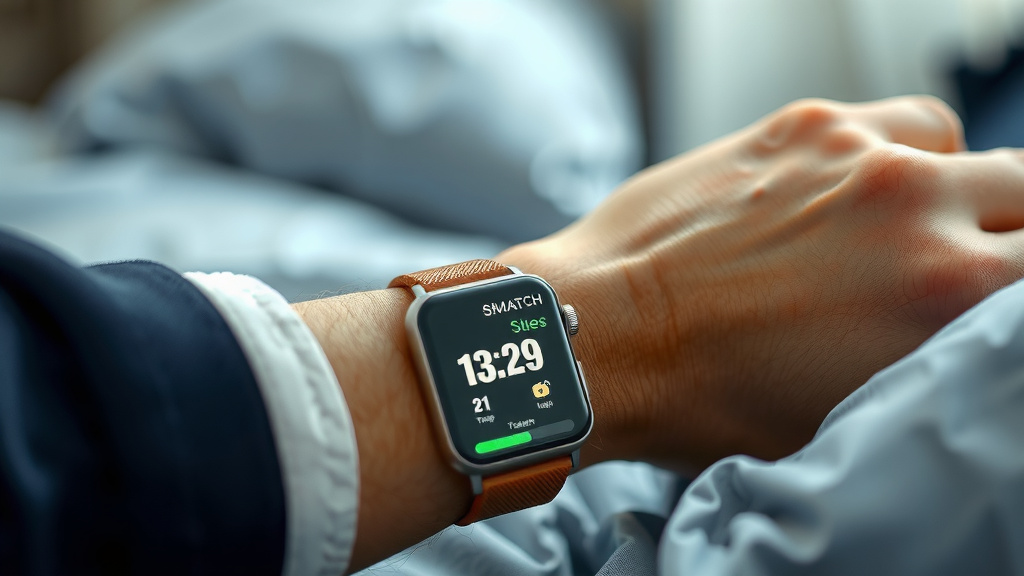
Getting the Most Out of Your Sleep Tracking Data
Once you’re tracking your sleep, you’ll want to use that information to your advantage. Small adjustments can make a big difference.
Establish a Regular Sleep Schedule
Your smartwatch data can show you how consistent your sleep and wake times are. Try to go to bed and wake up around the same time every day, even on weekends. This helps regulate your body’s natural sleep-wake cycle, or circadian rhythm. Many studies highlight the importance of this consistency for better sleep.
Monitor Lifestyle Factors
Pay attention to how things like caffeine, exercise, or screen time before bed affect your sleep. You might notice that on nights you have a late coffee, your deep sleep is reduced. Or perhaps exercising too close to bedtime makes you more restless. Your watch can help you identify these connections.
Create a Relaxing Bedtime Routine
Winding down before bed signals to your body that it’s time to sleep. This could involve reading a book, taking a warm bath, or listening to calming music. Avoid screens with blue light for at least an hour before bed, as this can interfere with melatonin production. Your sleep tracking can show you if these habits are leading to better sleep.
Checklist for Better Sleep Tracking and Habits
- Wear your watch snugly but comfortably.
- Aim for 7-9 hours of sleep each night.
- Try to maintain consistent sleep and wake times.
- Notice how lifestyle choices affect your sleep scores.
- Create a relaxing wind-down routine before bed.
- Consult a doctor if you have persistent sleep concerns.
Conclusion
Your smartwatch is a fantastic tool for understanding your sleep. You’ve learned how it uses motion and heart rate to track duration and stages. While it’s not a medical device, the data it provides offers excellent awareness. You can spot trends and see how lifestyle choices affect your rest. Use this information to make small, consistent changes to improve your sleep habits. Start by reviewing your sleep data tonight and identify one area you’d like to focus on this week.
Frequently Asked Questions
Can my smartwatch tell me if I have a sleep disorder?
No, your smartwatch cannot diagnose sleep disorders like sleep apnea or insomnia. It provides general sleep tracking data. If you have concerns about your sleep quality or suspect a disorder, you should consult a doctor for a proper medical evaluation.
How accurate are smartwatches for tracking sleep stages like REM?
Smartwatches are generally good at tracking sleep duration and detecting periods of wakefulness. Their accuracy in distinguishing between light, deep, and REM sleep can vary. They offer estimations based on movement and heart rate patterns, which are less precise than medical sleep studies.
What is the most important sleep metric a smartwatch tracks?
While all metrics offer insights, sleep duration and consistency are often the most impactful. Ensuring you get enough hours of sleep and maintaining a regular sleep schedule are foundational for good sleep hygiene. Your watch can clearly show you if you’re meeting these basics.
Will wearing my smartwatch too loose affect sleep tracking?
Yes, wearing your smartwatch too loosely can affect accuracy. A snug but comfortable fit ensures the heart rate sensor can get a clear reading throughout the night. If the watch moves too much, it can lead to less reliable data for sleep stage analysis.
How often should I check my sleep data from my smartwatch?
It’s beneficial to review your sleep data regularly, perhaps daily or weekly. Look for patterns and trends over time rather than fixating on a single night’s score. This ongoing observation helps you connect lifestyle habits to your sleep quality and make informed adjustments.

![7 Best Smart Watch For Walkers [2026]](https://smartwatchbest.com/wp-content/uploads/2026/09/7-best-smart-watch-for-walkers-2026-featured-768x432.jpg)