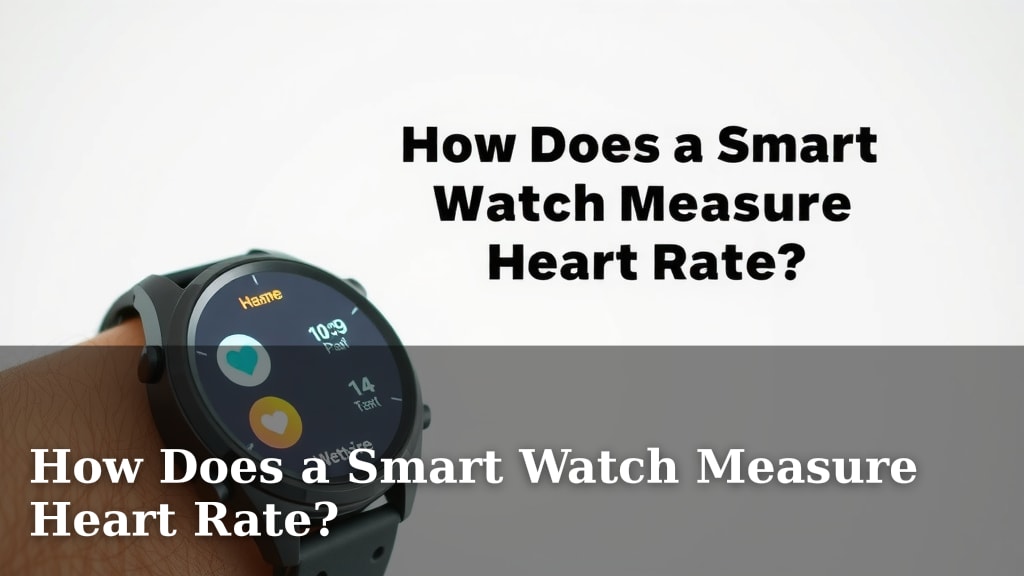
How Does a Smart Watch Measure Heart Rate?
Your smartwatch measures your heart rate using light and sensors. It shines light onto your skin and detects the tiny changes in light absorption. These changes happen because your blood flow pulses with each heartbeat.
This technology, often called photoplethysmography (PPG), has become quite accurate for everyday use. It’s a clever way to keep an eye on your fitness and health metrics without needing bulky equipment. Think of it as a tiny, friendly doctor on your wrist.
- Smartwatches use light and sensors.
- They detect changes in blood flow.
- This process is called photoplethysmography (PPG).
- It’s a common and effective method.
Let’s walk through exactly how this magic happens, step by step, so you can understand what’s going on inside your favorite gadget.
Understanding How Your Smartwatch Tracks Your Heart Rate
You might be wondering how that little device on your wrist can accurately count your heartbeats. It’s a fascinating blend of science and technology, and it’s simpler than you might think. Your smartwatch uses a method called photoplethysmography, or PPG for short. This technology has been around for a while, but smartwatches have made it incredibly accessible and convenient for everyday use.
The core idea is to shine light onto your skin and then measure how much of that light gets reflected or absorbed. Your heart rate is directly linked to blood flow, and that’s where the light comes in. As your heart beats, it pumps blood through your body. This pulsing blood flow changes how light interacts with your skin. Your smartwatch detects these subtle changes.
The Science Behind the Glow: Light and Sensors at Work
At the heart of your smartwatch’s heart rate sensor are tiny LEDs (light-emitting diodes) and a photodiode. These components work together like a miniature optical system. The LEDs are typically green, as green light is well absorbed by your blood. The photodiode is the light sensor, which measures the light that bounces back.
When the LEDs shine light onto your wrist, some of that light passes through your skin and tissue. When your heart pumps, more blood rushes to the capillaries in your wrist. This increased blood volume absorbs more green light. When your heart relaxes, there’s less blood, and less light is absorbed. The photodiode detects these variations in reflected light.
What Happens to the Light?
Imagine your blood as tiny sponges for light. When your heart beats, it fills those “sponges” with more blood, making them absorb more light. When the beat is over, there’s less blood, and the “sponges” are less full, letting more light reflect back. Your smartwatch is essentially watching how full those “sponges” get with each pulse.
The intensity of the reflected light is what the smartwatch uses to calculate your heart rate. A stronger signal means more blood flow, indicating a pulse. A weaker signal means less blood flow. By measuring the timing between these stronger signals, your watch can determine how many times your heart is beating per minute.
Navigating the Signals: Turning Light into Beats Per Minute
It’s not just about shining a light. The smartwatch has sophisticated algorithms to process the data from the photodiode. These algorithms are designed to filter out noise and interference. Things like movement, ambient light, and even your skin tone can affect the readings.
The watch takes thousands of readings every minute. It looks for patterns in the fluctuating light absorption that correspond to your pulse. It then translates these patterns into a beat-per-minute (BPM) number. This process requires powerful processing for such a small device.
Dealing with the Real World: Movement and Other Factors
One of the biggest challenges is accounting for movement. When you move, your muscles can also cause changes in blood flow, which could be mistaken for a heartbeat. Smartwatches use accelerometers and gyroscopes – the same sensors that track your steps and activity – to compensate for this.
For instance, if you’re running, your watch knows you’re moving. It can then adjust the algorithm to better distinguish between the rhythmic pulsing of blood from your heart and the erratic movements of your arm. This is why a secure fit is so important for accurate readings.
Why a Tight Fit Matters
A snug fit ensures that the LEDs are always in close contact with your skin. This helps to minimize ambient light from getting in and interfering with the sensor. It also ensures that the reflected light is consistently measured. If your watch is too loose, the light can escape, and external light can enter, leading to inaccurate data.
What About Other Factors?
Skin tone can also play a role. Melanin, the pigment that gives skin its color, can absorb light. This means that individuals with darker skin tones might have slightly different light absorption patterns. Manufacturers are constantly refining their algorithms to ensure accuracy across a wide range of skin tones.
Other factors like tattoos on the wrist, hand temperature, and even hydration levels can have minor impacts. However, for most day-to-day activities, the technology is remarkably reliable. Many health organizations acknowledge PPG as a valid method for general heart rate monitoring (American Heart Association).
The Role of Different Types of Smartwatches
While the core PPG technology is similar, some smartwatches might offer additional features or variations. For instance, some higher-end devices might incorporate additional sensors for more detailed analysis.
Optical vs. Electrical Heart Rate Sensors
It’s important to distinguish between optical sensors (PPG) and electrical sensors (ECG or EKG). Optical sensors use light, like we’ve discussed, and are found on nearly all smartwatches for continuous monitoring. Electrical sensors measure the electrical signals your heart produces.
Some smartwatches have an ECG feature, which requires you to place a finger on the watch’s crown. This provides a more detailed reading, often used to detect irregular heart rhythms like atrial fibrillation. However, for everyday heart rate tracking, the optical sensor is the workhorse. Both methods have their place in monitoring your cardiovascular health.
Ensuring the Best Results from Your Smartwatch
To get the most accurate heart rate data from your smartwatch, there are a few simple things you can do. These tips will help the sensors do their job effectively.
- Wear it snugly: Make sure the watch band is snug but not uncomfortably tight. It shouldn’t slide around your wrist.
- Keep it clean: Ensure the sensor on the back of the watch is clean and free of smudges.
- Position it correctly: Wear the watch on the top of your wrist, about one finger-width above your wrist bone.
- Consider temperature: Cold hands can reduce blood flow. Try to warm your hands before taking a reading if possible.
- Be still for spot checks: For a single, precise reading, try to stay still for a few moments while the watch takes the measurement.
- Update your software: Manufacturers often release software updates that improve sensor accuracy and algorithms.
By understanding how your smartwatch measures your heart rate, you can better appreciate the technology and take steps to ensure you’re getting the most reliable data possible. It’s a powerful tool for staying informed about your well-being, right from your wrist!
Conclusion
You’ve learned that your smartwatch uses light and sensors to track your heart rate through a process called photoplethysmography (PPG). It detects changes in blood flow by shining light onto your wrist and measuring how it’s absorbed. Sophisticated algorithms then turn these light variations into your beat-per-minute count. Remember, a snug fit and clean sensors are key to getting the most accurate readings.
Now that you understand the science behind your wrist’s health monitor, you can use this knowledge to ensure you’re getting the best data. Keep an eye on those trends and continue prioritizing your well-being!
Frequently Asked Questions
How often does my smartwatch check my heart rate?
Most smartwatches continuously monitor your heart rate throughout the day and night. Some devices allow you to adjust the frequency of these checks in their settings to conserve battery life if needed.
Can my smartwatch’s heart rate reading be wrong?
Yes, your smartwatch’s heart rate reading can sometimes be inaccurate. Factors like movement, an improper fit, or even your skin tone can affect the sensors. For medical-grade accuracy, a doctor’s evaluation is always recommended.
Why does my heart rate seem high when I’m just sitting?
While smartwatches are generally accurate, a high reading while at rest could be due to several factors. This might include recent caffeine intake, stress, or the watch needing to recalibrate. If you’re concerned, rest for a few minutes and take another reading, or consult a healthcare professional.
Does wearing the watch on my other arm change the reading?
Generally, your smartwatch should provide similar readings regardless of which wrist you wear it on. The key is maintaining consistent skin contact and ensuring the sensors are properly positioned, which might require slight adjustments depending on your dominant arm.
Can tattoos on my wrist affect heart rate readings?
Yes, tattoos can sometimes interfere with heart rate readings. The ink pigment can absorb or reflect light differently than skin, potentially affecting the accuracy of the optical sensors. If you have tattoos on your wrist, try wearing the watch slightly higher up.