How Do Smart Watches Measure Deep Sleep?
Your smartwatch measures deep sleep by tracking movement and heart rate. It uses these metrics to estimate your sleep stages. This technology offers a convenient way to monitor your rest patterns.
Smartwatches use sophisticated algorithms to interpret your body’s signals. They look for the subtle changes that occur during different sleep cycles. This includes distinguishing between light sleep, deep sleep, and REM sleep, with deep sleep being the most restorative. It’s like having a little sleep detective on your wrist!
- Smartwatches track your movement and heart rate.
- These two factors help estimate your sleep stages.
- Deep sleep is the most restful stage.
- Your watch analyzes patterns to determine sleep quality.
Let’s break down exactly how your smartwatch works to figure out your deep sleep. We’ll cover the science behind it in a way that’s easy to understand.
Understanding Your Smartwatch’s Sleep Tracking Capabilities
So, how exactly does that little device on your wrist figure out if you’re getting enough deep sleep? It’s a bit more science than magic. Your smartwatch uses a combination of sensors to monitor your body’s signals throughout the night. These signals are then interpreted by complex algorithms. These algorithms are designed to identify the different stages of your sleep cycle. Think of it as your watch being a tiny, data-collecting sleep scientist. It’s **collecting clues all night long**.
The Sensors Behind the Sleep Science
Your smartwatch isn’t just guessing. It relies on a few key pieces of technology to gather the data it needs. These sensors work together to paint a picture of your sleep. Understanding these components helps you appreciate the technology.
1. The Accelerometer: Detecting Your Movement
One of the primary tools your smartwatch uses is the accelerometer. This sensor measures **acceleration and deceleration**. In simpler terms, it tracks how much you move. During sleep, your movement patterns change significantly between sleep stages. When you’re in light sleep, you tend to toss and turn more. As you transition into deeper sleep stages, your body becomes much more still. Your smartwatch picks up on this decrease in movement. Less motion often signals a deeper, more restorative sleep period. It’s like your watch is watching your physical stillness.
2. The Heart Rate Monitor: Listening to Your Body’s Rhythm
Most modern smartwatches also include a heart rate sensor, often using optical heart rate monitoring (OHRM). This sensor shines light into your skin and measures the light that bounces back. Blood flowing through your blood vessels absorbs and reflects light. The sensor detects changes in this reflected light, which correspond to your pulse. Your heart rate also varies depending on your sleep stage. During deep sleep, your heart rate typically slows down. It becomes more regular. This slowing heart rate is another **key indicator of deep sleep**. Your watch uses this data alongside movement data to get a more accurate picture.
How Heart Rate and Movement Work Together
It’s the combination of movement and heart rate data that gives your smartwatch its power. Imagine you’re very still. This could mean you’re in deep sleep, or it could mean you’re just lying awake and not moving much. However, if you’re very still AND your heart rate has slowed significantly, it’s a much stronger indicator that you’ve entered deep sleep. This **dual-sensor approach** makes the tracking more reliable. It helps to differentiate between true sleep and periods of stillness while awake. This is why many experts recommend watches with both features for sleep tracking.
Deciphering the Sleep Stages: What Your Watch Sees
Sleep isn’t a single state. It cycles through different stages. Your smartwatch algorithms are trained to identify these stages based on the data it collects. The most common sleep stages tracked are light sleep, deep sleep, and REM (Rapid Eye Movement) sleep. Some advanced watches may also track wakefulness. The algorithms look for specific patterns in your heart rate and movement to classify these stages. They are essentially trying to match your body’s signals to known physiological markers of each stage.
Light Sleep: The Transition Zone
Light sleep is usually the first stage you enter after falling asleep. It’s a bit like the waiting room for deeper sleep. Your heart rate starts to slow down, and your muscles begin to relax. You might still move around a bit during this stage. Your smartwatch will note increased, but not excessive, movement. Your heart rate will be lower than when you’re awake, but not as slow as in deep sleep. This stage is important for memory consolidation and overall rest, but it’s not the most restorative phase. It’s **your body preparing for deeper rest**.
Deep Sleep: The Restorative Powerhouse
This is the stage your smartwatch is specifically trying to identify. Deep sleep, also known as slow-wave sleep, is critical for physical recovery. During this stage, your body repairs tissues, builds bone and muscle, and strengthens your immune system. Your brain waves become very slow. Your heart rate and breathing reach their lowest levels. Movement is minimal. Your smartwatch sees this as a period of very low activity from both the accelerometer and the heart rate monitor. It’s the **most still and physiologically relaxed state** your body enters during sleep. Guidelines from sleep health organizations, like the National Sleep Foundation, highlight its importance for feeling refreshed.
REM Sleep: The Dream Zone
REM sleep is another vital stage, though different from deep sleep. This is when most vivid dreaming occurs. Your brain activity increases, resembling that of being awake. Your eyes move rapidly behind your eyelids. Interestingly, your major voluntary muscles become temporarily paralyzed, preventing you from acting out your dreams. Your heart rate and breathing can become more irregular and faster during REM sleep. Your smartwatch might detect subtle movements or twitches. Its heart rate patterns would also be different from deep sleep. It looks for this **unique combination of brain activity and muscle atonia** (which it infers from lack of gross body movement).
The Algorithms: Translating Data into Sleep Stages
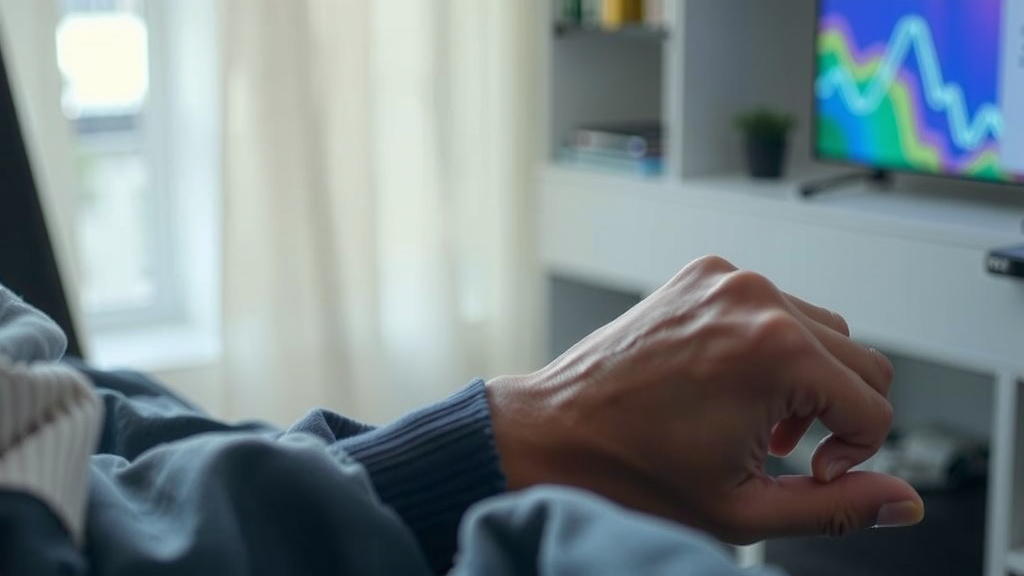
The data collected by the sensors is only useful if it’s interpreted correctly. This is where the algorithms come in. These are sets of rules and calculations that the smartwatch’s software uses. They analyze the incoming data streams. They compare them to patterns observed in large scientific studies of sleep. Researchers have established what typical heart rate and movement patterns look like for each sleep stage. Your smartwatch’s algorithm essentially tries to match your night’s data to these established patterns. It’s a **sophisticated pattern-matching process**. The accuracy depends on the quality of the sensors and the sophistication of the algorithm. Many wearables use machine learning models trained on polysomnography data for better accuracy (NCBI).
Accuracy and Limitations: What to Keep in Mind
While smartwatches have become remarkably good at tracking sleep, they are not perfect. They are considered consumer-grade devices, not medical-grade equipment like polysomnography (PSG) used in sleep labs. PSG directly measures brain waves, eye movements, and muscle activity with electrodes placed on the body. Smartwatches infer these through movement and heart rate. Therefore, there can be **occasional inaccuracies**. For instance, a very still period while awake might sometimes be misclassified as deep sleep. Or, subtle movements during deep sleep might be misinterpreted. However, for most users, they provide a good general overview of sleep patterns. They are excellent for identifying trends over time. Think of it as a helpful guide rather than a definitive diagnostic tool.
Putting Your Sleep Data to Good Use
Knowing how your smartwatch measures deep sleep is only half the battle. The real benefit comes from using that information. You can start to see how certain habits affect your sleep quality. Do late-night snacks disrupt your deep sleep? Does a consistent bedtime lead to more restorative rest? Your smartwatch data can help you answer these questions.
Tips for Improving Your Deep Sleep
Use your smartwatch data to guide you. Here are a few evidence-based tips:
- Maintain a consistent sleep schedule, even on weekends.
- Create a relaxing bedtime routine before you go to sleep.
- Ensure your bedroom is dark, quiet, and cool.
- Limit caffeine and alcohol, especially in the hours before bed.
- Get regular physical activity, but avoid intense workouts close to bedtime.
- Avoid large meals or excessive fluids close to bedtime.
By paying attention to the patterns your watch shows you, you can make informed changes to your lifestyle. This can lead to better sleep and a more energized you. It’s about using technology to **understand and improve your well-being**.
Conclusion
Your smartwatch is a helpful tool for understanding your sleep. By monitoring your movement and heart rate, it estimates your deep sleep stages. Remember, it’s a guide, not a medical device. The data can show you trends and how your habits affect rest. Use this information to make small, positive changes. Try adjusting your bedtime or bedroom environment. Improving your deep sleep can lead to more energy and better overall well-being. Start by reviewing your sleep data tonight and planning one small change!
Frequently Asked Questions
Can my smartwatch accurately tell me how much deep sleep I got?
Smartwatches provide a good estimation of your deep sleep based on movement and heart rate. While they are very helpful for tracking trends, they are not as precise as medical-grade sleep studies. Consumer-grade devices offer general insights rather than exact measurements.
Why is deep sleep considered so important?
Deep sleep is often called the most restorative sleep stage. During this time, your body focuses on physical repair, muscle growth, and immune system strengthening. It’s essential for feeling physically recovered and refreshed each day.
What if my smartwatch says I had very little deep sleep?
If you consistently see low deep sleep numbers, it might be a sign to examine your sleep habits. Factors like stress, alcohol, or an inconsistent sleep schedule can affect deep sleep. Try implementing relaxing bedtime routines and maintaining a regular sleep pattern.
Does the brand of smartwatch affect deep sleep tracking accuracy?
Different brands use varying algorithms and sensor technologies, which can lead to slight differences in reported sleep data. While most reputable smartwatches offer reasonable accuracy for general tracking, some advanced models may provide more detailed breakdowns.
Can a smartwatch detect REM sleep accurately too?
Yes, smartwatches typically track REM sleep alongside deep and light sleep. They infer REM sleep by looking for specific patterns like increased eye movement (often inferred from subtle head movements) and more variable heart rate, differentiating it from the stillness of deep sleep.

![7 Best Smart Tactical Watches [2026]](https://smartwatchbest.com/wp-content/uploads/2026/08/7-best-smart-tactical-watches-2026-featured-768x432.jpg)