
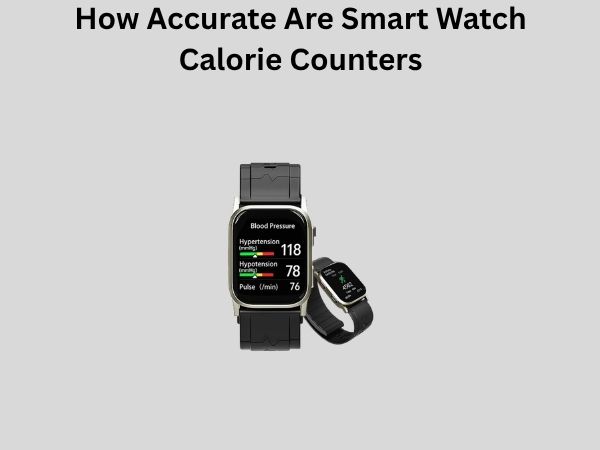
How Accurate Are Smart Watch Calorie Counters? A Comprehensive Guide to Weight Loss Facts
Have you ever glanced at your smartwatch and wondered whether those calorie burn numbers staring back at you are actually legitimate? You’re not alone. Millions of fitness enthusiasts rely on wearable technology to track their daily energy expenditure, yet many remain skeptical about the real accuracy of these devices. Let me walk you through what you need to know about smartwatch calorie counters and whether they’re worth trusting with your weight loss goals.
Understanding How Smartwatches Calculate Calories
When you strap on a smartwatch, you’re essentially wearing a miniature personal trainer with sensors. But how does this tiny device actually know how many calories you’re burning? Think of it like a very simplified version of your body’s metabolism calculator. Your smartwatch uses several data points to make its estimates, but here’s the thing—it’s making educated guesses, not precise measurements.
The Fundamental Technology Behind Calorie Counting
Smartwatches primarily rely on accelerometers and heart rate monitors to estimate calorie expenditure. The accelerometer detects your movement patterns and intensity, while the heart rate sensor monitors how hard your cardiovascular system is working. These two pieces of information are then fed into an algorithm that attempts to calculate how much energy your body is consuming.
Imagine you’re climbing stairs. The accelerometer recognizes the repetitive upward movement, while your heart rate spikes because your body is working harder. The smartwatch combines these signals and says, “Aha! You’re doing vigorous activity,” and then estimates your calorie burn based on predetermined formulas.
The Role of Personal Data Input
Before your smartwatch can make any reasonable estimates, you need to input your personal information. This typically includes your age, weight, height, and sometimes your biological sex. These metrics are crucial because they help the device estimate your basal metabolic rate—essentially, the calories you burn just existing.
- Age affects your metabolism significantly
- Weight influences how many calories you burn during activity
- Height factors into body composition estimates
- Sex differences impact hormonal and metabolic patterns
The Science Behind Calorie Burn Measurement
Here’s where things get interesting. Calorie burn isn’t something you can see or feel directly—it’s a physiological process that’s notoriously difficult to measure accurately, even in controlled laboratory settings. Scientists typically use indirect calorimetry or oxygen consumption measurements to calculate actual calorie expenditure, which is far more sophisticated than anything a wearable device can do.
Why Laboratory Measurements Differ from Wearable Estimates
In a lab setting, researchers can measure the exact amount of oxygen you consume and carbon dioxide you produce during exercise. This gives them a precise picture of your energy expenditure. A smartwatch, meanwhile, has to make assumptions based on limited sensor data. It’s like the difference between a detailed blueprint and a rough sketch—both serve a purpose, but one is infinitely more precise.
Your body also has hundreds of variables that affect calorie burn. Your fitness level, muscle mass percentage, hydration status, caffeine intake, sleep quality, and even stress levels all influence how efficiently you burn calories. A smartwatch can’t measure most of these factors, so it makes blanket assumptions that apply to the average person in your demographic category.
The Estimation vs. Measurement Dilemma
This is fundamentally important to understand: smartwatches are estimation devices, not measurement devices. They’re inferring your calorie burn based on observable metrics, not directly measuring the actual energy your body is expending. This distinction matters tremendously when you’re relying on these numbers for weight loss or fitness decisions.
Real-World Accuracy Rates and Research Findings
So what does the research actually say? Multiple studies have examined smartwatch accuracy, and the results are fairly consistent—though perhaps not as encouraging as manufacturers would like you to believe.
What Studies Have Revealed About Smartwatch Accuracy
A comprehensive review of wearable fitness trackers found accuracy rates varying wildly depending on the device and the type of activity being measured. For walking and running—activities that follow predictable patterns—smartwatches tend to perform reasonably well, with error margins often between 10 to 30 percent. However, for more complex exercises or activities with irregular movements, accuracy can plummet.
One particularly revealing study found that popular smartwatches overestimated calorie burn by an average of 20 to 40 percent during steady-state cardio exercises. For high-intensity interval training or strength training, the inaccuracy was even worse. Some devices overestimated by as much as 50 percent or more.
- Walking and jogging: 10-25% average error
- Cycling: 15-35% average error
- Strength training: 30-50% average error
- HIIT workouts: 25-45% average error
The Consistency Question
Interestingly, while absolute accuracy might be questionable, smartwatches do tend to be relatively consistent in their estimates. This means if your device says you burned 500 calories today, it probably didn’t burn exactly 500, but the next day when it says 450, the difference between those two days is probably directionally correct. This consistency can actually be valuable for tracking trends over time, even if the absolute numbers aren’t precise.
Factors That Influence Smartwatch Accuracy
Why are some smartwatch readings more accurate than others? Several important factors come into play, and understanding them can help you get better results from your device.
Heart Rate Monitoring Reliability
Since heart rate is a primary input for calorie calculations, the quality of your heart rate measurement matters tremendously. Some smartwatches use optical sensors that shine light through your skin to detect blood flow, while others use electrical sensors. Neither method is perfect, especially during certain activities.
If you have darker skin tones, some optical sensors may have difficulty reading your heart rate accurately. If you’re moving your wrist during exercise, the sensor might lose contact with your skin. If you have very low body fat or very high body fat, the readings might be skewed. These aren’t flaws in your use of the device—they’re limitations of the technology itself.
Activity Type and Movement Patterns
Smartwatches were designed with certain activities in mind. Running and walking are relatively straightforward—repetitive movements with predictable patterns. Your device can easily recognize these activities and apply established formulas. But what about rock climbing? Yoga? Swimming? These complex movements confuse accelerometers and can lead to wildly inaccurate estimates.
Water-based activities present a particular challenge. Many smartwatches struggle in water, and some can’t track swimming at all because the sensors don’t work properly when submerged. Even waterproof devices often provide less accurate calorie estimates for swimming compared to land-based activities.
The Impact of Individual Physiology
Here’s something many people don’t realize: two people of the same age, weight, and height can have drastically different metabolic rates. This variation comes down to genetics, muscle mass composition, hormonal profiles, and countless other factors. Your smartwatch doesn’t know your actual resting metabolic rate—it’s estimating it based on population averages.
If you’re more muscular than average for your weight, you probably burn more calories than your smartwatch thinks you do. If you have less muscle mass than average, you probably burn fewer. These individual differences can easily account for 100+ calorie discrepancies in daily totals.
Comparing Different Smartwatch Brands and Their Accuracy
Not all smartwatches are created equal. Some brands invest heavily in sensor technology and algorithm development, while others take a more generic approach to calorie estimation.
Premium Smartwatches vs. Budget Models
Generally speaking, smartwatches from established fitness companies like Apple, Garmin, and Fitbit tend to offer better accuracy than generic knockoffs. These companies have invested years in refining their algorithms and sensor technology. However, “better” doesn’t mean “accurate”—it typically means they’re less inaccurate than their competitors.
Apple Watch, for instance, has access to a larger dataset and continuously improves its algorithms through machine learning. Garmin focuses heavily on athletic performance and has specialized algorithms for different sports. Fitbit emphasizes consistency and user-friendly interfaces alongside their tracking capabilities.
Budget Smartwatches and Third-Party Trackers
Budget-friendly options might use simpler sensors and generic algorithms that don’t account for individual variation. Many devices in the $50-$100 range use predetermined formulas that work reasonably well for average people but may be quite far off for individuals who deviate from the norm.
The Role of Personal Metrics in Calculations
The information you enter during your smartwatch setup is absolutely critical. Garbage in, garbage out, as they say in programming.
Why Accurate Personal Data Matters
If you entered your weight as 150 pounds when you actually weigh 170, every calorie calculation will be off proportionally. Your weight is one of the primary drivers of calorie burn—heavier bodies require more energy to move around. Similarly, if you misrepresent your age or fitness level, these errors compound throughout all the device’s calculations.
The Importance of Updates
Many people set up their smartwatch once and never update their personal information. If you’ve lost 20 pounds, your device is still calculating calories as if you weigh what you weighed six months ago. Take time to update your metrics regularly, especially if significant changes have occurred in your weight or fitness level.
Limitations of Wearable Technology
Understanding what smartwatches can’t do is just as important as knowing what they can do.
What Smartwatches Cannot Measure
Smartwatches cannot directly measure:
- Your actual metabolic rate or how efficiently your body burns calories
- Your muscle mass percentage or body composition
- The intensity of your workout beyond heart rate elevation
- Your dietary intake or nutritional balance
- Hormonal fluctuations that affect metabolism
- Your actual energy expenditure—only an estimate
The Problem with Passive Calorie Counting
Most smartwatches count calories burned during rest and daily activities automatically. This is convenient, but it’s also highly speculative. The device is estimating your basal metabolic rate and then adding estimated calories from activities throughout the day. Because these estimates are built on assumptions, the accumulated error can be substantial.
Environmental and Situational Factors
Temperature, altitude, humidity, and time of day all affect how efficiently your body burns calories. Your smartwatch doesn’t know you just climbed from sea level to 10,000 feet elevation, which would actually increase your calorie burn. It doesn’t know you’re working out in intense heat, which makes your heart work harder for the same intensity level. These contextual factors are invisible to the device.
Tips for Improving Tracking Accuracy
Even though smartwatch calorie counting has inherent limitations, you can take steps to get better results from your device.
Optimizing Your Smartwatch Settings
- Update your personal information regularly, especially weight changes
- Ensure your smartwatch is properly fitted—not too loose or too tight
- Choose specific activity modes rather than relying on automatic detection
- Manually adjust intensity levels when the device doesn’t recognize them
- Keep your smartwatch software updated with the latest algorithms
- Calibrate your device if the manufacturer offers this feature
Wearing Your Smartwatch Correctly
The way you wear your smartwatch significantly impacts sensor accuracy. Heart rate monitors work best when positioned on your wrist about one finger’s width above your wrist bone. During exercise, the band should be snug but not cutting off circulation. If the band is too loose, the optical sensors can’t get a good reading. If it’s too tight, it becomes uncomfortable and can actually restrict blood flow.
Using Multiple Data Points
Rather than trusting a single calorie number, look at trends over time. If your smartwatch consistently shows you burning around 2,300 calories daily, that consistency is more valuable than the absolute number. You can use this baseline to make informed decisions about your diet and exercise, even if the actual number isn’t perfectly accurate.
Using Smartwatch Data Effectively for Weight Loss
So how should you actually use your smartwatch calorie data if you’re trying to lose weight?
Treating Smartwatch Numbers as Estimates, Not Gospel
Think of your smartwatch calorie counts as roughly directional rather than precise. If it says you burned 2,500 calories today, the real number might be anywhere from 2,000 to 3,000. This uncertainty needs to factor into your decision-making.
Many fitness professionals recommend building in a safety margin. If you’re trying to eat at a calorie deficit for weight loss, don’t assume you can eat back all the calories your smartwatch says you burned. A reasonable approach might be to eat back only 50 to 75 percent of estimated exercise calories, accounting for the overestimation that research suggests is common.
Combining Smartwatch Data with Other Metrics
Smartwatch data works best when combined with other information sources. Your weight scale, how your clothes fit, your energy levels, and your actual food intake all provide valuable context. If your smartwatch says you should be losing weight based on your calorie balance, but the scale hasn’t moved in several weeks, that’s valuable information that suggests the smartwatch estimates might be off for your particular body.
The Psychological Benefits Beyond Accuracy
Even if smartwatch calorie counting isn’t perfectly accurate, these devices provide genuine psychological benefits. Seeing your daily activity levels, getting reminders to move, and tracking progress toward goals increases accountability and motivation. For many people, these behavioral changes lead to actual weight loss, regardless of calorie estimation accuracy.
Understanding Calorie Surplus and Deficit with Imperfect Data
Weight loss fundamentally comes down to calories in versus calories out. But when both sides of that equation are estimates, how do you actually make progress?
The Accumulation of Error
If your smartwatch overestimates burns by 20 percent and you underestimate food intake by 10 percent (as research suggests many people do), those errors compound. Over a week, this could mean an extra 1,000 to 1,500 calories of error in your deficit calculation. Over a month, that’s potentially 4,000 to 6,000

![7 Best Smart Watch 4g [2026]](https://smartwatchbest.com/wp-content/uploads/2026/08/7-best-smart-watch-4g-2026-featured-768x432.jpg)