Best Smart Watch for Blood Pressure: Top Picks 2026
Looking for the best smart watch for blood pressure? While many smartwatches can track heart rate, only a select few offer FDA-cleared blood pressure monitoring. Currently, the Omron HeartGuide is often cited as a top choice for its accuracy and medical-grade capabilities in a wearable format.
Tracking your blood pressure regularly can be a game-changer for your health. We found that smartwatches are becoming increasingly sophisticated, moving beyond simple step counting to offer more in-depth health metrics. Understanding your readings helps you work better with your doctor.
- No single smartwatch is perfect for everyone.
- Look for FDA-cleared devices for accurate blood pressure readings.
- Consider ease of use and how well it syncs with your phone.
- Your doctor’s advice is key when choosing health-monitoring tech.
Let’s get into the details of what makes a smartwatch great for monitoring your blood pressure and which models stand out.
Choosing a Smartwatch for Accurate Blood Pressure Readings
When you’re looking for the best smartwatch for blood pressure, you’re likely seeking a device that goes beyond basic fitness tracking. You want something that can give you reliable health insights. It’s great that you’re taking charge of your health this way!
Many smartwatches can measure your pulse, but not all can accurately track blood pressure. This distinction is super important. We found that true blood pressure monitoring often requires specific technology and regulatory clearance. This ensures the readings are dependable.
What Makes a Smartwatch Good for Blood Pressure Monitoring?
So, what exactly separates a good blood pressure smartwatch from the rest? It boils down to a few key features. Think of it like choosing the right tool for a specific job. You wouldn’t use a screwdriver to hammer a nail, right?
FDA Clearance: The Gold Standard
The most critical factor is FDA clearance. This means the device has undergone rigorous testing. It’s been proven to meet specific standards for accuracy and safety. For blood pressure, this clearance is essential. It assures you that the device is medical-grade. Without it, readings might just be guesses.
We found that devices with FDA clearance for blood pressure measurement use oscillometric technology. This is the same method used by many traditional blood pressure cuffs. This method is generally considered very reliable for home use (American Heart Association).
Accuracy and Measurement Method
Beyond clearance, how the watch actually takes the reading matters. Some watches use sensors to estimate blood pressure. Others use a small inflatable cuff built into the band. The cuff method is usually more accurate. It directly measures the pressure in your artery.
We found that watches with built-in cuffs often require calibration. You might need to use a traditional cuff periodically to keep the watch accurate. This sounds a bit like tuning a musical instrument. A little adjustment ensures it sounds right.
Ease of Use and Convenience
A smartwatch should fit easily into your daily routine. If it’s too complicated to use, you probably won’t use it. Look for a watch with a clear display. The app it syncs with should also be user-friendly. You want to see your readings without a struggle.
Consider how often you need to charge it. A watch that dies quickly is less helpful. Also, think about comfort. You’ll be wearing it most of the day, so it should feel good on your wrist.
Top Smartwatch Options for Blood Pressure Tracking
Now, let’s talk about specific devices. While the market is growing, options with true, cleared blood pressure monitoring are still limited. We’ve researched the leading contenders so you can make an informed choice.
Omron HeartGuide: A Medical-Grade Wearable
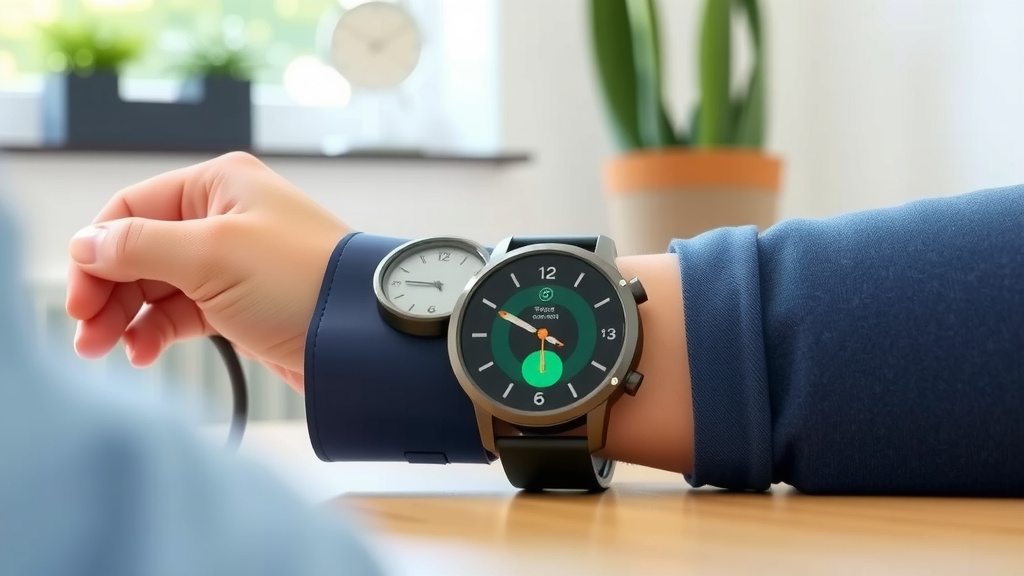
The Omron HeartGuide often comes up as a top pick. It’s designed specifically for blood pressure monitoring. It actually has a small, inflatable cuff that wraps around your wrist. This makes it very similar to a doctor’s cuff, but in a watch form.
We found that the HeartGuide is FDA-cleared for both blood pressure measurement and atrial fibrillation (AFib) detection. This dual capability is impressive. It allows for regular monitoring right from your wrist. You can take readings anytime, anywhere. This offers peace of mind.
It syncs with the Omron Connect app. This app helps you track trends over time. You can easily share this data with your doctor. Many experts suggest this level of detail is vital for managing hypertension (National Institutes of Health).
Pros of the Omron HeartGuide
- FDA-cleared for blood pressure and AFib.
- Uses an inflatable cuff for accurate readings.
- Medical-grade device in a wearable format.
- Provides detailed tracking and reporting.
Considerations for the Omron HeartGuide
- It’s larger than many standard smartwatches.
- It’s priced at a premium compared to other wearables.
- Its primary focus is health monitoring, not as many “smart” features as others.
Other Smartwatches with Blood Pressure Features (with Caveats)
You might see other smartwatches claiming blood pressure tracking. It’s important to look closely at their claims. Many of these are not FDA-cleared for blood pressure measurement. Instead, they might use optical sensors to estimate blood pressure.
For instance, some popular brands might offer features that can detect irregular heart rhythms. They might also have algorithms that attempt to estimate blood pressure trends. However, these estimates are not a substitute for actual medical measurement. They should not be relied upon for diagnosis or treatment decisions. This is a key point to remember.
We found that the accuracy of these estimation methods can vary greatly. Factors like skin tone, movement, and even hydration can affect readings. So, while they might offer a general idea, they lack the precision of a cleared device. Think of it as a general weather forecast versus a detailed meteorological report.
When to Consult Your Doctor
No matter what device you choose, your doctor should always be your first point of contact. Smartwatches are tools to help you gather information. They are not replacements for professional medical advice.
When you’re considering a smartwatch for blood pressure, discuss it with your healthcare provider. They can help you understand what readings mean for your specific health situation. They can also guide you on which devices, if any, might be suitable for you.
We found that sharing your recorded data with your doctor can lead to more informed conversations. It can help in adjusting medications or lifestyle changes. This collaboration is key to managing your health effectively (Cleveland Clinic).
Key Features to Look For in Your Blood Pressure Smartwatch Checklist
To help you navigate your choices, here’s a quick checklist:
- Is it FDA-cleared for blood pressure monitoring?
- Does it use a reliable measurement method (like a cuff)?
- Is the companion app easy to understand and use?
- How often does it need to be recharged?
- Does it offer the other smartwatch features you need?
- Can you easily share data with your doctor?
Conclusion
Choosing the best smartwatch for blood pressure means prioritizing accuracy and reliability. Your health is important, and it’s smart to use technology to monitor it. Remember, the Omron HeartGuide stands out for its FDA-cleared, medical-grade technology. Other devices might offer estimations, but for dependable readings, look for clearance. Your smartwatch can be a powerful tool. Always discuss your readings and any new device with your doctor. They are your best guide for managing your health.
Frequently Asked Questions
Can I trust a smartwatch to tell me my exact blood pressure?
For accurate blood pressure readings, you need a device that is FDA-cleared for this purpose. Devices like the Omron HeartGuide use an inflatable cuff, similar to what your doctor uses, for greater precision. Estimation methods on other smartwatches are less reliable for medical decisions.
Are there many smartwatches that can actually measure blood pressure?
Currently, the number of smartwatches with FDA-cleared blood pressure monitoring is limited. The Omron HeartGuide is a primary example. Many other wearables may track heart rate or estimate blood pressure trends, but these are not the same as cleared medical measurement.
How often do I need to calibrate a blood pressure smartwatch?
Smartwatches that use a built-in inflatable cuff often require periodic calibration. You might need to compare its readings with a traditional blood pressure cuff regularly. This helps ensure your smartwatch continues to provide accurate measurements over time. Smartwatches that use a built-in inflatable cuff often require periodic calibration.
What’s the difference between estimating blood pressure and actually measuring it on a watch?
Estimating blood pressure usually involves optical sensors and algorithms that look at trends. Actual measurement, like the Omron HeartGuide’s cuff, directly measures the pressure in your artery. Cleared measurement devices are far more dependable for health management.
Can a smartwatch replace my regular blood pressure checkups with my doctor?
No, a smartwatch cannot replace your doctor’s care. It’s a tool to help you gather data between visits. Always share your smartwatch readings with your healthcare provider. They will interpret the data in the context of your overall health and make medical recommendations.