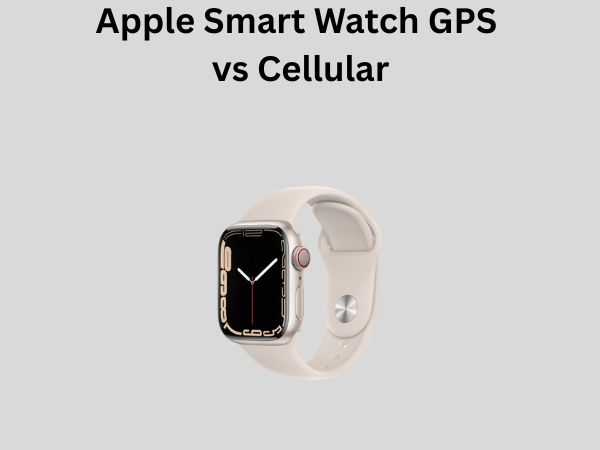
Apple Smart Watch GPS vs Cellular: What’s the Real Difference?
When you’re standing in the Apple Store looking at those gleaming smart watches on display, you’ve probably noticed something confusing on the price tags. There’s a GPS version, and then there’s a GPS + Cellular version, and the cellular one costs more. But what exactly are you paying for? Is it worth the extra money, or are you just throwing cash at features you’ll never use? That’s what we’re diving into today.
I get asked this question constantly. People want to know if they really need cellular connectivity on their wrist, or if the regular GPS model will do just fine. The truth is, the answer depends entirely on how you plan to use your Apple Watch, and I’m here to help you figure out which one actually makes sense for your lifestyle.
Understanding the Basics: GPS vs Cellular Technology
Let’s start with something fundamental. Both versions of the Apple Watch have GPS built in. That’s not the difference. The real difference is what happens when you want to do something that requires an internet connection and your iPhone isn’t nearby.
Think of it this way: GPS is like having a map. It tells you where you are. Cellular is like having a phone line. It lets you communicate and access data. A standard GPS Apple Watch is like having a GPS device in your car, but no way to call for help if something goes wrong. The cellular model? That’s like having a phone in your car too.
How GPS-Only Watches Work
The GPS-only Apple Watch uses satellite technology to pinpoint your exact location. It’s incredibly accurate, and it works great for tracking your runs, hikes, and general navigation. But here’s the catch: that’s pretty much where it stops. If you want to send a message, take a call, or stream music, you need your iPhone nearby.
The watch connects to your phone via Bluetooth, and your phone does all the heavy lifting. Your watch is essentially a remote control for your phone when you’re away from it, but only within Bluetooth range, which is typically about 30 to 40 feet in ideal conditions.
How Cellular-Enabled Watches Operate
The cellular version is different. In addition to GPS, it has an embedded eSIM that connects directly to your cellular network. This means your watch has its own phone number and can operate completely independently from your iPhone. You can leave your phone at home and still get calls, texts, and access services that require an internet connection.
It’s like the difference between a child who can only talk to their parent through a walkie-talkie versus a child who has their own phone. Both can communicate, but one has a lot more independence.
The Price Difference: Is It Really Worth It?
Let’s talk money, because that’s usually the deciding factor for most people. The cellular model typically costs between 100 and 150 dollars more than the GPS version, depending on which generation you’re buying. That’s a significant jump, and you need to decide if the features justify the expense.
Additional Cost Considerations Beyond the Watch
Here’s something a lot of people forget to factor in: adding cellular service to your Apple Watch isn’t free. Your carrier will charge you an additional monthly fee. We’re talking somewhere between 10 and 15 dollars per month on top of whatever you’re already paying for your phone service. Over two years, that’s 240 to 360 dollars in additional costs on top of the higher upfront price.
So before you commit to the cellular model, you need to be honest with yourself. Is this a feature you’ll actually use enough to justify an extra 100 dollars upfront plus 10 to 15 dollars every single month?
Situations Where GPS-Only Makes Perfect Sense
Let me paint you a picture of the ideal GPS-only watch owner. You go to the gym five times a week. You want accurate tracking of your workouts without carrying your phone. You go on weekend hikes and want to know where you are. You run errands around town and like having your watch to check messages and respond with voice commands.
In all of these scenarios, your iPhone is either at home or in your bag nearby. The GPS watch handles everything beautifully because your phone is never far away when you need something beyond basic fitness tracking.
The GPS Model for Home-Bodies
If you’re someone who rarely ventures far from your phone, the GPS model is absolutely sufficient. Let’s be honest, most of us aren’t running marathons in remote locations. We’re moving around our homes, our workplaces, and our neighborhoods. In these familiar territories, your phone is usually within Bluetooth range anyway.
Fitness Enthusiasts and Casual Athletes
Runners, cyclists, and gym-goers get tremendous value from the GPS-only model. You get all the fitness tracking, accurate distance measurements, and route mapping. The GPS chip handles everything related to your exercise, and that’s genuinely what most people actually care about when they buy an Apple Watch.
When Cellular Actually Becomes Necessary
Now let’s talk about when paying that premium for cellular actually makes legitimate sense. If you’re someone who regularly leaves the house without your phone, or you spend significant time away from it, cellular becomes way more valuable.
The True Independent User
Imagine you’re a serious runner who does long-distance training runs. You love listening to music, but you don’t want the weight of your phone bouncing against you for five miles. With a cellular watch, you can leave your phone at home completely, and your watch becomes a standalone device. You can take calls, you can use Siri to text people, and you can stream music directly from Apple Music to your watch.
That’s genuine freedom that the GPS-only model simply can’t provide.
Professional Scenarios and Lifestyle Needs
Some people have jobs that require them to be reachable at all times but they don’t want the distraction of their phone. A server in a restaurant, a security guard making rounds, or a parent at the park with their kids can all benefit from cellular. Your Apple Watch becomes your communication device, keeping you connected without needing to have your phone on you.
Peace of Mind and Safety
There’s also the peace of mind factor. Some people feel more secure knowing that their watch can call for help if something goes wrong, even if their phone is miles away. If you’re hiking in a remote area or traveling alone, that’s a legitimate safety feature that actually has value.
Comparing Network Connectivity Features
Let’s dig deeper into what these different connectivity options actually mean in real-world usage.
Bluetooth Connectivity and iPhone Pairing
Both GPS and cellular models connect to your iPhone via Bluetooth. This is how they sync your data, receive notifications, and handle most functions. The Bluetooth range is roughly 30 to 40 feet, though walls and other obstacles can reduce this. As long as you’re in range, your watch functions beautifully whether it’s GPS or cellular.
WiFi Connectivity Options
Here’s something people often overlook: both models can connect to WiFi. If you’re at home or at work where you have WiFi access, your GPS-only watch can do almost everything the cellular model does. It can send messages, make calls, and access data. The main advantage of WiFi is that it extends your connectivity range far beyond Bluetooth.
LTE and 5G Capabilities
The cellular model uses your carrier’s network to connect. Depending on your watch model and carrier, you might have access to LTE or even 5G. This is what sets it apart. When you’re out of WiFi range and your phone isn’t nearby, the cellular model can still communicate because it has its own direct connection to the network.
Real-World Performance Comparison
Let’s talk about how these watches actually perform in everyday situations, because that’s what really matters.
Daily Notifications and Communication
For receiving notifications, notifications, and responding to messages, both models perform identically when your phone is nearby. You get the same haptic feedback, the same display quality, and the same ability to respond with Siri voice commands. The difference only shows up when you’re separated from your phone.
Music Streaming and Media Playback
Both models can store music and play it through a Bluetooth speaker or wireless earbuds. The cellular model can stream music directly from Apple Music when connected to cellular, WiFi, or Bluetooth. The GPS model needs WiFi or your nearby iPhone to stream anything. This is a real advantage for the cellular model if you care about music during workouts without your phone.
Emergency and Health Features
The Emergency SOS feature works on both models. GPS-only watches can make emergency calls if they’re connected to WiFi or within Bluetooth range of your iPhone. Cellular models can call for help anytime, anywhere, which is genuinely more reliable from a safety standpoint.
Battery Life Implications
Here’s something worth mentioning: the cellular model uses slightly more battery power than the GPS model. The cellular radio consumes extra energy, which means you might see marginally shorter battery life. We’re not talking about a dramatic difference, but if you’re already a power user who charges daily, this is worth considering.
Managing Battery Expectations
Both models claim roughly all-day battery life, typically around 18 hours under normal usage. In practice, this means charging every night, whether you choose GPS or cellular. The difference is minimal enough that it shouldn’t be a deciding factor, but it’s worth knowing that cellular uses a bit more juice.
Making Your Decision: Questions to Ask Yourself
Rather than telling you which one to buy, let me ask you some questions that will probably make the answer obvious.
Smartphone Dependency Evaluation
First question: how often are you truly separated from your iPhone? Not by choice, but in situations where you genuinely don’t have it with you? If the answer is rarely or never, you don’t need cellular.
Second question: when you are separated from your phone, do you actually need to be reachable? Some people prefer disconnecting for a couple of hours. Others need to stay in touch. This matters.
Fitness and Activity Patterns
How important is it to you to leave your phone behind during workouts? Do you listen to music during exercise? Would you want the freedom to run five miles without anything on your body except your watch? If these things excite you, cellular becomes more appealing.
Lifestyle and Work Requirements
Does your job require you to be reachable even when you’re away from your desk? Do you spend time in places where people might need to contact you while you’re purposely not carrying your phone? These are legitimate reasons to consider cellular.
The Verdict: GPS vs Cellular for Different Users
Let me break this down by user type, because I think that’s the clearest way to help you decide.
Best for GPS-Only Models
- Home and office workers who always have their phone nearby
- Budget-conscious buyers who want all the core Apple Watch features
- People who primarily want fitness tracking and notifications
- Those comfortable charging their watch daily anyway
- Users with limited cellular coverage in their area
Best for Cellular Models
- Serious athletes who train without their phones
- People with jobs requiring constant availability
- Frequent travelers who want independence from their phones
- Those prioritizing safety and emergency connectivity
- Users willing to pay extra for standalone functionality
Future-Proofing Your Decision
One more thing to consider: where is technology heading? Cellular connectivity in wearables is becoming more common, not less. Networks are improving, and the technology is maturing. If you think you might want these features in a year or two, buying cellular now prevents you from regretting the choice later.
That said, the GPS model is no less capable as a smartwatch. It does everything Apple Watch is supposed to do, and it does it beautifully. You’re not settling for less by choosing GPS-only; you’re just choosing what you actually need rather than what sounds impressive on paper.
Conclusion
The Apple Watch GPS versus cellular debate isn’t actually that complicated once you stop thinking about the specs and start thinking about your actual life. The GPS model is excellent if your iPhone is usually nearby, and it saves you a hundred dollars upfront plus recurring monthly fees. The cellular model is genuinely valuable if you regularly need your watch to function independently.
There’s no wrong choice here, only the choice that’s wrong for you specifically. Think about how you actually use your devices, not how you think you should use them. That clarity will make your decision obvious. Whatever you choose, you’re getting a remarkable piece of technology that will serve you well. Just make sure you’re paying for the features you’ll actually use, and you’ll be perfectly happy with your purchase.
Frequently Asked Questions
Can I upgrade from GPS to Cellular later if I change my mind?
Unfortunately, no. The GPS and cellular models are completely separate products. Once you buy one, you’re committed to that version. You can’t add cellular to a GPS watch after purchase, so you need to make this decision upfront. That’s another reason to think carefully about which one suits your actual lifestyle.
Do I need a separate phone plan for the cellular watch?
Yes, cellular service requires an additional monthly subscription through your carrier. Most carriers charge between 10 and 15 dollars per month to add your watch to your account. Some offer family plans that include watch connectivity, so check with your provider about options. This cost definitely factors into the total cost of ownership.
Can a GPS watch do everything the cellular watch does if I stay close to my iPhone?
Essentially yes. If your iPhone is within Bluetooth range, the GPS watch can handle calls, messages, notifications, and most functions the cellular watch can do. The only advantage cellular has in this scenario is slightly extended range and the ability to function completely independently when you need it. For most people’s daily lives, the GPS model paired with a nearby iPhone does everything they need.
Is the cellular watch worth it for occasional runners and fitness enthusiasts?
It depends on your specific situation. Casual runners who occasionally leave their phones behind benefit from GPS-only. Serious distance runners who frequently train without their phone get real value from cellular. If you’re somewhere in between, think about whether you’d realistically use that independence. If you’re not sure, GPS-only is the safer financial choice.
What happens if I buy cellular and later decide I don’t need it?
You can simply not activate or maintain the cellular service, effectively using it like a GPS-only watch. However, you’re still stuck with the hardware you bought, and you don’t recover the extra money you spent on it. This is why making the right choice upfront matters. Think seriously about your needs before purchasing the more expensive model.
“`
![7 Best Aviation Smart Watches [2026]](https://smartwatchbest.com/wp-content/uploads/2026/06/7-best-aviation-smart-watches-2026-featured-768x432.jpg)
![7 Best Smart Watch Blood Pressure Monitor [2026]](https://smartwatchbest.com/wp-content/uploads/2026/08/7-best-smart-watch-blood-pressure-monitor-2026-featured-768x432.jpg)
![7 Best Smart Watch Cellular [2026]](https://smartwatchbest.com/wp-content/uploads/2026/08/7-best-smart-watch-cellular-2026-featured-768x432.jpg)