
Smart Watch vs Smart Band Which Is Right For You
Choosing between a smartwatch and a smart band often comes down to your priorities. A smartwatch offers more apps and features like a mini smartphone on your wrist, while a smart band focuses on fitness tracking with a simpler design. You really need to consider if you want a do-it-all device or a dedicated fitness companion.
Both gadgets can track your steps, heart rate, and sleep. But a smartwatch typically has a larger screen and can handle calls, messages, and even mobile payments. A smart band is usually more affordable and has a longer battery life, making it great for pure activity monitoring.
TL;DR:
- Smartwatches are like mini smartphones; smart bands are fitness trackers.
- Smartwatches have more apps, larger screens, and more features.
- Smart bands are simpler, cheaper, and often have better battery life.
- Your choice depends on whether you prioritize apps or fitness tracking.
Let’s break down the key differences to help you decide which one is the perfect fit for your lifestyle. This guide can help you decide which one is the perfect fit for your lifestyle.
Smartwatch vs. Smart Band: What’s the Real Difference?
Deciding between a smartwatch and a smart band can feel like picking between a Swiss Army knife and a really good pocket knife. Both have their uses, but they excel in different areas. You’re probably wondering which one will actually make your daily life easier and help you reach your goals.
At their core, smartwatches and smart bands are both wearable devices that connect to your smartphone. They often share basic fitness tracking abilities. But the path they take diverges significantly from there. Think of it this way: a smartwatch is designed to be a mini-computer on your wrist, while a smart band is focused on being your personal health and activity coach.
Core Functionality: What They Both Do
Before we get into the nitty-gritty, let’s talk about what most of these devices have in common. You can expect both to be pretty good at keeping tabs on your physical activity. This is where the smart band really shines, often providing a more focused experience.
Fitness Tracking Basics
Both devices can count your steps and track your distance. They also commonly monitor your heart rate throughout the day and during workouts. Sleep tracking is another popular feature. You’ll get data on how long you slept and perhaps how much time you spent in different sleep stages, like deep or REM sleep. Many people find this data helpful for understanding their daily habits (CDC).
Research from institutions like the National Institutes of Health (NIH) shows that consistently monitoring these metrics can encourage healthier behaviors. Simply seeing your step count or sleep duration can be a powerful motivator.
Connectivity Features
Most smart bands and all smartwatches will connect to your smartphone via Bluetooth. This allows them to receive notifications from your phone. You might get alerts for incoming calls, text messages, and notifications from your favorite apps. This is a handy way to stay informed without constantly pulling out your phone.
Smartwatch: The All-in-One Wrist Computer
When you think of a smartwatch, picture a device that does a little bit of everything. It aims to replace or supplement your smartphone for many tasks, right from your wrist. The screen size and interface are usually designed for more interaction.
Advanced Features and Apps
Smartwatches go beyond basic tracking. They often have their own operating systems, allowing you to install and run various apps. Think of weather apps, music players, and even navigation tools. Some high-end models can even make contactless payments using services like Apple Pay or Google Pay. This convenience can really change how you manage your day.
The app ecosystem is a big differentiator. You can customize your smartwatch with apps that fit your specific needs. Whether you want to track your stocks, control your smart home devices, or just get quick news updates, there’s likely an app for that. We found that users who engage with these extra apps often feel more connected to their digital lives.
Communication Capabilities
Many smartwatches allow you to respond to messages directly from your wrist. You might be able to dictate a reply or use pre-set quick responses. Some models even have built-in speakers and microphones, letting you take phone calls without reaching for your phone. This is especially useful when you’re exercising or have your hands full.
Display and Design
Smartwatches typically feature larger, full-color displays. These screens are often touch-sensitive and designed for easy navigation. The aesthetic is usually more akin to a traditional watch, with a variety of styles, bands, and watch faces to choose from. You can often dress them up or down to match your outfit or occasion.
Smart Band: The Focused Fitness Companion
A smart band, on the other hand, is built with a singular purpose: to help you track your fitness and health. While they’ve become more sophisticated over the years, their primary focus remains on activity and wellness. They tend to be more discreet and simpler to use.
Simplicity and Ease of Use
Smart bands are generally easier to set up and use. Their interfaces are usually simpler, often relying on swipes and taps on a smaller screen. This makes them ideal for people who want a device that just works without a lot of fuss. You won’t find hundreds of apps to manage.
Battery Life Champion
One of the biggest advantages of smart bands is their exceptional battery life. Because they have fewer power-hungry features, many smart bands can last anywhere from several days to even a couple of weeks on a single charge. This means less time tethered to a charger and more time tracking your progress. Many users report preferring this “set it and forget it” approach.
Affordability Factor
Generally speaking, smart bands are more affordable than smartwatches. If your main goal is to monitor your workouts, track your steps, and get basic health metrics without breaking the bank, a smart band is often the more budget-friendly choice. You get a lot of bang for your buck in terms of core fitness features.
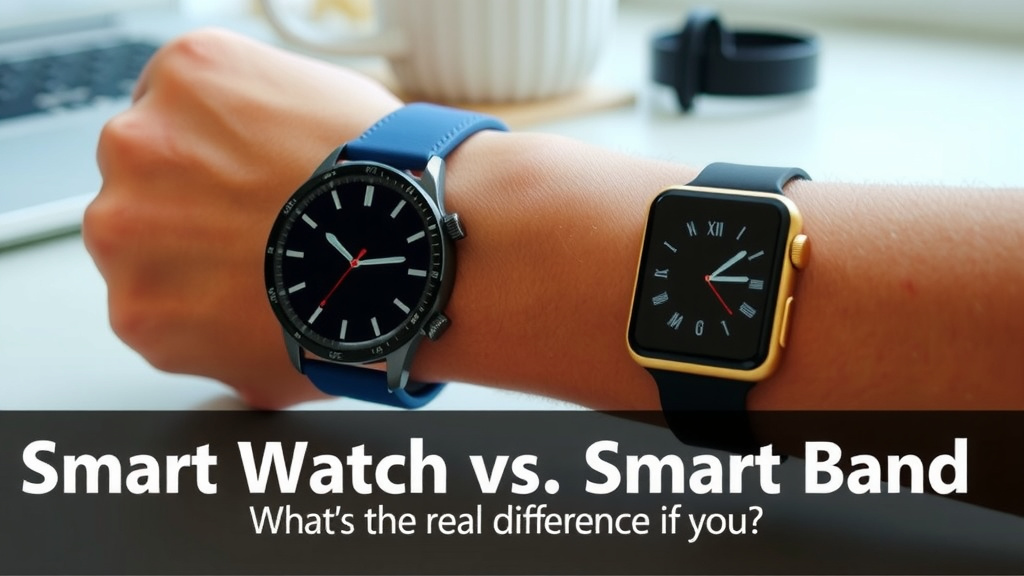
Key Differences at a Glance
To help you visualize the distinctions, let’s look at a quick comparison:
| Feature | Smartwatch | Smart Band |
|---|---|---|
| Primary Focus | All-in-one device, apps, communication | Fitness tracking, health monitoring |
| Screen | Larger, full-color, touch-enabled | Smaller, often monochrome or basic color |
| Apps | Extensive app store, customizable | Limited or no third-party apps |
| Communication | Calls, extensive messaging replies | Notifications, basic replies (if any) |
| Battery Life | Typically 1-3 days | Several days to 2 weeks |
| Price | Higher | Lower |
Making Your Choice: What Matters Most to You?
So, how do you pick the right one for your wrist? It really boils down to what you want the device to do for you. Are you looking for a gadget that can help you leave your phone behind more often, or are you primarily interested in tracking your activity and improving your health?
Consider Your Lifestyle and Goals
If you love gadgets, want to manage notifications easily, and appreciate having an extended functionality right on your wrist, a smartwatch might be your best bet. If you’re an athlete, a fitness enthusiast, or someone who wants to start moving more, a smart band could be the perfect, distraction-free companion. Many experts suggest that for pure fitness, the simpler device often leads to better engagement (Mayo Clinic).
Quick Checklist for Your Decision:
- Do you want to run apps from your wrist?
- Do you need to take calls or reply to texts easily on the go?
- Is a large, colorful display important for quick glances?
- Is maximizing battery life a top priority for you?
- Are you looking for the most affordable option for fitness tracking?
- Do you prefer a simpler, more focused device experience?
By answering these questions, you’ll get a clearer picture of whether a smartwatch’s broad capabilities or a smart band’s focused approach aligns better with your personal needs and daily routines.
Conclusion
You’ve learned that the choice between a smartwatch and a smart band boils down to your personal needs. A smartwatch offers a mini-computer experience with apps and communication, perfect for staying connected. A smart band excels as a dedicated fitness tracker, providing essential health metrics with simplicity and long battery life. If you’re looking for a device that mirrors your phone’s functionality, go for a smartwatch. If your priority is focused fitness tracking without the bells and whistles, a smart band is likely your best bet. Take a moment to consider your daily routine and your health goals to make the right pick for your wrist.
Frequently Asked Questions
Can a smart band really replace my smartwatch?
For most people, a smart band can effectively replace a smartwatch if their primary need is fitness tracking and basic notifications. If you rely heavily on third-party apps, making calls, or mobile payments from your wrist, a smart band won’t offer that level of functionality.
Which is better for sleep tracking: a smartwatch or a smart band?
Both devices offer sleep tracking, and the accuracy can vary by model rather than by category. Smart bands are often more comfortable for sleeping due to their lighter, simpler design, which might lead to more consistent tracking for some users.
Do I need a smartphone to use either a smartwatch or a smart band?
Yes, you generally need a smartphone to set up and manage both smartwatches and smart bands. They use your phone for initial pairing, syncing data, and accessing most companion app features, though some smartwatches can function more independently once set up.
Are smartwatches too complicated for beginners?
Smartwatches can have a learning curve due to their many features and apps. However, many newer models are designed with user-friendly interfaces. Smart bands are typically much simpler to navigate and are often recommended for those new to wearable tech.
Can I use a smart band for workouts if I don’t have my phone?
Most smart bands can track workouts independently, storing data directly on the device. You can then sync this information to your smartphone later. Some higher-end smart bands even include GPS, allowing for phone-free activity tracking with distance and pace data.
![7 Best Smart Watch For Android [2026]](https://smartwatchbest.com/wp-content/uploads/2026/06/7-best-smart-watch-for-android-2026-featured-768x432.jpg)
![7 Best High End Smart Watch [2026]](https://smartwatchbest.com/wp-content/uploads/2026/08/7-best-high-end-smart-watch-2026-featured-768x432.jpg)
![7 Best Smart Watch Blood Pressure Monitor [2026]](https://smartwatchbest.com/wp-content/uploads/2026/08/7-best-smart-watch-blood-pressure-monitor-2026-featured-768x432.jpg)