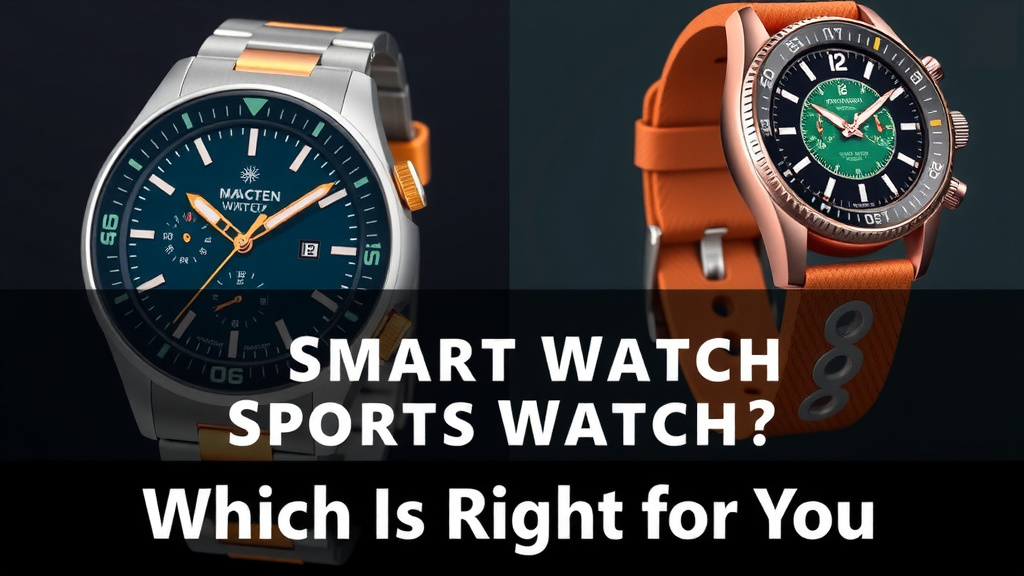
Smart Watch vs Sports Watch: Which Is Right for You
When choosing between a smartwatch vs. sports watch, the key difference is that a smartwatch is a versatile everyday companion, while a sports watch is a specialized fitness tool. Think of it this way: a smartwatch does a bit of everything, handling notifications and apps, while a sports watch focuses on tracking your workouts with precision.
You might be wondering which is right for your lifestyle. We found that smartwatches excel at connectivity and smart features. Sports watches, on the other hand, offer advanced metrics for specific activities, like running dynamics or swim stroke analysis. Many experts agree that the best choice depends on your primary needs.
- Smartwatches are for daily life and general fitness.
- Sports watches are for serious athletes and detailed tracking.
- Consider how much you’ll use smart features versus fitness-specific ones.
- Your budget will also play a role.
Let’s walk through the details to help you decide which wristwear best fits your routine.
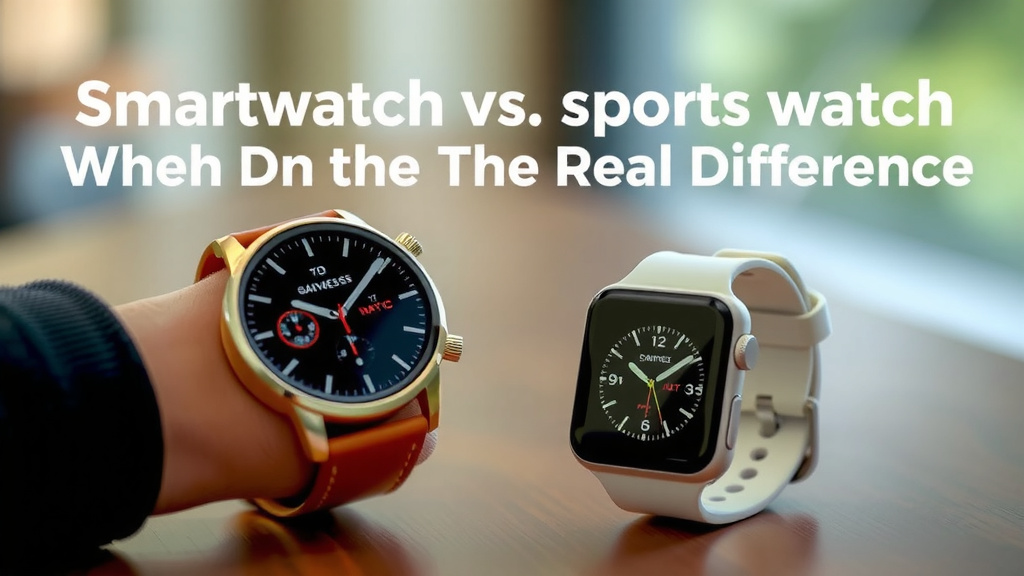
Smartwatch vs. Sports Watch: What’s the Real Difference?
Deciding between a smartwatch and a sports watch can feel like choosing between a Swiss Army knife and a chef’s knife. Both are useful tools, but they excel in different areas. We’ve found that the main distinction lies in their primary purpose and the depth of their features. Think of it this way: a smartwatch aims to be your do-it-all device for daily life, while a sports watch is built for serious athletic pursuits.
Understanding the Core Functions
At their heart, these watches serve different masters. A smartwatch is designed to keep you connected and informed throughout your day. A sports watch is engineered to meticulously track and analyze your physical activities. Let’s break down what each one typically brings to the table.
The Smartwatch: Your Connected Companion
When you think of a smartwatch, imagine a mini-computer on your wrist. Its strength lies in its versatility. You’ll often see features like receiving calls and texts, checking emails, controlling music, and even making contactless payments. Many smartwatches also include basic fitness tracking, like step counting and heart rate monitoring. We found that for many users, these everyday conveniences are a big draw.
For example, imagine you’re in a meeting. Instead of pulling out your phone, you can discreetly glance at your wrist to see if that incoming notification is urgent. It’s about convenience and staying in the loop without constant phone fumbling. Many experts suggest smartwatches are perfect for individuals who want a device that handles general wellness and daily tasks equally well.
Everyday Features You’ll Love
- Notifications: Get alerts for calls, texts, emails, and app updates right on your wrist.
- Apps: Access a variety of applications, from weather forecasts to news headlines.
- Payments: Many models offer NFC for contactless payments.
- Music Control: Manage your playlists and podcasts without reaching for your phone.
- Voice Assistants: Use commands to set reminders, ask questions, or control smart home devices.
The Sports Watch: Your Dedicated Training Partner
Now, let’s talk about the sports watch. This device is built with a singular focus: performance tracking. If you’re serious about a particular sport—running, cycling, swimming, hiking—a sports watch offers a level of detail you just won’t find on a standard smartwatch. We’ve seen that these watches are packed with advanced sensors and specialized algorithms.
Think about a marathon runner. A sports watch can provide real-time pace, cadence, stride length, and even ground contact time. It’s about getting granular data to help you improve your technique and performance. This level of detail is crucial for athletes looking to shave seconds off their time or prevent injuries. Many sports watch manufacturers are keen on providing highly accurate GPS and sophisticated heart rate monitoring.
Advanced Metrics for Athletes
- Precision GPS: Highly accurate tracking of distance, pace, and routes.
- Advanced Heart Rate: More reliable readings during intense exercise.
- Sport-Specific Modes: Tailored tracking for dozens of activities, from triathlons to skiing.
- Performance Analysis: Metrics like VO2 max, training load, and recovery time recommendations.
- Durability: Often built with tougher materials to withstand harsh conditions.
Who Is Each Watch For?
So, who should lean towards which device? It’s really about what you want your watch to accomplish for you. We’ve found that the line can blur, as many sports watches now include smartwatch features and vice versa.
The Smartwatch User Profile
You’re probably a good fit for a smartwatch if your daily routine involves a mix of work, social activities, and general fitness. You want to stay connected, get quick information, and perhaps track your daily steps and workouts without needing deep analytical tools. Think of someone who enjoys the convenience of checking notifications or paying for coffee without their phone. We found that for many, this convenience factor is key.
The Sports Watch User Profile
On the other hand, a sports watch is likely your best bet if you have a primary athletic passion. You might be training for a specific event, regularly participate in competitive sports, or simply want to understand your body’s performance in great detail. If you obsess over your running pace, cycling power output, or swim efficiency, a sports watch will be your go-to. Experts like those at the American College of Sports Medicine suggest that detailed physiological data can aid in training optimization (ACSM).
Key Features Compared
Let’s put some of the main differences side-by-side. This might help you visualize what each device prioritizes. We think comparing them directly is often the most effective way to decide.
Here’s a quick look:
| Feature | Smartwatch | Sports Watch |
|---|---|---|
| Primary Focus | Connectivity, Apps, Daily Life | Activity Tracking, Performance Metrics |
| Fitness Tracking Depth | Basic (steps, HR, sleep) | Advanced (GPS, sport modes, recovery) |
| App Ecosystem | Extensive, varied | Primarily fitness-focused |
| Battery Life | Often 1-3 days | Can range from days to weeks (depending on GPS use) |
| Durability | Standard | Often rugged, water-resistant |
| Connectivity | High (Bluetooth, Wi-Fi, sometimes LTE) | High (GPS, Bluetooth) |
Battery Life: A Crucial Consideration
One area where these watches can significantly differ is battery life. If you’re someone who forgets to charge devices, this is important. We found that smartwatches, with their always-on displays and constant connectivity, tend to need charging more frequently.
Many smartwatches are designed to be charged nightly, much like your smartphone. This ensures all their smart features are ready for you each morning. Conversely, many sports watches are built to last through long training sessions or multi-day events. Some models can last for weeks on a single charge if you’re not constantly using GPS. This If you prefer less frequent charging, our guide on how to check your smartwatch battery can help you manage power.endurance is a major plus for adventurers and ultra-marathoners.
Price Points to Consider
Your budget will undoubtedly play a role. Generally speaking, basic smartwatches can be quite affordable. High-end smartwatches with premium materials and cellular connectivity can cost as much as a good sports watch. On the other hand, entry-level sports watches are often more budget-friendly than their advanced counterparts.
However, when you start looking at top-tier sports watches with advanced analytics, specialized features, and robust build quality, the price can climb rapidly. We suggest checking out reviews and comparing specific models within your budget to see what features you can get. Remember, the most expensive watch isn’t always the best one for your needs.
Making Your Final Decision: A Quick Checklist
To help you narrow down your choice, ask yourself these questions:
- Do you want to answer calls and texts from your wrist?
- Are you primarily focused on detailed fitness metrics for a specific sport?
- How important is battery life for your daily routine?
- Do you need advanced features like contactless payments or music storage?
- Is durability a major concern due to your activities?
- What is your realistic budget for a new wearable?
Answering these can point you clearly in one direction. Many users find that by focusing on their top two or three priorities, the decision becomes much simpler. We want you to find a device that truly enhances your life, whether it’s for staying connected or pushing your athletic limits.
Conclusion
Choosing between a smartwatch and a sports watch comes down to your personal priorities. If you want a device for daily connectivity, app access, and general fitness tracking, a smartwatch is likely your best friend. For dedicated athletes needing in-depth performance data and sport-specific metrics, a sports watch is the specialized tool you need. We’ve seen that many models blur the lines, offering a mix of features. Before you buy, think about which aspects—daily convenience or athletic precision—will most enhance your routine. Visit a store or read detailed reviews to see which device truly fits your lifestyle.
Frequently Asked Questions
Can a sports watch replace my daily smartwatch?
Many modern sports watches now include smartwatch features like notifications and basic apps. You might find that if your smartwatch needs are simple, a high-end sports watch can cover both your training and daily connectivity. However, it may not have the same extensive app selection or user-friendly interface for non-fitness tasks as a dedicated smartwatch.
Will a smartwatch track my workouts accurately enough?
For general fitness tracking like steps, heart rate, and basic activity logging, most smartwatches offer good accuracy. If you’re training for performance or participating in endurance sports, you might find their GPS and advanced metric tracking less precise than a dedicated sports watch. We recommend checking reviews for specific models if workout accuracy is a top concern.
What is the main difference in battery life?
Smartwatches often have shorter battery life, typically lasting one to three days, due to their power-hungry displays and constant connectivity. Sports watches, especially those focused on GPS tracking, can last much longer, with some models lasting days or even weeks on a single charge when not using GPS heavily. This makes sports watches better for long events or users who prefer less frequent charging.
Are sports watches less durable than smartwatches?
Generally, sports watches are built with durability in mind for rugged use. They often feature tougher materials, better water resistance, and more robust designs to withstand outdoor activities and intense workouts. While many smartwatches are also durable, they might prioritize style or thinness, making them more susceptible to damage in harsh conditions.
Can I use my sports watch for contactless payments?
The availability of contactless payment features like NFC varies greatly by sports watch model. While common on many smartwatches, it’s not a standard feature on all sports watches. You’ll need to check the specific product specifications for any sports watch you’re considering if mobile payments are important to you.