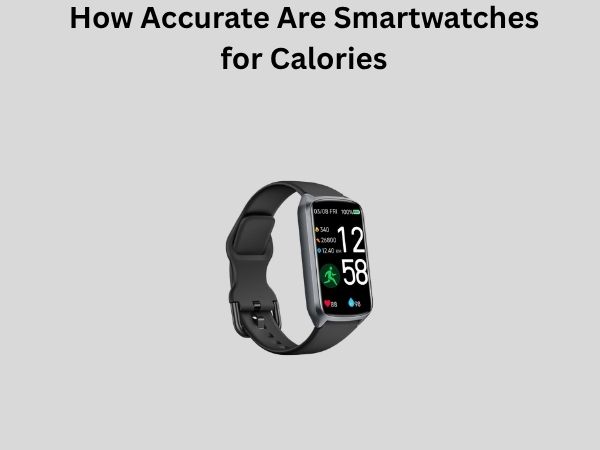
How Accurate Are Smartwatches for Calories? The Truth About Burn Rates
You’re strapping on your smartwatch, hitting the gym, and watching those calorie numbers climb on your wrist. It feels great, right? But here’s the question that keeps many fitness enthusiasts up at night: just how accurate are these devices when it comes to tracking the calories you actually burn? Let me be honest with you—the answer is more nuanced than you might think, and understanding it could completely change how you approach your fitness goals.
Understanding What Smartwatches Actually Measure
Before we dive into accuracy, we need to talk about what smartwatches are really doing when they claim to count your calories. These devices aren’t mind readers. They can’t look inside your body and measure the actual energy you’re expending at the cellular level. Instead, they’re making educated guesses based on the data they can collect.
Think of it like this: a smartwatch is essentially playing detective. It’s gathering clues—your heart rate, your movement patterns, the intensity of your workout—and then using algorithms to piece together a story about how many calories you’ve burned. The problem? Every person’s body is different, and the “clues” your watch collects might not tell the complete story.
The Role of Heart Rate Monitoring
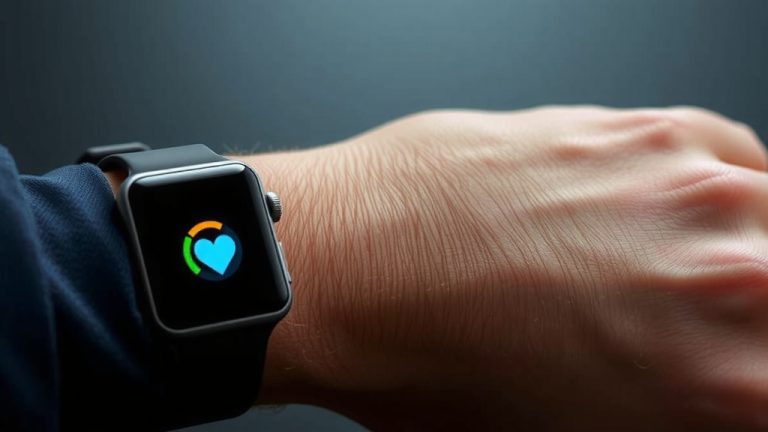
Heart rate is the primary tool smartwatches use to estimate calorie burn. When you exercise, your heart pumps faster to deliver oxygen to your muscles. Generally, the harder you work, the faster your heart beats. Most smartwatches use this relationship to calculate energy expenditure.
But here’s where things get tricky. Heart rate doesn’t tell the entire story. Two people could have identical heart rates while exercising, yet burn completely different amounts of calories. One person might be naturally more efficient at converting fuel into movement, while another person’s body works harder to achieve the same result.
Movement and Acceleration Data
Your smartwatch is also tracking your movement through accelerometers and gyroscopes. These sensors detect the speed, direction, and intensity of your movements. When you’re walking, running, or cycling, the device registers these movements and factors them into its calorie calculations.
However, movement sensors have limitations. They work great for activities like running or walking, where the motion is clear and consistent. But what about swimming? Strength training with controlled movements? Yoga? These activities might not register the same way, leading to underestimation of calories burned.
The Accuracy Problem: What Research Actually Shows
Let’s talk numbers. Multiple scientific studies have tested the accuracy of popular smartwatches and fitness trackers. The results are, well, all over the place.
Research published in various fitness technology journals shows that smartwatches typically have an error margin of anywhere from 20 to 40 percent. Some studies found even larger discrepancies, with certain devices being off by as much as 50 percent or more. To put that in perspective, if your watch says you burned 500 calories, you might have actually burned anywhere from 300 to 750 calories. That’s a massive range.
Why Accuracy Varies So Much
So why is the accuracy so inconsistent? Several factors contribute to this problem:
- Individual metabolic rates vary significantly from person to person
- Body composition isn’t considered—muscle burns more calories than fat at rest
- Age, gender, and fitness level all affect calorie burn but might not be properly weighted in the algorithm
- The type of activity matters—what works for running might not work for weightlifting
- Environmental factors like temperature and altitude can influence energy expenditure
- Medications and health conditions can alter how your body processes energy
These factors are incredibly difficult for a device on your wrist to account for, especially without continuous biochemical analysis.
The Basal Metabolic Rate Problem
Smartwatches need to know your basal metabolic rate—the number of calories your body burns just existing, without any exercise. Most devices ask you to input basic information like age, weight, height, and gender. Then they plug these numbers into a formula to estimate your BMR.
Here’s the issue: this formula is generic. It doesn’t know that you spent the last five years strength training and building muscle, or that you have a thyroid condition affecting your metabolism. Your actual BMR could be significantly different from what the formula predicts, which throws off all the calculations that follow.
Different Types of Activities and Their Accuracy
Cardio Activities: Where Smartwatches Perform Best
Steady-state cardio like running, cycling, or elliptical training is where smartwatches shine. Because your heart rate and movement are both elevated consistently, the device can more accurately estimate your energy expenditure. Studies show that smartwatches are generally within 15 to 20 percent accuracy for these activities.
That said, “within 20 percent” still means there’s room for error. If you’re relying on your watch to tell you exactly how many calories to eat back after a run, you could easily be overestimating or underestimating.
Strength Training and Resistance Work
This is where smartwatches really struggle. During weightlifting or resistance training, your heart rate might be elevated, but the actual calorie burn is often lower than the device predicts. Why? Because strength training isn’t continuous. You lift, you rest, you lift again. Your heart rate fluctuates but might not be a good indicator of the energy you’re actually expending.
Additionally, the afterburn effect—also called excess post-exercise oxygen consumption—is real but unpredictable. Your body continues burning extra calories for hours after a strength session as it repairs muscles and restores systems. Smartwatches often overestimate this effect, inflating the total calorie burn figures.
Low-Intensity Activities and Daily Movement
Walking around your house, doing light yard work, or casual daily activities present another challenge. Your heart rate might not elevate much, so the watch struggles to gauge how much energy you’re using. Some devices compensate by being overly generous with calorie assignments to low-intensity movement, while others underestimate. There’s no consistent standard.
Swimming and Water-Based Exercise
Most smartwatches can’t accurately track swimming because water interferes with their sensors. Some waterproof models try to estimate based on arm movements, but they’re often way off. If swimming is a major part of your exercise routine, smartwatch calorie data becomes even less reliable for you.
Individual Factors That Affect Accuracy
Body Composition Matters More Than You Think
Let’s say two people weigh exactly 180 pounds. One has 15 percent body fat; the other has 35 percent body fat. They’ll burn very different amounts of calories doing the same workout. The person with more muscle will burn significantly more energy because muscle tissue is metabolically active.
Your smartwatch doesn’t know your body composition. It just knows your weight. This is a fundamental limitation that no amount of algorithm refinement can completely overcome without additional hardware like bioelectrical impedance sensors.
Age, Gender, and Hormonal Factors
Your age affects how many calories you burn during exercise. Your gender typically influences the calculation too, since on average, men tend to have more muscle mass than women at the same weight. Hormonal fluctuations, especially for menstruating individuals, can also affect metabolic rate throughout the month.
Most smartwatches use these basic demographic factors in their calculations, but they can’t account for individual variations. Someone with a thyroid condition, PCOS, or other hormonal imbalances might have a metabolic rate quite different from the algorithm’s prediction.
Fitness Level and Training Status
Trained athletes have different cardiovascular responses than untrained individuals. Your heart rate at a given intensity is partly determined by how well-trained you are. A competitive runner’s heart rate during a moderate-pace run might be 130 beats per minute, while an untrained person’s could be 170 at the same speed.
Many smartwatch algorithms don’t adequately account for fitness level variations, which can lead to significant errors in athletic populations.
The Tech Behind Popular Smartwatch Brands
How Leading Brands Approach Calorie Calculation
Different smartwatch manufacturers use different approaches. Some rely heavily on heart rate, others incorporate GPS and movement data, and some even use machine learning to improve their algorithms over time.
Apple Watch uses a combination of heart rate, accelerometer data, and user-provided information to estimate calorie burn. Fitbit uses a proprietary algorithm that weighs multiple factors differently depending on the activity type. Garmin offers different calculations based on the specific sport profile you’re using.
While these advanced approaches are certainly better than basic calculations, they still can’t overcome the fundamental limitation: they’re estimating from external data rather than measuring actual energy expenditure.
Machine Learning Improvements
Some newer smartwatches claim to improve accuracy through machine learning. As you use the device, it learns your patterns and refines its estimates. This is theoretically great, but it only works if the initial estimates are reasonably close. If the algorithm is starting from a biased foundation, learning from inaccurate data just makes the bias more sophisticated.
Comparing Smartwatch Estimates to Lab Testing
What Laboratory Testing Actually Measures
When scientists want to measure true energy expenditure, they use methods like indirect calorimetry. This involves measuring the oxygen you breathe in and the carbon dioxide you breathe out. Since your body burns calories by combining nutrients with oxygen, these measurements can accurately calculate energy expenditure.
This is the gold standard for calorie measurement, but it’s expensive, time-consuming, and impractical for everyday use. It’s not something you can do at home or at a typical gym.
Study Results: How Far Off Are Smartwatches?
When smartwatches are compared directly to laboratory measurements, the differences are sometimes shocking. Some studies found that popular smartwatches overestimated calorie burn by 25-30 percent on average. Others found underestimation. The inconsistency depends on the device, the activity, and the individual.
What makes these findings even more interesting is that the same device might overestimate for one person and underestimate for another, even during the same activity.
Should You Even Trust Your Smartwatch Calorie Numbers?
The Case for Using Smartwatch Data Cautiously
This doesn’t mean you should throw your smartwatch in a drawer. These devices are still useful, but you need to shift your perspective. Rather than treating the calorie numbers as absolute truth, consider them as approximate markers.
If your watch says you burned 400 calories today and tomorrow it says you burned 380 calories, you know roughly that today was slightly more active than tomorrow. That relative comparison can be valuable, even if the absolute numbers are off.
Practical Ways to Use Smartwatch Data Effectively
Here’s how I recommend approaching smartwatch calorie data:
- Use it as a trend indicator rather than a precise measurement
- Look at weekly patterns rather than daily fluctuations
- Compare your estimated burn to your real-world results—if weight loss is slower than expected, your burn might be overestimated
- Use the data to stay motivated and accountable, even if it’s not perfectly accurate
- Don’t eat back all your estimated exercise calories if weight loss is your goal
- Combine smartwatch data with how you feel and your actual results
When to Be Extra Skeptical
Be particularly cautious if your smartwatch is giving you numbers that seem too good to be true. If you’re getting told you burned 800 calories in 30 minutes of activity, and you’re not an elite athlete, your device is probably overestimating.
Be especially skeptical about calorie burns from activities where your watch can’t properly track your effort, like swimming, indoor cycling, or strength training.
Practical Alternatives and Complementary Methods
Using Heart Rate Zones Instead of Calorie Numbers
Rather than obsessing over the calorie count, many fitness professionals recommend focusing on heart rate zones. If your watch can tell you that you spent 20 minutes in zone 3 and 10 minutes in zone 4, that tells you about your workout intensity regardless of the calorie estimate.
This approach removes the questionable calorie calculation and focuses on the data your watch can actually measure accurately: your heart rate.
Combining Multiple Data Points
Don’t rely solely on your smartwatch. Track your actual results. If you’re trying to lose weight, weigh yourself regularly and see if the numbers are moving in the direction you expect based on your calorie intake and smartwatch-estimated burn. If there’s a disconnect, adjust your assumptions about how many calories you’re actually burning.
Using Established Equations as a Reality Check
You can calculate your estimated calorie burn using well-established formulas based on your activity level, body weight, and exercise intensity. Websites and apps that use standard metabolic calculations can give you a baseline estimate. If your smartwatch is consistently way higher or lower than these established formulas, that’s a red flag.
The Bottom Line on Smartwatch Accuracy
So, how accurate are smartwatches for calories? The honest answer is: not very, at least not in terms of absolute precision. Most smartwatches have error margins of 20 to 40 percent, with some being even further off depending on the activity and the individual.
But here’s the thing—they’re still better than guessing, and they can be valuable tools when used with realistic expectations. The key is understanding their limitations and using them appropriately.
Don’t treat your smartwatch calorie count as gospel truth. Instead, use it as one data point among several in your overall fitness journey. Combine it with real-world results, how you feel, and established fitness principles. Your smartwatch is a helpful companion, not an infallible oracle.
Conclusion
Smartwatches have revolutionized how we track our fitness, but their calorie-burning estimates remain an imperfect science. These devices use algorithms based on heart rate, movement, and personal information to estimate energy expenditure, but they can’t account for the incredible complexity of human metabolism and individual variations in body composition, fitness level, and metabolic efficiency.
The research is clear: smartwatch calorie estimates typically carry error margins of 20 to 40 percent or more. They perform best with steady-state cardio activities but struggle with strength training, low-intensity movement, and water-based exercises. Factors like body composition, age, gender, hormonal status, and training level all affect how accurately a device can estimate your burn, yet most smartwatches have limited ability to account for these individual differences.
Rather than abandoning your smartwatch or becoming obsessed with its numbers, the best approach is to use the data intelligently. View calorie counts as approximate estimates and relative comparisons rather than precise measurements. Track trends over time, monitor your actual results, and adjust your assumptions based on what your body actually does. Your smartwatch is a useful tool for motivation and awareness, but it should work alongside your own observations and common sense, not replace them.
In the end, fitness success depends far more on consistent effort, proper nutrition, and smart training choices than it does on precisely knowing how many calories you burned during your workout. Use your smartwatch as a helpful guide, but remember that the most important metric of all is how you look, feel, and perform—and no device on your wrist can measure those things.
![7 Best Sleep Tracking Smart Watch [2026]](https://smartwatchbest.com/wp-content/uploads/2026/08/7-best-sleep-tracking-smart-watch-2026-featured-768x432.jpg)