
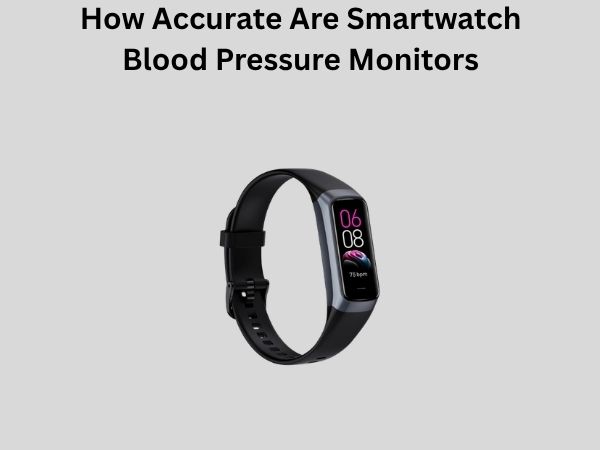
How Accurate Are Smartwatch Blood Pressure Monitors? The Truth You Need to Know
You’re standing in the electronics aisle, staring at that sleek smartwatch on the shelf. It promises to monitor your heart rate, track your steps, and yes—measure your blood pressure, all from your wrist. Sounds amazing, right? But here’s the question that’s probably running through your mind: can you actually trust what that little screen is telling you about your cardiovascular health?
This is a conversation we need to have. More and more people are relying on wearable technology to keep tabs on their health, and blood pressure monitoring has become one of the most sought-after features. But before you ditch your doctor’s office blood pressure cuff, let’s dive deep into what the science actually says about smartwatch accuracy.
Understanding Blood Pressure and Why Accuracy Matters
First, let’s get on the same page about what we’re actually measuring. Blood pressure is the force your blood exerts against the walls of your arteries as your heart pumps it through your body. It’s expressed as two numbers—systolic over diastolic. Think of it like water pressure in a hose: the systolic number represents the pressure when the hose is actively pushing water, while the diastolic number shows the pressure when the hose is relaxed.
Why does accuracy matter so much? Well, if you’re managing a health condition like hypertension, even small measurement errors can lead to incorrect treatment decisions. Taking medication based on inaccurate readings could mean you’re either overmedicated or undermedicated. That’s not something to take lightly.
The Current State of Smartwatch Blood Pressure Technology
Smartwatch manufacturers have made impressive strides in health monitoring technology over the past few years. Samsung, Apple, Huawei, and Garmin have all invested heavily in developing blood pressure monitoring capabilities. Some models use optical sensors combined with special algorithms to estimate your blood pressure, while others require calibration against a traditional cuff.
The thing is, these devices aren’t actually measuring blood pressure the way a traditional blood pressure monitor does. They’re estimating it based on pulse wave analysis and other indirect measurements. It’s kind of like how a weather app can predict rain—it’s using available data to make an educated guess, but it’s not the same as directly measuring rainfall.
How Smartwatch Blood Pressure Monitors Actually Work
Optical Sensors and Photoplethysmography
Most smartwatches use optical sensors—those little lights on the back of your watch. These sensors emit light (usually red or infrared) and measure how much light bounces back from your blood vessels. This technique is called photoplethysmography, and it’s the same technology your smartwatch uses to track your heart rate.
When your heart pumps, your blood vessels expand slightly, which changes how much light the sensor detects. By analyzing these changes over time, the watch can determine your heart rate. But here’s where it gets tricky: measuring blood pressure requires not just knowing your heart rate, but understanding the relationship between your heart rate variability, arterial stiffness, and other physiological factors.
The Role of Calibration
Many smartwatches that measure blood pressure require what’s called calibration. This means you take a measurement with a traditional blood pressure cuff at the same time as your smartwatch, and the device uses this data point to adjust its algorithm. It’s like teaching your watch what your actual blood pressure feels like so it can make better estimates in the future.
But here’s the catch—calibration is only as good as the initial measurement. If you calibrate against an inaccurate traditional cuff, your smartwatch will be off. Plus, your blood pressure changes throughout the day based on stress, activity level, caffeine intake, and countless other factors. A single calibration point doesn’t account for all these variations.
What Does the Research Actually Say?
Clinical Studies and Accuracy Findings
Let’s talk about what scientists have discovered when they’ve put these devices to the test. Multiple peer-reviewed studies have examined smartwatch blood pressure accuracy, and the results are mixed. Some devices perform reasonably well, while others fall significantly short of clinical standards.
A general consensus from research shows that many smartwatches have a mean absolute error of somewhere between 5 to 15 millimeters of mercury (mmHg). To give you perspective, clinical-grade devices are expected to have errors of less than 5 mmHg. That gap might not sound huge, but it can absolutely matter for medical decision-making.
Here’s what’s particularly interesting: accuracy varies considerably between different smartwatch models, different users, and even different measurement conditions. Someone with a smaller wrist, different skin tone, or higher body mass index might get different results than someone else using the same device.
FDA Approval and Regulatory Status
You might be wondering if the FDA has approved any smartwatch blood pressure monitors for medical use. The answer is: not many, and certainly not in a comprehensive way. Some smartwatches have cleared certain regulatory hurdles in specific countries, but that doesn’t mean they’ve been validated as medical-grade devices.
The FDA distinguishes between devices that are marketed as wellness trackers versus medical devices. Most smartwatches fall into the wellness category, which means they operate under different standards than actual medical equipment. This is an important distinction because it affects how rigorously their accuracy has been tested.
The Factors That Affect Smartwatch Blood Pressure Accuracy
Wrist Placement and Tightness
Where you wear your watch and how snugly it fits matters more than you might think. If your watch is too loose, the sensors won’t get consistent readings. If it’s too tight, it might actually affect your circulation and skew the results. The ideal fit is snug but comfortable—like the fit of a traditional blood pressure cuff, actually.
Additionally, the placement on your wrist can influence readings. Most smartwatches are designed to be worn on the inside of your wrist, where blood vessels are closer to the skin surface. Wearing it on the outside of your wrist or higher up your arm will likely produce different (and less accurate) results.
Skin Tone and Optical Sensor Performance
Here’s an uncomfortable truth that the tech industry has only recently started acknowledging: optical sensors don’t work equally well for everyone. The light absorption and reflection properties of skin vary based on melanin content and pigmentation. Studies have shown that people with darker skin tones sometimes get less accurate readings from optical sensors because of how the light interacts with their skin.
This isn’t a problem with the person—it’s a design and testing limitation of the technology. The sensors and algorithms were often developed and tested primarily on people with lighter skin tones, which means they’re sometimes less optimized for other populations. It’s a reminder that technology isn’t always neutral, and accuracy claims need to account for diverse user populations.
Movement and Body Position
Your smartwatch needs you to be relatively still for an accurate reading. If you’re moving around, exercising, or even fidgeting, the watch will struggle to get a clean signal from your blood vessels. This is why most blood pressure readings are taken while sitting down—movement introduces variables that make measurement more difficult.
Similarly, your body position matters. Blood pressure readings taken while standing, sitting, or lying down can differ significantly. For a valid comparison, you need to be consistent about your positioning. This is another area where smartwatches fall short of clinical standards, which specify exact positioning protocols.
Time of Day and Physiological Factors
Your blood pressure isn’t static throughout the day. It rises when you’re stressed, after you’ve had caffeine, when you exercise, or even just from the simple act of waking up. Smartwatches don’t account for all these variables the way a clinical assessment would.
Additionally, factors like menstrual cycle phases, sleep quality, and even ambient temperature can influence blood pressure. A smartwatch measurement is just a snapshot in time, without the context that a healthcare provider would gather through a complete patient history and assessment.
Comparing Smartwatch Readings to Traditional Blood Pressure Monitors
The Gold Standard: Ambulatory Blood Pressure Monitoring
When doctors want an accurate picture of your blood pressure patterns, they sometimes recommend ambulatory blood pressure monitoring. This involves wearing a traditional cuff that inflates automatically at intervals throughout the day and night. It captures your blood pressure in real-world conditions and gives a much fuller picture than a single office reading.
Smartwatches are sometimes marketed as being able to provide this kind of continuous monitoring, but they’re really not in the same league. They’re making estimates, not directly measuring the force your blood exerts on your arterial walls the way a traditional cuff does.
Home Blood Pressure Monitors: A Worthy Comparison
If you’re going to use a smartwatch for blood pressure monitoring, it’s fair to compare it against a good quality home blood pressure monitor—the kind you can pick up at any pharmacy. These devices use an inflatable cuff and are significantly more accurate than smartwatches.
When you compare the two directly, home monitors consistently outperform smartwatches in terms of accuracy and reliability. If you’re serious about monitoring your blood pressure, a home monitor is still your better option. The good news is they’re affordable and easy to use.
The Real Benefits of Smartwatch Blood Pressure Monitoring
Convenience and Regular Tracking
Let’s be fair to smartwatches—they do have genuine advantages. The main one is convenience. You have your watch on you all the time, so taking a blood pressure reading is as simple as opening an app. This can encourage people to track their readings regularly, which can actually be useful for seeing trends even if individual readings aren’t perfectly accurate.
Having data points over time can reveal patterns. Maybe your blood pressure tends to spike after stressful meetings, or maybe you notice it improves after you’ve been exercising regularly. These trends can be valuable information to discuss with your doctor, even if the absolute values aren’t perfectly calibrated.
Motivation for Lifestyle Changes
There’s something about having a wearable device that makes people more conscious of their health. If your smartwatch is consistently showing elevated readings, even if they’re not perfectly accurate, it might motivate you to make positive changes like reducing stress, exercising more, or cutting back on sodium. That’s genuinely valuable, even if the absolute accuracy is imperfect.
Early Warning Signs
If you’re used to your smartwatch readings hovering around a certain range, a sudden spike might prompt you to check with a traditional monitor or contact your healthcare provider. So while the device itself might not be precise enough for diagnosis, it can serve as an alert system that something might warrant attention.
When You Should Trust Smartwatch Blood Pressure Data
Wellness and Trend Tracking
Smartwatch blood pressure data is reasonable for general wellness purposes and trend tracking. If you’re not dealing with a medical condition that requires precise measurements, using your watch to see how your pressure changes throughout the day or in response to different activities can be interesting and potentially useful information.
Relative Comparisons Over Time
Another valid use case is comparing your own readings to yourself over time. If your watch consistently shows readings of 120/80 mmHg, and then starts showing 135/88 mmHg, that change might be meaningful even if the absolute values aren’t perfectly accurate. The consistency of the device matters more than its absolute accuracy when you’re looking at trends.
When You Should NOT Rely on Smartwatch Blood Pressure Readings
Medical Diagnosis and Treatment Decisions
This is the critical point: do not use smartwatch blood pressure readings to make medical decisions. If you’re being evaluated for hypertension, if you’re adjusting blood pressure medication, or if you have any health condition that depends on accurate pressure readings, you need a proper medical device. An inaccurate reading could lead to inappropriate treatment.
Initial Blood Pressure Assessment
If you’re checking your blood pressure for the first time or if you suspect you might have hypertension, see your healthcare provider or use a validated home monitor. The stakes are too high to rely on a device whose accuracy hasn’t been rigorously verified for medical purposes.
The Future of Smartwatch Blood Pressure Technology
Promising Developments on the Horizon
The good news is that technology companies and researchers are actively working to improve smartwatch blood pressure accuracy. New sensor designs, improved algorithms, and better calibration methods are all in development. We’ll likely see more accurate devices in the coming years.
Some researchers are exploring multi-sensor approaches that combine optical sensors with other measurement methods. Others are developing better algorithms that account for individual differences in physiology. These advances could eventually make smartwatch blood pressure monitoring more reliable.
The Importance of Continued Research
As these technologies improve, it’s crucial that manufacturers continue rigorous testing across diverse populations. We need to ensure that accuracy improvements benefit everyone, not just a narrow segment of users. Independent testing by qualified researchers will be essential for building trust in these devices.
How to Use Your Smartwatch Blood Pressure Monitor Responsibly
Best Practices for Smartwatch Readings
- Take readings while sitting down in a relaxed state
- Wear your watch snugly but comfortably on the inner wrist
- Avoid caffeine, exercise, and stress for at least 30 minutes before measuring
- Take multiple readings and look for patterns rather than relying on individual numbers
- Calibrate your device regularly against a validated blood pressure monitor
- Keep a log of your readings and share it with your healthcare provider
Complementing Smartwatch Data with Medical Monitoring
Think of your smartwatch as one tool in your health monitoring toolkit, not the entire toolkit. Combine it with periodic checks using a proper medical device, regular check-ups with your doctor, and awareness of your own symptoms and how you’re feeling.
The Bottom Line on Smartwatch Blood Pressure Accuracy
What We Know and What We Don’t
Here’s what the research and practical experience tell us: smartwatch blood pressure monitors are convenient, they’re getting better, and they can provide useful trend data for general wellness purposes. However, they’re not yet reliable enough to serve as your primary tool for blood pressure monitoring, especially if you have a medical condition that requires precise measurements.
The accuracy varies depending on the specific device, your individual physiology, and how you’re using it. They work better for some people than others, and they’re less accurate than traditional monitors or home blood pressure cuffs.
Making Smart Choices About Your Health Data
Don’t let the convenience of smartwatch monitoring lull you into a false sense of security about your cardiovascular health. Use the device for what it does well—encouraging you to be more aware of your health, tracking trends, and serving as a reminder to check in with your doctor. But when it comes to actual medical decisions, stick with validated, clinically-proven devices.
Your health is too important to leave to estimated readings. Be an informed user of your smartwatch, understand its limitations, and don’t hesitate to double-check important readings with a proper medical device.
Conclusion
The question of whether you can trust smartwatch blood pressure monitors doesn’t have a simple yes-or-no answer. The truth is more nuanced: these devices can be useful tools for general health awareness and trend tracking, but they’re not yet reliable enough to replace traditional blood pressure monitoring for medical purposes.
Technology companies are working hard to improve accuracy, and we’ll likely see significant advances in the coming years. But right now, if you’re managing a health condition or making medical decisions based on blood pressure
![7 Best Smart Watch For Heart Rate Monitoring [2026]](https://smartwatchbest.com/wp-content/uploads/2026/09/7-best-smart-watch-for-heart-rate-monitoring-2026-featured-768x432.jpg)