
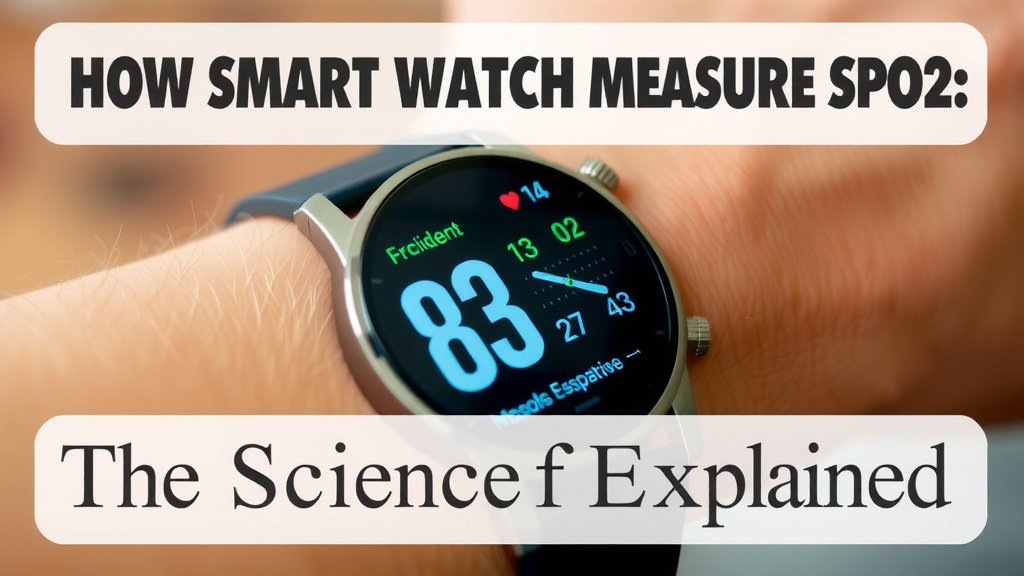
How Smartwatches Measure SpO2: The Science Explained
Your smartwatch measures SpO2 using red and infrared light. It shines these lights through your wrist. Then, it measures how much light is absorbed. This tells your watch how much oxygen is in your blood. It’s a quick way to get a blood oxygen reading.
This technology is called photoplethysmography, or PPG. It works by detecting changes in light absorption. Oxygenated blood absorbs more infrared light. Deoxygenated blood absorbs more red light. Your watch uses this difference to calculate your SpO2 percentage.
- Smartwatches use red and infrared light.
- They measure light absorption through your wrist.
- This helps calculate your blood oxygen levels.
- It’s a non-invasive way to check SpO2.
- Accuracy can vary based on the watch model.
Let’s dive into the science behind how your smartwatch actually tracks your blood oxygen levels. We’ll break down the technology in simple terms!
How Your Smartwatch Cracks the SpO2 Code
You’ve seen the SpO2 reading on your smartwatch, and you might be wondering, “How in the world does this little gadget know my blood oxygen level?” It’s not magic, though it can feel like it! Your watch uses a clever technique involving light. It’s pretty fascinating stuff, and we’re here to break it down for you.
This technology is called photoplethysmography, or PPG for short. Think of it as your watch using its own tiny, built-in light show to get a peek inside your body. It’s a non-invasive method, meaning it doesn’t require any needles or discomfort. You just wear your watch, and it does the work!
The Science of Light and Blood Oxygen
So, how does light actually tell us about oxygen in our blood? It all comes down to how different types of blood absorb light. Your smartwatch uses two specific colors of light: red light and infrared light. You can’t see infrared light, but your watch can detect it.
Understanding Light Absorption
When your watch shines these lights through the skin on your wrist, a portion of that light gets absorbed by your blood. The key difference lies in how oxygenated and deoxygenated blood behave with these lights.
Oxygenated blood, which is bright red and carries oxygen to your tissues, absorbs more infrared light. It reflects more of the red light. On the other hand, deoxygenated blood, which is darker red and is on its way back to your lungs, absorbs more red light. It reflects more of the infrared light.
Calculating Your SpO2 Percentage
Your smartwatch has tiny light sensors that measure how much of the red and infrared light makes it through your wrist. By comparing the amount of red light absorbed versus the amount of infrared light absorbed, the watch can calculate the ratio. This ratio is then translated into your SpO2 percentage, which tells you how saturated your hemoglobin is with oxygen.
Many medical devices, like pulse oximeters you might see in a doctor’s office, use the same fundamental principles. Your smartwatch is essentially a miniaturized version of this technology, adapted for everyday use. The calculations are done by complex algorithms within the watch’s software.
What Your Smartwatch is Actually Doing
Let’s get a little more specific about what’s happening on your wrist. Your smartwatch has small LEDs (light-emitting diodes) and a photodetector. The LEDs are the light sources, and the photodetector is the sensor that “sees” the light.
The Role of LEDs
The watch will flash both red and infrared LEDs onto your skin. This happens very rapidly, in a continuous cycle. You won’t notice it happening, but the lights are constantly pulsing. These lights penetrate the skin and reach the blood vessels in your wrist.
The Photodetector’s Job
As the light passes through your wrist, some of it is absorbed by your blood and tissues, and some of it is reflected back. The photodetector on your watch is positioned to capture this reflected light. It’s essentially counting how many “photons” (particles of light) bounce back to it.
Processing the Data
The watch’s internal processor takes the data from the photodetector. It analyzes how much of each color of light (red and infrared) was detected. Based on the known properties of oxygenated and deoxygenated blood and light absorption, the watch’s software calculates the percentage of oxygen saturation.
Think of it like this: if your watch detects a lot of red light returning, it suggests more red light is being absorbed by the blood, meaning lower oxygen levels. If more infrared light returns, it suggests less infrared absorption, meaning higher oxygen levels. It’s a delicate balance of light and detection.
Factors Affecting Accuracy
While this technology is impressive, it’s important to understand that smartwatch SpO2 readings aren’t always perfect. Several factors can influence the accuracy of your watch’s measurement.
Movement and Fit
This is a big one! If your wrist is moving too much while the watch is trying to take a reading, it can confuse the sensors. This is why most watches will prompt you to stay still during an SpO2 check. A loose watch band can also cause problems, as it might not keep the sensors in proper contact with your skin.
We found that a snug but comfortable fit is key for reliable readings. If the watch slides around, the light might not be consistently applied or detected. This can lead to inaccurate results, so taking a moment to secure your watch is helpful.
Skin Tone and Other Physical Factors
Research suggests that skin tone can sometimes play a role in the accuracy of PPG-based SpO2 measurements. Melanin, the pigment that gives skin its color, can absorb light. This means that people with darker skin tones might sometimes see less accurate readings, depending on the specific device and its algorithms (Journal of Clinical Monitoring and Computing).
Other factors like tattoo ink in the area where the watch sits, excessive hair, or even cold extremities can affect how well the lights penetrate and are detected. For instance, if your hands are very cold, blood flow to your wrist might be reduced, impacting the reading.
Environmental Conditions
While less common for everyday wear, extreme environmental factors could theoretically interfere. For example, very bright ambient light shining directly on the sensor might affect its ability to accurately measure the reflected light from your wrist.
When to Rely on Your Smartwatch SpO2 Readings
Your smartwatch provides a convenient way to get a general idea of your blood oxygen levels. It’s excellent for tracking trends over time during sleep or general daily activity. For many healthy individuals, it can offer peace of mind.
Tracking Sleep and Recovery
One of the most popular uses for smartwatch SpO2 is tracking your blood oxygen levels overnight. Changes in SpO2 during sleep can sometimes indicate underlying issues. Your watch can help you spot patterns that you might not otherwise notice (Cleveland Clinic).
Monitoring Fitness and Altitude
For athletes, especially those who train at high altitudes, monitoring SpO2 can be useful. It can give you an idea of how your body is adapting to lower oxygen levels. This information can help you adjust your training intensity. However, it’s not a substitute for medical-grade equipment when dealing with serious altitude sickness.
A General Health Indicator
Think of your smartwatch’s SpO2 feature as another data point in your overall health picture. It’s a tool that can help you become more aware of your body. If you notice consistently low readings or have concerns, it’s always best to consult a healthcare professional.
Here’s a quick checklist to help you get the most out of your SpO2 readings:- Ensure your watch is snug and positioned correctly on your wrist.
- Stay as still as possible during a reading.
- Avoid taking readings on wrists with tattoos that cover the sensor area.
- Be aware that cold hands might affect accuracy.
- Use readings to track trends, not for definitive medical diagnoses.
- If you have health concerns, always consult your doctor.
Conclusion
You’ve learned that your smartwatch uses a clever optical method called PPG to measure your blood oxygen. By shining red and infrared light onto your wrist and analyzing how much is absorbed, it calculates your SpO2 percentage. While incredibly convenient for tracking trends during sleep or activity, remember it’s a general indicator. Factors like fit, movement, and even skin tone can affect readings. Use this data to get a better sense of your body’s patterns, but for any health concerns, always consult your doctor for professional advice.
Frequently Asked Questions
Can my smartwatch’s SpO2 reading replace a medical pulse oximeter?
Your smartwatch offers a convenient way to track general SpO2 trends, but it’s not a medical device. For accurate medical diagnoses or critical situations, you should always rely on a hospital-grade pulse oximeter prescribed by your doctor.
How often should I check my SpO2 with my smartwatch?
Many smartwatches can automatically track your SpO2 overnight. For manual checks, you can use it whenever you want a quick snapshot, but focus on consistency rather than frequency. Tracking trends over time is more informative than single readings.
Why does my smartwatch tell me to stay still for an SpO2 reading?
Movement can interfere with the light sensors. If your wrist is moving, the watch can’t accurately measure how much light is absorbed by your blood. Staying still ensures the sensors have a clear, consistent view of your blood flow for a more reliable reading.
Can tattoos affect my smartwatch’s SpO2 accuracy?
Yes, tattoos can sometimes interfere with SpO2 readings. The ink in tattoos can absorb light, similar to skin pigment. If the sensor area on your wrist is covered by a tattoo, you might get inaccurate or no readings at all.
Is it normal for my SpO2 to fluctuate slightly throughout the day?
A slight fluctuation in SpO2 readings is normal for most healthy individuals. Factors like breathing patterns, physical activity, and even the time of day can cause minor variations. Consistent, significant drops, however, warrant attention from a healthcare provider.
![7 Best Smart Watch For Jogging [2026]](https://smartwatchbest.com/wp-content/uploads/2026/09/7-best-smart-watch-for-jogging-2026-featured-768x432.jpg)
![7 Best Smart Watch For Older People [2026]](https://smartwatchbest.com/wp-content/uploads/2026/07/7-best-smart-watch-for-older-people-2026-featured-768x432.jpg)
![7 Best Smart Watch For Elderly With Fall Detection [2026]](https://smartwatchbest.com/wp-content/uploads/2026/07/7-best-smart-watch-for-elderly-with-fall-detection-2026-featured-768x432.jpg)