
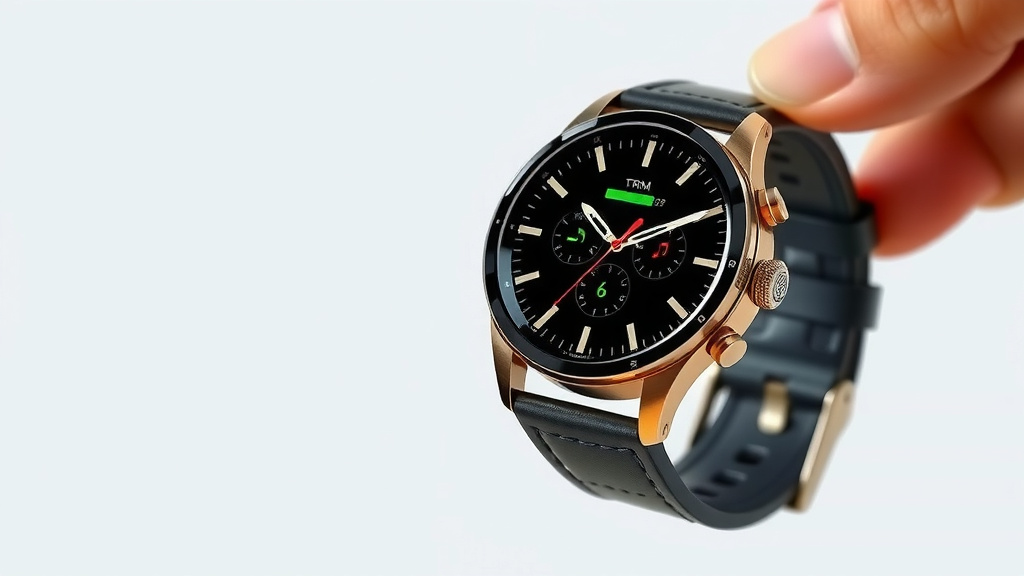
How Smartwatches Count Your Steps Accurately
Your smartwatch tracks your steps using a combination of built-in sensors. It mainly relies on an accelerometer and sometimes a gyroscope to detect movement. These sensors measure the swing of your arm and the motion of your body. When you walk or run, your arms naturally swing, and these movements are picked up by the accelerometer. The watch’s software then interprets these movements as steps.
It’s like a tiny motion detector right on your wrist! Researchers have found that these sensors are quite accurate for common activities. The smart watch algorithms are designed to distinguish between different types of motion. This helps them avoid counting things like driving or other vibrations as steps. It’s a clever way to keep tabs on your daily activity.
- Smartwatches use accelerometers to count steps.
- They also use gyroscopes for more precise tracking.
- Arm swings and body motion are key indicators.
- Algorithms help differentiate steps from other movements.
- Accuracy can vary slightly with different activities.
Let’s break down exactly how your smartwatch turns your movement into a step count, and what makes it so good at it.
“`htmlHow Your Wristband Counts Every Step
Your smartwatch is surprisingly good at guessing how much you move. It’s all thanks to tiny sensors inside. Think of them as your watch’s ears and eyes for motion. They work together to translate your body’s movements into a number of steps. We’ll show you how this magic happens.
The Heart of Step Counting: The Accelerometer
The main hero in your smartwatch’s step-counting system is the accelerometer. This sensor is brilliant at detecting changes in motion and gravity. It measures acceleration in three dimensions: up/down, forward/backward, and side-to-side. When you walk, your arms swing naturally. This swinging motion causes the accelerometer to detect changes. It’s like a tiny pendulum inside your watch reacting to your movement.
Your smartwatch is programmed to look for a specific pattern. This pattern usually involves a rhythmic up-and-down or forward-and-backward motion. Researchers found that the accelerometer can pick up these regular movements very well (NCBI). When it detects this pattern repeatedly, it starts counting it as steps. The stronger and more consistent the swing, the easier it is for the watch to register a step.
Adding a Layer of Precision: The Gyroscope
Some smartwatches go a step further by adding a gyroscope. This sensor works alongside the accelerometer. While the accelerometer detects acceleration, the gyroscope measures rotational motion. It can tell how much your watch is tilting or turning. This is super helpful because not all arm movements are simple steps.
Imagine you’re waving your hands while talking. An accelerometer alone might get confused. The gyroscope helps the watch understand that this isn’t the same motion as walking. By combining data from both sensors, your smartwatch can get a clearer picture. It helps it **distinguish between walking strides and other body movements**. This leads to more accurate step counts, especially during varied activities.
Making Sense of the Data: Algorithms at Work
Raw sensor data isn’t enough on its own. Your smartwatch uses sophisticated algorithms to interpret this information. These are like smart programs that analyze the patterns. They learn what a “step” looks and feels like. They can also learn what *doesn’t* look like a step.
For example, the algorithm knows that when you’re driving, your body might jiggle, but your arms don’t swing in a typical walking pattern. It can filter out these vibrations. Many experts say these algorithms are continuously improving (CDC). They get better at understanding different gaits, speeds, and even activities like running. The software is designed to recognize the cadence and intensity of steps.
Factors That Can Influence Your Step Count
While smartwatches are great, they aren’t perfect. A few things can sometimes throw them off. Your stride length plays a role. If you have a longer stride, your watch might count fewer steps for the same distance compared to someone with a shorter stride. This is normal, as the watch counts individual limb movements.
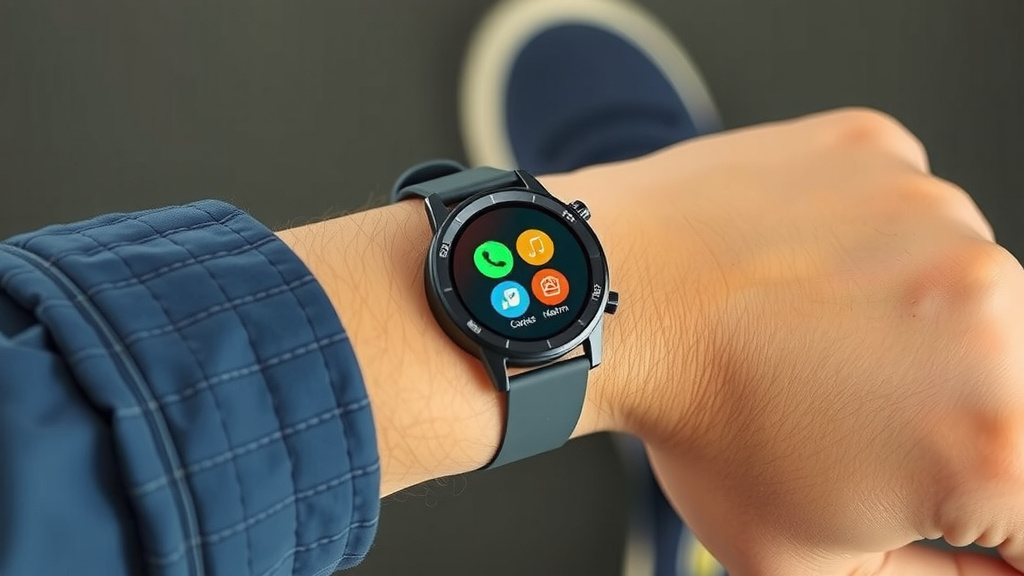
How you wear your watch matters too. Wearing it loosely might allow it to move more freely, potentially leading to inaccurate readings. Wearing it too tightly could restrict natural arm swing. For the most accurate results, many suggest wearing it snug but comfortable on your wrist (Mayo Clinic). The position on your arm can also have a minor impact.
What About Other Activities?
Activities where your arms don’t swing normally can be tricky. Think about pushing a stroller or carrying heavy bags. In these cases, your arms might not swing much, even though you’re walking. Your smartwatch might not register as many steps as you actually took. Similarly, exercises like cycling or swimming don’t typically involve the arm swing patterns that accelerometers rely on.
However, many modern smartwatches are getting smarter. They can often detect when you’re doing a specific exercise, like running or cycling, and use different tracking methods. For example, GPS can track distance for running or cycling.
Accuracy and What the Research Says
Generally, research shows that smartwatches are quite accurate for everyday walking and running. Studies have found them to be reliable for moderate-paced activities. One review mentioned that many devices show an error rate of less than 5% for walking (NCBI). This means they are a good tool for monitoring your general activity levels.
However, accuracy can decrease during very slow or very fast movements. It can also be less precise when you’re doing activities that involve a lot of upper body movement but aren’t steps. It’s important to remember that your smartwatch provides an **estimation** of your steps. It’s a fantastic motivator but not a medical-grade pedometer.
Keeping Your Step Count Reliable
Want to get the most accurate readings from your smartwatch? Here are a few simple tips:
- Wear your watch snugly on your non-dominant wrist.
- Ensure your personal details (height, weight) are accurate in the app.
- Keep your watch’s software updated.
- Be aware that certain activities might not be counted perfectly.
- Use your step count as a guide, not an absolute measure.
The Bottom Line on Your Step Tracker
Your smartwatch uses a combination of an accelerometer and often a gyroscope to detect movement. These sensors capture the rhythm of your arm swings and body motion. Smart algorithms then analyze this data to count your steps. While not perfect, they are remarkably good at estimating your daily activity for most common movements.
“`
Conclusion
You’ve seen how your smartwatch cleverly uses accelerometers and gyroscopes to count your steps. It analyzes the rhythm of your movements and applies smart algorithms to make sense of it all. While it’s a fantastic tool for staying motivated, remember it provides an estimate, not a perfect count. For the best results, wear your watch snugly and keep your personal details updated in the app. Use your step count as a helpful guide to understand your activity levels and inspire you to keep moving!
Frequently Asked Questions
Can my smartwatch count steps if I don’t swing my arms?
Generally, smartwatches rely heavily on arm swing to detect steps. If your arms are held still, like when pushing a stroller, your watch might count fewer steps than you actually take. Some newer models are getting better at detecting lower body movement, but arm swing is still the primary indicator.
Does wearing my smartwatch on my non-dominant wrist improve accuracy?
Yes, many experts suggest wearing your smartwatch on your non-dominant wrist. This can lead to more accurate readings because your non-dominant arm typically has less movement during everyday tasks. This helps prevent accidental step counts from non-walking motions.
Why might my smartwatch count fewer steps when I’m running versus walking?
This can happen because the algorithms are often tuned for typical walking patterns. Running involves a different type of motion and stride. If the algorithms aren’t specifically optimized for your running gait, they might not register every single stride as a distinct step.
Can my smartwatch count steps accurately if I have a very short or very long stride?
Smartwatches are generally most accurate with average stride lengths. Very short strides might be too subtle for the sensors to reliably detect as steps. Conversely, extremely long strides might be interpreted differently. Your watch counts motion, so variations in stride can affect the final number.
What’s the best way to ensure my smartwatch is counting my steps correctly?
To get the most reliable step count, ensure your watch is worn snugly on your wrist and that your personal profile (height, weight, age) is accurate in the companion app. Keeping the watch’s software updated also helps incorporate the latest algorithm improvements for better accuracy.
![7 Best Smart Watch For Firefighters [2026]](https://smartwatchbest.com/wp-content/uploads/2026/08/7-best-smart-watch-for-firefighters-2026-featured-768x432.jpg)
![7 Best Aviation Smart Watches [2026]](https://smartwatchbest.com/wp-content/uploads/2026/06/7-best-aviation-smart-watches-2026-featured-768x432.jpg)