
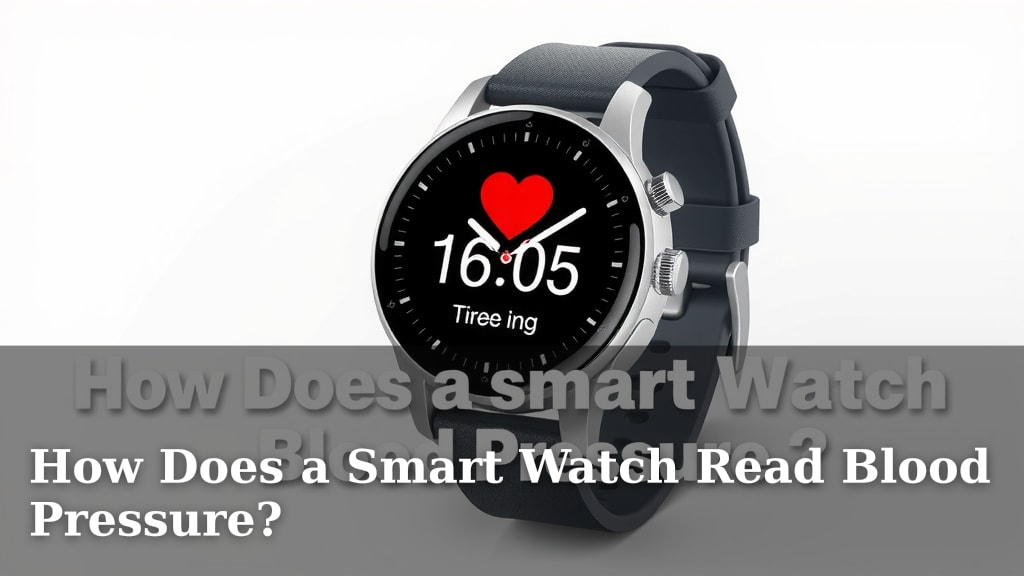
How Does a Smart Watch Read Blood Pressure?
Yes, your smartwatch can read blood pressure, but it’s not as simple as a traditional cuff. Current smartwatches use sensors to estimate blood pressure by analyzing how blood moves through your arteries. Think of it like your watch doing a detective job on your pulse, looking for subtle changes that hint at your pressure. It’s a clever feat of engineering, turning everyday tech into a health monitor.
While not a replacement for your doctor’s cuff, these watches offer a convenient way to track trends. They use things like PPG (photoplethysmography) sensors, the same ones that measure heart rate, to see how your blood is flowing. By understanding these flow patterns, your watch can give you an idea of your blood pressure. It’s a great way to stay more aware of your body’s signals between doctor visits.
TL;DR:
- Smartwatches estimate blood pressure using sensors, not a traditional cuff.
- They analyze pulse and blood flow changes.
- PPG sensors are often used for this estimation.
- It’s a tool for tracking trends, not a medical diagnostic device.
- Convenient for awareness between doctor check-ups.
Ready to understand the science behind your wrist-based health guru? Let’s walk through exactly how your smartwatch takes on the task of reading blood pressure.
How Your Wrist Measures Blood Pressure
It might seem like magic, but your smartwatch uses some really clever science to estimate your blood pressure. Unlike the bulky cuff you get at the doctor’s office, smartwatches rely on sensors. These sensors work by analyzing the changes in your pulse and how blood flows through your arteries. Think of it like your watch being a super-smart detective for your circulation!
The Core Technology: PPG Sensors
The main tool your smartwatch uses for this job is called a PPG, or photoplethysmography, sensor. You probably know it as the sensor that measures your heart rate. It uses small LED lights to shine light into your skin. When your heart beats, blood flows through the vessels. This blood absorbs some of the light. The sensor then measures how much light is reflected back. By tracking these changes in light absorption over time, your watch can get a good idea of your blood flow.
How PPG Detects Blood Pressure Trends
So, how does measuring blood flow tell us about blood pressure? When your blood pressure is higher, your arteries are under more strain. This means the blood moves through them with more force. Your PPG sensor can pick up on these subtle differences in blood flow patterns. It notices how quickly your pulse wave travels or how the volume of blood changes with each beat. Researchers have found that these patterns are related to your blood pressure readings.
It’s important to remember that this is an estimation. The smartwatch isn’t directly measuring the pressure in your arteries like a cuff does. Instead, it’s looking at how your body’s circulatory system responds. Think of it like guessing the weather by looking at how dark the clouds are. You can get a pretty good idea, but it’s not the same as using a weather station.
Calibration: Making the Numbers Meaningful
For your smartwatch to give you blood pressure estimates, it needs to learn what your personal “normal” looks like. This is where calibration comes in. You’ll usually need to calibrate your watch with a traditional blood pressure cuff. This means taking a reading with your cuff and then entering that number into your watch. Your watch uses this data to create a baseline. It learns how your specific pulse patterns correspond to your actual blood pressure.
Why Regular Calibration Matters
Your blood pressure can change day to day due to diet, stress, exercise, and other factors. That’s why most smartwatches recommend you recalibrate them regularly, often every month. This keeps the estimates accurate. Without regular calibration, the watch’s readings might drift and become less reliable over time. It’s like tuning a musical instrument; regular adjustments keep it sounding right.
What Happens During Calibration?
During the calibration process, you’ll typically be asked to take several blood pressure readings with a traditional cuff. You then input these readings into the smartwatch app. The watch’s algorithm uses this information to create a personalized model for you. It learns to associate specific pulse wave characteristics with your measured blood pressure values. This makes the estimations much more tailored to your body.
What Else Your Smartwatch Sensors Detect
While PPG sensors are key for blood pressure estimation, your smartwatch likely has other sensors too. These work together to give you a broader picture of your health. They can provide context for your blood pressure trends.
Heart Rate Monitoring
This is the most common function. Your smartwatch constantly tracks your heart rate throughout the day. It can tell you your resting heart rate, your heart rate during exercise, and alert you to unusually high or low heart rates. Knowing your typical heart rate range can help you understand how your body is responding to different activities and stress levels.
Blood Oxygen Levels (SpO2)
Some smartwatches can also measure your blood oxygen saturation. This tells you how much oxygen your red blood cells are carrying. While not directly related to blood pressure, very low blood oxygen can sometimes indicate underlying health issues. It adds another layer of health data for you to consider.
Activity and Sleep Tracking
Your smartwatch tracks your steps, distance, calories burned, and sleep patterns. All of these factors can influence your blood pressure. For example, regular physical activity can help lower blood pressure. Poor sleep can sometimes lead to higher readings. By looking at these metrics alongside your estimated blood pressure, you can see how your lifestyle choices might be affecting your cardiovascular health.
Understanding the Data: Trends Over Time
The real power of a smartwatch for blood pressure monitoring lies in its ability to track trends. Instead of just getting a single number, you can see how your blood pressure estimate changes over days, weeks, and months. This can help you and your doctor spot patterns you might otherwise miss.
Identifying Potential Issues
Are your estimated readings consistently higher in the mornings? Do they spike after stressful workdays? Seeing these patterns can be incredibly useful. It might prompt you to discuss these trends with your doctor. They can then decide if further investigation with a traditional cuff is needed. Remember, the watch is a great tool for awareness, not diagnosis.
Lifestyle Impact on Readings
You might notice how certain habits affect your readings. Perhaps after a day of eating salty foods, your estimated blood pressure is a bit higher. Or maybe after a good night’s sleep and a morning walk, it’s lower. This feedback loop can motivate you to make healthier choices. It helps you see the direct impact of your actions on your cardiovascular system.
Limitations and When to See a Doctor
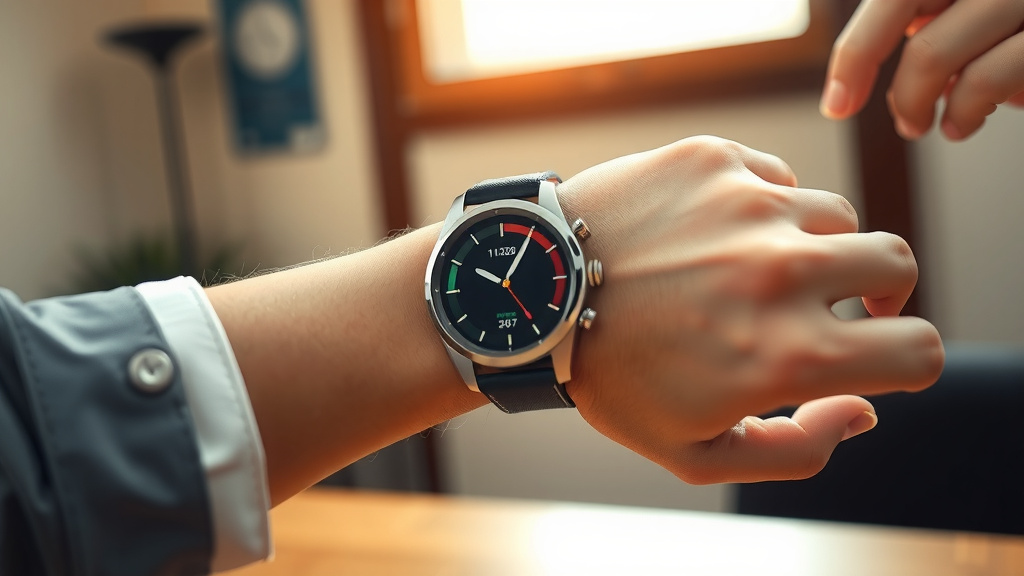
It’s essential to be realistic about what smartwatches can do. They are not medical devices and should never replace professional medical advice or a proper blood pressure cuff used by a healthcare provider. These watches offer estimates, and accuracy can vary.
Accuracy Variations
Several factors can affect the accuracy of smartwatch blood pressure readings. These include how snugly the watch is worn, your skin tone, and even your body temperature. Movement during measurement can also throw off the readings. The technology is improving, but it’s still an estimation.
When to Rely on Traditional Cuffs
For a precise, medical-grade blood pressure reading, you’ll always need to use a validated upper-arm cuff. If you have concerns about your blood pressure or if your smartwatch readings show a significant or concerning trend, it’s vital to consult your doctor. They can provide an accurate diagnosis and recommend the best course of action. Don’t make any major health decisions based solely on your smartwatch data.
Checklist for Using Your Smartwatch for Blood Pressure
- Calibrate regularly: Follow your watch’s instructions for monthly calibration.
- Wear it correctly: Ensure a snug but comfortable fit for best sensor contact.
- Stay still during readings: Avoid talking or moving while your watch measures.
- Track trends: Focus on the patterns over time, not just single readings.
- Compare with a cuff: Periodically verify your watch’s estimates with a traditional cuff.
- Consult your doctor: Always discuss significant readings or trends with a healthcare professional.
Conclusion
You’ve learned how your smartwatch uses clever sensor technology, like PPG, to estimate blood pressure by analyzing blood flow and pulse waves. Remember, this is a tool for awareness, not a replacement for medical devices. By regularly calibrating your watch and tracking trends over time, you gain a better understanding of your body’s signals. Always compare your smartwatch data with readings from a traditional cuff and consult your doctor for any health concerns. Continue to use your smartwatch as a helpful guide to keep you more informed about your cardiovascular health between appointments.
Frequently Asked Questions
Can I trust my smartwatch for blood pressure readings?
Smartwatches provide estimations, and while technology is improving, they are not medical-grade devices. Always calibrate your watch with a traditional cuff and consult your doctor for accurate readings and health decisions. Focus on trends rather than single numbers for better insight.
How often do I need to calibrate my smartwatch for blood pressure?
Most manufacturers recommend calibrating your smartwatch monthly. This ensures the estimations remain accurate as your body’s patterns can change. Follow your specific watch’s instructions for the best results.
What are the main limitations of smartwatch blood pressure monitoring?
Accuracy can be affected by factors like watch fit, skin tone, body temperature, and movement during readings. They are best used for tracking trends and general awareness, not for diagnosing conditions.
Can my lifestyle choices affect my smartwatch blood pressure readings?
Absolutely. Factors like diet, exercise, sleep, and stress can influence your blood pressure. Your smartwatch can help you see how these habits correlate with your estimated readings, providing motivation for healthier choices.
When should I consult a doctor about my smartwatch blood pressure readings?
If your smartwatch shows consistently high or concerning trends, or if you have any worries about your blood pressure, it’s vital to see your doctor. They can perform accurate checks and offer professional medical advice.
![7 Best Smart Watch For Fall Detection [2026]](https://smartwatchbest.com/wp-content/uploads/2026/07/7-best-smart-watch-for-fall-detection-2026-featured-768x432.jpg)
![7 Best Fitness Smart Watch 2025 [2026]](https://smartwatchbest.com/wp-content/uploads/2026/08/7-best-fitness-smart-watch-2025-2026-featured-768x432.jpg)