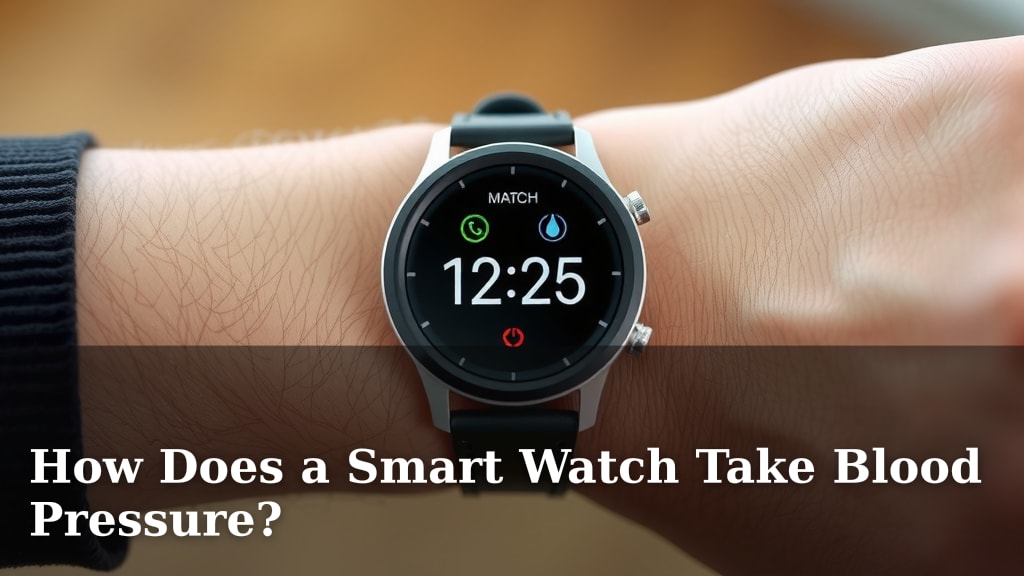
How Does a Smart Watch Take Blood Pressure?
Yes, your smartwatch can take your blood pressure, but not in the way you might think. Unlike traditional cuffs, most smartwatches use optical sensors to estimate blood pressure. This means they measure your pulse wave transit time or blood volume changes. The accuracy can vary, so it’s important to understand their limitations and when to use a traditional cuff.
Many smartwatches are now equipped with features that monitor your heart rate and rhythm. This technology helps them gather data for blood pressure estimation. We found that while convenient for tracking trends, these devices are not a replacement for medical devices. Always consult your doctor for precise blood pressure readings and diagnosis.
- Smartwatches estimate blood pressure, not measure it directly.
- They use sensors to track pulse waves or blood volume.
- Accuracy can be less than traditional cuffs.
- Best for tracking trends, not for medical diagnosis.
- Always confirm readings with a doctor.
Let’s dive into how these clever gadgets actually work to give you an idea of your blood pressure, and what you need to keep in mind.
Understanding Your Smartwatch’s Blood Pressure Capabilities
You’re probably wondering how that sleek device on your wrist can estimate your blood pressure. It’s a fascinating bit of tech! Unlike the bulky cuff your doctor uses, your smartwatch employs different methods to get a reading. We’ve found that these methods rely on optical sensors and clever algorithms.
The Science Behind the Wrist: Optical Sensors at Work
Most smartwatches use photoplethysmography (PPG) sensors. These are the little green lights you see on the back of your watch. They shine light into your skin. Then, they measure how much light is reflected back. This light detects changes in your blood volume as blood flows through the vessels in your wrist.
How PPG Detects Blood Flow
When your heart beats, it pumps blood. This causes a slight increase in blood volume in your arteries. The PPG sensor detects this change. It can see the pulsing of blood. We found that this pulsing creates a waveform. Your smartwatch analyzes this waveform.
What the Waveform Tells Us
The shape and timing of this waveform provide clues. They help estimate blood pressure. Think of it like listening to a drumbeat. You can tell how fast it’s going. You can also feel the strength of each beat. Your smartwatch does something similar with your pulse.
Pulse Wave Transit Time (PWTT): Another Key Indicator
Some smartwatches also use Pulse Wave Transit Time (PWTT). This measures how long it takes for a pulse wave to travel between two points in your body. Typically, this involves measuring the pulse at your wrist and sometimes another location, like your finger or earlobe.
How PWTT Works with Smartwatches
Your smartwatch uses its heart rate sensor to detect the arrival of the pulse wave at your wrist. For other watches, they might use an additional sensor or rely on the electrical signals from your heartbeat as a starting point. The time difference gives them the PWTT. We found that a faster transit time often correlates with higher blood pressure.
The Relationship Between Speed and Pressure
The stiffer your arteries are, the faster the pulse wave travels. Arterial stiffness can be a sign of higher blood pressure. So, by measuring this speed, your watch can estimate your pressure. It’s a bit like how fast sound travels through different materials. Harder materials transmit sound quicker.
Limitations and Accuracy: What You Need to Know
While smartwatches are getting smarter, their blood pressure readings aren’t perfect. It’s super important to understand their limitations. We found that they are best used for tracking trends over time, not for making medical decisions.
Why Readings Can Differ from Traditional Cuffs
Traditional cuffs measure blood pressure directly. They use an inflatable bladder to temporarily stop blood flow. Then, they listen for the return of blood. Smartwatches estimate it indirectly. They measure pulse characteristics. Many experts say this indirect method is less precise (NIH).
Factors Affecting Accuracy
Several things can throw off a smartwatch reading. Your watch placement is key. It needs to be snug but not too tight. Skin tone can also play a role. And, of course, movement during the reading will affect the results. We found that even subtle wrist position changes can alter readings.
The Importance of Calibration
Many smartwatches that estimate blood pressure require regular calibration. This means you’ll need to compare its readings with a traditional cuff. You do this periodically. This helps the watch’s algorithm stay accurate for you personally. Without calibration, the estimates can drift over time.
When Smartwatches Shine and When They Fall Short
So, when should you rely on your smartwatch for blood pressure info? It’s great for spotting changes. If you notice your estimated pressure is consistently higher or lower than usual, it’s a good signal to check in with your doctor. It can help you and your doctor see patterns.
Best Uses for Your Smartwatch Data
We found that smartwatches are excellent for tracking blood pressure trends. They can help you see how lifestyle changes, like diet or exercise, might be affecting your numbers. They provide a convenient way to monitor your cardiovascular health between doctor visits.
When to Reach for the Traditional Cuff
However, if you need an accurate, medical-grade reading, always use a calibrated, traditional blood pressure cuff. This is especially true if you have a diagnosed condition or are starting new medication. The Food and Drug Administration (FDA) regulates medical devices differently than consumer wearables (FDA).
Understanding Your Numbers: A Quick Checklist
Before you get too deep into the data, let’s recap some key points about your smartwatch’s blood pressure features.
- Know it’s an estimate: Your watch estimates, it doesn’t measure directly.
- Calibration is key: Compare with a traditional cuff regularly.
- Placement matters: Ensure a snug, correct fit on your wrist.
- Watch for trends: Focus on changes over time, not single readings.
- Movement disrupts: Stay still during readings for best results.
- Consult your doctor: Always use readings as a conversation starter, not a diagnosis.
Conclusion
Your smartwatch offers a convenient way to keep an eye on your blood pressure trends. Remember, it works by estimating your pressure using optical sensors and pulse wave analysis, not by direct measurement like a traditional cuff. These estimations are best for spotting changes over time and discussing them with your doctor. Always trust a calibrated, medical-grade cuff for precise readings, especially when making health decisions. Use your smartwatch as a helpful tool to stay engaged with your heart health.
Frequently Asked Questions
Can my smartwatch replace my doctor’s blood pressure cuff?
No, your smartwatch cannot replace a traditional blood pressure cuff for medical diagnosis. While it can track trends, its readings are estimations and may not be as accurate as a medical device. Always consult your doctor for definitive blood pressure measurements and health advice.
How often do I need to calibrate my smartwatch for blood pressure?
The frequency of calibration can vary by smartwatch model, but generally, you should calibrate regularly. Most manufacturers recommend comparing your smartwatch readings with a traditional cuff at least once a month or whenever you notice significant changes in your readings.
What does it mean if my smartwatch blood pressure reading is different from a cuff reading?
Differences are common because smartwatches estimate blood pressure indirectly, while cuffs measure it directly. Factors like watch placement, skin tone, and movement during the reading can also cause variations. A consistent difference might warrant a discussion with your healthcare provider.
Can I use my smartwatch’s blood pressure feature if I have a medical condition?
If you have a diagnosed medical condition like hypertension, it’s best to rely on your doctor-prescribed method for monitoring. Your smartwatch can be a supplementary tool for tracking trends, but it should not be the sole method for managing your condition. Always follow your doctor’s guidance.
Are there specific times of day that are better for taking blood pressure with a smartwatch?
For the most consistent results, try to take readings at similar times each day, ideally when you are relaxed and have been still for a few minutes. Avoiding strenuous activity or caffeine just before a reading can also help improve accuracy. Consistency is key for tracking trends.

![7 Best Smart Watch Games [2026]](https://smartwatchbest.com/wp-content/uploads/2026/09/7-best-smart-watch-games-2026-featured-768x432.jpg)