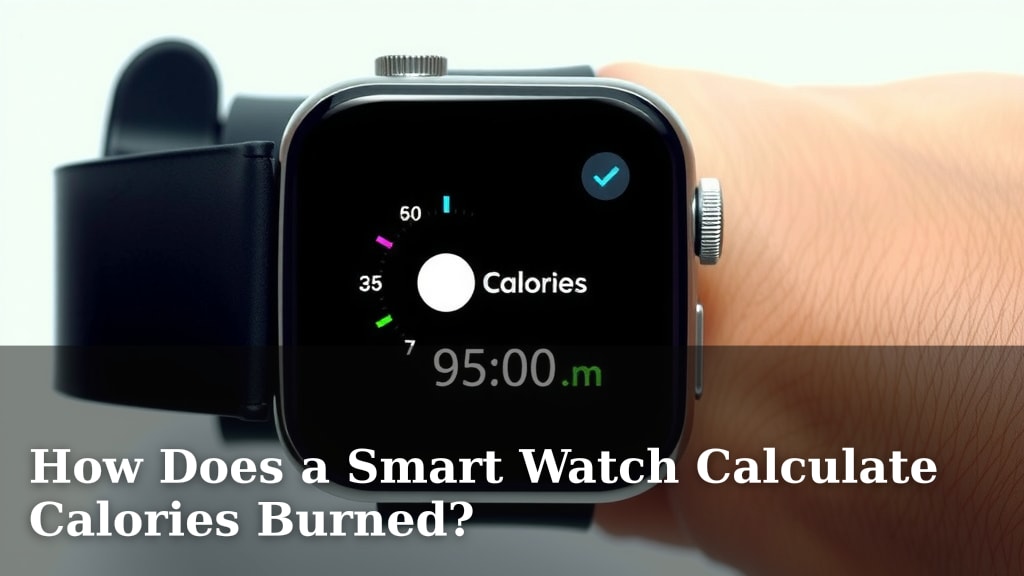
How Does a Smart Watch Calculate Calories Burned?
Your smartwatch calculates calories burned by combining heart rate data with information about your activity type and personal stats. It’s a clever mix of real-time biometrics and educated guesses to give you a calorie count. Think of it as your personal fitness detective.
Beyond heart rate, it uses other sensors to understand your movement. This includes tracking steps, elevation changes, and even your stride. The more data it has, the more accurate your calorie burn estimate will be. It’s like giving your watch a better picture of your workout.
- Smartwatches use your heart rate.
- They also track your movement and activity.
- Your personal details matter a lot.
- It’s an educated estimate, not perfect.
Ready to see how your watch turns effort into numbers? Let’s break down exactly how your smartwatch estimates calories burned.
“`htmlHow Your Smartwatch Estimates Calories Burned
Your smartwatch is smarter than you might think when it comes to fitness. It uses a clever combination of sensors and algorithms. These work together to give you an estimate of the calories you burn throughout the day and during workouts. It’s not a perfect science, but it’s a surprisingly good approximation.
The Heart of the Matter: Heart Rate Data
Your heart rate is the most important piece of data your smartwatch uses. Why? Because your heart rate is a direct indicator of how hard your body is working. When you exercise, your heart pumps faster to deliver oxygen and nutrients to your muscles. The higher your heart rate, the more energy your body is expending, and thus, the more calories you’re burning.
How Heart Rate Translates to Calories
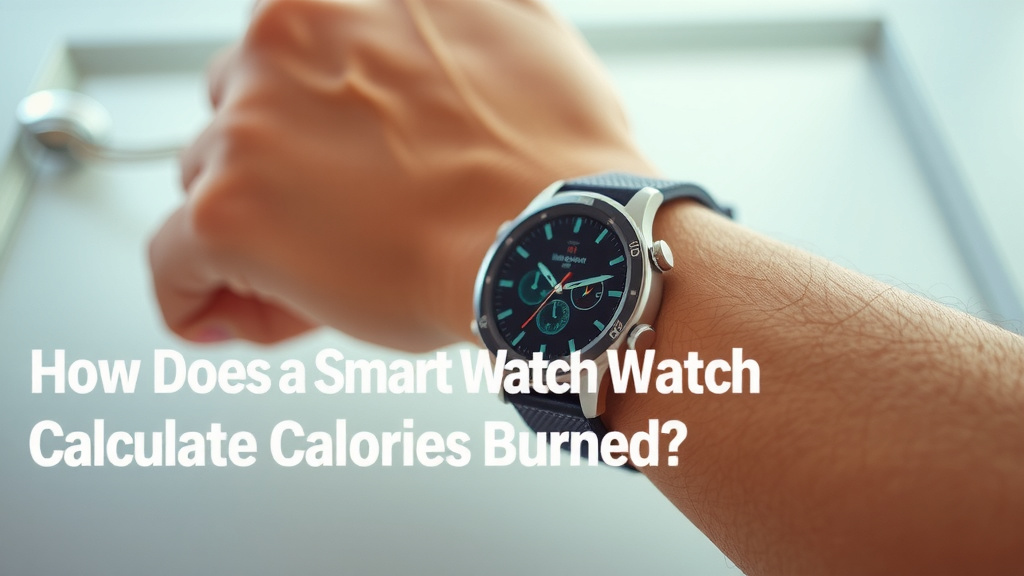
Your smartwatch has optical heart rate sensors. These shine light onto your skin. They then measure how the light is absorbed or reflected. This tells them how much blood is flowing through your wrist at any given moment. A faster pulse means more blood flow, which your watch translates into a higher heart rate reading.
Many experts agree that heart rate is a key metric for calorie estimation (American Heart Association). It’s like the engine RPM gauge on your car. It shows you how hard the engine is working. The watch then uses this information in its calculations. It compares your current heart rate to your resting heart rate. This difference helps gauge the intensity of your activity.
Beyond Heart Rate: Movement and Activity Tracking
While heart rate is crucial, it’s not the only factor. Your smartwatch also tracks your movement. This gives it a broader picture of your physical output. Think about it: walking and running can elevate your heart rate. But running burns significantly more calories. Your watch needs to know you’re running!
Accelerometer and Gyroscope at Work
Most smartwatches have an accelerometer. This sensor measures changes in velocity. It can detect when you’re moving and the speed of that movement. It’s how your watch counts your steps. It also helps differentiate between different types of motion.
There’s also often a gyroscope. This sensor measures rotational motion and orientation. Together, these sensors help your watch understand not just that you’re moving, but also *how* you’re moving. Are you walking, running, cycling, or swimming? This information is vital.
Using Elevation and Other Sensors
Some smartwatches include a barometer or altimeter. This sensor measures atmospheric pressure. It can detect changes in altitude. This means your watch can tell if you’re going uphill or downhill. Climbing stairs or hiking a steep trail burns more calories than walking on a flat surface. Your watch accounts for this extra effort.
Other sensors, like GPS, can track distance and pace. This adds even more context. The more sensors your watch has and uses, the more detailed picture it gets of your activity.
Personal Statistics: The User’s Profile Matters
Your smartwatch needs to know who you are. It can’t accurately estimate your calorie burn without your personal details. This is where the information you provide when setting up your watch becomes essential.
Why Your Stats Are So Important
The main factors are your age, weight, height, and sex. These factors influence your basal metabolic rate (BMR). This is the number of calories your body burns at rest just to maintain basic functions like breathing and circulation.
For example, a heavier person will generally burn more calories than a lighter person doing the same activity. This is because their body has more mass to move. Similarly, men often have more muscle mass than women, which can increase calorie burn. Age also plays a role; metabolism can slow down as we get older.
| Personal Stat | Impact on Calorie Burn |
|---|---|
| Weight | Higher weight means more energy needed to move. |
| Height | Taller individuals may have a slightly higher BMR. |
| Age | Metabolism can decrease with age. |
| Sex | Muscle mass differences influence metabolic rate. |
The Role of Your Resting Heart Rate
The heart rate your watch records when you’re at rest is also very important. A lower resting heart rate often indicates better cardiovascular fitness. This means your heart is more efficient. Your watch uses this as a baseline. It then calculates how much your heart rate increases during exercise.
Putting It All Together: The Algorithm
Your smartwatch combines all this data. It uses a complex algorithm to calculate your calorie burn. The algorithm takes your heart rate, activity type, duration, and your personal statistics. It then outputs an estimated number of calories burned.
Different brands use slightly different algorithms. This is why you might see different calorie counts between different smartwatches or fitness trackers, even if you’re doing the exact same activity. Many algorithms are based on established scientific formulas. These formulas attempt to predict energy expenditure based on physiological responses (NIH).
Accuracy and Limitations
It’s important to remember that this is an estimate. Smartwatches are not medical devices. They can’t measure your exact calorie expenditure. Factors like individual metabolism, hydration levels, and environmental conditions can affect calorie burn. These are often not fully accounted for by the watch. However, for most people, smartwatches provide a useful and generally reliable approximation of calories burned.
Maximizing Your Smartwatch’s Accuracy
Want to get the most accurate calorie readings possible from your watch? Here are a few tips:
- Ensure your personal stats are up-to-date.
- Wear your watch snugly, but not too tight, for good heart rate readings.
- Let your watch learn your fitness level over time.
- Sync your watch regularly.
- Be consistent with how you wear it during workouts.
Conclusion
Your smartwatch does a great job estimating calories burned by combining your heart rate, activity, and personal stats. It uses sensors like accelerometers and altimeters to understand your movement. Your age, weight, height, and sex are essential for accuracy. While it’s an estimate, not a perfect measurement, it offers a useful way to track your fitness efforts. To get the best results, keep your personal details updated and wear your watch snugly. Use this data to stay motivated on your health journey!
Frequently Asked Questions
How accurate is my smartwatch’s calorie count?
Your smartwatch provides an educated estimate. It’s generally reliable for tracking trends. Factors like individual metabolism can affect the exact number. For most users, it’s a good approximation of your energy expenditure.
Can my smartwatch tell the difference between walking and running for calorie burn?
Yes, it can. By using its accelerometer and gyroscope, your watch detects the intensity and type of movement. Running burns more calories than walking, and your watch accounts for this difference in its calculations.
Why do I get different calorie counts on different smartwatches?
Different brands use unique algorithms to process data. These algorithms are based on scientific formulas but can vary. This is why you might see slight differences even when performing the same activity on different devices.
Does a smartwatch account for my workout intensity?
Absolutely. Your heart rate is a key indicator of workout intensity. Your watch uses your heart rate data, compared to your resting heart rate, to gauge how hard you’re working and adjust the calorie burn estimate accordingly.
Should I wear my smartwatch tight to get accurate calorie readings?
You should wear your watch snugly, but not uncomfortably tight. This ensures the optical heart rate sensors make good contact with your skin. This consistent contact is vital for accurate heart rate readings, which directly impacts calorie calculations.

![7 Best Smart Watch For Youth [2026]](https://smartwatchbest.com/wp-content/uploads/2026/09/7-best-smart-watch-for-youth-2026-featured-768x432.jpg)
![7 Best Smart Watch For Trail Running [2026]](https://smartwatchbest.com/wp-content/uploads/2026/09/7-best-smart-watch-for-trail-running-2026-featured-768x432.jpg)