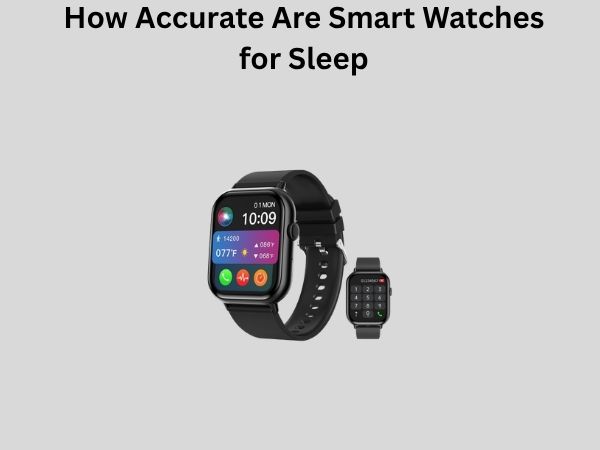
How Accurate Are Smart Watches for Sleep: Improving Your Rest
We’ve all been there—you wake up wondering if you actually slept well last night, and you glance at your smartwatch hoping it’ll give you the answers you need. But here’s the million-dollar question: can you really trust what that little device on your wrist is telling you about your sleep? That’s exactly what we’re diving into today, and trust me, the answer is far more nuanced than a simple yes or no.
Understanding the Sleep Accuracy Question
When you ask yourself “how accurate are smartwatches for sleep?” you’re essentially asking whether these devices can genuinely measure what’s happening in your body during those precious eight hours you’re supposed to be resting. It’s a fair question, and one that more people are asking as smartwatch adoption continues to skyrocket. After all, these devices promise detailed insights into our sleep patterns, but the reality is considerably more complicated.
What Makes Sleep Tracking So Difficult?
Sleep isn’t something that happens in a vacuum. Your body goes through multiple stages—light sleep, deep sleep, and REM sleep—and each one plays a crucial role in how refreshed you feel the next day. The problem is that tracking these stages accurately requires some serious technology, and your smartwatch, while clever, has some pretty significant limitations when it comes to distinguishing between them.
Think of it like this: imagine trying to identify different types of clouds from inside a moving car. You can see there’s something up there, but getting the specifics right is a whole different ballgame. Your smartwatch is essentially doing something similar—it’s making educated guesses based on movement and heart rate data, but it’s not getting the full picture.
How Smartwatches Actually Track Your Sleep
Before we can talk about accuracy, we need to understand the methodology. Most smartwatches rely on a combination of sensors and algorithms to track your sleep, and knowing these details will help you understand why the accuracy question is so important.
The Role of Accelerometers and Motion Sensors
The primary tool in your smartwatch’s sleep-tracking arsenal is the accelerometer. This sensor detects movement, and the assumption is that when you’re not moving much, you’re probably sleeping. It’s a logical starting point, but it’s also where things get tricky. You move differently during various sleep stages, and sometimes you’re awake but completely still—lying in bed scrolling through your phone, for instance.
Your smartwatch interprets periods of minimal movement as sleep time, but it doesn’t actually know if you’re sleeping or just lying motionless in the dark. This is a fundamental limitation that affects the accuracy of virtually every consumer-grade smartwatch on the market.
Heart Rate Monitoring and Sleep Stages
Many modern smartwatches also include heart rate sensors that track your pulse throughout the night. During different sleep stages, your heart rate varies in predictable ways. When you’re in light sleep, your heart rate might be slightly elevated compared to deep sleep. During REM sleep, there’s often more variability in heart rate patterns.
However—and this is crucial—heart rate data alone can’t definitively determine which sleep stage you’re in. It’s more like reading tea leaves than checking a medical chart. The algorithm is making assumptions based on limited data, and while those assumptions are usually in the right ballpark, they’re frequently off by a significant margin.
Oxygen Saturation and Respiratory Patterns
Some higher-end smartwatches now include blood oxygen sensors and can track respiratory rates. These additional data points certainly help improve accuracy, but they’re still not diagnostic-grade tools. They provide a better picture than motion and heart rate alone, but there’s still considerable room for error.
The Accuracy Reality: What Research Tells Us
So what do the experts say about smartwatch sleep accuracy? Well, numerous studies have compared smartwatch data to gold-standard polysomnography (that’s the fancy term for the sleep studies doctors do in clinics), and the results are pretty revealing.
How Smartwatches Compare to Clinical Sleep Studies
When researchers pit smartwatches against professional sleep monitoring equipment, the results vary depending on which device and which aspect of sleep you’re measuring. Here’s what the research generally shows:
- Smartwatches are reasonably good at detecting whether you’re asleep or awake, with accuracy rates typically ranging from 70 to 90 percent
- They’re much less accurate at distinguishing between different sleep stages, with error rates often exceeding 30 percent
- Total sleep time estimates tend to be fairly close, but can be off by 30 minutes to an hour in either direction
- REM sleep detection is particularly unreliable, often overestimated or underestimated significantly
What this means in practical terms is that your smartwatch might tell you that you slept for seven hours and twenty minutes when you actually slept for six hours and fifty minutes. That’s not terrible, but it’s not highly accurate either.
Individual Variation and Personalization Matters
Here’s something important that doesn’t always get discussed: smartwatch accuracy can vary dramatically from person to person. Someone who sleeps very still might get more accurate readings than someone who tosses and turns all night. Similarly, people with certain sleep disorders or conditions might get measurements that are way off base.
The algorithms inside these devices are often trained on data from diverse populations, but that doesn’t mean they work equally well for everyone. Your particular sleeping style, body composition, and health status all influence how well your device can track your sleep.
Why Smartwatches Overestimate Sleep Time
One consistent finding across multiple studies is that smartwatches tend to overestimate the amount of time you’ve actually spent sleeping. You know that experience of lying awake for what feels like hours, only to check your watch and see that it counted those hours as sleep? That happens because your device interprets stillness as sleep, even when your brain is wide awake.
The Problem with Binary Sleep/Wake Detection
Your smartwatch essentially asks itself one question repeatedly throughout the night: am I detecting movement? If the answer is no, it logs you as asleep. If yes, it logs you as awake. But human sleep is far more nuanced than a simple binary state. You can be in light sleep where you’re still somewhat aware of your surroundings, or you can be awake but completely motionless.
This is particularly problematic during the transitions between sleep and wakefulness. That drowsy state where you’re drifting off or just waking up? Your smartwatch probably isn’t categorizing it the same way your brain actually experiences it.
The Variability Between Different Smartwatch Brands
Not all smartwatches are created equal when it comes to sleep tracking. Some brands have invested heavily in sleep tracking technology, while others seem to have added it as an afterthought.
Premium Options with Better Accuracy
Devices like the Apple Watch Series 8 and later, Garmin’s premium sports watches, and Fitbit’s latest offerings tend to perform better than budget alternatives. They use more sophisticated algorithms, sometimes incorporating machine learning to improve accuracy over time. But even the best of them still have limitations.
Budget Smartwatches and Generic Tracking
If you’ve got a budget smartwatch from a lesser-known brand, your sleep tracking is probably using fairly generic algorithms. These devices might track movement and heart rate, but the interpretation is often quite basic, leading to higher error rates.
Practical Tips for Getting More Accurate Sleep Data
Okay, so smartwatches aren’t perfect. But that doesn’t mean you should give up on using them to understand your sleep. Here are some practical ways to get better data from your device.
Wearing Your Watch Properly
The fit and positioning of your smartwatch matters more than you might think. A watch that’s too loose won’t accurately track your heart rate or movement patterns. You want it snug enough to maintain contact with your skin, but not so tight that it’s uncomfortable. Many people don’t realize that the way they wear their watch significantly impacts data quality.
Using Consistent Sleep Schedules
Your smartwatch gets smarter when you give it consistent data to work with. If you’re going to bed at wildly different times each night, the device has a harder time calibrating its algorithms. Maintaining a regular sleep schedule doesn’t just help your smartwatch—it helps your actual sleep too.
Combining Smartwatch Data with How You Feel
This might sound obvious, but don’t rely solely on what your watch tells you. Pay attention to how rested you actually feel. If your smartwatch says you slept nine hours but you feel exhausted, that’s important information. Your subjective experience matters, and sometimes it’s more reliable than the device’s objective measurements.
Keeping Your Device Updated
Manufacturers regularly release software updates that improve sleep tracking algorithms. Make sure you’re keeping your smartwatch updated with the latest firmware. These updates sometimes include significant improvements to accuracy.
Limitations You Should Know About
Understanding what your smartwatch can’t do is just as important as knowing what it can do.
Sleep Disorders and Medical Conditions
If you have a diagnosed sleep disorder like sleep apnea, insomnia, or restless leg syndrome, your smartwatch probably isn’t giving you accurate information about what’s really happening. These conditions create sleep patterns that the standard algorithms simply aren’t designed to interpret correctly. For actual diagnosis and management of sleep disorders, you need professional medical testing.
Medication Effects and Health Factors
Certain medications can affect heart rate and movement patterns in ways that confuse your smartwatch. Similarly, health conditions like pregnancy, hormonal changes, or certain medications can significantly impact the accuracy of sleep tracking. These factors aren’t accounted for in most consumer-grade algorithms.
Should You Still Use Your Smartwatch for Sleep Tracking?
Given all these limitations, you might be wondering if it’s worth bothering with sleep tracking on your smartwatch at all. The answer is nuanced, and it depends on what you’re hoping to get out of it.
Where Smartwatch Sleep Tracking Adds Real Value
Despite its limitations, smartwatch sleep tracking can be genuinely useful for identifying trends and patterns. If your watch shows that you’re consistently getting only six hours of sleep, that’s valuable information, even if the exact figure is off by thirty minutes. The relative trends—whether your sleep is getting better or worse—are often more reliable than the absolute measurements.
Smartwatch sleep tracking can also serve as a motivational tool. Seeing your sleep data might encourage you to maintain better sleep hygiene. Sometimes just being aware of your sleep patterns is enough to inspire changes that improve your actual rest.
What to Avoid Using Smartwatch Data For
Don’t use your smartwatch data to self-diagnose sleep disorders. Don’t obsess over nightly variations—your sleep will naturally fluctuate from night to night. And don’t let your watch convince you that you have a serious problem if you’re actually feeling fine.
The Future of Smartwatch Sleep Tracking
Technology is advancing rapidly, and future smartwatches will likely include more sophisticated sensors and better algorithms. We might eventually see devices that can more accurately distinguish between sleep stages, though we’ll probably never achieve clinical-grade accuracy in a consumer device.
Emerging Technologies on the Horizon
Some researchers are experimenting with EEG sensors small enough to fit in a smartwatch, which would dramatically improve accuracy. Others are working on more sophisticated algorithms that use machine learning to improve over time. While these technologies aren’t mainstream yet, they’re coming.
Making the Most of Your Smartwatch Sleep Data
The best approach is to view your smartwatch as one tool among many for understanding your sleep. Use it alongside other indicators like how you feel, your energy levels throughout the day, and any sleep symptoms you notice.
Creating a Holistic Sleep Understanding
Instead of obsessing over the exact numbers your watch reports, focus on using that data as a starting point for conversations with yourself. Are you getting enough sleep? Are you noticing patterns that concern you? Are there lifestyle changes you could make that might improve your rest? These are the questions that matter.
Conclusion
So, how accurate are smartwatches for sleep? The honest answer is that they’re reasonably accurate at some things and quite inaccurate at others. They’ll probably give you a ballpark figure for total sleep time that’s within 30 to 60 minutes, but their ability to distinguish between sleep stages is significantly more limited. They’re tools for generating awareness and identifying trends, not diagnostic instruments for serious sleep issues.
Your smartwatch can be a helpful companion on your journey toward better sleep, but it shouldn’t be your only source of information. Pay attention to how you actually feel, maintain consistent sleep habits, and if you’re genuinely concerned about your sleep quality, don’t hesitate to talk to a healthcare professional. The future of smartwatch sleep tracking is promising, but for now, take the data with a grain of salt and focus on what really matters—getting the restorative sleep your body needs.
Frequently Asked Questions
Can smartwatches detect sleep apnea?
Most consumer smartwatches are not designed to diagnose sleep apnea, though some can detect irregular breathing patterns or oxygen level changes. However, if you suspect you have sleep apnea, you need a proper clinical sleep study, not just smartwatch data. While your device might notice something unusual, it cannot provide the definitive diagnosis that only a healthcare provider can give.
Why does my smartwatch say I slept more than I feel like I slept?
This is one of the most common complaints, and it happens because your watch counts periods of stillness as sleep, even when your brain is partially awake. That time you spent lying in bed unable to fall asleep, or those moments when you were drifting between sleep and wakefulness? Your watch probably counted all of that as sleep time, which is why the numbers might not match your actual experience.
Which smartwatch is most accurate for sleep tracking?
While no smartwatch is perfectly accurate, premium devices from Garmin, Apple, and Fitbit generally perform better than budget alternatives. That said, accuracy still varies from person to person based on individual sleep patterns and body characteristics. There’s no universally “most accurate” watch—the best one for you is the one that provides data you find useful and actionable.
Is it bad to wear a smartwatch while sleeping?
Wearing a smartwatch while sleeping is generally safe for most people. The devices emit very minimal electromagnetic radiation, and there’s no scientific evidence suggesting they’re harmful during sleep. However, if the watch is uncomfortable or if you find yourself waking up to check notifications, it might be worth removing it before bed for better sleep quality.
Should I worry if my smartwatch shows I’m getting less sleep than I think I need?
Not necessarily. Remember that smartwatch data isn’t always accurate, and what matters most is how you actually feel. If you’re feeling rested and energetic despite what your watch says, you’re probably getting sufficient sleep. However, if you’re consistently tired and your watch is showing low sleep numbers, that’s worth taking seriously and discussing with a healthcare provider.
“`
![7 Best Lightweight Smart Watch [2026]](https://smartwatchbest.com/wp-content/uploads/2026/08/7-best-lightweight-smart-watch-2026-featured-768x432.jpg)
![7 Best Citizen Smart Watch [2026]](https://smartwatchbest.com/wp-content/uploads/2026/08/7-best-citizen-smart-watch-2026-featured-768x432.jpg)