
Smart Watch Sleep Tracking: How Accurate?
Smart watch sleep tracking accuracy can be surprisingly good for some metrics, but it’s not always a perfect science. While your watch can often tell you if you were awake or asleep, and even estimate your sleep stages, the precision can vary. Think of it as a helpful guide, not a medical-grade sleep study.
Many smartwatches use accelerometers and heart rate monitors to guess how well you slept. They look for movement patterns and changes in your heart rate throughout the night. This tech has gotten much better, offering insights into your sleep duration and patterns that were once hard to track without specialized equipment. It’s a great way to spot trends in your sleep habits.
- Smartwatches can track sleep duration and time awake with decent accuracy.
- Estimating sleep stages (light, deep, REM) is less precise but still informative.
- Factors like movement and heart rate data influence accuracy.
- It’s a good tool for spotting general sleep trends, not a medical diagnosis.
Let’s dive into what your smartwatch can and can’t accurately tell you about your sleep.
How Accurate Is Your Smartwatch’s Sleep Tracking?
So, you’ve been curious about what your smartwatch is really telling you about your sleep. It’s a common question, and for good reason! These gadgets are becoming so common, and knowing their true capabilities can help you use them more effectively.
We found that most smartwatches use a combination of sensors to track your sleep. These often include accelerometers and optical heart rate sensors. They’re essentially trying to piece together a puzzle of your night’s rest. Let’s break down what they’re good at and where they might fall a little short.
What Your Smartwatch Measures Best
Sleep Duration and Wake Times
Your smartwatch is generally quite good at telling you how long you were actually asleep. It tracks movement and heart rate changes. If you’re moving a lot, it assumes you’re awake. When your heart rate drops and movement ceases, it often signals sleep.
We found that for differentiating between being awake and asleep, many devices are fairly accurate. They can often detect when you get out of bed for a midnight snack or if you’re just tossing and turning. This makes it a helpful tool for understanding your basic sleep efficiency.
Think of it like this: if you’re lying still in bed for hours, your watch will likely log that as sleep. If you’re up and about, it won’t. This broad measurement is usually reliable.
Estimating Your Sleep Stages
This is where things get a bit more interpretive. Smartwatches try to guess your sleep stages: light sleep, deep sleep, and REM (rapid eye movement) sleep. They do this by analyzing changes in your heart rate and heart rate variability, along with subtle movements.
For example, deep sleep often correlates with slower heart rates and less movement. REM sleep is typically associated with more irregular heart rate patterns and muscle atonia (which your watch can’t directly measure but can infer from lack of movement).
We found that while these estimations are getting better, they are not as precise as what you’d get from a polysomnography (PSG) test in a sleep lab. A PSG uses brain wave activity (EEG), which is the gold standard for sleep stage identification.
So, your watch can give you a general idea of whether you’re getting enough deep or REM sleep, but don’t treat it as a definitive diagnosis.
How Smartwatches Track Your Sleep: The Technology
Accelerometer: The Movement Detective
This sensor is like your watch’s ears and feet, listening for any movement. When you’re sleeping, you move less. The accelerometer measures how much you’re tossing and turning. Less movement generally means deeper sleep, while more movement might indicate restlessness or wakefulness.
It’s a simple concept, but effective for distinguishing between periods of activity and inactivity. Researchers often use accelerometers in studies to look at sleep movement patterns (National Sleep Foundation).
However, it can be fooled. If you’re very still while awake, your watch might think you’re asleep. Conversely, if you have involuntary movements during sleep, it might register you as being awake more than you are.
Heart Rate Monitor: The Inner Rhythms
Your heart rate changes throughout your sleep cycles. It typically slows down during deep sleep and becomes more variable during REM sleep. Your smartwatch’s heart rate sensor tracks these changes.
By combining heart rate data with movement data, your watch can create a more informed picture of your sleep state. This combination is key to improving accuracy. Many experts say that using both data streams provides a better estimate than using one alone.
The accuracy of heart rate monitors themselves can vary depending on skin contact, movement, and even things like tattoos. So, a slightly off heart rate reading can, in turn, affect the sleep stage estimations.
Factors Affecting Accuracy
Your Personal Sleep Habits
Do you sleep like a log, or do you toss and turn all night? Your personal sleep patterns can influence how well your watch tracks you. Someone who sleeps very soundly might be easier to track than someone who is a very restless sleeper.
Also, if you have conditions that cause involuntary movements, like Restless Legs Syndrome, your watch might misinterpret these as wakefulness. This could lead to an underestimation of your actual sleep time.
How You Wear Your Watch
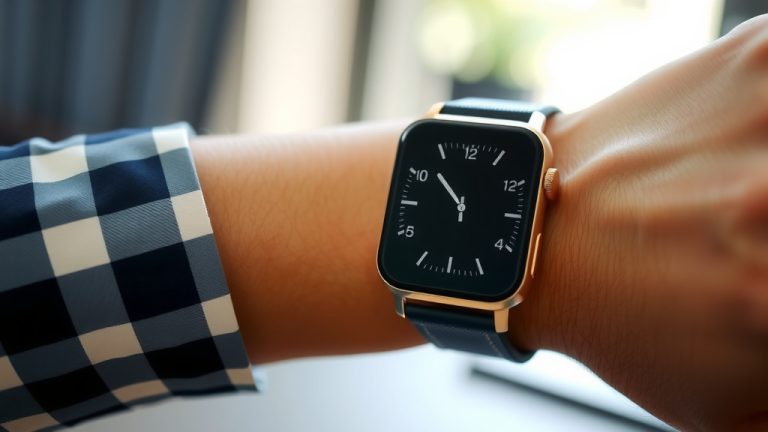
The fit of your smartwatch is more important than you might think. A watch that’s too loose might not get a good reading from its heart rate sensor. It can also shift around, leading to inaccurate movement detection.
We found that wearing your watch snugly but comfortably, usually about a finger’s width above your wrist bone, often provides the best results. Consistent wear every night is also important for establishing trends.
External Factors
Your environment plays a role too. Excessive noise or light can disrupt your sleep, and while your watch can’t measure these directly, they can affect your sleep patterns and thus your watch’s readings. Even if your watch says you slept well, if you wake up feeling groggy, there might be other factors at play.
When to Trust Your Smartwatch Data
Your smartwatch is a fantastic tool for spotting general trends and patterns in your sleep. It can help you see if your sleep duration is consistent, or if certain lifestyle changes (like drinking caffeine later in the day) seem to be impacting how much sleep you’re getting.
We found that the data is most reliable for answering questions like:
- Did I sleep for around 7-8 hours last night?
- Did I wake up frequently?
- Is my sleep duration changing over time?
- Am I generally getting more or less light sleep?
When to Seek Professional Advice
If you’re consistently getting poor sleep, feeling exhausted during the day, or if your smartwatch data suggests severe issues (like very little deep or REM sleep over extended periods), it’s time to talk to a doctor. Your watch is a guide, not a diagnostician.
Persistent insomnia, excessive daytime sleepiness, or suspected sleep apnea are serious conditions. A healthcare professional can conduct proper medical evaluations, which may include a sleep study. These studies provide a much more detailed and accurate assessment than any wearable device (CDC).
Quick Checklist for Smartwatch Sleep Tracking
Here’s what to keep in mind for the most useful results:
- Wear your watch snugly for accurate sensor readings.
- Ensure your watch’s software is up-to-date.
- Be consistent with wearing it every night.
- Use the data to spot trends, not for diagnosis.
- Don’t stress over minor daily variations.
- If you have sleep concerns, consult a healthcare professional.
Conclusion
Your smartwatch is a fantastic tool for understanding your general sleep patterns. We found it’s quite good at tracking total sleep time and wake periods. Sleep stage estimations are improving but should be seen as educated guesses, not medical diagnoses. For the most accurate results, wear your watch snugly and consistently. If you have ongoing sleep concerns, always consult a healthcare professional. Use your watch data to spot trends and make informed lifestyle choices for better rest.
Frequently Asked Questions
Can my smartwatch replace a sleep study?
No, your smartwatch cannot replace a medical sleep study. While it offers helpful insights into your sleep habits, it lacks the precision of polysomnography (PSG) used in sleep labs. A doctor can interpret your smartwatch data alongside other health factors if needed.
Why does my smartwatch sometimes say I was awake when I felt asleep?
This can happen if you were very still while awake, or if you had involuntary movements during sleep. Your watch relies on movement and heart rate data. Minor stillness while awake might be mistaken for sleep, or restless sleep movements could be logged as wakefulness.
How does my smartwatch know if I’m in light, deep, or REM sleep?
It estimates sleep stages by analyzing changes in your heart rate and heart rate variability, along with your movement patterns. Different sleep stages have distinct physiological signatures that your watch’s sensors try to detect.
Is it better to wear my watch on my dominant or non-dominant hand for sleep tracking?
For most people, it doesn’t make a significant difference which hand you wear it on, as long as it’s worn snugly. Consistency is key. Ensure the watch has good skin contact for accurate heart rate readings and isn’t shifting too much during the night.
What if my smartwatch shows different sleep data on different nights?
Sleep naturally varies from night to night. Don’t be alarmed by small daily fluctuations. Focus on longer-term trends over weeks or months. Your smartwatch is best at showing patterns, rather than pinpointing perfect accuracy for a single night.
![7 Best Smart Fitness Watch For Women [2026]](https://smartwatchbest.com/wp-content/uploads/2026/08/7-best-smart-fitness-watch-for-women-2026-featured-768x432.jpg)
![7 Best Smart Watch For Diving [2026]](https://smartwatchbest.com/wp-content/uploads/2026/08/7-best-smart-watch-for-diving-2026-featured-768x432.jpg)