
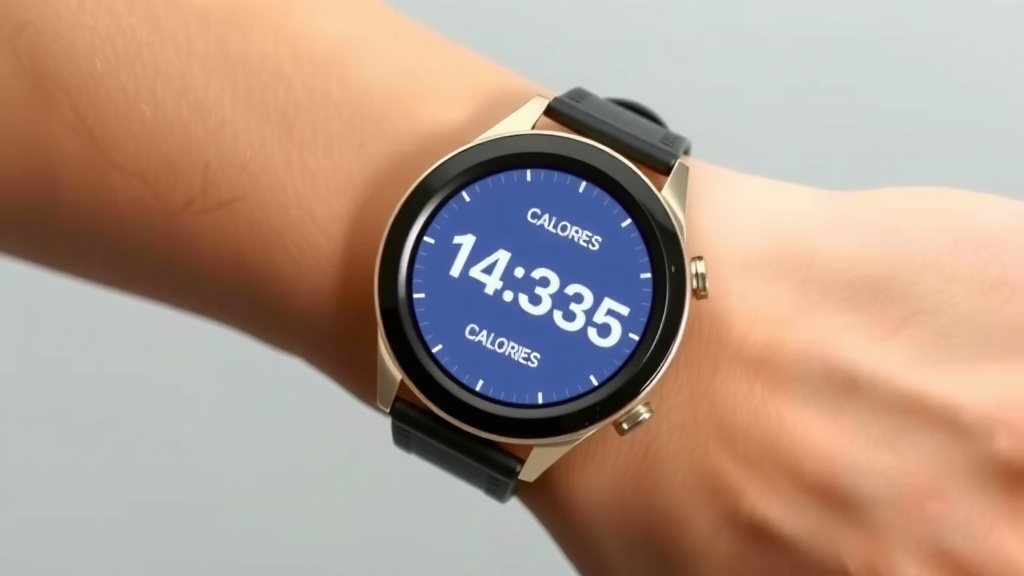
How Your Smartwatch Tracks Calories Burned
Yes, your smartwatch measures calories burned using a clever combination of your heart rate, movement, and personal data like your age, weight, and gender. It estimates how hard your body is working, and by extension, how many calories you’re using up. Think of it as your wrist-based fitness detective, piecing together clues to give you an answer.
This process relies on several sensors. Your watch tracks your heart rate, which is a key indicator of effort. It also uses an accelerometer and gyroscope to detect your movements. Combining this with your unique physical characteristics helps it calculate your calorie burn with surprising accuracy. It’s more than just steps; it’s a sophisticated estimation.
- Smartwatches estimate calories burned using heart rate and movement data.
- They factor in your personal details for a more accurate reading.
- This helps you track your fitness and energy expenditure.
- It’s a smart way to understand your daily activity levels.
Let’s dive into the specific ways your smartwatch works its magic to count those calories. You might be surprised at the technology on your wrist!
How Your Smartwatch Tracks Calories Burned
It’s pretty amazing how that little device on your wrist can estimate how many calories you’ve torched. Your smartwatch does this by looking at a few key pieces of information. Think of it like a detective gathering clues to solve the mystery of your energy expenditure.
The Heart of the Matter: Heart Rate Monitoring
The heart rate sensor is perhaps the most critical component. When you exercise, your heart rate goes up. The harder you work out, the faster your heart beats. Your smartwatch measures these beats per minute (BPM).
Why Heart Rate Matters for Calorie Counting
Research shows a strong correlation between your heart rate and your metabolic rate. A higher heart rate generally means your body is working harder and burning more calories. This is why you’ll often see calorie counts jump significantly during intense workouts.
When you first set up your watch, you input details like your age, weight, height, and gender. This personal data is vital. It helps the watch understand your basal metabolic rate (BMR). Your BMR is the number of calories your body burns just to stay alive at rest.
Personalization for Better Accuracy
Different people burn calories at different rates. A taller person might burn more than a shorter person doing the same activity. Similarly, someone with more muscle mass will burn more calories than someone of the same weight with less muscle. Your watch uses this personal data to fine-tune its calculations.
Many guidelines point to this personalization as a key factor in improving accuracy (Mayo Clinic). Without it, the calorie estimate would be very generic and less useful for you specifically.
Movement and Activity Tracking
Beyond your heart rate, your smartwatch is constantly monitoring your movement. This is where the accelerometer and gyroscope come into play.
What Accelerometers and Gyroscopes Do
The accelerometer detects motion and changes in orientation. It can tell if you’re walking, running, or jumping. The gyroscope helps to measure the angles and rotational speeds of your movements. Together, they track the intensity and type of physical activity you’re doing.
These sensors help your watch distinguish between different activities. For instance, running burns more calories than simply walking. It can even detect specific exercises like cycling or swimming, though accuracy can vary by watch model and the specific sensors included.
Steps vs. True Calorie Burn
You might think it’s just about counting steps, but it’s much more. While steps are a good indicator of general activity, your watch aims to measure the energy expended. Someone might take fewer steps but move with more intensity, burning more calories. Your watch tries to capture this nuance.
We found that watches that combine heart rate data with detailed movement analysis provide a more robust calorie estimate. It’s not just about quantity of movement, but the quality and effort involved.
Putting It All Together: The Algorithm
Your smartwatch doesn’t just collect raw data; it runs it through a sophisticated algorithm. This is the smart part of the smartwatch.
How Algorithms Estimate Calories
The algorithm takes your heart rate, movement data, and personal profile (age, weight, etc.) and plugs them into formulas. These formulas are based on physiological research. They estimate the oxygen your body is consuming, which is directly related to calorie burning.
Think of it like a recipe. You have your ingredients (heart rate, movement, personal stats), and the algorithm is the chef that combines them to make the final dish (your calorie burn estimate).
Understanding the Limitations
While smartwatches have become much more accurate, they are still estimates. They aren’t as precise as medical-grade equipment used in labs. Factors like individual physiology, hydration levels, and even environmental conditions can affect your actual calorie burn. It’s a good number to track, but not a definitive measurement.
We found that for general fitness tracking and motivation, these estimates are very effective. However, for precise medical or dietary needs, consulting with a healthcare professional is always recommended (CDC). Your watch is a tool to guide you, not a doctor.
Daily Activity vs. Specific Workouts
Your smartwatch tracks calories burned in two main ways: your overall daily activity and specific workout sessions.
Basal Metabolic Rate (BMR) and Non-Exercise Activity Thermogenesis (NEAT)
Your watch estimates calories burned even when you’re not actively exercising. This includes your BMR, which is the energy your body uses at rest. It also accounts for NEAT, which is the energy spent on everyday activities like fidgeting, walking to your car, or doing chores. Many experts say NEAT can account for a significant portion of daily calorie expenditure (NIH).
Active Calories During Exercise
When you start a workout mode on your watch, it shifts its focus. It prioritizes your heart rate and the intensity of your movements to give you a more accurate burn for that specific period. This is often shown as “active calories” distinct from your total daily burn.
Here’s a quick summary of what your watch uses:
- Heart Rate: Your pulse is a key indicator of effort.
- Movement Data: Accelerometer and gyroscope track your activity.
- Personal Details: Age, weight, gender, and height personalize the estimate.
- Activity Type: Different exercises have different calorie burn rates.
- Duration: The longer you do an activity, the more calories you burn.
- Algorithm: Smart software crunches all this data.
Comparing Different Smartwatches
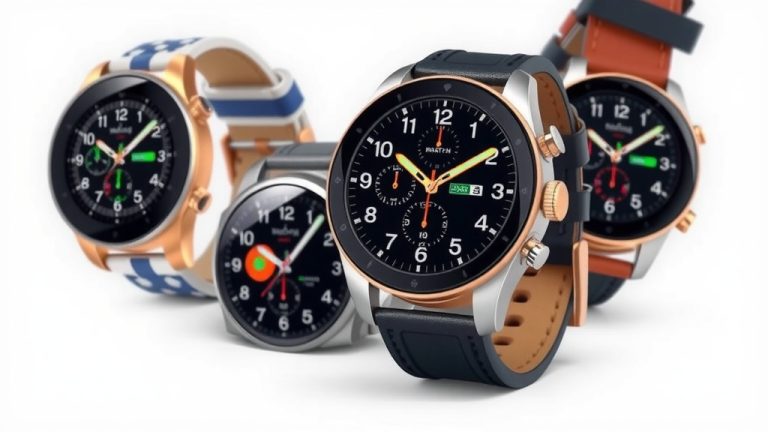
Not all smartwatches are created equal when it comes to calorie tracking. The quality of the sensors and the sophistication of the algorithm can vary.
Sensor Quality Matters
A watch with a more advanced optical heart rate sensor might provide more accurate readings. Similarly, watches with better GPS tracking can more accurately measure distance for activities like running or cycling, which also feeds into calorie calculations.
Software and Algorithm Differences
The company behind the smartwatch also plays a big role. Different brands invest differently in their algorithms. Some may have algorithms that are better at accounting for specific types of workouts or individual variations. You might find that one brand’s calorie count for the same activity differs from another.
When choosing a smartwatch, consider what features are most important to you. If calorie tracking is a top priority, look for reviews that specifically address the accuracy of that feature on different models. Some top health organizations suggest looking for devices that have been validated for their accuracy if possible (Cleveland Clinic).
Conclusion
You now understand how your smartwatch uses heart rate, movement, and personal data to estimate your calorie burn. It’s a smart combination of sensors and algorithms working together. Remember, these are helpful estimates, not exact measurements. They provide a great way to track your progress and stay motivated on your fitness journey. For the most accurate picture of your health, always consult with a healthcare professional. Keep moving and keep tracking!
Frequently Asked Questions
Can my smartwatch track calories burned while I’m sleeping?
Some advanced smartwatches can estimate calories burned during sleep by monitoring your heart rate and movement patterns. This helps account for your Basal Metabolic Rate (BMR) even when you’re at rest. The accuracy for sleep calorie burn is generally lower than during active periods.
How accurate are smartwatches for calorie tracking compared to fitness trackers?
Generally, smartwatches offer more sophisticated calorie tracking than basic fitness trackers because they often include more advanced sensors like GPS and more complex algorithms. The accuracy can still vary between brands and models, with those integrating heart rate data showing better results.
Does the type of workout I do affect the calorie count on my smartwatch?
Yes, absolutely. Your smartwatch tries to detect the type of activity you’re doing, like running versus cycling. Different exercises have different energy demands, and the watch adjusts its calorie calculation based on the intensity and type of movement it detects.
What is “active calories” versus “total calories” on my smartwatch?
“Active calories” refer to the calories you burn during intentional exercise or increased physical activity. “Total calories” include your active calories plus the calories your body burns at rest to maintain basic functions throughout the day. Your watch tracks both to give you a complete picture.
Should I rely solely on my smartwatch for weight loss calorie goals?
While your smartwatch is a fantastic tool for motivation and tracking, it’s best not to rely on it solely for strict weight loss calorie goals. Its calorie burn estimates are still just that—estimates. For precise dietary needs, it’s wise to combine its data with advice from a registered dietitian or doctor.

![7 Best Android Smart Watch For Blood Pressure [2026]](https://smartwatchbest.com/wp-content/uploads/2026/06/7-best-android-smart-watch-for-blood-pressure-2026-featured-768x432.jpg)