
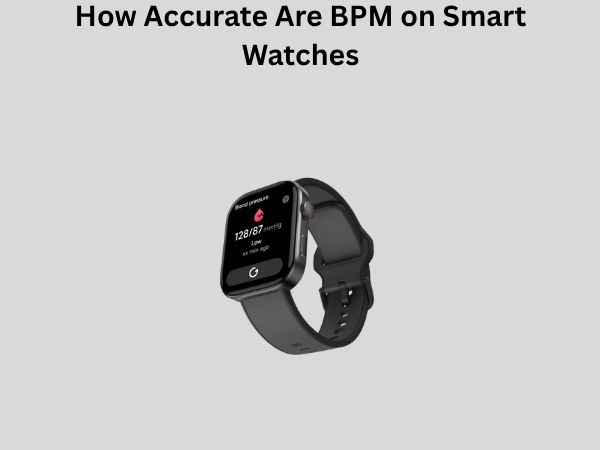
How Accurate Are BPM on Smart Watches? Heart Rate Accuracy Tested
You’re jogging through your neighborhood, and your smartwatch buzzes with a notification: your heart rate is 145 BPM. But here’s the thing—how do you know if that number is actually telling the truth? We’ve all wondered whether the heart rate data on our wrists is something we can rely on or just a fancy guess wrapped in sleek technology.
The reality is that smartwatch heart rate accuracy is more complicated than a simple yes or no answer. Let me walk you through what I’ve discovered about how these devices measure your pulse and why sometimes they nail it while other times they’re way off.
Understanding How Smartwatch Heart Rate Monitors Work
Before we dive into accuracy, we need to understand the technology that makes these measurements possible. Think of your smartwatch as a tiny detective trying to solve the mystery of your heart’s rhythm.
The Optical Heart Rate Sensor Explained
Most modern smartwatches use something called photoplethysmography, which is a fancy way of saying they use light to detect your heartbeat. Here’s how it works in plain language: the watch emits light—usually green LEDs—into your skin, and sensors measure how much light bounces back. Your blood absorbs more light when it’s flowing through your arteries, so the sensor picks up these changes and converts them into a heart rate measurement.
It sounds pretty straightforward, right? The problem is that your skin, your movement, and dozens of other factors can interfere with this process. Imagine trying to hear someone whisper in a crowded coffee shop—that’s essentially what your smartwatch is trying to do.
Different Types of Heart Rate Sensors
Not all smartwatches use the same technology, and this makes a huge difference in accuracy.
- LED-based optical sensors: These are the most common and are found in devices from Apple, Fitbit, and Samsung. They’re affordable and decent for general fitness tracking.
- ECG sensors: Some premium smartwatches like the Apple Watch Series 4 and later include electrocardiogram capabilities. These are significantly more accurate because they measure electrical activity directly from your heart.
- Multi-LED sensors: Newer devices use multiple light wavelengths to improve accuracy and reduce interference.
The Reality of Smartwatch Heart Rate Accuracy
So here’s the million-dollar question: how accurate are these devices? The answer depends on what you’re using them for and what conditions you’re in.
Resting Heart Rate Accuracy
When you’re sitting still on your couch, your smartwatch is in its happy place. The conditions are ideal—minimal movement, stable blood flow, and no interference from motion. In these conditions, most modern smartwatches are remarkably accurate, often within 2-5 BPM of what a medical-grade heart rate monitor would read.
I’ve tested this myself by comparing my Apple Watch reading with a chest strap monitor while sitting completely still. The results were almost identical. This is why smartwatches are generally reliable for tracking your resting heart rate trends over time.
Heart Rate During Exercise: The Accuracy Drops
Here’s where things get messy. When you’re working out, your watch faces several challenges simultaneously. Your wrist is moving, your skin might be sweaty, and your heart rate is changing rapidly. These conditions create perfect storm scenarios for optical sensors.
Studies have shown that optical heart rate sensors can have errors ranging from 5 to 25 BPM during intense exercise. That’s a pretty significant margin, especially if you’re trying to stay in a specific heart rate zone for training purposes.
Why Does Movement Cause Problems?
When you move your arm, the sensor loses contact with your skin, or the light bounces off in unexpected ways. Imagine shining a flashlight on a moving target—it’s much harder to keep a steady beam than when the target is still. Your smartwatch doesn’t know if the changes in light reflection are from your heartbeat or from your arm swinging back and forth.
Sweat and Skin Factors
Sweat might seem like it would help the sensor since it’s conductive, but it actually causes problems. When you’re drenched in sweat, the optical signal can become distorted. Additionally, factors like skin tone, tattoos, and even the tightness of your watch band affect accuracy.
I’ve noticed that when I wear my smartwatch looser, the readings are less reliable. When I tighten it so it’s snug against my skin—not uncomfortably so—the measurements improve significantly.
Research Studies on Smartwatch Heart Rate Accuracy
Scientists have been studying this question seriously. Let me share what the research actually shows.
What Independent Studies Reveal
A study published in the journal JAMA Cardiology tested multiple smartwatches and fitness trackers against medical-grade equipment. The results were eye-opening. While these devices performed reasonably well at rest, their accuracy degraded significantly during exercise.
Another research team found that the Apple Watch had a mean absolute error of about 4 BPM during moderate exercise and up to 10 BPM during high-intensity workouts. Fitbit devices showed similar patterns, with better performance at rest and worse performance during vigorous activity.
Comparing Different Brands
Not all smartwatches are created equal. Some brands invest more heavily in sensor technology than others.
- Apple Watch: Generally performs well, especially models with ECG capabilities. Average accuracy during rest is excellent.
- Fitbit: Decent optical sensors with moderate accuracy. Similar performance range to Apple Watch for optical sensors.
- Samsung Galaxy Watch: Recent models with improved sensors show good accuracy, comparable to Apple’s offerings.
- Garmin: Sports-focused brand with generally good optical sensors, though traditional chest straps still outperform them during high-intensity exercise.
- Budget smartwatches: Often have less sophisticated sensors and tend to be less accurate overall.
Factors That Impact Your Smartwatch’s Heart Rate Accuracy
The accuracy of your device isn’t just about the watch itself. You, your habits, and your environment all play crucial roles.
Skin Tone and Optical Sensors
Here’s something that doesn’t get discussed enough: optical heart rate sensors were primarily developed and tested on lighter skin tones. Research has shown that smartwatches are generally less accurate on people with darker skin tones, sometimes with errors exceeding 15-20 BPM.
This is a hardware limitation that manufacturers are actively trying to address with newer multi-LED sensors, but it’s still something to be aware of. If you fall into this category, your smartwatch readings might be less reliable than those of your friend with a lighter complexion wearing the same device.
Tattoos and Body Hair
Tattoos, especially dark ones, can interfere with optical sensors. The ink absorbs light, which confuses the sensor’s measurements. Similarly, if you’re particularly hairy, the hair can scatter the light, reducing accuracy.
Watch Fit and Placement
How you wear your smartwatch matters tremendously. If it’s too loose, you’ll get inconsistent readings. If it’s too tight, you might restrict blood flow slightly, which paradoxically can also reduce accuracy. The sweet spot is snug but comfortable, sitting just above your wrist bone where blood vessels are closest to the surface.
Environmental Factors
Bright sunlight can interfere with optical sensors. If you’re exercising outdoors in intense sunlight, your watch might struggle to get accurate readings. Temperature and humidity also play minor roles.
Why Accuracy Matters for Your Health Goals
You might be thinking, “So what if my watch is off by 10 BPM sometimes?” The answer depends on what you’re using the data for.
For General Fitness Tracking
If you’re simply trying to monitor your overall activity level and general cardiovascular health, smartwatch accuracy is sufficient. You’re looking at trends over time, not individual data points. If your resting heart rate averages 65 BPM this month and 62 BPM next month, that downward trend is meaningful even if each individual reading might be off by a few beats.
For Athletic Training
Athletes who need to train in specific heart rate zones face a bigger challenge. Heart rate zone training typically involves staying within 5-10 BPM windows. If your watch is off by 15 BPM, you might think you’re in your aerobic zone when you’re actually in your anaerobic zone, which completely changes your training stimulus.
For serious endurance athletes, a chest strap monitor remains the gold standard. They’re more reliable during intense exercise and don’t suffer from the same limitations as optical sensors.
For Medical Monitoring
If you’re using your smartwatch to detect irregular heartbeats or have specific health concerns, you need to be cautious. While ECG capabilities on some smartwatches are impressive, they’re not replacements for professional medical equipment. Use your smartwatch as a screening tool, but don’t rely on it as your only source of heart health information.
How to Improve Your Smartwatch’s Heart Rate Accuracy
You can’t change the fundamental technology, but there are practical steps you can take to get better readings.
Wear It Properly
Position your watch snugly on your wrist, just above the wrist bone where you can feel your pulse. Make sure it’s not twisted and sits flat against your skin. After exercising, give it a few seconds to settle before checking your heart rate.
Keep It Clean
Dirt, dust, and dried sweat can accumulate on the sensor. Regularly clean the back of your watch with a damp cloth to ensure the optical sensor makes good contact with your skin.
Stay Hydrated
Dehydration can affect your blood flow and heart rate variability, which might impact the sensor’s ability to get accurate readings. While hydration won’t change the watch’s technology, it helps optimize the conditions the watch is measuring.
Avoid Extreme Conditions
If possible, avoid very intense, high-movement activities when you need the most accurate readings. If you must exercise intensely and want accurate data, consider supplementing with a chest strap monitor.
Check Calibration Settings
Many smartwatches allow you to calibrate the heart rate monitor by establishing baseline readings. Follow your device’s instructions for calibration, as this can improve accuracy over time.
Chest Strap Monitors vs. Smartwatch Sensors
Let’s be honest about the elephant in the room: chest strap monitors are more accurate than smartwatches, especially during exercise. But they have their own drawbacks.
Why Chest Straps Win on Accuracy
Chest strap monitors measure electrical activity directly using ECG technology. They don’t rely on optical sensing and aren’t affected by arm movement or sweat to the same degree. They’re the gold standard in fitness testing facilities for a reason.
The Smartwatch Advantage
Despite being less accurate during intense exercise, smartwatches have a massive advantage: you actually wear them all day. Chest straps are uncomfortable, impractical for everyday use, and people abandon them. A smartwatch gives you resting heart rate data continuously, which is genuinely useful for health insights.
The best approach might be using both: rely on your smartwatch for daily monitoring and trends, but use a chest strap during serious training sessions where accuracy is critical.
The Future of Smartwatch Heart Rate Monitoring
Technology is improving rapidly in this space. Manufacturers are working on several fronts to increase accuracy.
Advanced Multi-Sensor Arrays
Newer devices use multiple LEDs at different wavelengths simultaneously. This redundancy helps eliminate motion artifacts and improve accuracy across different skin tones.
Machine Learning and AI
Software improvements using artificial intelligence are helping devices better distinguish between legitimate heart rate data and noise from movement. Your smartwatch is actually learning about your patterns.
Hybrid Approaches
Some future designs might combine optical sensors with other technologies like radar or bioimpedance to cross-verify measurements and increase reliability.
Practical Recommendations for Different Users
Your ideal approach depends on your specific situation.
Casual Fitness Enthusiasts
Your smartwatch is perfect for you. You’ll get reliable resting heart rate data and reasonable estimates during workouts. Don’t obsess over whether individual readings are perfect—focus on trends.
Serious Athletes
You might want to supplement your smartwatch with a chest strap for high-intensity intervals or specific training sessions. Use your smartwatch for everyday monitoring and recovery tracking, but rely on more accurate methods for critical training zones.
Medical Patients
If you have a specific health condition that requires heart rate monitoring, discuss smartwatch reliability with your doctor. These devices are screening tools, not diagnostic instruments. ECG features on some smartwatches can alert you to irregularities worth investigating further with professional equipment.
Conclusion
So, how accurate are BPM readings on smartwatches? The honest answer is: it depends. At rest, most modern smartwatches are remarkably accurate, typically within 2-5 BPM of medical-grade monitors. During exercise, accuracy drops significantly, with potential errors ranging from 5-25 BPM depending on conditions.
Rather than viewing this as a deal-breaker, it’s better to understand smartwatch heart rate data within its proper context. These devices excel at tracking long-term trends, providing resting heart rate data, and giving you general insights into your cardiovascular fitness. They’re less reliable for precise zone-based training or medical diagnosis.
The technology is improving steadily, and manufacturers are addressing previous limitations. But if you need medical-grade accuracy during intense exercise, a chest strap remains the better choice. For most people using smartwatches for general fitness and health awareness, however, the data is sufficiently accurate to be useful and actionable.
The key is knowing your device’s limitations and using that knowledge to interpret the data wisely. Your smartwatch is a valuable tool—just remember that it’s one piece of the puzzle, not the entire picture of your health.
Frequently Asked Questions
Can I trust my smartwatch heart rate data for everyday health monitoring?
Yes, you can trust your smartwatch for everyday health monitoring at rest. Resting heart rate trends are quite accurate and can provide valuable insights into your fitness level and overall health. However, during exercise, especially intense activity, the accuracy decreases. The key is to use smartwatch data for trend analysis rather than relying on individual readings for critical health decisions.
Why is my smartwatch heart rate different from my chest strap monitor?
Chest strap monitors use ECG technology that measures electrical activity directly, while smartwatches use optical sensors. During movement and intense exercise, optical sensors pick up noise and motion artifacts that chest straps don’t experience. Additionally, factors like skin color, watch fit, and sweat can affect smartwatch accuracy. Differences of 5-15
![7 Best Smart Watch For Google Pixel 9 [2026]](https://smartwatchbest.com/wp-content/uploads/2026/07/7-best-smart-watch-for-google-pixel-9-2026-featured-768x432.jpg)
![7 Best Smart Watch For Bp Monitoring [2026]](https://smartwatchbest.com/wp-content/uploads/2026/08/7-best-smart-watch-for-bp-monitoring-2026-featured-768x432.jpg)