Analog vs Smart Watch: Which One Is Better for Everyday Use?
When you glance at your wrist to check the time, what do you see? If you’re like millions of people worldwide, you’re probably torn between two worlds: the timeless elegance of an analog watch or the cutting-edge functionality of a smartwatch. This isn’t just about telling time anymore—it’s about choosing a lifestyle, a statement, and frankly, a commitment to how you want to interact with the world around you.
The debate between analog and smart watches has become increasingly heated as technology advances. But here’s the thing: there’s no universally “better” choice. Instead, there’s a better choice for you, your lifestyle, and your needs. Let me walk you through everything you need to know to make an informed decision.
Understanding the Basics: What Sets Them Apart
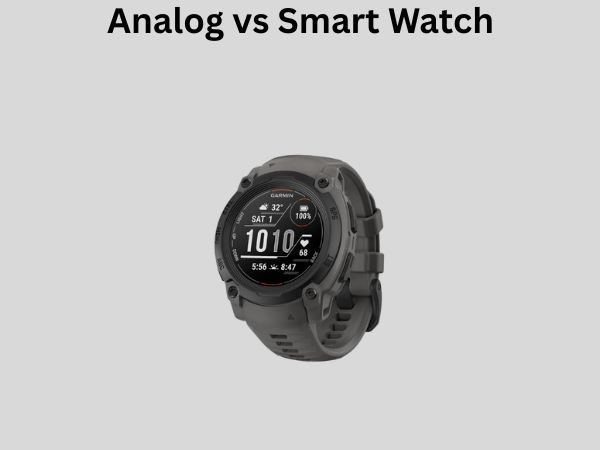
Before we dive deep into the nitty-gritty, let’s establish what we’re actually comparing. An analog watch is a mechanical or quartz timepiece that displays time through moving hands on a numbered dial. A smartwatch, on the other hand, is a miniaturized computer strapped to your wrist, packed with sensors, processors, and connectivity features that extend far beyond simply telling time.
Think of it like comparing a bicycle to a motorcycle. The bicycle gets you where you need to go efficiently and requires minimal maintenance. The motorcycle offers speed, convenience features, and opens up possibilities the bicycle simply can’t match. But the motorcycle also demands more from you—more fuel, more learning, more responsibility.
The Core Philosophy Difference
Analog watches operate on a principle of minimalism and purposefulness. They’re designed to do one thing exceptionally well: keep accurate time. Smartwatches embrace the opposite philosophy—they’re maximalist devices that try to bring as many functionalities as possible to your wrist. This fundamental difference ripples through every aspect of the comparison.
The Analog Watch: Timeless Simplicity
Why Analog Watches Never Go Out of Style
There’s something deeply satisfying about an analog watch. Maybe it’s the mechanical precision, the craftsmanship visible in every component, or simply the fact that your grandfather wore one that still works today. Analog watches represent reliability in its purest form.
When you wear an analog watch, you’re not just wearing a tool—you’re wearing a piece of wearable art. The watch face, the choice of numerals, the material of the band, the finishing of the case—every element contributes to a visual statement that speaks volumes about your personal style without you saying a word.
The Mechanical Marvel
Let’s talk about what makes analog watches special. Many people don’t realize that some analog watches contain hundreds of moving parts working in perfect harmony. The escapement mechanism alone—the part that regulates the release of energy—is a masterpiece of engineering that hasn’t fundamentally changed much since the 1600s.
- Mechanical watches offer a connection to horological tradition
- No charging required for most analog watches
- Quartz movements offer reliable timekeeping for decades
- Lower maintenance requirements compared to smartphones
- Can be handed down as heirlooms to future generations
The Aesthetic Advantage
Walk into any high-end jewelry store, and you’ll see why analog watches dominate the luxury market. There’s an incredible diversity of designs available. From minimalist Scandinavian watches to ornate chronographs dripping with complications, from sporty diving watches to elegant dress watches—there’s genuinely something for everyone.
A smartwatch, conversely, is a smartwatch. Yes, you can change the band and choose different watch faces on the display, but fundamentally, it’s a rectangular or rounded screen on your wrist. The aesthetic variety is much more limited, and frankly, many people still find smartwatches to look a bit too “techy” for formal occasions.
The Smart Watch: Your Wrist-Worn Computer
More Than Just Time
If an analog watch is a Swiss Army knife, a smartwatch is your entire toolbox. When you put on a smartwatch, you’re gaining access to a device that can track your heartbeat, monitor your sleep, count your steps, deliver notifications, make payments, and even send messages—all without pulling your phone out of your pocket.
The smartwatch ecosystem has matured significantly over the past few years. What started as gimmicky devices with poor battery life and limited functionality has evolved into sophisticated health and lifestyle companions that genuinely enhance daily productivity.
The Health Tracking Revolution
Here’s where smartwatches truly shine. If you’re health-conscious, a smartwatch isn’t just better than an analog watch—it’s in a completely different category. Modern smartwatches include:
- Heart rate monitoring throughout the day and during sleep
- SpO2 (blood oxygen) measurement
- ECG functionality (on some models) for detecting irregular heartbeats
- Sleep tracking with detailed analysis of sleep stages
- Stress level monitoring
- Automatic workout detection and calorie burning estimates
- Hydration reminders
- Menstrual cycle tracking
An analog watch can’t do any of this. It tells you what time your workout started, but a smartwatch tells you how many calories you burned, your average heart rate, and how this compares to your historical data.
Notification Hub on Your Wrist
Smartwatches act as an extension of your smartphone, filtering notifications so you only see what matters. Instead of constantly reaching for your phone, you can glance at your wrist to see if that notification deserves your attention. This can actually reduce phone addiction and help you stay more present in real-world interactions.
Battery Life Comparison
The Endurance Test
This is perhaps the area where analog watches have the most decisive advantage. A quartz analog watch can run for months or even years on a single battery. Mechanical watches require no battery at all if you wind them regularly. You can literally forget about your analog watch and it will keep ticking away faithfully.
Smartwatches, meanwhile, are power-hungry devices. Most smartwatches need charging every one to three days, depending on usage and the specific model. Some newer models can stretch this to a week, but they’re still nowhere near the endurance of an analog watch.
What This Means for Daily Life
If you’re someone who travels frequently, this battery difference matters significantly. An analog watch travels indefinitely without requiring a power outlet or charger. A smartwatch requires the same consideration you give your smartphone—you need to remember to charge it, and you need access to a power source.
However, if you’re diligent about charging habits and you charge your watch overnight like you do your phone, this becomes less of a practical issue and more of a philosophical one.
Health and Fitness Tracking Capabilities
Analog Watches and Fitness Tracking
An analog watch can track fitness in one way: you can use the dial to time your activities. If you’re running, you note the time you start and the time you finish. That’s it. It’s not useless—many runners and swimmers actually prefer this approach because there’s no distraction from notifications.
Smartwatch Fitness Features
Smartwatches, however, transform you into a quantified version of yourself. They don’t just track that you exercised; they track:
- Duration and intensity of your workout
- How your heart rate responded to the exercise
- Real-time coaching and form suggestions (on some models)
- Long-term trends in your fitness improvements
- Comparison with other users for motivation
- Integration with health apps to correlate exercise with diet, sleep, and overall wellness
For serious athletes or people trying to develop a consistent fitness habit, this data can be genuinely motivating and useful. Seeing your progress visualized can push you to keep going when motivation wanes.
Sleep Tracking and Recovery
One feature that deserves special mention is sleep tracking. Smartwatches can monitor your sleep patterns, detecting when you’re in light sleep, deep sleep, or REM sleep. They can alert you to potential sleep issues and suggest improvements to your sleep hygiene. An analog watch can’t tell you anything about your sleep except when you went to bed and woke up.
Style and Aesthetic Appeal
Fashion Statements
Let’s be honest: watches are fashion accessories first and functional tools second. When you wear an analog watch, you’re making a statement about who you are or who you want to be perceived as. A vintage Rolex Submariner says something completely different from a minimalist Braun watch, which says something different from a colorful Swatch.
This diversity is simply unmatched in the smartwatch world. Yes, smartwatch manufacturers have improved their designs tremendously, and some smartwatches genuinely look good. But there’s a limit to how much visual variety you can achieve when the core of the device is a screen.
Context Matters
Here’s a scenario: you’re going to a black-tie gala. Would you wear a smartwatch? Most people wouldn’t. An elegant analog dress watch? Absolutely. Would you wear an analog sports watch to the gym? You could, but it’s not ideal. A smartwatch? Perfect.
The reality is that analog watches have a broader aesthetic range and can be appropriate in more formal contexts. Smartwatches are fantastic for casual and active settings but struggle in the elegance department.
Connectivity and Smart Features
Beyond Timekeeping
Here’s what a smartwatch can do that an analog watch simply can’t:
- Receive and respond to messages
- Make and receive calls
- Control your music playback
- Accept mobile payments via NFC technology
- Control smart home devices
- Get real-time traffic and navigation directions
- Receive weather updates
- Check calendar appointments
- Access voice assistants like Siri or Google Assistant
This is the smartwatch’s killer app: convenience. You don’t have to pull out your phone. You just glance at your wrist. For busy professionals, this convenience can genuinely improve daily efficiency.
The Downside of Connectivity
However, this connectivity comes with a cost. Smartwatches require pairing with your smartphone and maintaining that connection. They’re dependent on your phone’s data plan or their own cellular connectivity (which adds cost). They’re vulnerable to the same security and privacy concerns as any connected device.
An analog watch? No connectivity needed. No vulnerabilities. No data collection. Just pure, autonomous functionality.
Durability and Longevity
Built to Last
A well-made analog watch can last forever. Seriously. There are Rolex watches from the 1950s still keeping perfect time. There are mechanical watches centuries old that still work. The materials are timeless—stainless steel, gold, sapphire crystal—and they don’t degrade with age. They may need occasional maintenance, like a battery replacement in quartz watches or servicing in mechanical watches, but the fundamental structure endures.
Smartwatch Lifespan
Smartwatches, like all electronics, have a more limited lifespan. The battery degrades with each charge cycle and eventually needs replacement. The software becomes outdated and stops receiving updates. The processor, which was cutting-edge when you bought the watch, becomes slow and insufficient within a few years.
The typical lifespan of a smartwatch is three to five years before it feels genuinely sluggish or the battery barely holds a charge. Compare this to an analog watch that can work flawlessly for decades or centuries, and the difference becomes clear.
Repairability
An analog watch can be repaired by any competent watchmaker. Smartwatches? Good luck finding someone other than the manufacturer who can fix them. They’re sealed units with proprietary parts. If something breaks, you often need to replace the entire watch.
Price Considerations
Entry-Level Comparison
You can buy a decent analog watch for as little as $20. You can buy a quality analog watch for $100. A good smartwatch starts around $150 and goes up to $400 or more for premium models like the Apple Watch.
Long-Term Cost of Ownership
However, the initial purchase price tells only part of the story. Consider the total cost of ownership over a decade:
- Analog watch: $100 (purchase) + $10 (battery replacement every few years) + $50 (occasional maintenance) = approximately $160 total over ten years
- Smartwatch: $300 (purchase) + $300 (replacement in 5 years) + $100 (charging cable replacements) = approximately $700 total over ten years
From a purely economic standpoint, analog watches are significantly cheaper over their lifetime.
Luxury Markets
This comparison flips entirely in the luxury segment. A luxury analog watch can cost thousands or even hundreds of thousands of dollars. Smartwatches, even premium models, max out around $2,000. If you’re buying a watch as an investment or status symbol, analog watches (particularly mechanical ones from prestigious brands) have actual resale value and can even appreciate.
Water Resistance and Outdoor Performance
Analog Watches in Challenging Environments
Many analog watches are incredibly water-resistant. Dive watches can go hundreds of meters underwater. They handle extreme temperatures better than electronics. They don’t require worry about salt water corroding internal circuits or moisture damaging processors. A sports analog watch can handle more punishment than most smartwatches.
Smartwatch Environmental Concerns
Smartwatches are becoming increasingly water-resistant, which is great progress. Many modern smartwatches can handle swimming and snorkeling. However, they’re still more fragile than a rugged analog sports watch. Drop them hard enough, and the screen breaks. Submerge them in saltwater, and corrosion concerns increase. Extreme cold can deplete their batteries faster.
If your lifestyle involves water sports, hiking in extreme conditions, or other outdoor adventures, an analog watch might be the more reliable companion.
![7 Best Smart Watch Compatible With Samsung [2026]](https://smartwatchbest.com/wp-content/uploads/2026/08/7-best-smart-watch-compatible-with-samsung-2026-featured-768x432.jpg)