
Smart Watch Body Composition: How Accurate?
Smartwatch body composition accuracy is a mixed bag. While they can offer a general trend of your body fat and muscle mass, they are not as precise as medical-grade devices. Think of them as a handy progress tracker rather than a diagnostic tool.
These devices use bioelectrical impedance analysis (BIA) to estimate your body composition. This method sends a tiny electrical current through your body. Different tissues conduct electricity differently, allowing the watch to make an educated guess. Accuracy can vary based on hydration levels and how you hold the watch. We found that factors like your last meal and exercise can also affect the readings.
- Smartwatch body composition is a general trend, not exact science.
- They use BIA, which measures electrical current through your body.
- Accuracy can be influenced by hydration, meals, and exercise.
- Use them for tracking changes over time, not for absolute numbers.
Ready to see how your smartwatch stacks up? Let’s dive into what makes these readings tick and how accurate they really are for your fitness journey.
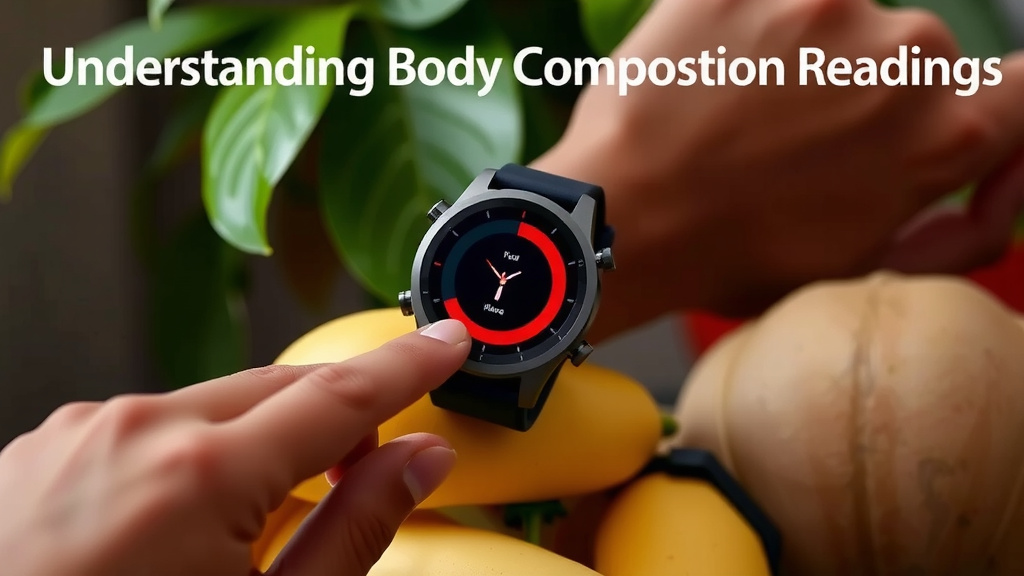
Understanding Smartwatch Body Composition Readings
Smartwatches offer a convenient way to track body composition metrics. They aim to give you an idea of your body fat percentage and muscle mass. This information can be useful for monitoring your fitness journey over time. But how do they actually do it, and how accurate are these numbers?
How Smartwatches Measure Body Composition
The technology behind most smartwatch body composition readings is called bioelectrical impedance analysis, or BIA. You might have seen BIA scales that work in a similar way. It’s a method that’s been around for a while, and smartwatches have adapted it for your wrist.
The Science Behind BIA
BIA works by sending a tiny, harmless electrical current through your body. This current travels through different types of body tissue at different speeds. Fat tissue has a higher water content and conducts electricity slower than lean muscle mass. Your smartwatch measures the resistance (impedance) to this current. It then uses an algorithm to estimate your body fat percentage and other metrics.
What Your Watch “Sees”
Think of it like this: your watch is trying to guess what’s inside your body based on how easily electricity flows through it. The less resistance the current encounters, the more lean mass (like muscle) your watch might assume you have. More resistance can suggest a higher body fat percentage. It’s an educated guess, but not a direct measurement of your fat cells.
Factors Affecting Accuracy: The Nitty-Gritty Details
This is where things get a bit tricky. While the BIA method is sound, its accuracy on a smartwatch can be impacted by many everyday factors. These can cause your readings to fluctuate more than you might expect.
Hydration Levels are Key
Research consistently shows that your hydration level is one of the biggest influencers of BIA readings. If you’re dehydrated, your body tissues will have less water content. This can make your body appear to have more fat than it actually does. On the flip side, being over-hydrated can skew the results the other way. It’s why many experts recommend taking readings at the same time of day, under consistent hydration conditions (Mayo Clinic).
Timing of Meals and Exercise
What you ate and when you last exercised can also play a role. A recent meal can affect your body’s water distribution. Intense exercise can cause temporary shifts in hydration and fluid balance. For the most consistent results, it’s often suggested to avoid taking readings immediately after eating or working out. Waiting an hour or two is usually a good idea.
Skin Contact and Placement
How you wear your smartwatch matters too. For BIA to work effectively, the electrical current needs to pass through your body correctly. This often requires specific finger placement on the watch bezel to complete the circuit. Ensure your fingers are making good contact and that the watch band is snug but not too tight. A loose band can disrupt the signal. Many experts suggest following the specific instructions provided by the watch manufacturer for the best results.
Smartwatch Accuracy vs. Professional Devices
It’s important to have realistic expectations. Smartwatches are designed for convenience and general tracking, not for medical-grade precision. How do they stack up against more sophisticated methods?
What Medical Devices Offer
Professional body composition analysis often uses methods like DEXA scans (dual-energy X-ray absorptiometry) or hydrostatic weighing. These are considered the gold standards because they directly measure bone density, lean mass, and fat mass with much higher accuracy. They are typically performed in clinical settings and are more expensive.
Smartwatch Limitations
Smartwatches, using wrist-based BIA, have inherent limitations. The electrical current takes a path of least resistance. On a watch, this path is primarily through your arm, not your entire body. This means the readings are estimations based on that limited path. They can provide a general trend, but they won’t give you the pinpoint accuracy of a DEXA scan. Think of it as getting a rough sketch versus a detailed portrait.
| Method | How it Works | Typical Accuracy | Convenience |
|---|---|---|---|
| Smartwatch BIA | Low electrical current measures impedance | General trend, variable | Very High (wearable) |
| BIA Scale | Low electrical current measures impedance | Fair, variable with hydration | High (at home) |
| DEXA Scan | X-rays measure bone, fat, and lean mass | Very High, considered gold standard | Low (clinic visit required) |
Making the Most of Your Smartwatch Readings
Even with their limitations, your smartwatch can still be a helpful tool. The key is to use the data wisely. Don’t get fixated on the exact numbers.
Focus on Trends, Not Absolute Numbers
Instead of worrying if your body fat percentage is exactly 25% or 26%, look at the overall direction. Are your readings generally decreasing over weeks and months? That’s a positive sign that your diet and exercise plan is working. Consistent tracking over time is far more informative than a single daily reading. Many users find that seeing a downward trend in body fat and an upward trend in muscle mass is very motivating.
Consistency is Your Best Friend
To get the most reliable trends, be consistent with your measurements. Try to measure at the same time of day. Use the same arm if possible. Ensure you have had similar hydration levels and haven’t just eaten or exercised. This reduces the variables that can throw off your readings. Think of it like a science experiment – you want to keep as many conditions the same as possible.
Use It as a Motivational Tool
Your smartwatch can be a great motivator. Seeing those numbers change (even if they aren’t perfectly exact) can reinforce your healthy habits. It can provide that little nudge you need on days when motivation is low. Celebrate the progress you see, and don’t let a slightly off reading discourage you. It’s a piece of the puzzle, not the whole picture.
Here’s a quick checklist to help you get the most out of your smartwatch body composition readings:
- Measure at the same time each day.
- Stay consistently hydrated.
- Avoid measuring right after meals or workouts.
- Ensure good skin contact and proper watch placement.
- Focus on long-term trends, not daily fluctuations.
- Understand that readings are estimates, not exact measurements.
Conclusion
Your smartwatch can be a helpful partner in understanding your body composition, but it’s important to manage expectations. Remember, these devices offer a general trend of your progress, not a precise medical reading. By consistently measuring under similar conditions and focusing on long-term changes rather than daily numbers, you can effectively use your watch as a motivational tool. Keep those hydration levels steady and be mindful of your measurement timing, and you’ll be well on your way to better tracking your fitness journey.
Frequently Asked Questions
Can I rely on my smartwatch for exact body fat percentage?
No, you shouldn’t rely on your smartwatch for exact body fat percentages. Research indicates these devices provide a general trend and are influenced by many factors. They are best used for tracking progress over time rather than for absolute numbers.
How often should I take body composition readings with my smartwatch?
For the most reliable trends, aim for consistency. Try to take your readings at the same time each day, ideally in the morning before eating or drinking. This helps minimize the impact of daily fluctuations.
Does drinking water before a reading affect my smartwatch’s accuracy?
Yes, your hydration level is a major factor. Drinking water right before a reading can skew the results, potentially making your body fat percentage appear lower. It’s better to maintain consistent hydration throughout the day and measure when you are not over-hydrated.
What’s the biggest difference between smartwatch BIA and a DEXA scan?
The biggest difference lies in their methodology and accuracy. Smartwatch BIA estimates composition based on electrical impedance through your arm, while DEXA scans use X-rays to directly measure bone density, lean mass, and fat mass throughout your entire body, offering much higher precision.
My smartwatch reading changed drastically after a workout, why?
Intense exercise can temporarily alter your body’s hydration and fluid balance. This can significantly impact BIA readings. Experts often advise waiting at least an hour or two after exercising before taking a body composition measurement.


![7 Best Smart Watch For Hrv [2026]](https://smartwatchbest.com/wp-content/uploads/2026/09/7-best-smart-watch-for-hrv-2026-featured-768x432.jpg)