Apple Watch vs Smart Ring: Which Wearable Makes More Sense?
Have you ever found yourself standing in front of your smartphone, wondering if there’s a better way to stay connected without constantly reaching into your pocket? You’re not alone. The wearable technology market has exploded over the past few years, and now we’re faced with more choices than ever before. Two of the most popular options are the Apple Watch and smart rings. But which one should you actually choose?
Let me be honest with you: this decision isn’t straightforward. Both devices offer unique benefits, and the right choice depends heavily on your lifestyle, budget, and what you prioritize in a wearable. In this comprehensive guide, I’m going to walk you through everything you need to know to make an informed decision.
Understanding the Wearable Technology Landscape
Before we dive into the specifics of each device, let’s take a step back and understand what we’re really talking about here. Wearables have become extensions of our digital lives, much like how a watch once became an essential accessory for timekeeping. Today’s wearables do far more than tell time—they monitor our health, keep us connected, and help us stay organized.
The wearable market is incredibly diverse, but two categories have emerged as frontrunners: smartwatches and smart rings. Each represents a different philosophy about how technology should integrate into our daily routines.
What Is an Apple Watch Anyway?
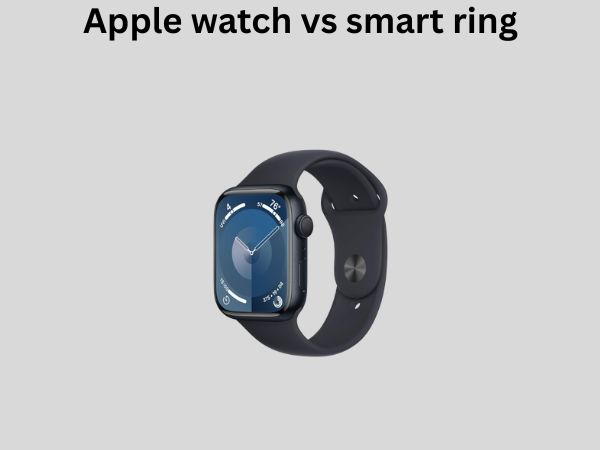
The Apple Watch is a fully-featured smartwatch that’s been refined over multiple generations since its initial release in 2015. Think of it as a miniature computer you wear on your wrist. It’s packed with features, has a substantial screen, and offers deep integration with Apple’s ecosystem.
The Core Features of Apple Watch
- Full touchscreen display with various size options
- Comprehensive health and fitness tracking capabilities
- Cellular connectivity options for independence from your phone
- App ecosystem with thousands of third-party applications
- Digital crown navigation system
- Blood oxygen monitoring
- ECG functionality
- Fall detection and emergency SOS features
The Apple Watch Display and Interface
One of the most distinctive features of the Apple Watch is its colorful Retina display. You can read notifications, respond to messages, and navigate through menus with relative ease. The digital crown, that little rotating dial on the side, provides an intuitive way to scroll through content without obscuring what’s on screen with your finger.
However, here’s something important to consider: all that screen real estate comes at a cost. The larger the display, the more battery life gets impacted.
Introducing Smart Rings: The Minimalist Alternative
Smart rings are the newer player in this game, and they represent a fundamentally different approach to wearable technology. Instead of a prominent wrist device, you’re getting a sleek, minimalist piece of jewelry that does one thing exceptionally well: health tracking.
What Makes Smart Rings Different
Imagine trying to fit all the capabilities of a smartphone into something the size of a pencil. That’s essentially what smart ring manufacturers have attempted to do. Popular options include the Oura Ring, Samsung Galaxy Ring, and various fitness-focused alternatives.
- Compact, rings-shaped form factor
- Exceptional battery life (often 5-7 days)
- Focus on health metrics and sleep tracking
- Minimal screen or no screen at all
- Syncs data to your smartphone for analysis
- Lightweight and less noticeable
- Often more affordable than premium smartwatches
The Minimalist Philosophy Behind Smart Rings
Smart rings embrace a philosophy that less is more. Rather than trying to do everything on the device itself, they collect data and let your phone handle the heavy lifting. This approach appeals to people who find smartwatches intrusive or who simply want to reduce screen time and notifications.
Display and User Interface: Screen vs No Screen
This is perhaps the most fundamental difference between these two device categories. Let’s explore what this means in practical terms.
The Apple Watch Screen Advantage
Having a full-color display on your wrist means immediate access to information. You can see who’s calling, read an entire text message, navigate through your calendar, and control music playback directly from your wrist. It’s undeniably convenient when you need quick access to information.
But here’s the flip side: a screen requires power. It also requires you to interact with it, which means more notifications, more temptation to check your wrist constantly, and potentially more digital fatigue throughout your day.
Smart Rings and the Notification Paradox
Smart rings typically use subtle haptic feedback—gentle vibrations—to notify you of important events. You might feel a gentle buzz for an incoming call or a series of taps for a message. Some advanced models include minimal LED indicators, but even these are intentionally understated.
This approach has a psychological advantage: you’re less likely to become addicted to checking your device. You get the essential information without the constant visual stimulation that a screen provides.
Health and Fitness Tracking: The Core Battle
Both devices excel at health monitoring, but they take different approaches. Let’s break down the specifics.
Apple Watch Health Features
The Apple Watch has evolved into a comprehensive health monitoring platform. It tracks your heart rate continuously, monitors blood oxygen levels, provides ECG readings that rival some medical devices, and can detect irregular heart rhythms. For fitness, it tracks numerous workout types, counts steps, measures elevation, and provides detailed activity rings that motivate you to stay active.
The Apple Watch also integrates with the Health app ecosystem, creating a unified view of your health data alongside other health apps you might use.
Smart Ring Health Features
Smart rings are often considered the gold standard for sleep tracking. Their proximity to your body and lightweight nature make them ideal for continuous monitoring throughout the night. Most smart rings track heart rate variability, body temperature, and activity levels with impressive accuracy.
However, smart rings typically don’t include advanced features like ECG or blood oxygen monitoring. They’re excellent at what they do, but their scope is more limited.
Accuracy and Data Quality
Research suggests that both devices are remarkably accurate for basic metrics like step counting and heart rate. The real advantage of smart rings appears in sleep tracking, where their design provides better data due to closer skin contact and less movement during sleep.
Battery Life: The Endurance Test
Battery life is where smart rings genuinely shine. Most models last between five to seven days on a single charge. The Apple Watch, by comparison, typically provides around one to two days of battery life depending on usage and model.
Think about this: smart ring batteries are so efficient because they’re doing less. They’re not powering a bright display or running complex apps. They’re simply collecting data and broadcasting it to your phone.
If you hate charging your devices frequently, smart rings are clearly the winner here. However, the Apple Watch’s all-in-one capability means you might not mind the daily charging ritual if it means having comprehensive functionality.
Price Point and Value Proposition
Let’s talk money, because that matters in the real world.
Apple Watch Pricing
Apple Watch models range from around 250 dollars for the SE model to over 800 dollars for premium versions with cellular capabilities and premium materials. You’re paying for a full-featured computing device.
Smart Ring Pricing
Smart rings typically range from 150 to 400 dollars, with most premium options falling around 300 dollars. Some budget options exist for under 100 dollars, though the data quality might not be as comprehensive.
The price difference is significant, but it reflects the difference in functionality and ecosystem support.
Ecosystem Integration and Software Support
Apple’s Ecosystem Advantage
If you’re already invested in Apple’s ecosystem—iPhone, iPad, Mac—the Apple Watch is a natural extension. It works seamlessly with your other devices, shares data across your Apple devices, and benefits from Apple’s ongoing development and support.
Apple also has a strong track record of supporting older devices with software updates, which means your investment is relatively future-proof.
Smart Ring Ecosystems
Smart rings from companies like Oura and Samsung have their own ecosystems, but they’re more limited in scope. The Oura Ring, for instance, works with many platforms but lacks the deep integration that Apple products enjoy within their own ecosystem.
However, this openness also has advantages. A smart ring might work better across multiple platforms if you’re not exclusively tied to one company’s ecosystem.
Notifications and Communication: Staying Connected
Apple Watch Communication Capabilities
The Apple Watch allows you to read and respond to messages, take calls, and access notifications in detail. You can dictate replies, use emoji, or even draw messages. For people who need to stay highly connected, this is incredibly valuable.
Smart Rings and the Notification Question
Smart rings primarily notify you that you’ve received something—they don’t provide deep communication capabilities. If you need to respond to a message immediately, you’ll still need to pull out your phone.
But here’s an interesting perspective: is that necessarily a bad thing? Some people argue that forcing a slight friction in the communication process actually improves our relationships and reduces digital overload.
Design and Aesthetics: Form Follows Function
This is deeply personal, but important nonetheless.
Apple Watch Design Philosophy
Apple Watches are undeniably stylish and come in numerous colors, bands, and designs. However, they’re unmistakably tech devices. You’re wearing a computer on your wrist, and it looks like one.
The variety of bands means you can customize the look for different occasions, which is a genuine advantage.
Smart Ring Aesthetics
Smart rings are designed to look like actual rings. People might not realize you’re wearing a tech device at all. For those concerned about constantly displaying technology, this is a significant advantage.
Some users prefer this subtlety, feeling that smart rings fit more naturally into their personal style and don’t scream “tech nerd” to everyone around them.
Who Should Buy an Apple Watch?
The Apple Watch is ideal for you if:
- You own an iPhone and value deep ecosystem integration
- You need comprehensive health monitoring including ECG and blood oxygen
- You want a device that’s also a watch, fitness tracker, and communication hub
- You appreciate having thousands of third-party apps available
- You don’t mind charging your device daily
- You want advanced fitness tracking with detailed metrics
- You need cellular independence from your phone
Who Should Buy a Smart Ring?
A smart ring makes more sense for you if:
- You prioritize exceptional battery life and minimal charging
- You want unobtrusive health tracking without constant notifications
- You’re interested primarily in sleep tracking and recovery metrics
- You prefer minimalist design and jewelry-like aesthetics
- You want to reduce screen time and digital notifications
- You’re budget-conscious and don’t need all the extras
- You value simplicity and focused functionality
The Hybrid Approach: Can You Have Both?
Here’s something worth considering: these devices aren’t mutually exclusive. Some people wear both an Apple Watch during the day and a smart ring at night for superior sleep tracking. It might seem like overkill, but it’s actually a reasonable approach if you’re serious about comprehensive health monitoring.
Think of it like a photographer carrying both a camera phone and a dedicated camera. They serve different purposes, and having both provides better overall coverage.
Future Developments and Market Trends
The wearable space is evolving rapidly. Smart rings are gaining more advanced features, while Apple continues refining the Watch’s capabilities. Samsung’s entry into the smart ring market with the Galaxy Ring is intensifying competition and innovation.
We’re likely to see smarter rings with more advanced display capabilities and more capable smartwatches with improved battery efficiency. The gap between these categories may narrow over time.
Real-World Usage Scenarios
The Executive’s Perspective
An executive juggling multiple priorities might prefer the Apple Watch’s comprehensive notification system and app access. The ability to see and respond to messages from your wrist saves precious seconds throughout the day.
The Fitness Enthusiast’s Choice
A serious athlete might appreciate the Apple Watch’s detailed workout metrics, but a wellness-focused individual might prefer a smart ring’s comprehensive sleep tracking and recovery metrics.
The Minimalist’s Approach
Someone focused on reducing digital clutter and screen time would likely find a smart ring more aligned with their values.
Common Misconceptions Cleared Up
Let me address some myths I’ve heard repeatedly:
Misconception One: “Smart rings can’t track as much data as smartwatches.” Reality: They track different data sets. Smart rings excel at some metrics while smartwatches dominate others.
Misconception Two: “You have to choose one or the other.” Reality: Many people successfully use both devices simultaneously.
Misconception Three: “Apple Watch is always better because it costs more.” Reality: Price doesn’t determine suitability. A smartring might be perfect for your needs despite costing less.
Making Your Final Decision
Here’s my advice for choosing between these devices:
First, identify your primary use case. What’s the main reason you want a wearable? Health tracking? Communication? Fitness? Your answer should heavily influence your choice.
Second, consider your ecosystem. Are you deeply invested in Apple’s products, or do you use a variety of platforms?
Third, evaluate your lifestyle. Are you someone who can charge devices daily, or do you need exceptional battery life?
Finally, think about notifications. Do you want to stay connected to everything constantly, or would you prefer a more filtered approach?
Conclusion
The choice between an Apple Watch and a smart ring isn’t about finding an objectively “better” device. It’s about finding the device that aligns with your specific needs, preferences, and lifestyle.
The Apple Watch is a powerful, all-in-one device that excels when you want comprehensive functionality, deep ecosystem integration, and the ability to handle communication and apps from your wrist. It’s perfect for those who view their wearable as an extension of their smartphone.
Smart rings, meanwhile, represent a more focused approach to wearable technology. They excel at health tracking without the distraction of notifications, offer exceptional battery life, and provide a minimalist aesthetic that appeals to many users. They’re ideal for people who want data without the constant digital interference.
Ultimately, there’s no wrong choice here. Both categories are evolving, both offer genuine value, and both have legitimate places in the w
![7 Best Apple Smart Watch For Seniors [2026]](https://smartwatchbest.com/wp-content/uploads/2026/06/7-best-apple-smart-watch-for-seniors-2026-featured-768x432.jpg)