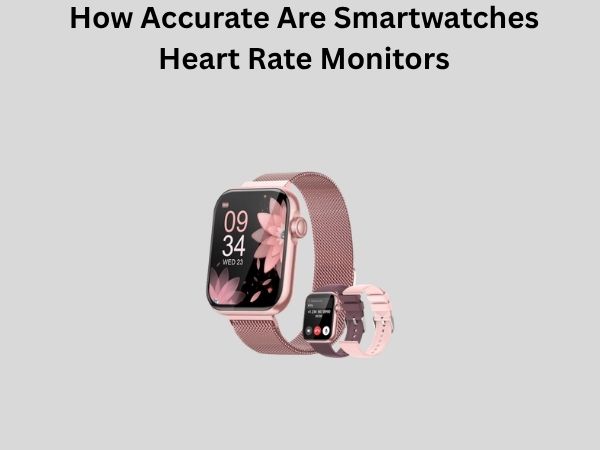
How Accurate Are Smartwatches Heart Rate Monitors? A Complete Guide
Have you ever glanced at your smartwatch and wondered if that heart rate reading is actually telling you the truth? You’re not alone. Millions of people rely on these wearable devices to track their fitness, monitor their health, and understand their bodies better. But here’s the million-dollar question: can you really trust what your smartwatch is telling you about your pulse?
The short answer is yes and no. It’s complicated, and that’s exactly what we’re going to explore together in this comprehensive guide. I’ll walk you through the technology behind smartwatch heart rate sensors, their accuracy levels, and most importantly, when you should actually believe what your device is telling you.
Understanding the Outline of This Deep Dive
Before we jump into the details, let me give you a roadmap of what we’ll cover. We’ll start by explaining how smartwatch heart rate sensors actually work, then move into the real-world accuracy data, explore the factors that affect precision, and finally help you understand when these readings matter most and when they don’t.
How Smartwatch Heart Rate Sensors Actually Work
Most modern smartwatches use a technology called photoplethysmography, or PPG for short. I know, that’s a mouthful. Let me break it down in plain English.
The Science Behind PPG Technology
Think of PPG like a tiny detective on your wrist. Your smartwatch emits light—usually green light, sometimes red or infrared—through the sensor on the back of your device. This light penetrates your skin and bounces off your blood cells. Every time your heart beats, more blood flows through your arteries, which changes how much light gets reflected back to the sensor.
By measuring these subtle changes in reflected light hundreds of times per second, your smartwatch can calculate your heart rate. It’s actually pretty clever when you think about it. The device doesn’t need to be uncomfortable or invasive. It just watches your blood flow indirectly through optical means.
Why Your Wrist Position Matters
Here’s something many people don’t realize: your smartwatch needs good contact with your skin to work properly. If your watch is too loose, sitting too high on your wrist, or if you have a lot of arm hair covering the sensor, you’re going to get poor readings. The light needs to actually reach your blood vessels and bounce back to the sensor reliably.
Think of it like trying to have a conversation in a noisy room. If you’re too far away from the person you’re talking to, you’re going to miss important details and misunderstand what they’re saying. Same principle applies here.
The Real Accuracy Numbers: What Does the Research Say?
Let’s talk about the hard data. What do actual studies show about smartwatch heart rate accuracy?
Clinical Studies and Their Findings
Multiple peer-reviewed studies have examined smartwatch accuracy compared to medical-grade equipment like ECG monitors. The results are generally encouraging, but they come with important caveats.
Most popular smartwatches, including those from Apple, Garmin, and Fitbit, show accuracy levels ranging from 90 to 97 percent when conditions are ideal. However, this doesn’t mean they’re always within a few beats per minute of the actual number. Some studies show an average error margin of plus or minus 5 to 10 beats per minute, which might not sound like much until you consider what that means for your fitness training.
When Accuracy Varies the Most
Research reveals that smartwatch accuracy tends to drop significantly during certain activities. Here’s where things get interesting:
- During intense exercise or high-intensity interval training, accuracy decreases noticeably
- While you’re at rest or doing steady-state cardio, accuracy tends to be better
- Different skin types and skin conditions can affect readings
- Tattoos, especially dark ones, can interfere with optical sensors
- Lower skin perfusion (less blood flow) naturally produces less reliable data
Think about this: if you’re sprinting on a treadmill, your heart is pounding, and you’re moving around. Your smartwatch is trying to read light reflections off your skin while you’re bouncing up and down. It’s a challenging situation, and the technology just isn’t quite perfect yet.
Factors That Influence Smartwatch Heart Rate Accuracy
Now that we understand the basics, let’s explore what actually impacts whether your smartwatch gives you good data or bad data.
Your Physical Characteristics and Skin Type
Not all wrists are created equal when it comes to optical heart rate sensing. People with darker skin tones sometimes experience slightly different accuracy levels compared to those with lighter skin, and this has become an important area of research and improvement in the wearable technology industry.
Skin thickness, melanin levels, and even the amount of body hair on your wrist play a role. If you have a lot of fine arm hair covering your sensor, you might get readings that are less accurate than someone with less hair in that area.
Watch Fit and Positioning
I cannot stress this enough: your smartwatch must fit properly. It should be snug but not cutting off your circulation. The sensor should be in direct contact with your skin, and you shouldn’t be able to slide it up and down your wrist easily.
Many people wear their watches too loosely, especially during workouts. They think a loose fit is more comfortable, but it actually makes the heart rate readings less reliable. It’s a trade-off that many people don’t realize they’re making.
Arm Movement and Exercise Type
The type of activity you’re doing matters tremendously. Your smartwatch will give you very accurate readings while you’re sitting on the couch watching television. The moment you start running or cycling, especially if your arms are swinging dramatically, the accuracy drops.
Some activities are particularly problematic. Swimming is notorious for throwing off optical heart rate sensors because water interferes with the light readings. High-intensity interval training with lots of arm movement also produces unreliable data.
Your Blood Flow and Circulation
People with naturally lower blood circulation will have weaker light reflections bouncing back to the sensor. This includes older individuals, people with certain medical conditions, and those with lower cardiovascular fitness levels. In these cases, your smartwatch might struggle to get an accurate reading even when everything else is optimal.
Comparing Different Smartwatch Brands and Their Accuracy
So which smartwatch brand should you trust most? Let’s break it down.
Apple Watch Performance
Apple Watch devices consistently rank among the most accurate smartwatches available. The company has invested heavily in heart rate technology, and their sensors are generally considered reliable for everyday use and moderate exercise. Studies show Apple Watch heart rate readings typically correlate well with ECG equipment, especially during steady-state activities.
Garmin Accuracy Rankings
Garmin watches, particularly their premium models, offer excellent heart rate accuracy. Garmin seems to have optimized their sensors particularly well for intense athletic activity, which makes sense given their focus on serious fitness enthusiasts. If you’re a runner or athlete, Garmin is often considered a solid choice.
Fitbit and Budget Options
Fitbit devices deliver reasonable accuracy for the price point, though they generally don’t quite match premium brands during intense exercise. They work well for general health tracking and rest-state measurements but may show more variability during workouts.
Emerging Brands and New Technology
Newer entrants to the smartwatch market are constantly improving their heart rate sensors. Some brands are experimenting with multiple sensors, different light wavelengths, and even artificial intelligence to improve accuracy. The technology is evolving, and we can expect better readings across the board in the coming years.
When Smartwatch Heart Rate Data Actually Matters
Here’s something important to understand: accuracy matters differently depending on what you’re using the data for.
Health Monitoring and Resting Heart Rate
If you’re tracking your resting heart rate to monitor overall cardiovascular health, smartwatch data can be quite valuable. Resting heart rate is relatively stable and your watch can measure it accurately when you’re sitting still. Changes in your resting heart rate over weeks or months can reveal meaningful trends about your fitness level and health.
The absolute number might be off by a few beats, but if your resting heart rate trends upward over time, that’s useful information regardless of whether your smartwatch is off by five beats or not.
Fitness Training and Heart Rate Zones
This is where accuracy becomes more critical. If you’re using heart rate zones to guide your training intensity—say, trying to stay in zone 2 for aerobic base building—an inaccurate reading could send you too hard or too easy.
If your smartwatch reads 20 beats too high, you might think you’re training at 70% of your max heart rate when you’re really at 60%. Over many weeks of training, this could meaningfully affect your progress and training outcomes.
Abnormal Heart Rhythm Detection
Some smartwatches, particularly the Apple Watch, can detect irregular heart rhythms and alert you to potential atrial fibrillation. This feature has shown promise in research studies and could genuinely help people identify health issues before they cause problems. The accuracy here is improving, and the potential value is significant.
When You Should Actually Get a Medical Check
While smartwatch heart rate data can be useful, it absolutely should not replace proper medical evaluation when something seems wrong.
Red Flags That Require Professional Assessment
If your smartwatch is showing unusual patterns, like consistently elevated resting heart rate, frequent irregular beats, or readings that feel incorrect based on how you feel, that’s not the time to trust your watch. That’s the time to see a doctor.
A smartwatch might alert you to something worth investigating, which is valuable. But the smartwatch itself should never be your sole source of diagnostic information. Think of it as a helpful prompt to pay attention to your health, not as a medical device providing definitive diagnosis.
Tips for Getting Better Heart Rate Readings from Your Smartwatch
Want to improve the accuracy of your smartwatch heart rate readings? Here are practical steps you can take right now.
Proper Fitting and Placement
Wear your smartwatch snugly, about a finger’s width above your wrist bone. The sensor should be touching your skin directly, with no gap between the device and your wrist. Adjust the fit if you need to remove it and reposition it during workouts.
Keeping Your Sensor Clean
Dirt, sweat, and debris can interfere with light reflection. Clean the back of your watch regularly with a slightly damp cloth. After sweaty workouts, take a moment to wipe it down.
Considering Environmental Factors
Bright sunlight can interfere with optical sensors. If you’re exercising in very bright conditions, be aware that your readings might be less accurate. Similarly, very cold temperatures can reduce blood circulation and affect readings.
Using Your Watch’s Calibration Features
Many smartwatches allow you to manually input your heart rate during calibration. If your watch seems consistently off, calibrating it by checking your pulse manually and telling your device what the correct number is can help improve future readings.
The Future of Smartwatch Heart Rate Technology
The technology is improving faster than most people realize. Manufacturers are working on several fronts to improve accuracy.
Multi-Sensor Approaches
Instead of relying on a single optical sensor, newer watches are incorporating multiple sensors in different locations. This redundancy helps correct for errors and provides better data overall.
Artificial Intelligence and Machine Learning
Some smartwatches are now using AI algorithms to learn your unique patterns and correct for individual variations. Your watch can learn how your particular physiology responds to different activities and adjust its readings accordingly.
New Sensor Technologies
Researchers are exploring alternatives to optical sensors, including radar-based technology that could work through clothing and would be less affected by skin type. While these aren’t in consumer smartwatches yet, they’re on the horizon.
Conclusion
So, how accurate are smartwatch heart rate monitors? The honest answer is: more accurate than you might think, but with real limitations you should understand.
Your smartwatch can give you reasonably reliable heart rate data for many purposes, especially for resting heart rate, general fitness tracking, and spotting trends over time. The accuracy generally ranges from 90 to 97 percent under ideal conditions, though real-world accuracy varies based on numerous factors including the activity you’re doing, how well your watch fits, your individual physiology, and the specific model you own.
During intense exercise, the accuracy drops. During relaxation, it improves. Your smartwatch works best for steady-state activities and worst for high-intensity, high-movement activities.
The key is understanding what your smartwatch is good for and what it isn’t. Use it as a health tracking tool, a training guide, and a motivator. But don’t treat it as a medical device, and don’t panic over every slight variation in your readings. If something seems genuinely wrong based on how you feel, see a doctor. Your smartwatch is a helpful companion for understanding your health, not a replacement for professional medical care.
As technology continues to improve, we can expect even better accuracy from future generations of smartwatches. For now, knowing the capabilities and limitations of your current device will help you get the most value from it.
Frequently Asked Questions
Can smartwatch heart rate monitors be completely trusted for medical diagnosis?
Smartwatch heart rate monitors should never be your sole source of medical diagnosis. While they can detect irregular heart rhythms and alert you to seek medical attention, a proper diagnosis requires professional medical equipment and evaluation from a healthcare provider. Think of your smartwatch as a helpful alerting system, not a diagnostic tool. If you notice anything concerning in your readings or how you feel physically, make an appointment with your doctor for proper evaluation.
Why does my smartwatch give different readings when I check my pulse manually?
Several factors could cause a discrepancy. First, your manual pulse check might not be perfectly accurate if you’re not trained to take your own pulse. Second, your heart rate naturally fluctuates throughout the day, and readings taken at different times might show variations. Third, the way you’re wearing your watch, your current activity level, and even slight movements can affect optical sensor readings. If you consistently see large differences between manual and smartwatch readings, try recalibrating your device or checking that it fits properly.
Does skin color affect smartwatch heart rate accuracy?
Yes, research has shown that smartwatch accuracy can vary based on skin tone. Darker skin absorbs more of the light emitted by optical sensors, which can affect how well the device detects blood flow changes. However, major manufacturers are aware of this issue and working to improve their sensors for all skin types. If you’ve noticed accuracy issues and you have darker skin, this could be a factor. Some newer models are addressing this, so checking reviews from people with similar skin tones might help you choose a more accurate device.
Is it better to check heart rate on your left wrist or right wrist?
Most people’s smartwatches perform similarly regardless of which wrist they’re worn on, though your non-dominant wrist is typically more comfortable for all-day wear. What matters more is that the watch fits properly and sits in the right position on whichever wrist you choose. Some people find that wearing their watch
![7 Best Smart Watch For Rough Use [2026]](https://smartwatchbest.com/wp-content/uploads/2026/09/7-best-smart-watch-for-rough-use-2026-featured-768x432.jpg)