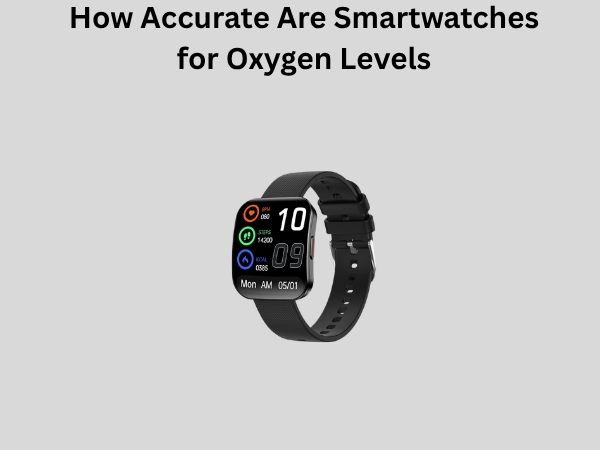
How Accurate Are Smartwatches for Oxygen Levels: Everything You Need to Know
Have you ever glanced at your smartwatch and wondered whether that oxygen level reading is actually telling you the truth? You’re not alone. Millions of people are strapping these devices to their wrists every single day, trusting them with health information that could genuinely matter. But here’s the thing—accuracy when it comes to blood oxygen measurement is way more complicated than most people realize.
In this comprehensive guide, I’m going to walk you through exactly how smartwatch oxygen sensors work, what the science actually says about their reliability, and whether you should be making health decisions based on what your wrist is telling you. Let’s dive in.
Understanding How Smartwatch Oxygen Sensors Actually Work
Before we talk about accuracy, we need to understand the basic mechanics of how these devices measure oxygen levels in the first place. Think of it like learning how a camera works before judging whether a photograph is realistic.
The Technology Behind the Measurement
Smartwatches measure blood oxygen saturation, often called SpO2, using a method called photoplethysmography. Now, that’s a fancy word, but it’s actually quite straightforward. The device shines red and infrared light onto your skin, then measures how much of that light gets absorbed by your blood. Oxygenated blood absorbs light differently than blood that’s lacking oxygen.
The smartwatch basically compares the ratio of these light absorptions and calculates what percentage of your blood oxygen is actually saturated. This is the same fundamental technology that medical-grade pulse oximeters have been using for decades. The difference? Those medical devices are much more sophisticated, better calibrated, and used in controlled environments.
Why Your Wrist Isn’t the Ideal Testing Location
Here’s something most people don’t think about: your wrist is actually one of the worst places to measure blood oxygen accurately. Medical professionals typically use your finger or earlobe because these areas have more consistent blood flow and less interference from movement.
Your wrist is constantly moving. You’re typing, gesturing, exercising, and living your life. All that movement creates interference with the light sensors. Plus, the blood flow in your wrist varies based on temperature, physical activity, and even how tightly your smartwatch is fitted. It’s like trying to take a clear photograph while riding a bike—technically possible, but full of challenges.
What Does the Research Actually Say About Smartwatch Accuracy?
So what does the science tell us? Let’s look at what actual studies have found when researchers put these devices to the test.
Clinical Studies and Their Findings
Multiple clinical studies have compared smartwatch oxygen readings against medical-grade pulse oximeters, which are the gold standard. The results are consistent but sobering: smartwatches can be reasonably accurate under ideal conditions, but they’re far from perfect in real-world use.
One major study published in peer-reviewed journals found that popular smartwatch brands showed accuracy within about 2-3% of clinical-grade devices when the wearer was sitting still in a controlled environment. That sounds pretty good, right? But here’s the catch—once people started moving around, exercising, or just going about their daily lives, the margin of error increased significantly. Some measurements were off by 5% or more.
The Problem With Darker Skin Tones
There’s something really important that doesn’t get discussed enough: smartwatch oxygen sensors have a documented accuracy problem when it comes to people with darker skin tones. This isn’t theoretical—it’s a real issue that’s been identified in multiple studies.
The technology relies on light absorption patterns, and those patterns vary across different skin types. Studies have shown that for individuals with darker skin, smartwatch oxygen readings can be significantly less accurate than for those with lighter skin. This is a major equity issue in health technology that manufacturers are only beginning to address seriously.
Factors That Impact Your Smartwatch’s Oxygen Accuracy
Accuracy isn’t a fixed thing—it fluctuates based on lots of different factors. Understanding these can help you interpret your readings more intelligently.
Physical Activity and Movement
When you’re exercising or even just moving around, your smartwatch becomes less reliable. The constant motion interferes with the optical sensors. If you check your oxygen level while running on a treadmill versus while sitting quietly, you’ll likely get different readings. Neither might be completely accurate, but the sitting version is probably closer to reality.
Fit and Positioning
How tightly your smartwatch sits on your wrist matters tremendously. If it’s too loose, the sensors won’t get consistent contact with your skin, leading to unstable readings. If it’s too tight, it might actually restrict blood flow to some degree. You want that goldilocks zone—snug enough for reliable contact but not so tight that you’re cutting off circulation.
The positioning also matters. Smartwatches are designed to be worn a specific way, typically about half an inch up from your wrist bone. Wear it in a different position and you’re compromising accuracy.
Skin Temperature and Environmental Conditions
Cold hands affect blood flow, which affects the optical reading. Similarly, if you’re in a cold environment, your body naturally reduces blood flow to your extremities. This can throw off your oxygen readings. Conversely, when you’re overheated and your blood vessels are dilated, readings might be more reliable.
Tattoos and Skin Conditions
If you have tattoos on your wrist where the sensors make contact, this can interfere with readings. Dark ink, especially, can impact how the light passes through and bounces off. Similarly, people with certain skin conditions, heavy body hair, or even excessive sunburn in that area might see less accurate readings.
Caffeine and Stimulant Intake
When you consume caffeine or other stimulants, your heart rate increases and your blood vessels constrict slightly. This can cause fluctuations in your oxygen readings that might not represent your actual baseline oxygen saturation.
Comparing Smartwatch Brands: Who’s Most Accurate?
Not all smartwatches are created equal when it comes to oxygen measurement. Some brands have invested more in this technology than others.
Premium Fitness Watches vs. Basic Smartwatches
Generally speaking, premium fitness watches from brands that specialize in health tracking tend to have more sophisticated oxygen sensors than basic smartwatches. They’ve spent more time and resources refining the algorithm and the hardware. But even the premium options have limitations.
Devices specifically designed for athletes and fitness enthusiasts often perform better during movement because the manufacturers have specifically tuned them for that use case. However, they might not be better at baseline resting measurements than other devices.
Consistency Within the Same Device
Interestingly, one of the better uses of your smartwatch’s oxygen sensor is tracking trends over time. Even if the absolute numbers aren’t perfectly accurate, if your specific device consistently reads your oxygen levels, you can use it to notice if there’s a change in your personal baseline. That’s valuable information, even if the actual numbers aren’t clinically precise.
When You Should Trust Your Smartwatch Oxygen Reading
So when is it actually okay to rely on your smartwatch for oxygen measurement? There are specific scenarios where the data is likely to be reasonably trustworthy.
Resting Baseline Measurements
The most reliable readings come when you’re sitting or lying down, completely still, in a comfortable temperature environment, with your smartwatch properly fitted. Take your oxygen measurement under these conditions, and you’re getting your best chance at an accurate reading. This is the time to use it as your baseline for comparison.
Noticing Personal Trends
Again, if you check your oxygen level regularly under similar conditions, you can notice when something changes. If you normally read 97-98% at rest and suddenly you’re consistently reading 93-94%, that’s worth paying attention to. The absolute accuracy matters less than the change you’re observing.
General Health Awareness
For healthy individuals, the smartwatch can give you a sense of whether your oxygen levels are in the normal range. Normal SpO2 for healthy people at sea level is typically between 95-100%. If your smartwatch consistently reads in the high 80s or low 90s, you might want to discuss that with a doctor, though you’d want confirmation with a medical-grade device.
When You Absolutely Should Not Trust Your Smartwatch
There are important situations where you should not rely on your smartwatch oxygen readings and should instead use proper medical equipment.
During or Immediately After Exercise
Your smartwatch is likely to give you unreliable readings while you’re working out or in the immediate aftermath. The movement, increased heart rate, and elevated body temperature all conspire to make the measurement less reliable. Wait at least 10-15 minutes after exercising before checking your oxygen levels on your watch.
If You Have Underlying Health Conditions
If you have respiratory conditions like asthma or COPD, heart disease, sleep apnea, or any condition that affects oxygen levels, you need proper medical-grade equipment, not a smartwatch. These conditions require accurate monitoring, and a smartwatch simply isn’t the tool for the job.
During Sleep Apnea Screening or Monitoring
Sleep apnea involves oxygen desaturations during sleep. While some people use their smartwatches to notice concerning patterns, an actual sleep study with proper monitoring equipment is what you need for diagnosis. Smartwatch readings during sleep are particularly unreliable due to movement and positioning changes.
If You’re Experiencing Symptoms of Low Oxygen
If you’re feeling dizzy, experiencing chest pain, having trouble breathing, or feeling faint, that’s a situation for emergency medical attention and proper pulse oximetry, not checking your smartwatch. Trust your symptoms and seek proper medical evaluation.
The Technology Gap: Medical Grade vs. Consumer Grade
Let’s talk about what separates a proper medical pulse oximeter from your smartwatch. Understanding these differences really clarifies why accuracy differs so much.
Calibration and Testing Standards
Medical pulse oximeters go through rigorous calibration and testing before they’re approved for clinical use. They’re tested against known oxygen levels in controlled laboratory settings. Smartwatches, on the other hand, are tested differently. They don’t have the same rigorous clinical validation standards, and the algorithms are often designed for general wellness rather than medical accuracy.
Hardware Sophistication
Clinical pulse oximeters typically use multiple wavelengths of light and more advanced optical systems. They’re also designed to be used in a specific, consistent way—usually clipped onto your finger. Smartwatches use simplified sensors that have to work while bouncing around on your wrist.
Software Algorithms
The software that converts light measurements into SpO2 readings is where a lot of the difference lies. Medical devices use algorithms that have been extensively tested and refined over decades. Smartwatch algorithms are newer, less extensively tested in real-world conditions, and sometimes prioritize smooth, user-friendly readings over clinical precision.
Improving Your Smartwatch Oxygen Reading Accuracy
If you’re going to use your smartwatch for oxygen monitoring, there are specific things you can do to maximize the accuracy of your readings.
Establish Ideal Measurement Conditions
Create consistent conditions for your measurements. Check your oxygen level at the same time each day, ideally in the morning before getting out of bed or in the evening after sitting quietly for at least ten minutes. Consistent conditions allow for better trending.
- Sit or lie down completely still for at least one minute before checking
- Make sure your smartwatch is snugly fitted but not too tight
- Ensure your wrist is at heart level
- Keep the area warm and avoid checking right after being in cold weather
- Don’t check immediately after eating or drinking caffeine
Clean Your Sensors Regularly
Dust, dead skin cells, and dirt can interfere with the optical sensors. Wipe down your smartwatch sensors with a soft, slightly damp cloth regularly. This simple maintenance can improve reading quality.
Know Your Device’s Limitations
Read your smartwatch manufacturer’s documentation about oxygen measurement. Different devices have different accuracy claims and different limitations. Understanding what your specific device is designed to do helps you use it appropriately.
The Future of Wearable Oxygen Monitoring
This technology is evolving rapidly. Manufacturers are investing heavily in improving accuracy, and there’s been real progress in the last few years. We’re likely to see more accurate wearable oxygen sensors in the near future.
Emerging Technologies
Researchers are exploring different wavelengths of light, improved sensor arrays, and more sophisticated algorithms that can account for individual variation. Some companies are working on sensors that perform better across different skin tones, which is an important step toward equitable health technology.
Improved Algorithms and AI
Machine learning is being used to refine oxygen measurement algorithms. By analyzing patterns from millions of smartwatch users, companies can create algorithms that are more accurate for real-world conditions, including during movement and activity.
What Doctors Actually Recommend About Smartwatch Oxygen Readings
If you talk to cardiologists, pulmonologists, and other specialists, there’s a fairly consistent message: smartwatches are fine for general awareness and trend tracking, but they’re not appropriate for medical decision-making.
Most doctors appreciate when patients are engaged with their health through devices like smartwatches, but they want to see proper medical testing for any real health concerns. If your smartwatch reading concerns you, bring it up at your next doctor’s visit, but don’t make health decisions solely based on it.
Practical Tips for Smartwatch Oxygen Monitoring
Here’s how to actually use your smartwatch oxygen sensor in a sensible way:
- Use it to establish a personal baseline, not to diagnose conditions
- Notice major changes from your normal pattern
- Don’t obsess over day-to-day fluctuations
- Never ignore symptoms in favor of a good smartwatch reading
- Mention significant changes to your doctor
- Use it as a conversation starter with your healthcare provider, not as a replacement for their expertise
- Consider purchasing a finger pulse oximeter if you need accurate readings for health reasons
- Remember that consistency of measurement conditions matters more than the absolute accuracy
The Bottom Line on Smartwatch Oxygen Accuracy
So, circling back to the original question: how accurate are smartwatches for oxygen levels?
The honest answer is: reasonably accurate under ideal conditions, but not precise enough for medical decision-making. They can be off by several percentage points, especially during movement or in real-world conditions. For healthy people using them to track general wellness trends, they’re fine. For anyone with health concerns or medical conditions, they’re supplementary at best.
Think of your smartwatch oxygen sensor as a wellness indicator, not a medical diagnostic tool. It’s like the difference between a home blood pressure monitor and the measurement your doctor takes in the office—similar technology, but different levels of clinical reliability.
The technology is improving, and wearables will undoubtedly become more accurate. But as of right now, in 2024, you should view smartwatch oxygen readings as one data point in the broader context of your health, not
![7 Best Small Smart Watches For Women [2026]](https://smartwatchbest.com/wp-content/uploads/2026/08/7-best-small-smart-watches-for-women-2026-featured-768x432.jpg)
![7 Best Smart Watch For Sleep And Stress Tracking [2026]](https://smartwatchbest.com/wp-content/uploads/2026/09/7-best-smart-watch-for-sleep-and-stress-tracking-2026-featured-768x432.jpg)