Smartwatch Benefits: Are They Worth The Investment?
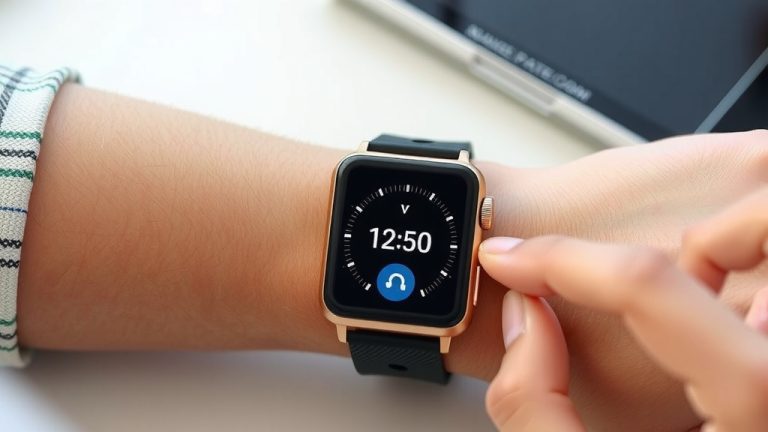
Smartwatches are remarkably good for staying connected, tracking your health, and simplifying daily tasks. They offer a convenient way to access information and monitor your well-being right from your wrist, making them a powerful tool for many.
Beyond just telling time, these devices have become personal assistants. We found that many users rely on them for everything from checking notifications to managing fitness goals. Their ability to integrate with your smartphone adds a layer of convenience that’s hard to beat.
- They keep you connected without needing your phone constantly.
- Smartwatches are great for tracking fitness and health metrics.
- Many can help manage daily tasks and notifications efficiently.
- They offer convenience and quick access to information.
Let’s walk through exactly how good smartwatches can be for your everyday life, and what you should know before buying one.
So, how do smartwatches stack up in your daily life? We’ve found they’re surprisingly versatile. They’re more than just fancy wrist gadgets. Think of them as extensions of your smartphone and your personal wellness coach. Many users report feeling more organized and healthier since strapping one on.
Is a Smartwatch Worth It for You?
Smartwatches can be a fantastic addition to your daily routine. They offer convenience and health tracking capabilities that are hard to ignore. You might be wondering if all the hype is justified. We’ve seen that for many, the answer is a resounding yes.
The primary appeal is how they keep you connected. You can get notifications, answer calls, and send quick replies without digging for your phone. This convenience factor is a big win for busy individuals. It means fewer distractions and more focus on what’s in front of you.
Staying Connected, Effortlessly
One of the biggest pluses is staying in touch. Imagine being in a meeting and seeing an important message pop up on your wrist. You can quickly glance at it and decide if it needs immediate attention. This is far less disruptive than pulling out your phone.
Never Miss Important Alerts
Smartwatches excel at delivering notifications. You can customize which apps can send alerts to your wrist. This means only the truly important messages get your attention. You’re in control of your digital interruptions. We found this personalization helps reduce screen time on your phone.
Calls and Texts on the Go
Many smartwatches allow you to take calls directly from your wrist. This is super handy when your phone is in your pocket or bag. Sending quick replies to texts is also a breeze. You can use pre-set responses or even voice dictation. It’s like having a tiny communication hub right there.
Your Personal Health and Fitness Companion
This is where smartwatches truly shine. They are packed with sensors to monitor your health. From steps taken to heart rate, they provide a wealth of data about your well-being.
Tracking Your Activity
Most smartwatches come with built-in activity trackers. They count your steps, distance, and calories burned. They can also track various exercises like running, swimming, and cycling. Many models automatically detect when you start a workout. We found that seeing daily activity progress can be a great motivator.
Monitoring Your Heart Health
Heart rate monitoring is a standard feature. Some advanced models can even take an electrocardiogram (ECG). This can help detect signs of irregular heart rhythms, like atrial fibrillation. The CDC recommends staying aware of your heart health. Smartwatches can provide valuable daily insights (Cleveland Clinic).
Sleep and Stress Management
Did you know many smartwatches track your sleep? They can tell you how long you slept, how much time you spent in different sleep stages, and your sleep quality. Some also offer stress tracking features. They might prompt you to take a moment for guided breathing exercises. Managing stress is key for overall health, as many health organizations point out.
Simplifying Daily Tasks
Beyond communication and health, smartwatches can simplify other daily tasks.
Convenient Payments
Many smartwatches support contactless payments. You can link your credit or debit card and pay for things with a tap of your wrist. This is incredibly convenient when you don’t want to carry your wallet. Imagine grabbing a coffee without fumbling for cash or cards.
Music and Media Control
Want to change the song or adjust the volume while your phone is out of reach? Your smartwatch can do that. You can control music playback from various apps directly on your wrist. It’s a small convenience that adds up.
Navigation Assistance
Getting directions can be much easier with a smartwatch. You can get turn-by-turn navigation prompts right on your wrist. A gentle vibration can signal when to turn, so you don’t have to constantly look at your phone. This is perfect for walking or cycling in unfamiliar areas.
A Quick Comparison: What to Expect
Different smartwatches offer varying features and price points. Here’s a general idea:
| Feature | Basic Smartwatch | Mid-Range Smartwatch | High-End Smartwatch |
|---|---|---|---|
| Notifications | Yes | Yes, with quick replies | Yes, with advanced customization |
| Activity Tracking | Steps, calories, basic workouts | More workout types, GPS | Advanced metrics, auto-detection |
| Health Monitoring | Heart rate | Heart rate, sleep tracking | ECG, blood oxygen, advanced sleep analysis |
| Payments | No | Yes (NFC) | Yes (NFC), wider app support |
| Other | Basic apps | Music control, voice assistant | Standalone cellular, advanced sensors |
We found that for most people, a mid-range smartwatch offers the best balance of features and price. You get a lot of functionality without breaking the bank.
Are There Downsides?
Of course, no device is perfect. Battery life can be a concern for some models. You might find yourself charging it every night. Also, the reliance on a smartphone is still there for full functionality. It’s an accessory, not a standalone device for most tasks.
Battery Life Considerations
Charging daily can be a hassle for some users. The more features you use, the faster the battery drains. Researching battery life for specific models is a good idea. Some smartwatches boast multi-day battery life, while others need charging nightly.
Dependence on Your Smartphone
While smartwatches offer independence for some tasks, they are still heavily reliant on your smartphone. You need your phone nearby for many functions, like GPS or full app interaction. They are designed to work hand-in-hand with your phone.
Is a Smartwatch Right for Your Lifestyle?
Consider these points:
- Do you want to monitor your fitness and health more closely?
- Would quick access to notifications improve your daily organization?
- Are you looking for a convenient way to make payments or control music?
- Do you have a smartphone to pair it with?
- Are you comfortable with the idea of daily or frequent charging?
- What’s your budget for a new wearable device?
Answering these questions will help you determine if a smartwatch is a good fit for you. They offer a lot, but it’s about matching those capabilities to your personal needs.
Conclusion
Smartwatches really do offer a lot for your daily life. We found they excel at keeping you connected, helping you monitor your health, and simplifying everyday tasks. From quick notification checks to detailed fitness tracking, they can genuinely make things easier. Consider how these features align with your personal goals and lifestyle. If you’re looking to boost your well-being or stay more organized, it might be time to explore your options and find the perfect smartwatch for you.
Frequently Asked Questions
How much battery do smartwatches typically last?
Battery life can vary greatly by model and how you use it. Many require charging nightly, especially with heavy use of features like GPS or always-on displays. Some advanced models or those with simpler functions can last several days on a single charge.
Can a smartwatch replace my smartphone?
For most functions, no. Smartwatches are designed as companions to your smartphone, not replacements. While you can take calls and reply to texts on some models, full app functionality, internet browsing, and complex tasks still require your phone.
Are smartwatches good for tracking workouts?
Yes, most smartwatches are excellent for tracking workouts. They monitor steps, distance, calories, and heart rate. Many also offer specific modes for various activities like running, swimming, or cycling, providing detailed metrics for your exercise sessions.
Do I need a specific type of smartphone to use a smartwatch?
Generally, yes. Most smartwatches are designed to work best with smartphones running either iOS or Android. You’ll need to check the compatibility list for the specific smartwatch you’re interested in to ensure it pairs with your phone.
Is a smartwatch worth the cost for basic fitness tracking?
If your primary need is basic fitness tracking like steps and heart rate, a mid-range smartwatch often provides the best value. You get robust tracking capabilities and other convenient features without the high price of top-tier models.
![7 Best Smart Watch For Rough Use [2026]](https://smartwatchbest.com/wp-content/uploads/2026/09/7-best-smart-watch-for-rough-use-2026-featured-768x432.jpg)