How Smart Watch Size Is Measured
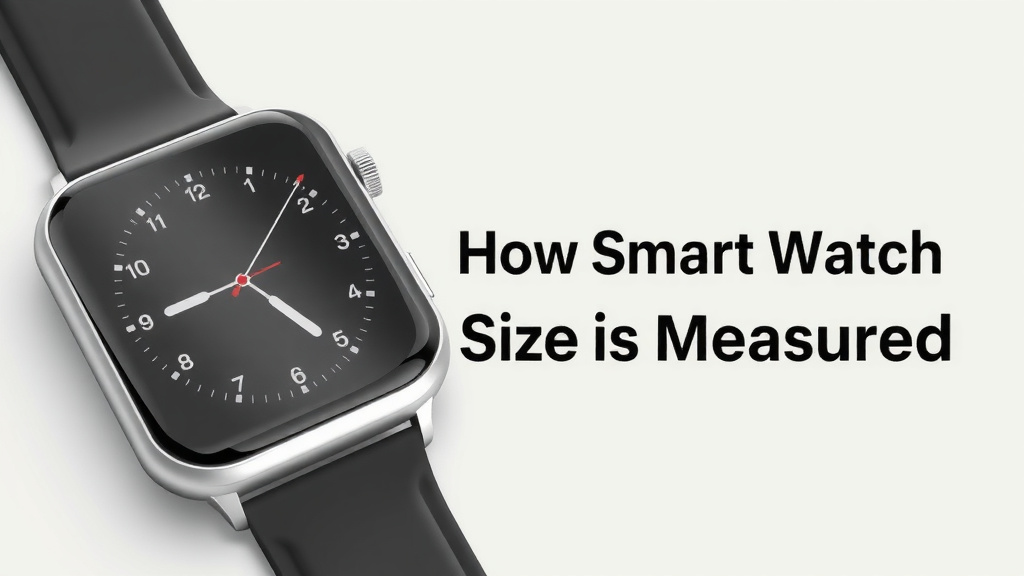
Smart watch size is typically measured by the diameter of the watch case, excluding the crown and lugs. This measurement is usually given in millimeters (mm), so you’ll often see sizes like 40mm, 44mm, or 45mm. It’s the most straightforward way to understand how big the watch will look on your wrist and is a key factor in choosing your perfect fit.
Understanding these dimensions helps you avoid the common pitfall of a watch that’s either too bulky or too small. We’ve found that the case diameter, along with lug-to-lug distance and strap width, all play a role in the overall perceived size. Getting this right means your smartwatch will feel comfortable and look balanced on your arm, which is a big win for daily wear.
- Smartwatch size is measured by its case diameter (in mm).
- This measurement excludes the crown and lugs for accuracy.
- Common sizes range from 40mm to 45mm.
- Proper size ensures comfort and a good look on your wrist.
Let’s dive into exactly how smart watch sizes are measured and what you should look for to find the right one for you.
Figuring Out Smartwatch Size: Your Guide to a Perfect Fit
So, you’re looking to get a smartwatch, and you’ve noticed those numbers like 40mm or 44mm. What exactly do they mean for how it’ll look and feel on your wrist? We found that understanding these dimensions is key to avoiding that “too big” or “too small” feeling. It’s all about the case diameter, which is the most common way manufacturers tell you how large their watches are.
The Main Measurement: Case Diameter Explained
When you see a smartwatch advertised as, say, 45mm, that number refers to the diameter of the watch case. Think of it as the width of the main body of the watch. This measurement is taken straight across the widest part of the case. It’s measured from one edge to the other, usually from the left side to the right side if you were looking at it on your wrist.
Here’s a really important detail: this measurement doesn’t include the crown. The crown is that little rotating knob you often find on the side of traditional watches, used for setting the time or navigating menus. It also doesn’t include the lugs. Lugs are the small projections on the top and bottom of the case where the watch strap attaches.
We found that focusing on the case diameter gives you a solid starting point. It’s the most advertised and easily comparable metric. Many users find it straightforward to grasp. For example, a 40mm watch is generally smaller than a 45mm watch. This difference can be quite noticeable on your wrist.
Why Excluding the Crown and Lugs Matters
You might wonder why they leave out the crown and lugs. It’s about standardization. By excluding these parts, manufacturers aim for a consistent way to describe the watch’s core size. Imagine if everyone included their own little additions; comparing sizes would become a guessing game. We found that this standardized approach helps you compare different brands more easily.
The crown, while small, can add a little extra width and might catch on things if it’s particularly pronounced. The lugs, on the other hand, contribute more to how the watch “wears” on your wrist, which we’ll get to later. For now, just remember that the case diameter is the primary number to focus on for raw size.
Beyond Diameter: Other Sizing Clues
While case diameter is king, it’s not the only thing to consider for how a smartwatch actually fits. Other measurements can significantly affect the perceived size and comfort. We found that looking at these can help you make an even better choice for your wrist.
Lug-to-Lug Distance: The Watch’s “Span”
This is a measurement that many people overlook, but we think it’s quite important. Lug-to-lug distance is measured from the point where the top lug attaches to the watch case straight down to the point where the bottom lug attaches. Essentially, it’s how long the watch is from top to bottom.
Why does this matter? A watch can have a relatively narrow case diameter but be very long from lug to lug. If your wrist is narrow, a watch with a large lug-to-lug distance might overhang the sides of your wrist, making it look and feel too big. Conversely, a watch with a large diameter but a shorter lug-to-lug measurement might actually fit better.
We found that this measurement is particularly useful for individuals with smaller or larger wrists. For smaller wrists, a shorter lug-to-lug distance is often preferable. For larger wrists, a longer lug-to-lug measurement can help the watch sit more comfortably without looking lost.
Watch Thickness: The Vertical Dimension
Smartwatches, especially those with more features, can sometimes be a bit thicker than traditional watches. Thickness is measured from the bottom of the watch case to the very top of the case, not including any domed crystal. A thicker watch can feel more substantial and might even poke out from under shirt cuffs.
We found that while diameter gets the most attention, thickness plays a role in how a watch presents itself. A very thin watch can appear more discreet, while a thicker one might have a bolder presence. If you prefer a low-profile look, paying attention to thickness is wise.
Strap Width: The Finishing Touch
The width of the watch strap, typically measured where it connects to the watch case (the lug width), also influences the overall look. A wider strap can make a watch seem larger, balancing out a bigger case diameter. A narrower strap might make a watch appear a bit smaller or more delicate.
We observed that manufacturers usually specify the lug width. This is also helpful if you plan to swap out the original strap for a different one. The width of the strap contributes to the watch’s overall visual balance on your wrist.
Common Smartwatch Sizes and What They Mean
Smartwatch manufacturers offer a range of sizes to cater to different wrist shapes and preferences. You’ll commonly see sizes in a certain range, and understanding this can guide your search.
For many popular smartwatches, the case diameter often falls between 40mm and 45mm. For instance, you might find a 40mm or 41mm option, and then a larger 44mm or 45mm option. Some brands might even offer a smaller size, like 38mm or 39mm, for those with very petite wrists.
We found that women’s smartwatches tend to be on the smaller end of this spectrum, often around 38mm to 42mm. Men’s smartwatches commonly range from 42mm to 46mm, but this is not a strict rule. Many men prefer smaller watches, and many women like larger, bolder ones!
A 40mm to 42mm watch is generally considered a medium size. It’s often a good starting point for many people. A 44mm to 46mm watch is typically on the larger side. We found that comparing these sizes side-by-side online, or even better, trying them on in person, is incredibly helpful.
Tips for Finding Your Perfect Smartwatch Fit
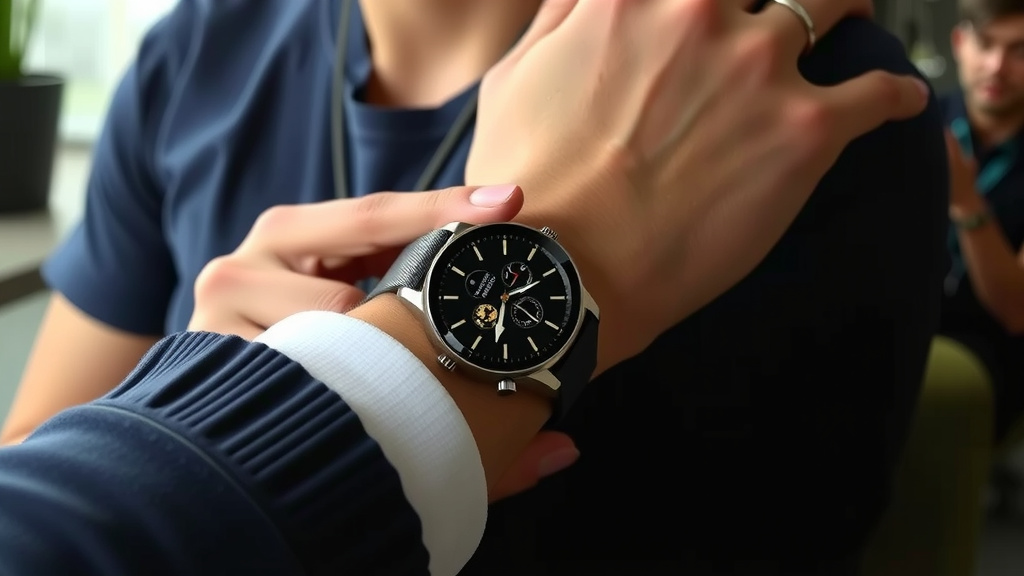
Choosing the right size isn’t just about the numbers; it’s about how the watch feels and looks on *your* wrist. We’ve put together a few tips to help you navigate the process.
- Measure Your Wrist: Use a flexible tape measure. Knowing your wrist circumference in inches or centimeters is a great baseline.
- Consider Lug-to-Lug: If you can find this spec, it’s very revealing, especially for narrower wrists.
- Look at Watch Face Shape: A round watch face might wear differently than a square or rectangular one, even at the same diameter.
- Visualizing is Key: Many sites offer comparison tools or videos showing watches on different wrist sizes.
- Don’t Forget Comfort: A watch that’s too heavy or has a strap that digs in won’t feel right, regardless of its diameter.
Ultimately, the best way to know if a smartwatch is the right size is to try it on. If that’s not possible, researching reviews and looking at photos or videos of the watch on wrists similar to yours can be a big help. We found that personal preference plays a huge role, so trust your gut feeling!
| Measurement | Small Smartwatch (approx.) | Medium Smartwatch (approx.) | Large Smartwatch (approx.) |
|---|---|---|---|
| Case Diameter | 38mm – 41mm | 42mm – 43mm | 44mm – 46mm |
| Lug-to-Lug Distance | 44mm – 48mm | 49mm – 51mm | 52mm – 55mm |
| Thickness | 9mm – 11mm | 10mm – 12mm | 11mm – 14mm |
| Strap Width (Lug Width) | 18mm – 20mm | 20mm – 22mm | 22mm – 24mm |
Remember, these are just general guidelines. Brands have their own interpretations, and some watches might have thicker bezels that make the screen appear smaller, or vice-versa. What feels comfortable and looks balanced on your wrist is the true measure of a good fit. Many experts suggest that the lugs of the watch should ideally sit within the width of your wrist, not overhang it.
Conclusion
We’ve learned that understanding smartwatch size is more than just looking at a single number. While the case diameter is your main guide, don’t forget about lug-to-lug distance and thickness. These factors truly determine how a watch will wear on your wrist. Your perfect smartwatch should feel comfortable, look balanced, and match your personal style.
So, before you click “buy,” take a moment to consider these measurements. We found that taking your wrist size and comparing it to the watch’s specs is the best way to avoid buyer’s remorse. Your next step? Grab a ruler or a flexible tape measure and get to know your wrist!
Frequently Asked Questions
Does the watch strap affect how big a smartwatch looks?
Yes, the strap width plays a role. A wider strap can make a smartwatch look more substantial and balanced, especially on larger wrists. A narrower strap might make a watch appear more delicate or even smaller. We found that the strap’s connection point, the lug width, is often specified and helps in judging this.
What’s the difference between case diameter and lug-to-lug distance?
The case diameter is the watch’s width, measured straight across the main body. The lug-to-lug distance is the watch’s length, from the top lug to the bottom lug where the strap attaches. We found lug-to-lug is key for how a watch overhangs your wrist.
Are there general size guidelines for men’s and women’s smartwatches?
While not strict rules, women’s smartwatches often range from 38mm to 42mm in diameter, and men’s from 42mm to 46mm. However, personal preference is huge! Many women love larger watches, and many men prefer smaller ones. We recommend focusing on what looks and feels good on *your* wrist.
How can I tell if a smartwatch will be too big for my wrist without trying it on?
We found that measuring your wrist circumference is a great first step. Then, look for the watch’s lug-to-lug measurement. Ideally, this measurement should be less than or equal to your wrist’s width. Online reviews often show the watch on various wrist sizes, which can also help you visualize the fit.
Why do smartwatches sometimes feel thicker than regular watches?
Smartwatches often contain more technology, like batteries, sensors, and processors, which can add to their thickness. We found that while diameter gets the most attention, thickness impacts how a watch sits under clothing and its overall presence. A thicker watch can feel more robust, while a thinner one might be more discreet.
![7 Best Smart Watch For Scuba Diving [2026]](https://smartwatchbest.com/wp-content/uploads/2026/09/7-best-smart-watch-for-scuba-diving-2026-featured-768x432.jpg)

![7 Best G Shock Smart Watch [2026]](https://smartwatchbest.com/wp-content/uploads/2026/08/7-best-g-shock-smart-watch-2026-featured-768x432.jpg)