How Does a Smart Watch Track REM Sleep?
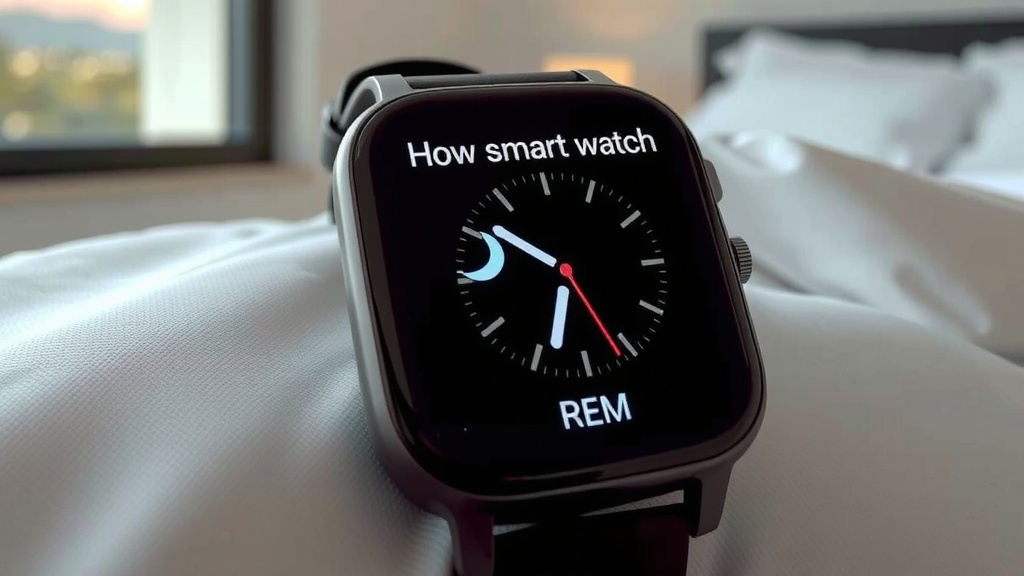
Your smartwatch tracks REM sleep by using motion sensors and heart rate monitors. These devices detect subtle changes in your body. They can tell when you’re likely in REM sleep based on these patterns. It’s pretty neat how technology can help us understand our sleep!
Many smartwatches use algorithms to interpret this data. They look for periods of rapid eye movement and reduced muscle tone. These are hallmarks of the REM stage. The watch then logs this as part of your sleep cycle. It’s a clever way to get a sleep overview.
- Smartwatches use sensors to track sleep.
- Motion and heart rate data are key.
- Algorithms analyze these patterns.
- They identify REM sleep stages.
- This helps you understand your sleep quality.
Let’s walk through exactly how your smartwatch figures out when you’re dreaming. We’ll break down the science behind this sleep tracking feature!
How Your Smartwatch Figures Out Your REM Sleep
Your smartwatch is more than just a timepiece. It’s a sleep detective! It helps you understand your sleep cycles. This includes REM sleep. REM stands for Rapid Eye Movement. It’s a really important stage for your brain. Your smartwatch uses sensors to gather data. Then, it uses smart algorithms to interpret that data. This gives you a picture of your sleep. Let’s dive into how it does this.
The Technology Behind Sleep Tracking
Smartwatches have built-in sensors. These sensors are key to tracking your sleep. They are always working, even when you’re not looking. They collect information about your body. This information is then sent to your watch’s software. The software analyzes it. It looks for patterns associated with different sleep stages. You might be surprised at what these little devices can detect.
Motion Sensors: Feeling Your Movements
One of the main tools is the accelerometer. This is a type of motion sensor. It detects movement. When you sleep, you move. Even small shifts can be picked up. During lighter sleep stages, you tend to move more. You might toss and turn. In deeper sleep, you move very little. REM sleep is a bit different. Your muscles are largely paralyzed. This is called atonia. So, there’s less movement overall. Your smartwatch’s accelerometer notices these changes in your activity levels. It learns your typical movement patterns throughout the night.
Heart Rate Monitoring: Listening to Your Heartbeat
Most modern smartwatches have a heart rate sensor. This sensor is usually on the back of the watch. It uses light to detect blood flow under your skin. Your heart rate changes during sleep. It tends to slow down in deep sleep. But, during REM sleep, your heart rate can become more variable. It might speed up or slow down unpredictably. This is because your brain is very active during REM. Your smartwatch tracks these fluctuations. It uses your heart rate data alongside movement data. This combination provides a more complete picture.
What Your Heart Rate Tells the Watch
Researchers have found that heart rate variability (HRV) is a good indicator. HRV is the variation in time between heartbeats. During REM sleep, HRV often increases. Your smartwatch can measure this. It looks for these quick changes. They are different from the steady, slower heart rate of deep sleep. This helps the watch distinguish REM sleep from other stages. It’s like listening to the rhythm of your body.
Other Sensors at Play (Sometimes)
Some advanced smartwatches use additional sensors. These can include gyroscopes. Gyroscopes help detect orientation and rotation. This can provide even more detail about subtle movements. A few even have SpO2 sensors. These measure blood oxygen levels. While not directly for REM tracking, they add another layer of health data. This data can sometimes indirectly inform sleep analysis. However, motion and heart rate are the primary trackers for REM.
Interpreting the Data: The Role of Algorithms
Just collecting data isn’t enough. Your smartwatch needs to understand what the data means. This is where algorithms come in. An algorithm is a set of rules or instructions. Your watch’s software uses complex algorithms. These are designed by sleep scientists and engineers. They are trained on vast amounts of sleep data. This data often comes from people sleeping in labs. Lab sleep studies are the gold standard. They use polysomnography (PSG). PSG measures brain waves, eye movements, and muscle activity. Smartwatch algorithms learn to mimic these PSG findings.
How Algorithms Identify REM Sleep
The algorithms look for specific patterns. They combine your movement data and heart rate data. They look for periods where you are mostly still. This is important. But they also look for signs of brain activity. How do they do this without EEG (electroencephalogram)? They infer it from heart rate variability. They also look for specific movement patterns. For example, there can be a slight twitching. This is sometimes seen in REM sleep. The algorithm compares the current data to your baseline. It also compares it to known patterns of REM sleep. If the data matches, it marks that time as REM sleep.
The “Sleep Score” Explained
Many apps give you a “sleep score.” This score is a summary. It’s based on the duration and quality of your sleep. It factors in time spent in different stages. This includes REM, light, and deep sleep. It also looks at how long it took you to fall asleep. And it considers awake times during the night. Your REM sleep percentage is a key part of this score. Getting enough REM sleep is linked to feeling refreshed.
What Your Smartwatch Can and Cannot Do
It’s important to be realistic. Smartwatches are not medical devices. They provide estimates of your sleep stages. They are generally quite good at telling the difference between awake and asleep. They are also good at distinguishing deep sleep from light sleep. Identifying REM sleep can be a bit trickier. Without direct brain wave measurement, it’s an educated guess. Still, they offer a great way to monitor trends. They can show you if your sleep patterns are changing. This can be very useful information for you.
Accuracy and Limitations
Research suggests that smartwatches are getting better. Some studies show good correlation with lab sleep studies. However, they are not perfect. Factors like sleeping position or restlessness can affect readings. If you have a sleep disorder, you should consult a doctor. Your smartwatch is a tool for general awareness. It can encourage healthier sleep habits. It can help you see the impact of things like caffeine or late-night screen time. But it’s not a substitute for medical advice.
Making the Most of Your Sleep Data
Understanding your sleep patterns can be empowering. Use the data your smartwatch provides. Look at your REM sleep duration over time. Are there patterns? Do certain nights have more REM sleep than others? This can help you identify factors that affect your sleep. Things like exercise, diet, and stress levels can all play a role. Pay attention to how you feel. Does your reported REM sleep match how rested you feel?
Tips for Better REM Sleep and Overall Sleep Quality
Here are some simple things you can try:
- Stick to a consistent sleep schedule. Go to bed and wake up around the same time, even on weekends.
- Create a relaxing bedtime routine. This signals to your body that it’s time to wind down.
- Optimize your sleep environment. Make sure your bedroom is dark, quiet, and cool.
- Limit caffeine and alcohol. Especially in the hours before bed.
- Get regular exercise. But try not to do vigorous workouts too close to bedtime.
- Manage stress. Practice relaxation techniques like meditation or deep breathing.
By paying attention to your smartwatch data and adopting good sleep hygiene, you can work towards better sleep. And better sleep means a better you!
Conclusion
Your smartwatch uses clever technology to track your REM sleep. It combines motion sensor data with heart rate patterns. Algorithms then interpret this information. This helps you understand your sleep cycles better. While not a medical device, it provides useful insights. You can use this data to improve your sleep habits. Pay attention to how you feel and adjust your routine. Make informed choices for better rest and well-being.
Frequently Asked Questions
Can my smartwatch accurately tell me how much REM sleep I got?
Your smartwatch provides an estimation of your REM sleep. It’s generally good at distinguishing between awake and asleep. It can also differentiate light and deep sleep. However, accurately measuring REM sleep without brain wave monitoring is challenging. Think of it as a helpful guide, not a perfect measurement.
Why is REM sleep important according to my smartwatch data?
REM sleep is a vital stage for your brain. Your smartwatch tracks it because it’s linked to cognitive functions like memory consolidation and learning. Getting sufficient REM sleep, as shown in your data, contributes to feeling mentally refreshed. It plays a key role in your overall sleep quality and daily performance.
What does it mean if my REM sleep varies a lot night to night?
Variations in REM sleep are common. Factors like stress, diet, exercise, and even alcohol can affect it. Your smartwatch data can help you spot these patterns. If you notice consistent significant drops, it might be worth looking at your lifestyle choices. Consistent patterns can also indicate you’re getting into a good sleep rhythm.
Can my smartwatch detect sleep disorders based on REM tracking?
No, your smartwatch is not a medical diagnostic tool. While it tracks REM sleep, it cannot diagnose sleep disorders like sleep apnea or insomnia. If you suspect you have a sleep disorder, it’s important to consult a healthcare professional. They can perform proper medical assessments.
How can I improve my REM sleep based on my smartwatch readings?
Use your smartwatch data to identify what might be affecting your sleep. If you see less REM sleep after a stressful day, try relaxation techniques before bed. Sticking to a regular sleep schedule and creating a dark, quiet sleep environment are also key. Good sleep hygiene generally supports healthy REM sleep cycles.
![7 Best Smart Watch For Reminders [2026]](https://smartwatchbest.com/wp-content/uploads/2026/09/7-best-smart-watch-for-reminders-2026-featured-768x432.jpg)
![7 Best Smart Watch For Counting Steps [2026]](https://smartwatchbest.com/wp-content/uploads/2026/08/7-best-smart-watch-for-counting-steps-2026-featured-768x432.jpg)
![7 Best Battery Smart Watches [2026]](https://smartwatchbest.com/wp-content/uploads/2026/07/7-best-battery-smart-watches-2026-featured-768x432.jpg)