
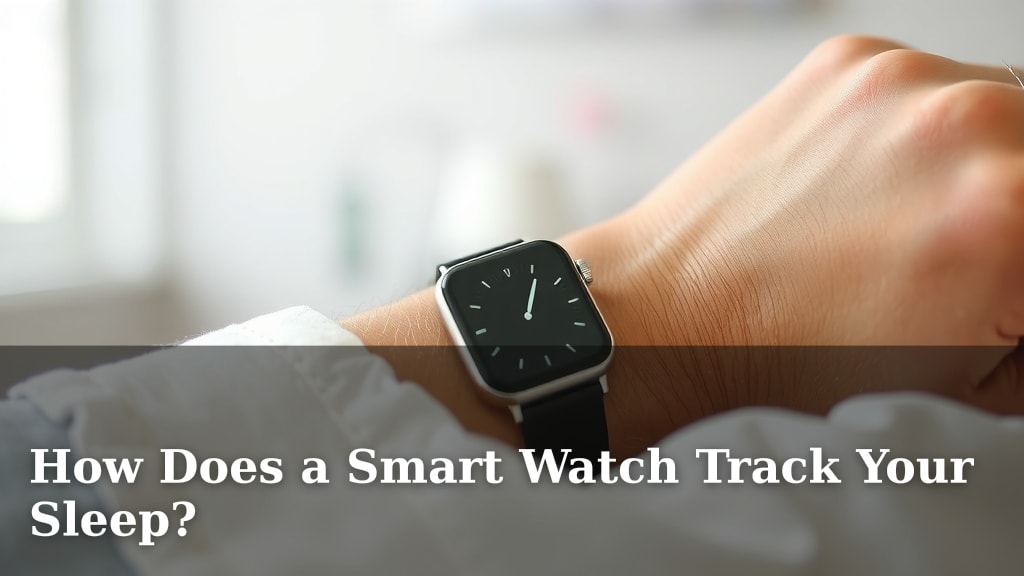
How Does a Smart Watch Track Your Sleep?
A smartwatch tracks your sleep by using a combination of motion sensors and heart rate monitors. These devices collect data about your movements and vital signs during the night. This information helps the watch estimate your sleep stages, like light, deep, and REM sleep, as well as periods of wakefulness. It’s a fascinating way technology helps us understand our rest.
You might be surprised at how much a tiny gadget on your wrist can reveal about your nightly journey. Experts found that by analyzing patterns in your activity and heart rate, your smartwatch can paint a pretty accurate picture of your sleep quality. This helps you see trends and make adjustments for better Zzz’s.
- Smartwatches use motion and heart rate sensors.
- They analyze movement and pulse to understand your sleep.
- This helps estimate sleep stages (light, deep, REM) and wakefulness.
- The goal is to provide insights into your sleep patterns.
Ready to see how your watch is working its magic while you snooze? Let’s walk through exactly how this technology helps you wake up knowing more about your sleep.
How Your Smartwatch Becomes Your Sleep Detective
So, how exactly does that little gadget on your wrist figure out if you’re tossing and turning or catching some serious Zzz’s? Your smartwatch is basically using a clever combination of sensors to monitor your body’s subtle signals throughout the night. It’s not magic, but it’s pretty darn smart technology working to give you a clearer picture of your rest.
Think of it like having a tiny sleep scientist watching over you. These devices collect data that, when analyzed, can tell us a lot about the quality and patterns of your sleep. We’re talking about understanding when you’re in different sleep stages and how often you might be waking up without even realizing it. This information is key to making informed decisions about your sleep habits.
The Tech Behind the Snooze Tracking
Motion Sensing: More Than Just Steps
Your smartwatch is equipped with tiny sensors called accelerometers and gyroscopes. These are the same types of sensors that detect movement in your phone. When you sleep, you still move. Even small shifts in position or fidgeting are picked up by these sensors.
During light sleep, you tend to move a bit more. As you enter deeper sleep stages, your body becomes more still. The watch tracks the frequency and intensity of your movements. Less movement generally indicates deeper, more restorative sleep. Lots of movement might suggest lighter sleep or even periods of wakefulness.
Heart Rate Monitoring: The Silent Storyteller
Most modern smartwatches have a heart rate sensor, often on the underside where it touches your skin. This sensor uses light to measure your pulse. When you’re asleep, your heart rate naturally slows down, especially during deep sleep. This is a really important clue for your watch.
Your heart rate also varies depending on your sleep stage. For instance, your heart rate might be more regular and slower during deep sleep. During REM (Rapid Eye Movement) sleep, which is when you often dream, your heart rate can become more variable and even speed up slightly. Your smartwatch analyzes these heart rate patterns to help differentiate between sleep stages.
Putting It All Together: The Algorithm’s Role
The data from the motion sensors and the heart rate monitor aren’t just recorded; they’re fed into a sophisticated algorithm. This algorithm is programmed to recognize patterns associated with different sleep states. It learns to distinguish between being awake, in light sleep, deep sleep, or REM sleep.
For example, the algorithm might note that a period of low movement combined with a slower, steady heart rate is likely deep sleep. Conversely, a period of more movement and a slightly elevated or variable heart rate might be interpreted as light sleep or REM sleep. Many health organizations and researchers agree that this combined data provides a fairly reliable estimate of your sleep architecture (Mayo Clinic).
| Sleep Stage | Typical Movement Pattern | Typical Heart Rate Pattern |
|---|---|---|
| Awake | Significant and varied movement | Higher and more variable rate |
| Light Sleep | Some movement, restlessness | Slightly slower than awake, can be variable |
| Deep Sleep | Minimal to no movement | Slowest and most regular rate |
| REM Sleep | Minimal movement, muscle atonia | Variable rate, can be faster than deep sleep |
Understanding Your Sleep Stages
The Four Pillars of Sleep
Your smartwatch aims to track you through the different stages of sleep. These stages cycle throughout the night. Understanding them helps you appreciate why your watch provides specific sleep metrics.
Light Sleep is generally the first stage you enter. It’s easy to be woken up during this time. You might still be aware of your surroundings, and your body is starting to relax.
Deep Sleep is incredibly important for physical recovery. It’s when your body repairs tissues, builds bone and muscle, and strengthens your immune system. You are very still during this stage. Getting enough deep sleep is vital for feeling refreshed.
REM Sleep is when most vivid dreaming occurs. Your brain activity increases, almost like you’re awake. Your muscles are temporarily paralyzed during REM, which is a protective mechanism so you don’t act out your dreams. This stage is thought to be important for learning and memory consolidation (National Institutes of Health).
Your smartwatch also tracks periods of Wakefulness. These can be brief moments you don’t remember, or longer stretches where you might get out of bed. Identifying frequent wakefulness can highlight potential disruptions to your sleep.
Beyond Basic Tracking: Advanced Sleep Features
Blood Oxygen (SpO2) Monitoring
Some smartwatches can also track your blood oxygen saturation levels. A sudden drop in blood oxygen while you’re asleep could indicate a sleep disorder like sleep apnea. This is an advanced feature that provides another layer of information about your sleep health. If your watch flags this, it’s wise to consult a doctor.
Breathing Rate and Skin Temperature
Other sensors might monitor your breathing rate or subtle changes in skin temperature. These metrics can offer further clues about your sleep quality and overall well-being. For example, a significantly elevated breathing rate might suggest stress or illness.
Making Sense of Your Sleep Data
Once your smartwatch has collected all this information, it presents it to you, usually through a companion app on your phone. You’ll typically see charts showing your time spent in each sleep stage, the total duration of your sleep, and how many times you woke up.
This data can help you spot trends. Are you consistently getting less deep sleep? Do you tend to sleep better on certain days? By looking at these patterns, you can start to connect them to your daily activities, diet, or stress levels. It’s like a personalized sleep journal created automatically for you.
A Checklist for Better Sleep Insights
- Check your smartwatch’s sleep tracking accuracy for your specific model.
- Wear the watch snugly for best sensor contact.
- Keep your smartwatch charged so it doesn’t miss data.
- Review your sleep data regularly in the companion app.
- Look for patterns between your sleep and daily habits.
- Consult your doctor if you have concerns about your sleep quality.
Conclusion
You now understand how your smartwatch uses motion and heart rate sensors to track your sleep. By analyzing movement patterns and pulse variations, it estimates your time in light, deep, and REM sleep, plus periods of wakefulness. This technology gives you a personalized look at your nightly rest. Use this data to identify patterns and make informed choices for better sleep hygiene. Start reviewing your sleep reports tonight to take the first step towards more restorative sleep!
Frequently Asked Questions
How accurate are smartwatches at tracking sleep stages?
Research and found that most modern smartwatches offer a fairly accurate estimation of sleep stages. While not as precise as a clinical sleep study, they do a good job of differentiating between wakefulness, light sleep, and deeper sleep. For everyday personal tracking, they provide useful trends.
Why does my smartwatch say I was awake when I don’t remember waking up?
Your smartwatch detects even brief moments of wakefulness based on movement and heart rate changes. You might have been briefly restless or even sat up without fully waking, which the watch interprets as a wake period. These small interruptions can affect your overall sleep quality.
Can a smartwatch detect sleep disorders like sleep apnea?
Some advanced smartwatches can track metrics like blood oxygen (SpO2) and breathing rate. Significant drops in oxygen or unusual breathing patterns during sleep could be indicators of a sleep disorder. If your watch flags these concerns, it’s wise to consult a healthcare professional.
Do I need to wear my smartwatch tightly for sleep tracking?
Yes, wearing your smartwatch snugly is important for accurate sleep tracking. The heart rate sensor needs good skin contact to effectively measure your pulse. If it’s too loose, the sensor might not get a consistent reading, impacting the data collected.
Will my smartwatch still track sleep if it’s not fully charged?
Your smartwatch needs sufficient battery power to operate its sensors and record data throughout the night. If the battery dies before you wake up, it won’t be able to track your sleep for the entire duration. Ensure it’s charged before bedtime for continuous monitoring.
![7 Best Android Smart Watch For Texting [2026]](https://smartwatchbest.com/wp-content/uploads/2026/06/7-best-android-smart-watch-for-texting-2026-featured-768x432.jpg)