
How Does a Smart Watch Check Blood Sugar?
So, you’re wondering if your smartwatch can really check your blood sugar? The answer is **not yet directly for most people**. While some smartwatches can monitor heart rate and ECG, checking blood glucose levels is a much trickier challenge that researchers are still working hard to solve. Current technology relies on invasive methods like finger pricks, but the dream of a **non-invasive blood sugar check** on your wrist is getting closer thanks to ongoing science.
Think about it: wouldn’t it be amazing to get a blood sugar reading just by glancing at your watch? Many of us would love that convenience and peace of mind. Scientists are exploring various **innovative technologies**, from using light to analyze blood composition to tiny needles that can draw a minuscule amount of fluid. It’s a complex problem, but the potential benefits for managing diabetes and overall health are huge, making it a **hot area of research**.
- Smartwatches can track many health metrics.
- Direct blood sugar monitoring is still in development.
- Non-invasive methods are the main goal.
- This technology could revolutionize health tracking.
- Expect future updates as research progresses.
Ready to learn more about how scientists are trying to make this a reality? Let’s dive into the fascinating world of how smartwatches might check blood sugar in the future.
Smartwatch Blood Sugar: The Science Behind the Dream
You’re probably wondering if your smartwatch can check your blood sugar, right? It’s a question many of us have as we see our wearable tech doing more and more for our health. The short answer is: not yet for routine use. While smartwatches are fantastic for tracking steps, heart rate, and even ECGs, measuring blood glucose is a much tougher nut to crack. Researchers are working hard on it, though!
Why is Blood Sugar Monitoring So Tricky for Smartwatches?
Think about how we check blood sugar now. Most of us use a small needle to prick our finger and get a tiny drop of blood. This is a direct way to measure the glucose in your blood. It’s effective, but it’s also **invasive and can be uncomfortable**. Smartwatches, on the other hand, are designed to be worn on the wrist. They don’t have needles. So, scientists need to find ways to measure glucose without breaking the skin.
The Challenge of Non-Invasive Monitoring
The goal is to find a non-invasive method. This means checking your blood sugar without needles or any discomfort. It’s like trying to figure out what’s inside a sealed box without opening it. Scientists are looking at different body fluids and signals that might indirectly tell us about glucose levels. This is where the real innovation comes in.
What the Experts Are Researching
There are a few main paths researchers are following. They are exploring how different technologies can “see” or detect glucose in your body. It’s a complex scientific puzzle, but the potential rewards are enormous for people managing diabetes and for general health awareness.
Using Light and Optics
One promising area involves using light. Different types of light can pass through your skin and interact with your blood. Glucose absorbs light in specific ways. By shining certain wavelengths of light through your wrist and measuring how much light is absorbed or reflected, scientists hope to figure out the glucose concentration.
This is like using a special flashlight. The flashlight shines through your skin, and the watch analyzes the light that comes back. Different amounts of glucose will change the light signal slightly. It’s a very **delicate measurement**. Companies are investing a lot in this optical approach.
Radio Frequency and Electrical Properties
Another avenue involves radio frequency (RF) or electrical signals. Your body’s tissues have certain electrical properties that can change based on glucose levels. By sending out low-power radio waves or electrical pulses and measuring the response, some researchers believe they can detect glucose changes.
Imagine sending a tiny, harmless radio wave into your wrist. The way it bounces back or changes could hold clues about your sugar levels. It’s a bit like using sonar to map the ocean floor, but on a much smaller scale. This is also a developing area.
Measuring Other Body Fluids
While direct blood checks are invasive, there are other fluids in your body. Scientists are looking at the fluid found in the small gaps between cells (interstitial fluid). This fluid is closely related to blood glucose but has a slight lag time. Continuous Glucose Monitors (CGMs) already use this principle with a tiny sensor inserted just under the skin.
The challenge for a smartwatch is to measure this interstitial fluid glucose without even a tiny under-the-skin sensor. Some research is exploring how to detect it from the surface of the skin. This is still in its very early stages, but it’s an option being considered.
Current Smartwatch Health Features vs. Blood Sugar
It’s helpful to understand what your smartwatch can do now versus what’s still in the works. Many smartwatches excel at tracking physical activity, monitoring your heart rate, and even detecting irregular heart rhythms like atrial fibrillation. Some can even measure your blood oxygen levels.
What Smartwatches Do Well Today
- Heart Rate: Tracks your pulse during exercise and rest.
- Activity Tracking: Counts steps, distance, and calories burned.
- Sleep Monitoring: Analyzes your sleep patterns and quality.
- ECG/EKG: Records your heart’s electrical activity for potential issues.
- Blood Oxygen (SpO2): Measures the oxygen saturation in your blood.
These features give you a great overall picture of your health. They are based on well-established sensor technology that is relatively straightforward to integrate into a watch.
The Blood Sugar Hurdle
Blood glucose is different. It’s a chemical measurement. Unlike heartbeats or oxygen levels, it requires detecting a specific molecule (glucose) in your body. This requires sensors that can either directly interact with glucose or detect its effects on other substances in a very precise way. Current technology for this is either too large, too invasive, or not accurate enough for a wrist-worn device.
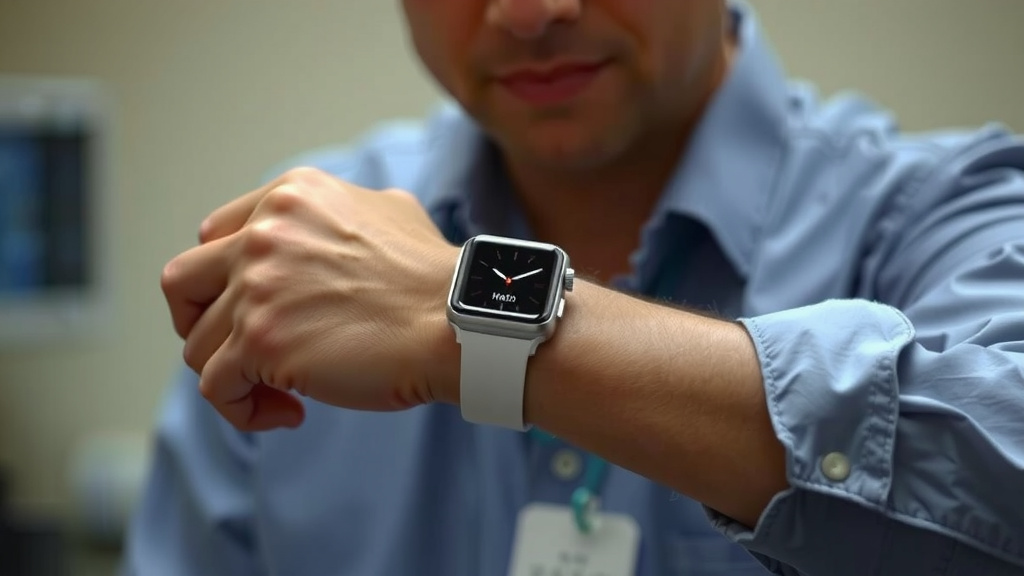
The Future of Blood Sugar Monitoring on Your Wrist
So, what does this mean for you? It means the dream of a fully non-invasive smartwatch blood sugar monitor is still a few years away from widespread use. However, the progress is real. Many major tech companies and medical device manufacturers are pouring money and talent into this research.
What to Expect Soon (and What’s Further Out)
We might see watches that can take a rough estimate of glucose trends in the near future. These wouldn’t replace finger-prick tests or CGMs for medical decisions but could be useful for general wellness tracking. For example, you might see your glucose trend gently rising after a large meal, giving you an idea of how your body is responding.
More advanced, medical-grade non-invasive monitoring is likely further out. It will need rigorous testing and regulatory approval. Think of it like a marathon, not a sprint. The first steps are being taken, and we’ll see improvements gradually.
The Importance of Research and Regulation
It’s important that this technology is both accurate and safe. For people managing diabetes, incorrect readings can have serious health consequences. That’s why regulatory bodies like the FDA will have a strict process for approving any new blood sugar monitoring devices. This ensures that what you wear on your wrist is reliable.
As we’ve found, this research is complex. It involves physics, chemistry, engineering, and biology all working together. The commitment to finding a solution is strong, driven by the desire to make health management easier and more accessible for everyone.
How You Can Stay Informed
While you wait for this amazing technology to mature, here’s what you can do:
- Keep Using Your Current Methods: If you monitor blood sugar, stick to your doctor’s recommended devices.
- Stay Updated on Health News: Follow reputable health and tech news sources.
- Talk to Your Doctor: Discuss your interest in new technologies with your healthcare provider.
- Be Skeptical of Early Claims: Not everything you read about new tech will be accurate right away.
- Focus on Overall Wellness: Continue using your smartwatch for general health tracking.
- Educate Yourself: Understand the difference between wellness tracking and medical monitoring.
The journey to a smartwatch that checks your blood sugar is exciting. It’s a clear sign of how technology is aiming to make health monitoring more convenient. We’re on the path to a future where managing your health might be as simple as checking the time.
Conclusion
So, while your smartwatch can’t check your blood sugar directly today, the science is moving fast. Researchers are exploring innovative ways, like using light or radio waves, to achieve non-invasive glucose monitoring. We’ve seen how different technologies work and what makes blood sugar tracking so challenging for wearables. The future promises more convenient health tracking, but accuracy and safety are key. Until then, continue relying on your current methods for blood sugar management and stay informed about new developments in health tech. Your health journey is evolving, and your smartwatch will likely be a bigger part of it soon.
Frequently Asked Questions
Will smartwatches ever check blood sugar without a finger prick?
Experts are actively researching non-invasive methods. Technologies using light or radio frequencies show promise for detecting glucose levels without breaking the skin. While not widely available yet, this is the primary goal for future smartwatch capabilities.
Can my current smartwatch estimate my blood sugar?
No, current commercially available smartwatches cannot accurately estimate blood sugar levels. While they excel at tracking heart rate and activity, blood glucose monitoring requires different, more advanced sensor technology that is still under development.
How long until we see smartwatches that can check blood sugar?
It’s difficult to predict an exact timeline, but widespread medical-grade non-invasive blood sugar monitoring on smartwatches is likely several years away. We might see rough trend estimations sooner, but accurate, reliable devices will need further research and regulatory approval.
Why is checking blood sugar so much harder for a smartwatch than heart rate?
Heart rate and activity are detected through physical signals like pulse or movement. Blood sugar is a chemical measurement. Detecting glucose requires identifying specific molecules or their subtle effects, which is far more complex for a non-invasive wrist-worn device.
What should I do if I need to monitor my blood sugar now?
If you need to monitor your blood sugar, it’s essential to continue using the methods recommended by your doctor, such as finger-prick tests or continuous glucose monitors (CGMs). These are currently the most accurate and reliable ways to track your glucose levels for medical management.
![7 Best Smart Watch For Trail Running [2026]](https://smartwatchbest.com/wp-content/uploads/2026/09/7-best-smart-watch-for-trail-running-2026-featured-768x432.jpg)
![7 Best Running Smart Watch 2025 [2026]](https://smartwatchbest.com/wp-content/uploads/2026/08/7-best-running-smart-watch-2025-2026-featured-768x432.jpg)
![7 Best Smart Watch For Backpacking [2026]](https://smartwatchbest.com/wp-content/uploads/2026/08/7-best-smart-watch-for-backpacking-2026-featured-768x432.jpg)
![7 Best Smart Watch 2025 For Health [2026]](https://smartwatchbest.com/wp-content/uploads/2026/08/7-best-smart-watch-2025-for-health-2026-featured-768x432.jpg)