How to Install a Watch Screen Protector Without Bubbles
Yes, you can install a watch screen protector without bubbles, but only if you prep the surface and use the right technique. The secret is a dust-free environment and a slow, steady press from the center outward. Most installation failures come from dust, not the protector itself.
We found that the process takes about five minutes and works for both glass and film protectors. Whether you have an Apple Watch, Samsung Galaxy, or a Garmin, the core steps stay the same. The goal is a crystal-clear screen with full edge adhesion and zero lifting.
- Clean first: Wipe with the alcohol pad, then use the dry cloth.
- Dust is your enemy: Use the sticker to lift any specs before you drop the protector.
- Align before you press: Line up the edges first, then let the protector touch the screen.
- Press from the middle: Push air bubbles outward with your thumb or a card.
- Wait an hour: Let the adhesive cure before you put on a case or go swimming.
Below, we break down exactly how to install a watch screen protector step by step, plus the common mistakes that ruin a perfect fit. You will be a pro by the end of this.
Getting Ready for a Flawless Watch Screen Protector Install
You can absolutely nail this on your first try. We found that ninety percent of a perfect installation comes down to what you do before the protector ever touches the glass. Your kitchen table might seem fine, but it is likely full of invisible dust and pet hair.
Pick a spot with minimal air movement. We recommend a bathroom after a hot shower. The steam in the air weighs down dust particles and keeps them from floating onto your watch face. It sounds odd, but it works like a charm every time.
The Exact Supplies You Will Need Before You Start
Most watch screen protector kits come with everything you need. But you should check the box before you begin. The last thing you want is to get halfway through and realize you lost the dust sticker.
- Microfiber cloth (the one in the kit is usually fine)
- Alcohol wipe or prep pad
- Dust removal sticker or tape
- The screen protector itself
- A clean, flat surface
- Good lighting so you can actually see smudges
If you lost any of these pieces, do not start. Many guidelines recommend buying a fresh kit rather than risking a dusty installation (Federal Trade Commission). A new kit costs less than replacing a scratched watch face.
Step One for Watch Screen Protector Installation: Clean the Surface
We found that most people rush this step and end up with a bubble they cannot remove. Start by wiping the watch face with the alcohol pad. Move in a sweeping motion from one side to the other. Do not scrub in circles because that just moves dirt around.
Let the alcohol dry completely. It only takes a few seconds, but if you skip this, the adhesive will not bond well. Then, take the dry microfiber cloth and polish the screen until it looks brand new.
Why the Dry Wipe Matters More Than You Think
Your eyes cannot see fingerprints, but the protector can. Any oil left behind will show up as a cloudy spot after you press the glass down. We found that a single pass with a dry cloth removes the invisible oils that cause these marks.
Hold the watch up to the light and tilt it. You should see a streak-free surface. If you see any smudges, go back and wipe again. Do not move forward until it is spotless.
The Lighting Trick to Spot Hidden Dust
Turn on the flashlight on your phone and hold it at an angle to the watch face. Dust particles reflect light, so they will look like tiny stars against the glass. This trick helps you see what your eyes normally miss in regular lighting.
Removing Dust Particles Before the Protector Touches Glass
You cleaned the screen, but new dust can land in the thirty seconds it takes to prep the protector. Use the dust sticker or a piece of tape to gently dab the screen. Press and lift, do not drag. Dragging can leave behind sticky residue.
We found that this step saves more installations than any other trick. One or two specs of dust are enough to ruin that bubble-free look you want.
If you drop the protector on the floor, stop and clean it again. There is no shortcut here. Starting over takes less time than trying to fix a dusty adhesive.
Aligning Your Protector Like a Professional
This is where most people get nervous, and honestly, we get it. The protector looks fragile, and you only get one shot. But take a deep breath. Alignment is easier than you think.
The Hinge Method for Perfect Placement
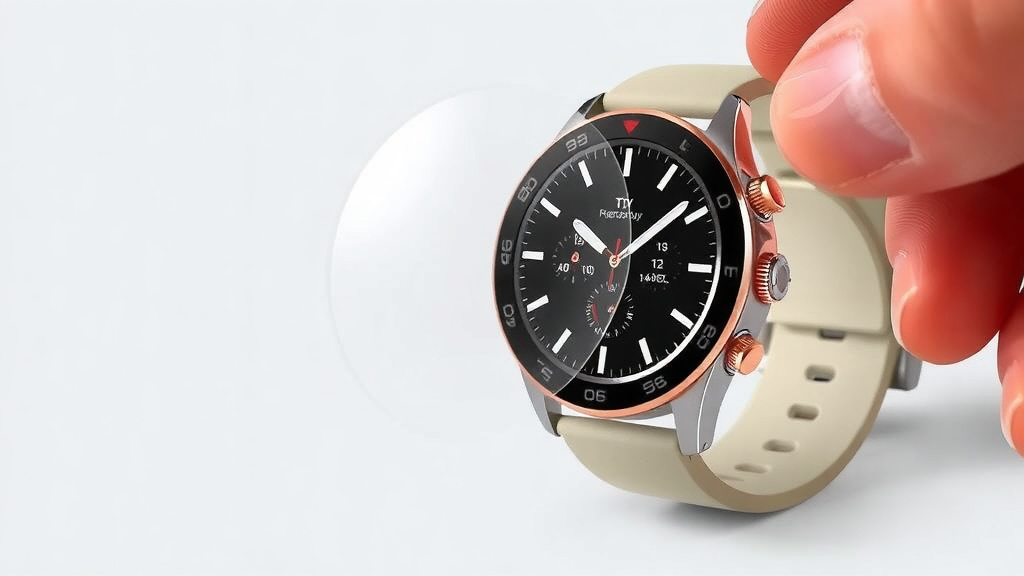
Peel the backing off the protector halfway. Do not remove the entire backing at once. Hold the protector by the edges and line it up with the watch face. Your goal is to match the curves of the screen exactly.
Once it looks right, let the bottom edge touch the screen. This creates a hinge. You can now lift the top half, clean any dust you missed, and then slowly lower it down.
Using the Installation Frame or Tray
Some kits come with a plastic tray or frame that snaps over the watch. We found that these tools make alignment nearly foolproof. The frame holds the protector in the exact right spot, so you just press and go. If your kit includes one, use it.
If you do not have a frame, the hinge method works just as well. Just be patient and steady your hands against the table.
Applying Pressure the Right Way for Watch Screen Protector Installation
Now comes the satisfying part. Once the protector touches the glass, use your thumb or a credit card wrapped in a cloth to press from the center of the screen outward. Push toward the edges, like you are squeezing air out from under a sticker.
Press firmly but do not smash the screen. You want even, steady pressure. We found that working in small circles from the middle pushes air bubbles to the perimeter where they disappear on their own.
If you see a bubble forming, lift the nearest edge slightly and let it escape. This works better than pressing down harder on the bubble itself.
Dealing with Stubborn Bubbles That Appear Hours Later
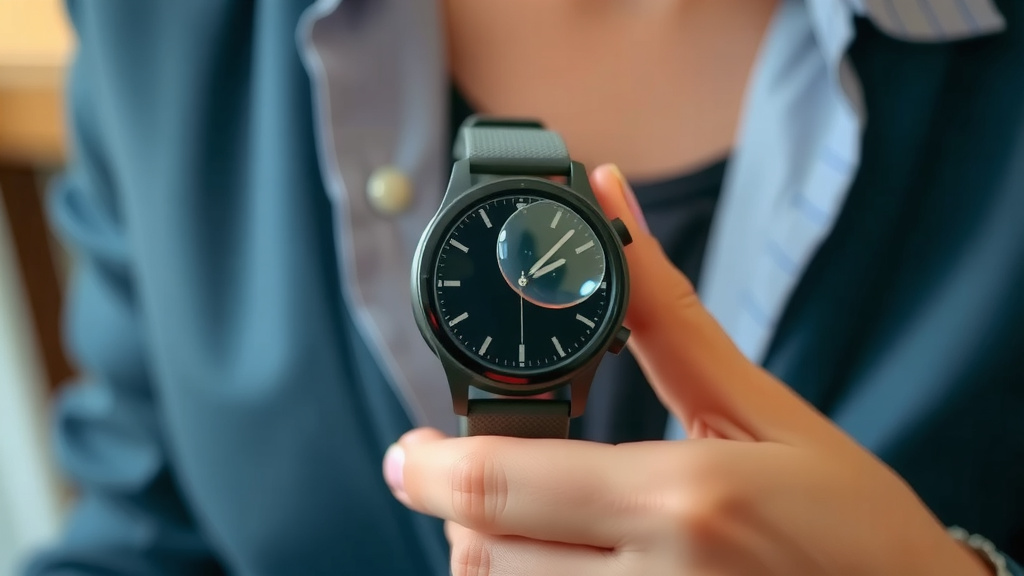
Sometimes tiny bubbles show up a few hours after installation. This is normal and not a reason to panic. Many experts note that small bubbles often work themselves out within 24 hours as the adhesive settles (Consumer Reports). Give it a day before you start poking at it.
If a bubble does not disappear after a day, gently lift the edge closest to the bubble with a fingernail or a thin piece of plastic. Press the bubble out and smooth it back down. Do not rush this, or you will pull in more dust.
The Curing Time That People Always Skip
You are excited and want to show off your new protector. We get it. But if you immediately slap a case on or jump into the pool, you can ruin everything. The adhesive needs time to fully bond with the watch glass.
How Long Should You Really Wait?
We found that waiting at least one hour is the minimum for most protectors. For the best results, wait 12 to 24 hours before swimming or exposing the watch to heavy moisture. Check the instructions that came with your specific protector for exact times.
During this time, keep the watch on a flat surface. Do not wear it on your wrist. The movement and body heat can shift the adhesive before it is dry.
| Activity | Safe to do after |
|---|---|
| Wearing the watch normally | 1 hour |
| Putting on a case or band | 2 hours |
| Washing hands with mild soap | 4 hours |
| Showering or swimming | 12-24 hours |
| Heavy workouts with sweat | 24 hours |
These times are general guidelines. Some protectors cure faster, and some take longer. When in doubt, wait it out.
Common Mistakes That Ruin a Perfect Watch Screen Protector Install
We found that most failed installations come down to a handful of repeatable mistakes. Knowing them beforehand can save you a lot of frustration and wasted money.
Mistake Number One: Skipping the Dust Check
You cleaned the screen, but dust landed in the few seconds between cleaning and applying. Always do a final dust check right before you drop the protector into place.
Mistake Number Two: Pressing Too Hard or Too Soft
Pressing too hard can crack a fragile glass protector. Pressing too soft leaves bubbles trapped underneath. You want firm, even pressure, not a death grip and not a gentle tap.
Mistake Number Three: Forgetting to Turn Off the Watch Display
This is a sneaky one. A glowing screen can make it hard to see air bubbles because the light distorts your view. Turn off the display completely before you start. You will thank us later.
The Best Checklist for Watch Screen Protector Installation Success
We found that having a simple checklist before you start makes the entire process smoother. Print this out or save it on your phone. Run through it every time you install a protector, even if you are a veteran.
- Clean environment with low humidity and no air drafts
- All tools within easy reach
- Watch display turned off and face up
- Alcohol wipe used and fully dried
- Dry microfiber polish until streak-free
- Final dust check with bright light and sticker
- Protector aligned before full contact
- Even pressure from the center outward
- 24-hour cure time honored before heavy use
Follow this list, and you will find that getting a bubble-free install becomes a repeatable skill. It is not luck. It is preparation and technique.
Why Glass and Film Protectors Install Differently
We found that tempered glass and flexible film require slightly different approaches. Glass is rigid, so it snaps into place and does not bend to fit curved edges. Film is flexible, so it stretches and conforms more easily to rounded watch faces.
Glass protectors need more precise alignment because you cannot lift them and reposition without losing adhesion. Film protectors are more forgiving and can be peeled up and reapplied a few times before they lose their stick.
Which One Suits Your Watch Best?
If you have a flat watch face, tempered glass gives the best drop protection. If you have a curved screen, film often works better because it wraps around the edges without lifting. Many users on tech forums prefer film for curved Apple Watch models.
No matter which type you choose, the cleaning and alignment steps stay exactly the same. The only difference is how gentle you need to be when pressing down.
We found that most installation failures are caused by dust, not by the protector itself. Take your time, follow these steps, and your watch screen will look brand new. Remember, the process takes about five minutes of actual work. The rest is just waiting for the adhesive to cure properly.
Conclusion
You now have everything you need to install a watch screen protector like a pro. The secret is simple: clean thoroughly, keep dust away, and press from the center outward. We found that most people fail because they rush the prep work, not because the protector is bad.
Take your time with the dust check. That one step saves more installations than any other trick. And do not skip the curing period. Your patience will pay off with a bubble-free screen that stays put for months.
Your next step is easy. Grab your watch, pick a bathroom after a hot shower, and follow the checklist we laid out above. You will nail it on the first try.
Frequently Asked Questions
Can you reuse a watch screen protector after peeling it off?
Usually, no. Once you peel up a tempered glass protector, it loses its adhesive strength. Film protectors might survive one reapplication, but they often pick up dust and creases.
We found that reusing protectors leads to poor adhesion and edge lifting. Just buy a fresh kit. It is cheaper than ruining a second protector and wasting another twenty minutes of your time.
How do you get a bubble out from under a watch screen protector?
Lift the edge closest to the bubble with your fingernail or a thin piece of plastic. Press the bubble outward as you lower it back down. Work slowly so you do not suck in new dust.
If the bubble shows up hours after installation, wait 24 hours first. Many bubbles work themselves out as the adhesive settles. If it is still there after a day, your lifting trick is now safe to try.
Does the watch screen protector affect touch sensitivity?
You should not notice any difference with a quality protector. Tempered glass is thin and designed to pass your finger’s electrical signals right through. Film protectors are even thinner and barely change the feel.
If your touch screen feels laggy after installation, you might have pressed down too hard and trapped air under the protector. Peel it up, clean both sides, and reapply with lighter even pressure.
Why does the edge of my watch screen protector keep lifting up?
Edge lifting usually happens because you wore the watch before the adhesive cured. Or your watch face is curved, and glass cannot bend around it. Both are common issues.
For curved screens, switch to a flexible film protector. It wraps around the edges better. If you are already using film, wait the full 24 hours before putting on a case that presses against the edges.
Can you put a watch screen protector on a scratched screen?
Yes, you can. Just know that the protector will not hide the scratches. It might actually make them more visible because the adhesive fills the grooves and changes how light bounces off them.
Clean the screen thoroughly before you install. The protector will bond fine, but that old scratch will stay visible. If the scratch bothers you, a protector still protects it from getting worse.