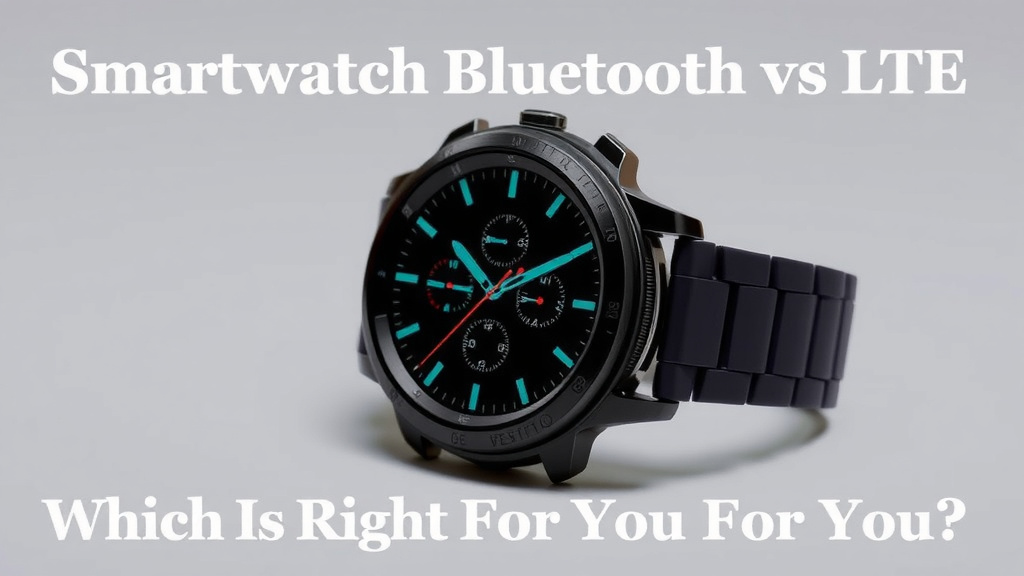
Smartwatch Bluetooth vs LTE: Which Is Right for You
Choosing between a Bluetooth smartwatch and an LTE smartwatch depends on how you plan to use it. A Bluetooth watch connects to your phone for calls, texts, and apps. An LTE watch can do all that and work independently with its own cellular connection, letting you leave your phone behind.
Think of it this way: Bluetooth is like a leash, tethering your watch to your phone. LTE is like giving your watch its own wings to fly solo. This cellular capability means more freedom but also a different cost structure. We found that many users prefer LTE for workouts or quick errands.
- Bluetooth smartwatches need your phone nearby.
- LTE smartwatches can function without your phone.
- LTE models offer more independence for calls and apps.
- Bluetooth is generally simpler and cheaper to maintain.
- Consider your daily routine when deciding.
Let’s break down the differences so you can pick the perfect smartwatch for your life.
“`htmlBluetooth vs. LTE Smartwatches: Which Connection Works for You?
This guide will help you understand the core differences between Bluetooth and LTE smartwatches. You’ll learn how each connects, what that means for your daily use, and which option might be the best fit for your lifestyle. We found that understanding these distinctions is key to making a smart purchase.
How Your Smartwatch Connects to the World
The Bluetooth Connection: Your Phone’s Wingman
A Bluetooth smartwatch relies on your smartphone for its internet connection and many of its smart features. Think of it as an extension of your phone. It pairs directly with your phone via Bluetooth technology. This connection allows your watch to receive notifications, send texts, and make calls, as long as your phone is within range.
The typical range for Bluetooth is about 30 feet (10 meters). So, if you step away from your phone, your watch might lose its connection to its smart capabilities. We found that for many users, this works perfectly fine. They keep their phone close by most of the time.
The LTE Connection: Your Watch’s Independence
An LTE smartwatch has its own cellular connection, just like your smartphone. LTE stands for Long-Term Evolution, a standard for wireless broadband communication. This means your watch can connect to cellular networks independently. It can make calls, send texts, stream music, and use apps even when your phone isn’t around.
This is a big advantage for those who like to leave their phone at home. Maybe you’re going for a run, to the gym, or just running a quick errand. With an LTE watch, you can still stay connected. We found that this independence is a major selling point for active users.
Key Features and Functionality Differences
Calls and Texts: Staying in Touch
With a Bluetooth smartwatch, you can typically answer or reject calls and read texts on your wrist. However, to reply to texts or make calls, you’ll usually need to pull out your phone. Some advanced Bluetooth watches might offer limited reply options. We found that for quick checks, Bluetooth is sufficient.
An LTE smartwatch lets you do much more. You can make and receive calls directly from your watch. You can also send and reply to texts using its interface, sometimes with voice-to-text capabilities. This freedom is what many users love about LTE models. It truly lets you disconnect from your phone for a bit.
Apps and Data: What Can Your Watch Do Solo?
Apps on a Bluetooth smartwatch often require your phone to be connected to function fully. This means that apps relying heavily on internet data will likely use your phone’s connection. You’ll see your notifications and basic app data, but advanced functions might be limited.
An LTE smartwatch can run apps that need an internet connection without your phone. This includes streaming music services, using navigation apps, or even making contactless payments. We found that the ability to use these features independently is a significant benefit. It makes the watch feel like a more powerful, standalone device.
Battery Life Considerations
Using Bluetooth is generally less power-intensive than using cellular data. Therefore, Bluetooth smartwatches often have longer battery life between charges. This is because they aren’t constantly transmitting and receiving data over a cellular network.
LTE smartwatches tend to have shorter battery life. Constantly connecting to cellular networks uses more power. This means you might find yourself charging an LTE watch more frequently, especially if you use its cellular features often. We found that users often balance this with the convenience LTE offers.
Costs and Service Plans
Bluetooth Smartwatches: Simpler Pricing
When you buy a Bluetooth smartwatch, there are typically no additional monthly costs beyond the initial purchase price. You are already paying for your smartphone plan, and the watch uses that connection. This makes Bluetooth watches a more budget-friendly option in the long run.
LTE Smartwatches: An Added Monthly Fee
To use the cellular features of an LTE smartwatch, you’ll usually need to add a separate line or an existing smartwatch plan to your mobile carrier account. This means an extra monthly fee. This fee covers the data and cellular service for your watch. We found that carriers offer various plans, so it’s worth comparing them.
Some carriers offer bundled plans for smartwatches. You might also find that the initial cost of an LTE smartwatch can be higher than a comparable Bluetooth model. This is due to the added cellular hardware and the expectation of ongoing service fees.
Making Your Choice: What Fits Your Life?
Let’s summarize how to decide. Consider your daily habits. Do you often leave your phone behind? If yes, an LTE watch might be perfect. Are you usually near your phone? Bluetooth may be all you need. We found that most users can make either work, but LTE offers a distinct advantage for those seeking true phone-free freedom.
Quick Checklist for Your Decision
- Do you need your watch to work without your phone?
- Are you willing to pay an extra monthly fee for cellular service?
- Do you exercise or run errands without your phone regularly?
- Is battery life a top priority, or can you charge daily?
- How important is it to make calls and use apps directly from your wrist?
Many experts point out that the choice often comes down to personal preference and budget (Cleveland Clinic). Think about which features genuinely enhance your daily activities. We found that trying out both options, if possible, can also be very helpful in making the final decision.
| Feature | Bluetooth Smartwatch | LTE Smartwatch |
|---|---|---|
| Phone Required Nearby | Yes | No (for cellular features) |
| Independent Connectivity | No | Yes (cellular) |
| Monthly Service Cost | No | Yes |
| Battery Life (General) | Often Longer | Often Shorter |
| Ideal For | Users who keep phone close | Users seeking phone-free independence |
Conclusion
You’ve learned the key differences between Bluetooth and LTE smartwatches. Your choice really boils down to your daily routine and what you want your watch to do independently. If you’re often near your phone and want a simpler, more affordable option, a Bluetooth watch is likely your best bet. However, if you dream of leaving your phone behind for workouts or quick errands and staying connected, an LTE watch offers that freedom, though it comes with an added monthly cost and potentially shorter battery life. Now, consider your lifestyle and make the smartwatch choice that truly fits you.
Frequently Asked Questions
Can I use an LTE smartwatch without a separate data plan?
Generally, no. To use the independent cellular features of an LTE smartwatch, you’ll need to add a specific smartwatch plan or line to your existing mobile carrier account. This plan incurs an additional monthly fee to cover the cellular data and service for your watch.
Will my Bluetooth smartwatch work if my phone is in another room?
Your Bluetooth smartwatch will likely lose its full functionality if your phone is too far away, typically beyond a 30-foot range. You might still be able to see the time or basic fitness data, but notifications, calls, and app features will stop working until your phone is back in range.
Does an LTE smartwatch drain its battery faster than a Bluetooth one?
Yes, LTE smartwatches typically use more battery power than Bluetooth models. Connecting to cellular networks requires more energy than maintaining a Bluetooth connection to your phone. If you frequently use your LTE watch’s independent cellular features, you’ll likely need to charge it more often.
Can I make payments with both Bluetooth and LTE smartwatches?
Many smartwatches, both Bluetooth and LTE, support contactless payments through apps like Google Pay or Apple Pay. However, an LTE watch can make these payments even when your phone isn’t nearby, whereas a Bluetooth watch will rely on your phone’s connection for the payment to go through.
Is an LTE smartwatch worth the extra monthly cost for me?
We found that an LTE smartwatch is worth the extra cost if you regularly leave your phone behind and still need to make calls, send texts, stream music, or use apps independently. If you’re always with your phone or don’t need those standalone features, a Bluetooth model is usually sufficient and more cost-effective.
![7 Best Round Smart Watch For Women [2026]](https://smartwatchbest.com/wp-content/uploads/2026/08/7-best-round-smart-watch-for-women-2026-featured-768x432.jpg)
![7 Best Chinese Smart Watch 2025 [2026]](https://smartwatchbest.com/wp-content/uploads/2026/08/7-best-chinese-smart-watch-2025-2026-featured-768x432.jpg)