
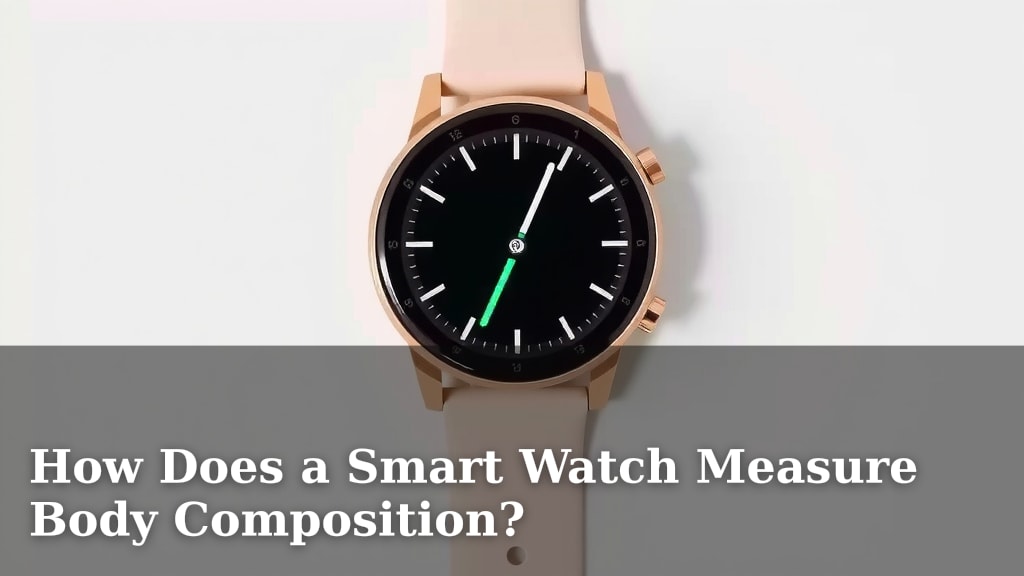
How Does a Smart Watch Measure Body Composition?
Your smartwatch can measure body composition using a technique called bioelectrical impedance analysis (BIA). It sends a small, safe electrical signal through your body. Different tissues, like fat and muscle, conduct this signal differently. This helps your watch estimate your body fat percentage and other metrics.
This technology is the same kind used in many home scales. It provides a quick snapshot of your internal makeup without needing more involved tests. Understanding these readings can help you track your fitness progress more effectively. It’s a pretty neat trick for something you wear on your wrist!
- Smartwatches use bioelectrical impedance analysis (BIA).
- A tiny, safe electrical signal travels through your body.
- Fat and muscle resist the signal differently.
- This helps estimate body fat percentage and muscle mass.
Let’s walk through exactly how your smartwatch does this, step by step.
How Your Smartwatch Figures Out Your Body Makeup
Your smartwatch uses a clever trick called bioelectrical impedance analysis (BIA). It’s a simple method, really. It sends a tiny, safe electrical current through your body. Your watch then measures how this current travels. Different parts of your body conduct electricity differently. This is the key to its estimations.
Understanding the Electrical Signal
Think of your body as a circuit. Water, electrolytes, and lean muscle are good conductors of electricity. They let the signal pass through easily. Fat, on the other hand, is a poor conductor. It resists the flow of electricity. This difference in resistance is what your watch uses to calculate things.
How Your Watch Sends the Signal
Most smartwatches designed for body composition have sensors on the back. These are usually the same ones that measure your heart rate. When you initiate a body composition reading, these sensors make contact with your skin. This allows the electrical signal to enter your body.
The Path the Signal Takes
The current typically travels from one hand, through your body, to the other hand. Some watches might use different paths. They might send it from the watch to your finger and then to other sensors. The exact path depends on the watch’s design. But the principle remains the same: measure resistance.
Calculating Body Composition Metrics
Your smartwatch uses algorithms to interpret the data. These algorithms take into account the electrical resistance. They then use this information, along with your personal details (like age, sex, and height), to estimate various metrics. This includes your body fat percentage and lean muscle mass. It can also estimate water content and bone mass. It’s quite a feat for a small device!
What is Body Fat Percentage?
Body fat percentage is the total weight of fat in your body. This is divided by your total weight. It’s a key indicator of fitness. Having too much or too little can affect your health. Guidelines from organizations like the CDC suggest healthy ranges vary by age and sex.
What About Muscle Mass?
Muscle mass refers to the total weight of muscle in your body. It includes skeletal muscle, smooth muscle, and the water in those muscles. Higher muscle mass is often associated with a faster metabolism. It also helps with physical performance.
Factors That Can Affect Readings
It’s important to know that BIA readings aren’t always perfect. Several factors can influence the accuracy of your smartwatch’s measurements. For instance, your hydration levels play a big role. If you’re dehydrated, your body has less water. This can make your body appear to have a higher body fat percentage. It’s because less water means higher resistance.
Hydration is Key
Drinking enough water is essential for accurate BIA readings. Experts recommend staying well-hydrated throughout the day. Try to take your reading when you feel adequately hydrated. This generally means not immediately after waking up or after intense exercise without rehydrating.
Other Influencing Factors
Other things can also throw off the numbers. Things like recent meals or exercise can affect your body’s water distribution. Even the temperature of your skin can make a slight difference. For the most consistent results, it’s best to try and take measurements under similar conditions each time.
| Metric | What It Is | Why It Matters |
|---|---|---|
| Body Fat Percentage | The proportion of fat in your body. | Helps assess health risks associated with obesity or underweight. |
| Lean Muscle Mass | The weight of your muscles, organs, and bones. | Indicator of strength and metabolic rate. |
| Body Water | The total amount of fluid in your body. | Essential for cell function and temperature regulation. |
Getting the Most Accurate Results
To get the best data from your smartwatch, follow these tips. Consistency is your best friend. Try to take your measurements at the same time of day. This helps minimize daily fluctuations. Taking readings before eating or drinking is often recommended.
Consistency is Key
Also, try to measure yourself in a similar environment. For example, don’t measure yourself when you’re very hot and then again when you’re very cold. This can affect the electrical conductivity. Aim for a calm, consistent routine for your measurements.
When to Take Your Measurement
Many sources suggest taking body composition readings first thing in the morning. This is after you’ve used the restroom and before you eat or drink anything. This ensures you have a baseline measurement. It’s less influenced by recent food or fluid intake. This approach offers a clearer picture over time.
Here’s a quick checklist to help you:
- Take readings at the same time daily.
- Measure before eating or drinking.
- Ensure you’re well-hydrated, but not overly so.
- Use the watch sensors on clean, dry skin.
- Keep your body still during the measurement.
- Compare trends over weeks, not just single readings.
Conclusion
You’ve learned how your smartwatch uses bioelectrical impedance analysis (BIA) to estimate your body composition. By sending a tiny electrical signal through your body, it measures resistance. Different tissues conduct this signal differently. This allows your watch to provide insights into metrics like body fat percentage and muscle mass. Remember that factors like hydration and timing can affect readings. For the most reliable trends, aim for consistent measurement habits. Now you can use this knowledge to better track your fitness journey and understand your body’s makeup!
Frequently Asked Questions
Can I rely on my smartwatch for exact body composition numbers?
Your smartwatch provides an estimation, not an exact measurement. BIA technology is influenced by several factors, like hydration and when you take the reading. Think of the numbers as a trend indicator rather than a precise diagnosis. Comparing readings over time will give you a better sense of your progress.
How often should I measure my body composition with my smartwatch?
For the best trending data, aim to measure your body composition consistently, perhaps once a day or a few times a week. It’s best to do this at the same time of day, under similar conditions, like first thing in the morning before eating or drinking. This minimizes daily fluctuations and helps you see real changes.
Why do my smartwatch body composition readings change so much?
Readings can fluctuate due to hydration levels, recent meals, exercise, and even skin temperature. When you’re dehydrated, your body’s resistance increases, potentially showing a higher body fat percentage. Staying well-hydrated and measuring under consistent conditions will help reduce these variations.
Can my smartwatch measure body composition if my hands are wet?
It’s best to ensure your skin is clean and dry where the sensors make contact. Moisture can affect the conductivity of the electrical signal. This can lead to less accurate or inconsistent readings. Always wipe your wrist and the watch sensors before taking a measurement.
Does the type of smartwatch matter for body composition readings?
Yes, not all smartwatches offer body composition analysis. You need a watch specifically designed with BIA sensors for this feature. Brands that offer this typically highlight it in their product specifications. Always check if your model has this capability before expecting it to work.

![7 Best Smart Watch For Heart Health [2026]](https://smartwatchbest.com/wp-content/uploads/2026/09/7-best-smart-watch-for-heart-health-2026-featured-768x432.jpg)