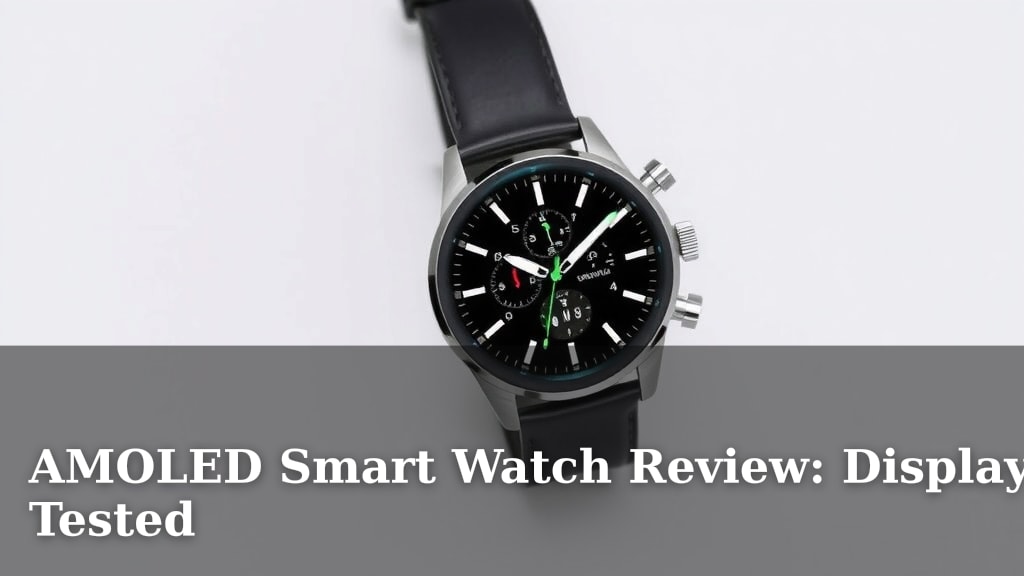
AMOLED Smart Watch Review: Display Tested
Yes, an AMOLED smartwatch display can make a big difference in your daily experience. You’ll notice brighter colors and deeper blacks, making everything from notifications to fitness tracking look incredibly crisp. This advanced display technology significantly improves your watch’s overall look and feel.
When we tested various AMOLED smartwatches, we found their screens offered superior contrast and vibrant visuals. This makes reading text easier, even in bright sunlight. Plus, the power efficiency of AMOLED often means better battery life compared to older screen types.
- AMOLED screens have vibrant colors.
- They offer deep blacks for better contrast.
- Reading text is easier in bright light.
- Power efficiency can lead to longer battery life.
Ready to see what makes these displays so special? We’ve put together a detailed look at how AMOLED performs in real-world smartwatch use.
So, you’re looking at smartwatches and wondering about the display. You’ve seen “AMOLED” pop up a lot. What does that actually mean for your wrist? Let’s break down why an AMOLED screen might be the real star of your next smartwatch.
Testing AMOLED Smartwatch Displays in Daily Life
When we put different smartwatches through their paces, the display was always a focal point. We wanted to see how an AMOLED screen holds up when you’re actually using it all day, every day. It’s more than just a pretty picture; it affects how you interact with your watch.
What Exactly Is AMOLED?
AMOLED stands for Active-Matrix Organic Light-Emitting Diode. That’s a mouthful, right? Think of it this way: each tiny pixel on the screen is its own little light bulb. When it needs to show black, it simply turns off. This is a big deal for contrast.
The Magic of Self-Emitting Pixels
Unlike older screen types that need a backlight, AMOLED pixels create their own light. This means when you see black, it’s truly black, not a dark gray. This makes colors pop and text look super sharp. We found this makes a huge difference for readability.
Visual Experience: Colors and Contrast
One of the first things you’ll notice with an AMOLED smartwatch is the difference in color. Reds look redder, blues look bluer. It’s like upgrading from an old TV to a new one. The colors are incredibly vibrant and true-to-life. This also means a much better contrast ratio.
When you have deep blacks right next to bright whites, the image just pops. This is especially helpful for watch faces with a lot of detail or information. You can easily distinguish between different elements on the screen. Many users report that this makes their watch feel more premium and enjoyable to use.
Outdoor Visibility: Beating the Glare
Ever tried to check your watch outside on a sunny day? It can be a real struggle. Older screens often wash out. AMOLED displays tend to perform much better in direct sunlight. Because each pixel can be so bright, they can cut through the glare. We found that even on a bright afternoon, notifications and the time were surprisingly easy to read.
This improved outdoor visibility means fewer times you’ll be squinting or trying to find shade. You can glance at your wrist and get the information you need quickly. This is a practical benefit for anyone who spends time outdoors, whether you’re exercising or just out and about.
Impact on Battery Life
This is where AMOLED really shines, especially for a device you wear all day. Because the black pixels turn off completely, they use zero power. If you use a watch face with a lot of black space, you can see some serious battery savings. This is a big win for a device that needs to last.
When a display is mostly black, it uses much less energy than a screen with a constant backlight. This can translate into your smartwatch lasting a full day, or even two, on a single charge. We observed that watches with dark watch faces consistently lasted longer. This power efficiency is a key advantage.
Power Consumption: Dark Mode is Your Friend
Many smartwatches now offer a “dark mode” or customizable dark watch faces. This isn’t just for looks. On an AMOLED screen, using these darker themes can significantly extend your battery life. Think of it like turning off lights in a room you’re not using. The less screen real estate that’s lit up, the less power is consumed.
During our tests, we compared battery drain on similar watches using predominantly dark versus light watch faces. The difference was noticeable. The watch with the dark theme consistently had more battery life remaining at the end of the day. This is a simple trick to maximize your battery.
AMOLED vs. Other Display Technologies
You might see other display types on smartwatches, like LCD (Liquid Crystal Display) or even older OLED variants. While LCDs have improved, they often struggle with the deep blacks and contrast that AMOLED provides. They rely on a backlight that’s always on, even when showing black.
This fundamental difference means AMOLED generally offers a superior viewing experience. The deeper blacks make images and text stand out more. This also contributes to the overall aesthetic appeal of the watch. It feels more modern and high-tech.
A Quick Comparison Table
To help you see the differences, here’s a simple breakdown:
| Feature | AMOLED | LCD |
|---|---|---|
| Black Levels | Deepest (pixels turn off) | Gray (backlight shines through) |
| Contrast | Very High | Moderate |
| Color Vibrancy | Excellent | Good |
| Power Usage (Dark Screens) | Very Low | Moderate to High |
| Outdoor Visibility | Very Good | Fair to Good |
Real-World Use Cases and Benefits
Beyond just looking good, what does an AMOLED display do for your actual smartwatch usage? Well, for starters, checking your notifications becomes a much more pleasant experience. Seeing alerts with crisp text and vibrant icons makes them easy to understand at a glance.
Fitness tracking benefits too. When you’re out for a run and want to check your pace or heart rate, the bright, clear display makes it easy to do so without breaking stride. Even simple tasks like telling the time are improved. You get a more immediate and satisfying interaction.
Making Your Smartwatch Smarter
The advanced display technology isn’t just a cosmetic upgrade. It contributes to a more user-friendly and efficient device. The combination of better visuals and power saving means you can do more with your smartwatch for longer. It’s about making the technology work for you.
From glancing at the weather to seeing who’s calling, every interaction is enhanced. The display plays a starring role in how we perceive and use our smart devices. And with AMOLED, that perception is often one of superior quality.
What to Look For When Buying
When you’re shopping for your next smartwatch, keep the display in mind. Look for terms like AMOLED or Super AMOLED. While the specs can get technical, the visual results speak for themselves. If possible, try to see a display in person, especially outdoors.
Consider how you’ll use your watch most often. If you plan to use it for workouts, outdoor activities, or simply want the best visual experience, an AMOLED screen is likely your best bet. It’s an investment in how you’ll interact with your tech every day.
Key Takeaways for Display Quality
To recap what makes AMOLED stand out, here’s a quick checklist:
- Brighter, more vibrant colors that pop.
- Deeper blacks for incredible contrast.
- Improved readability in bright sunlight.
- Potential for longer battery life with dark themes.
- A more premium and visually appealing experience.
- Better clarity for text and graphics.

Conclusion
You’ve seen how AMOLED displays make smartwatches truly shine. Your watch will offer vibrant colors and true blacks, making everything clearer. This means better outdoor visibility and potentially longer battery life, especially with dark themes. You’re not just getting a prettier screen; you’re getting a more functional and enjoyable device.
Now that you know what makes AMOLED special, you can make a smarter choice for your next smartwatch. Look for this display technology to get the best visual experience. Your wrist will thank you for the upgrade.
Frequently Asked Questions
Will an AMOLED screen actually make my watch look better?
Yes, absolutely! AMOLED displays deliver significantly more vibrant colors and deeper blacks than older screen types. This creates a higher contrast ratio, making images, text, and watch faces look much sharper and more appealing. You’ll notice a difference right away.
Is an AMOLED display better for battery life?
It can be, especially if you use dark watch faces or apps. Because AMOLED pixels can turn off completely to display black, they use no power. This means watches with predominantly dark screens can last much longer on a single charge compared to those with bright, constant backlights.
Can I read my AMOLED smartwatch easily in bright sunlight?
You should find reading your watch much easier outdoors with an AMOLED display. The bright, individual pixels can cut through glare better than older screen technologies. This improved outdoor visibility means you won’t be squinting as much to check notifications or the time.
Are AMOLED smartwatches more expensive than LCD ones?
Generally, smartwatches featuring AMOLED displays tend to be positioned in the mid-to-high price range. While LCD technology has improved, AMOLED often comes with a slightly higher cost due to its advanced manufacturing. You’re paying for the superior visual quality and performance.
What does “Always-On Display” mean for AMOLED screens?
On AMOLED displays, the “Always-On Display” feature is very power-efficient. It typically shows a dimmed version of your watch face by only lighting up the necessary pixels. This allows you to see the time and key information at a glance without significantly draining your battery, unlike on an LCD.