
Smart Watch BP Monitor: Is It Accurate?
Smartwatch blood pressure monitors can be surprisingly accurate for many users, but they aren’t always a replacement for traditional cuffs. While they offer convenience and frequent tracking, their accuracy depends heavily on the device and how you use it. Think of them as a helpful tool for trends, not a medical diagnosis device.
These devices use optical sensors to measure blood flow, a different method than the cuff-based ones your doctor uses. This means readings might vary more. We found that while many users report good results, it’s wise to compare them with a traditional cuff periodically. Your health is important, and getting reliable readings matters.
- Smartwatch BP monitors can be accurate, but aren’t always.
- Accuracy varies by watch model and user technique.
- They’re great for tracking trends over time.
- Always compare readings with a traditional cuff sometimes.
- Consult your doctor for medical advice.
Let’s take a closer look at what makes these watches tick and what you should know before relying on their readings.
Checking Your Blood Pressure: How Accurate Are Smartwatches?
Smartwatches with blood pressure monitoring are becoming more common. They offer a convenient way to keep an eye on your readings. But how reliable are they, really? We’ve looked into it, and here’s what you need to know.
How Do Smartwatch BP Monitors Work?
Most smartwatch blood pressure monitors use a method called photoplethysmography (PPG). It’s the same technology that measures your heart rate. PPG uses light sensors. These sensors shine light onto your skin. They then measure how much light is reflected back. This helps detect changes in blood volume. More blood means more light is absorbed.
The watch analyzes these light patterns. It tries to estimate your blood pressure based on them. This is different from traditional cuffs. Those use an inflatable bladder to squeeze your arm. They measure the pressure needed to stop blood flow. This difference in method is key to understanding accuracy.
Accuracy: What the Research Suggests
We found that the accuracy of smartwatch BP monitors can vary quite a bit. Some studies show they can be quite good for tracking trends. Others found they aren’t as precise as traditional cuffs. One review of several studies indicated that while some devices are promising, they still need more validation (National Institutes of Health).
Think of it this way: your heart rate is fairly consistent. Blood pressure, however, can change rapidly. It’s influenced by many factors like stress, diet, and activity. This makes it a tougher reading for PPG sensors to capture perfectly every time.
Factors Influencing Smartwatch BP Accuracy
Several things can affect how accurate your smartwatch readings are:
- Device Quality: Not all smartwatches are created equal. Higher-end models often have more advanced sensors. They may also have better algorithms for processing the data.
- Fit of the Watch: A loose watch can lead to inaccurate readings. The sensors need to be snug against your skin. Make sure it’s not too tight, though. That can also affect blood flow.
- Movement: If you move your arm while the watch is taking a reading, it can throw off the results. It’s important to stay still.
- Skin Tone and Tattoos: Some research suggests that darker skin tones and tattoos can interfere with PPG sensors. This is because they absorb light differently.
- User Technique: How you position your arm and body can make a difference. Following the manufacturer’s instructions precisely is important.
Smartwatches vs. Traditional Cuffs: What’s the Difference?
Traditional blood pressure cuffs are considered the gold standard for accuracy. They are calibrated regularly. They use a direct measurement method. This makes them very reliable for medical diagnoses.
Smartwatches offer convenience and frequent monitoring. You can take readings anytime, anywhere. This is great for spotting patterns. However, they are typically not considered medical-grade devices. They are best used as a complementary tool.
When Are Smartwatch Readings Most Useful?
Smartwatches are excellent for:
- Tracking Trends: You can see how your blood pressure changes throughout the day. You can also see how it changes over weeks or months. This can help you and your doctor spot issues.
- Early Detection: Noticing a sudden spike or drop might prompt you to check with a traditional cuff or your doctor.
- Lifestyle Monitoring: You can see how factors like exercise, sleep, or diet might be affecting your BP.
When You Should Definitely Use a Traditional Cuff
There are times when a traditional cuff is a must:
- Diagnosis: If your doctor needs to diagnose high or low blood pressure, they will use a calibrated cuff.
- Medication Adjustments: When your doctor is adjusting your blood pressure medication, they rely on precise readings.
- Critical Readings: If you get a reading that seems very high or low on your watch, confirm it with a traditional cuff.
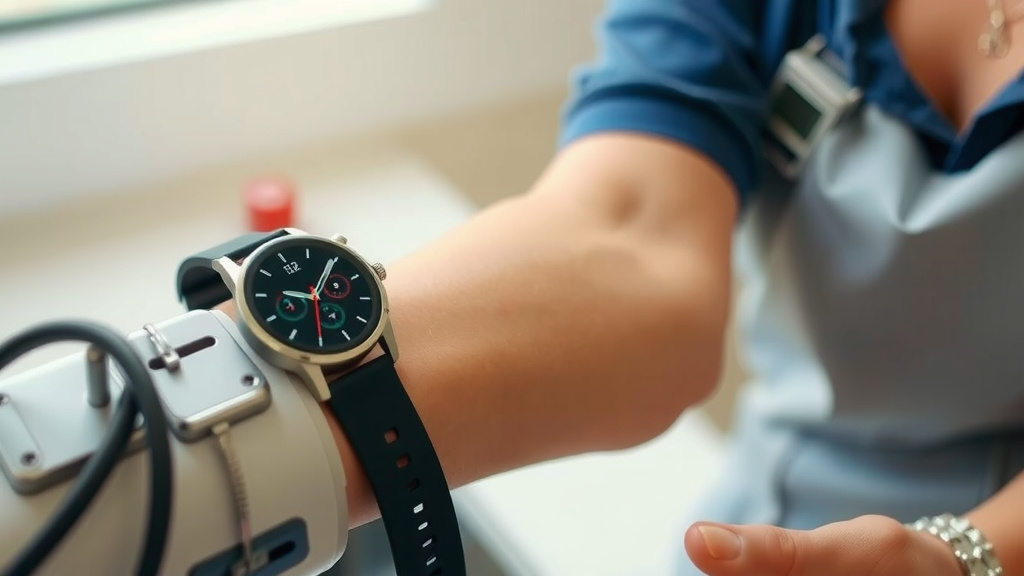
Tips for Getting the Best Readings from Your Smartwatch
To maximize the accuracy of your smartwatch BP monitor, follow these tips:
- Read the Manual: Every watch is a bit different. The manufacturer’s instructions are your best guide.
- Proper Fit: Ensure the watch is snug but comfortable. It should sit a finger’s width above your wrist bone.
- Rest Before Measuring: Sit down for at least 5 minutes before taking a reading. Keep your arm relaxed and at heart level.
- Stay Still: Don’t talk or move during the measurement. Even small movements can affect the results.
- Consistent Positioning: Always position your arm the same way for each reading.
- Regular Comparison: We found that comparing your smartwatch readings with a traditional cuff periodically is highly recommended. Do this at least once a month, or as your doctor advises.
Is a Smartwatch BP Monitor Right for You?
A smartwatch BP monitor can be a helpful tool in your health arsenal. It offers unprecedented convenience for tracking blood pressure trends. However, it’s vital to understand its limitations.
Think of your smartwatch as a guide, not a doctor. It can alert you to changes and patterns. It can help you have more informed conversations with your healthcare provider. But for definitive medical information, especially when making treatment decisions, always rely on a properly calibrated traditional blood pressure cuff and your doctor’s advice.
| Feature | Smartwatch BP Monitor | Traditional BP Cuff |
|---|---|---|
| Measurement Method | Optical sensors (PPG) | Inflatable arm cuff (auscultatory or oscillometric) |
| Primary Use | Trend tracking, lifestyle monitoring | Diagnosis, medication management, precise readings |
| Accuracy Potential | Can be good for trends; varies by device | Generally high and reliable when calibrated |
| Convenience | Very high; can measure anytime, anywhere | Lower; requires specific setup and time |
| Medical Grade | Usually not considered medical grade | Considered medical grade |
Conclusion
You’ve learned that smartwatch blood pressure monitors can offer a convenient way to track your health trends. They are great for spotting patterns over time, but remember they aren’t medical-grade devices. Accuracy can vary based on the watch’s quality, how you wear it, and even how you take the reading. Always compare your smartwatch data with a traditional cuff, especially for critical health decisions. Your doctor remains your best resource for interpreting your blood pressure readings and guiding your health journey. Schedule a check-in with your doctor to discuss your smartwatch data.
Frequently Asked Questions
Can I trust my smartwatch for blood pressure readings?
Smartwatches can provide useful trend data for your blood pressure. However, research suggests they aren’t as accurate as traditional cuffs for medical diagnoses. It’s best to use them as a supplementary tool to monitor changes and discuss findings with your doctor.
How often should I compare my smartwatch BP readings to a traditional cuff?
We recommend comparing your smartwatch readings with a traditional cuff at least once a month. Your doctor might also suggest a specific frequency based on your health needs. This helps ensure you’re getting a reliable overview of your blood pressure.
Why might my smartwatch give me different blood pressure readings than a cuff?
Smartwatches use optical sensors (PPG) that measure blood flow changes, which is less precise than a traditional cuff’s direct pressure measurement. Factors like watch fit, movement, and skin tone can also influence PPG accuracy.
Are there any specific smartwatch brands known for better BP accuracy?
While some higher-end models may have more advanced sensors, accuracy varies widely across brands and even within different models from the same brand. We found it’s always wise to check recent reviews and consider comparing readings with a traditional cuff, regardless of the brand.
Can I use my smartwatch’s blood pressure readings to adjust my medication?
No, you should never adjust your blood pressure medication based solely on smartwatch readings. Always consult your doctor. They rely on precise measurements from calibrated traditional cuffs to make medication decisions safely.
![7 Best Smart Watch For Skinny Wrist [2026]](https://smartwatchbest.com/wp-content/uploads/2026/09/7-best-smart-watch-for-skinny-wrist-2026-featured-768x432.jpg)
![7 Best Smart Watch 4g [2026]](https://smartwatchbest.com/wp-content/uploads/2026/08/7-best-smart-watch-4g-2026-featured-768x432.jpg)
![7 Best Smart Watch For Samsung Users [2026]](https://smartwatchbest.com/wp-content/uploads/2026/09/7-best-smart-watch-for-samsung-users-2026-featured-768x432.jpg)
![7 Best Budget Smart Health Watch [2026]](https://smartwatchbest.com/wp-content/uploads/2026/08/7-best-budget-smart-health-watch-2026-featured-768x432.jpg)