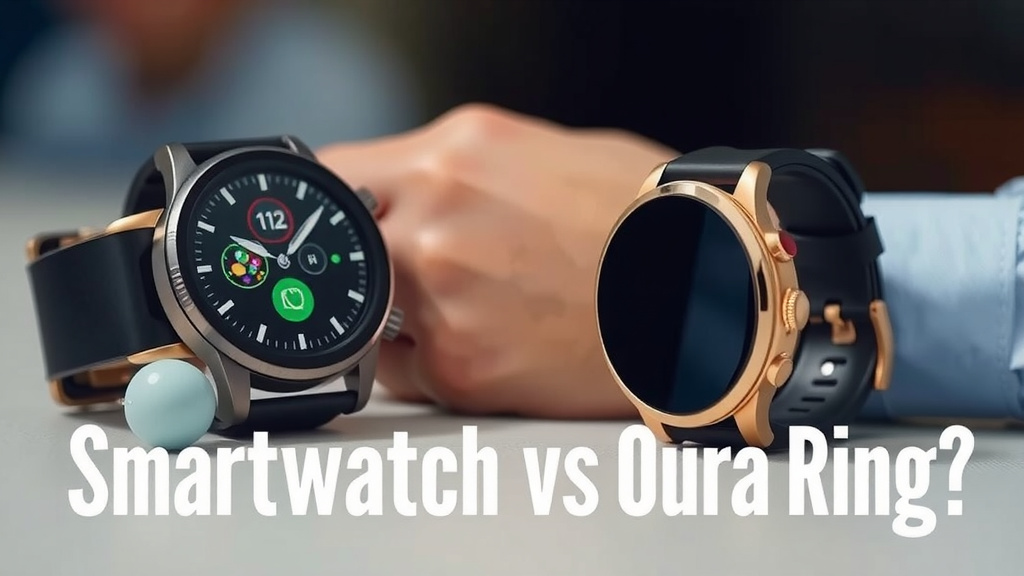
Smartwatch vs Oura Ring: Which is Right for You
Deciding between a smartwatch and an Oura Ring really depends on what you want to track. A smartwatch offers a wide range of features from notifications to fitness tracking and apps, while an Oura Ring focuses primarily on deep sleep and recovery metrics. For everyday convenience and diverse functionality, a smartwatch often wins. If your main goal is understanding your body’s readiness for the day, the Oura Ring is designed for that.
Think about what you’ll use it for most. Do you want a device that can help you manage your day with alerts and quick replies, or one that silently collects detailed physiological data? We found that many users choose a smartwatch for its all-around utility. Others prefer the Oura Ring’s discreet form factor and its specialized focus on health optimization. Both can enhance your well-being, but in different ways.
- Smartwatches offer broad features: notifications, apps, fitness.
- Oura Rings focus on sleep, recovery, and readiness scores.
- Choose a smartwatch for general use and connectivity.
- Choose an Oura Ring for in-depth health insights.
- Your personal goals will guide the best choice.
Let’s dive deeper into what makes each device unique and help you decide which one fits your lifestyle best.
Smartwatch vs. Oura Ring: Which Wearable Fits Your Life?
You’re thinking about getting a wearable to track your health and daily activity. That’s awesome! But now you’re faced with a common choice: a smartwatch or an Oura Ring. Both can give you data about your body, but they do it in very different ways. Think of it like choosing between a Swiss Army knife and a specialized chef’s knife. One does a lot of things okay, the other does one thing exceptionally well. We’ve looked at what each device offers to help you figure out which tool is right for your personal toolkit.
Understanding the Core Differences
The main difference comes down to their primary purpose. Smartwatches are designed to be mini-computers on your wrist. They connect to your phone, deliver notifications, let you make calls, run apps, and track fitness. Oura Rings, on the other hand, are laser-focused on providing deep health insights. Their main job is to monitor your sleep, recovery, and readiness for the day, all from a discreet ring.
The Smartwatch: Your Connected Companion
When you think of a smartwatch, picture a device that keeps you connected and informed. It’s your personal assistant, right there on your wrist. You can glance at it for incoming messages, calendar alerts, or to see who’s calling without pulling out your phone. Many smartwatches also offer a broad range of fitness tracking, from steps and heart rate to specific workouts like running or swimming.
Notifications and Apps: Staying in the Loop
One of the biggest draws of a smartwatch is its ability to keep you updated. You’ll get vibrations and alerts for texts, emails, and social media. You can often reply to messages with quick responses or voice dictation. Plus, the app stores on many smartwatches let you download tools for weather, music control, and even contactless payments.
Fitness Tracking Capabilities
For many, fitness is a key reason to get a smartwatch. They can automatically detect certain activities or allow you to manually start tracking a workout. You’ll see data like heart rate zones, calories burned, distance covered, and pace. Some advanced models even offer ECG readings and blood oxygen monitoring, giving you more detailed physiological data during exercise.
The Oura Ring: The Quiet Health Expert
The Oura Ring takes a different approach. It’s a small, comfortable ring designed for 24/7 wear. Its focus is less on buzzing you with notifications and more on silently collecting data about your body’s internal signals. Think of it as a dedicated scientist studying your sleep and recovery patterns. It aims to tell you how ready your body is to perform each day.
Sleep Tracking: The Gold Standard
Oura has gained a reputation for its exceptional sleep tracking. It goes beyond just duration. The ring analyzes your sleep stages (deep, light, REM), heart rate variability (HRV), body temperature, and respiratory rate. This data is used to give you a comprehensive understanding of your sleep quality. Many users report that Oura’s sleep analysis is more detailed and accurate than other wearables (Oura Blog).
Recovery and Readiness Scores: Knowing Your Limits
Based on your sleep, activity, and physiological signals, the Oura Ring provides a daily Readiness Score. This score helps you understand how recovered your body is and how much stress it’s under. A higher score suggests you’re ready for a challenging workout or a busy day. A lower score might mean it’s better to rest or take it easy. This feature is great for preventing overtraining and burnout.
Discreet Design and Long Battery Life
The Oura Ring’s form factor is a major advantage for many. It’s unobtrusive and stylish, fitting in easily with any jewelry. You can wear it all the time, even while sleeping, showering, or doing activities that might damage a smartwatch. Plus, Oura Rings typically boast a battery life of up to 7 days on a single charge, meaning less frequent charging interruptions.
Comparing Features Side-by-Side
Let’s break down how these two devices stack up in a few key areas. This table can help you quickly see where each one shines.
| Feature | Smartwatch | Oura Ring |
|---|---|---|
| Primary Focus | Connectivity, notifications, general fitness, apps | Sleep, recovery, readiness, in-depth health metrics |
| Notifications | Yes, extensive (texts, calls, apps) | No direct notifications (focus is on data collection) |
| Fitness Tracking | Broad, good for workouts, GPS common | Activity tracking, but less focus on real-time workout data |
| Sleep Tracking | Basic to good, varies by model | Excellent, very detailed stages and metrics |
| Readiness Score | Some smartwatches offer this, often simpler | Core feature, highly detailed and actionable |
| Design | Watch form, larger, more visible | Ring form, discreet, comfortable for 24/7 wear |
| Battery Life | 1-3 days typically | Up to 7 days |
| App Ecosystem | Large, diverse app stores | Oura app focuses on health data |

Who is Each Device Best For?
The Smartwatch User Profile
You might prefer a smartwatch if you love staying connected. If you want to see your notifications at a glance, control your music from your wrist, or use apps without reaching for your phone, a smartwatch is a great choice. It’s also ideal for casual fitness enthusiasts who want to track their steps, heart rate, and workouts easily. Think of someone who wants an all-in-one gadget to manage their day and their basic fitness goals.
The Oura Ring User Profile
The Oura Ring is likely a better fit for you if your main goal is to optimize your health through deep understanding. If you’re serious about improving your sleep, managing stress, and ensuring you’re properly recovered for your workouts or daily life, the Oura Ring excels. It’s for the person who values detailed physiological data over smartphone integration and wants a discreet, comfortable device for long-term wear.
Making Your Final Decision: A Quick Checklist
To help you decide, ask yourself these questions:
- Do you want to receive phone notifications on your wrist?
- Is detailed sleep and recovery analysis your top priority?
- Are you looking for a device to manage your day-to-day tasks?
- Do you prefer a discreet wearable you can forget you’re wearing?
- How important is a long battery life between charges?
- Are you tracking workouts primarily, or your body’s readiness?
Your answers will point you toward the right wearable. Both devices can be powerful tools for understanding your body, but they serve different needs. Many experts suggest that the best wearable is the one you’ll consistently wear and use for the data that matters most to you.
Conclusion
You’ve seen how smartwatches and Oura Rings cater to different needs. A smartwatch is your all-around connected companion, perfect for staying updated and tracking general fitness. The Oura Ring, however, is your dedicated health analyst, focusing on deep sleep and recovery to optimize your daily readiness. Your choice really comes down to your personal goals and how you want to interact with technology to improve your well-being.
Think about what daily convenience means to you versus what deep physiological data can help you achieve. For practical everyday use and connectivity, a smartwatch often wins. If understanding your body’s internal signals for better performance and rest is key, the Oura Ring is your go-to. Take a moment to reflect on your priorities and choose the wearable that truly fits your lifestyle.
Frequently Asked Questions
Can I wear an Oura Ring and a smartwatch at the same time?
Yes, you absolutely can! Many users find value in wearing both. You might use a smartwatch for notifications and quick activity logging, while the Oura Ring quietly tracks your sleep and recovery. This approach gives you a broader picture of your health and daily life.
Which device is better for serious athletes?
For serious athletes, it often depends on their focus. If you need real-time workout data, GPS, and detailed performance metrics during training, a smartwatch with advanced sports features might be better. If your priority is understanding recovery, sleep quality, and preventing overtraining, the Oura Ring excels in providing that readiness score.
Does the Oura Ring track steps or workouts?
The Oura Ring does track your daily activity, including steps, and it detects when you’re active. While it doesn’t offer the same detailed real-time workout tracking or GPS found on most smartwatches, it uses your activity data to contribute to your overall sleep and recovery scores.
Are Oura Ring’s sleep metrics really more accurate?
Research and user reports suggest Oura’s sleep tracking is exceptionally detailed, particularly regarding sleep stages (deep, light, REM) and overnight physiological changes like body temperature and heart rate variability. Its design allows for continuous, unobtrusive wear, which aids in collecting consistent sleep data.
Which device offers better battery life?
Generally, the Oura Ring offers significantly longer battery life, often lasting up to 7 days on a single charge. Most smartwatches typically need charging every 1-3 days, depending on usage and model, due to their more power-intensive features like larger screens and constant connectivity.
![7 Best Smart Watch For Iphone 15 Pro Max [2026]](https://smartwatchbest.com/wp-content/uploads/2026/09/7-best-smart-watch-for-iphone-15-pro-max-2026-featured-768x432.jpg)
![7 Best Refurbished Smart Watches [2026]](https://smartwatchbest.com/wp-content/uploads/2026/08/7-best-refurbished-smart-watches-2026-featured-768x432.jpg)