
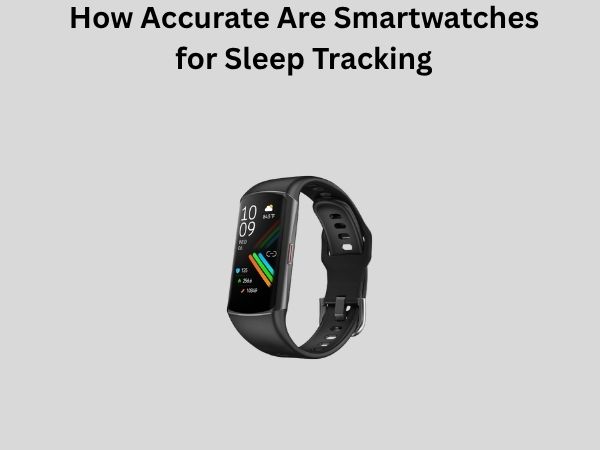
How Accurate Are Smartwatches for Sleep Tracking? A Comprehensive Guide to Modern Sleep Monitoring
Have you ever wondered what your smartwatch actually knows about your sleep? You strap it on your wrist before bed, and by morning, it’s served up a detailed report complete with sleep stages, heart rate variability, and recommendations for better rest. But here’s the million-dollar question: can you really trust what it’s telling you?
I’ve spent considerable time researching sleep tracking technology, and the answer is more nuanced than a simple yes or no. Smartwatches have come remarkably far in monitoring our nocturnal habits, but they’re not quite at the level of clinical-grade sleep labs. Let me walk you through everything you need to know about smartwatch sleep tracking accuracy.
Understanding How Smartwatches Track Your Sleep
Before we dive into accuracy, it’s important to understand the mechanics behind how these devices actually monitor your sleep. Think of your smartwatch as a detective trying to solve a mystery with limited clues.
The Technology Behind Sleep Detection
Most smartwatches rely on several sensors working in harmony to determine when you’re sleeping and what stage of sleep you’re in. The primary tool is accelerometry, which detects your movement or lack thereof. When you’re not moving for an extended period, your watch assumes you’re sleeping. It’s not rocket science, but it’s surprisingly effective.
Beyond basic movement detection, advanced smartwatches incorporate heart rate monitoring. Your heart rate behaves differently during various sleep stages. During REM sleep, your heart rate typically increases, while deep sleep shows more variation and overall lower rates. Some premium models even measure heart rate variability (HRV), which provides additional clues about your nervous system state.
Sensors and Their Functions
- Accelerometer: Detects body movement and stillness
- Optical heart rate sensor: Monitors heart rate throughout the night
- Temperature sensors: Track skin temperature changes during sleep cycles
- SpO2 sensor: Measures blood oxygen levels
- EDA sensor: Some models monitor electrodermal activity
The Accuracy Question: What Research Tells Us
Here’s where things get interesting. Several independent studies have examined smartwatch sleep tracking accuracy, and the results reveal both strengths and limitations.
Clinical Studies vs. Real-World Performance
When researchers compare smartwatch data to polysomnography (PSG)—the gold standard of sleep monitoring used in clinical sleep labs—the results are mixed. Most smartwatches show reasonable accuracy for detecting whether you’re asleep or awake, typically achieving 80 to 90 percent accuracy for overall sleep detection.
However, when it comes to distinguishing between different sleep stages, the accuracy drops significantly. Many smartwatches struggle to differentiate between light sleep, deep sleep, and REM sleep with the same precision as clinical equipment. This is because clinical sleep monitoring uses electroencephalography (EEG), which directly measures brain waves, while smartwatches are working with indirect measurements like movement and heart rate.
Where Smartwatches Excel
Despite their limitations, smartwatches do perform admirably in certain areas:
- Detecting overall sleep duration with reasonable accuracy
- Identifying major sleep disruptions and awakenings
- Tracking sleep consistency patterns over time
- Providing motivation for better sleep habits
- Monitoring heart rate trends during sleep
Comparing Popular Smartwatch Sleep Tracking Models
Not all smartwatches are created equal when it comes to sleep tracking. Let me break down some of the leading contenders in the market.
Apple Watch and Its Sleep Focus
Apple Watch has made significant strides in sleep monitoring. The newer models incorporate accelerometer data combined with heart rate information to estimate sleep stages. Apple’s approach focuses on simplicity, displaying your sleep in broad categories rather than claiming scientific precision. The device tracks wind-down time before bed and provides sleep trends based on your schedule settings.
What makes Apple Watch interesting is its integration with the overall health ecosystem. It encourages sleep through reminders and can track how your sleep correlates with your activity levels. However, it’s known for occasionally overestimating sleep duration, especially if you’re lying still but awake.
Fitbit’s Advanced Sleep Insights
Fitbit has invested heavily in sleep tracking technology. Their smartwatches and fitness trackers use heart rate variability and movement data to estimate sleep stages, including REM and deep sleep percentages. Fitbit also introduced a sleep score feature that rates your sleep quality from 0 to 100 based on multiple factors.
Research suggests Fitbit’s sleep stage estimation is reasonably accurate for broad classifications, though like most wearables, it struggles with fine-grained distinctions. The advantage of Fitbit is the detailed history and trend analysis you get in their app, which helps identify patterns over weeks and months.
Garmin’s Comprehensive Sleep Analysis
Garmin watches, particularly their premium models, offer sophisticated sleep tracking that includes body battery monitoring and sleep quality metrics. Garmin combines multiple data points including HRV, heart rate, respiration rate, and stress levels to paint a detailed picture of your sleep.
The brand’s sleep tracking is particularly strong for athletes and health-conscious users. Garmin’s devices correlate sleep with training load and recovery, providing actionable insights. However, some users report that Garmin watches can be overly sensitive to nighttime movements, sometimes fragmenting sleep data unnecessarily.
Samsung Galaxy Watch Performance
Samsung’s latest Galaxy watches feature improved sleep tracking with better sleep stage differentiation. They use heart rate and movement sensors to estimate deep sleep, light sleep, REM sleep, and awake periods. The integration with Samsung Health provides trend analysis and personalized sleep recommendations.
Samsung’s approach has improved significantly in recent years, and many users report more accurate readings compared to older models. The brand’s strength lies in the smooth integration with Android devices and consistent monitoring.
Oura Ring: A Different Approach
While technically not a smartwatch, the Oura Ring deserves mention because it represents an alternative form factor that claims exceptional sleep tracking accuracy. Worn on your finger, this device uses infrared sensors and motion detection to monitor sleep stages.
Oura Ring users report more consistent tracking and better stage differentiation compared to wrist-worn devices. The ring’s closeness to blood vessels in the finger provides potentially more accurate physiological data. However, the smaller size means fewer sensors overall, and results can vary based on fit and finger placement.
Factors That Impact Sleep Tracking Accuracy
Even the best smartwatch will show varying levels of accuracy depending on several factors specific to you and your situation.
Personal Variables That Affect Readings
Your individual physiology plays a huge role in how accurately your smartwatch can track sleep. People with irregular heart rates, for instance, might see less reliable heart rate-based calculations. Similarly, if you’re a restless sleeper who moves frequently even during deep sleep, accelerometer-based detection becomes less precise.
Temperature also matters. If you sleep in a very warm environment, your heart rate patterns might differ from the baseline algorithms expect, potentially throwing off sleep stage estimation. Interestingly, caffeine consumption, alcohol intake, and medications can all alter your physiological patterns, causing smartwatch accuracy to fluctuate from night to night.
Device Fit and Wearing Position
How snugly your smartwatch fits on your wrist significantly impacts optical heart rate sensor readings. A loose watch won’t maintain good contact with your skin, resulting in poor quality data. Most manufacturers recommend wearing the device snugly but not so tight that it restricts circulation.
Additionally, some people naturally wear their watches higher or lower on the wrist, which can affect sensor accuracy. Dark tattoos or arm hair can also interfere with optical sensors, particularly on devices with older sensor technology.
Environmental Factors
- Room temperature and humidity
- Light levels in your bedroom
- Noise disturbances and sleep disruptions
- Your mattress and pillow type
- Sleeping position changes throughout the night
Accuracy Limitations You Should Know About
Let’s be honest about what smartwatches can’t do well, because understanding limitations is just as important as knowing capabilities.
The Sleep Stage Differentiation Challenge
Here’s something that frustrates many users: smartwatches often struggle to distinguish between light and deep sleep accurately. Since they’re not measuring actual brain waves, they’re making educated guesses based on heart rate and movement patterns. These patterns vary significantly between individuals, which means the algorithms work better for some people than others.
You might wake up feeling like you had a night of deep, restorative sleep, but your smartwatch shows mostly light sleep. Conversely, you might feel groggy despite a report indicating excellent deep sleep. This disconnect happens because the device is working with incomplete information.
Sleep Onset and Offset Inaccuracies
Many smartwatches have difficulty pinpointing exactly when you fall asleep and when you wake up. If you lie in bed reading for twenty minutes before sleeping, your watch might mark that as sleep if you’re not moving much. Similarly, if you wake up briefly and lie still for a few minutes, the device might not immediately register that you’re awake.
This leads to common complaints about sleep duration being overestimated. Over a week, those minor discrepancies can add up, making trends less reliable than you’d hope.
The Nap Detection Problem
Most smartwatches are optimized for nighttime sleep, which means daytime naps often register inaccurately or not at all. If you take a 20-minute nap, your device might miss it entirely or log it with wildly incorrect duration.
Using Smartwatch Sleep Data Wisely
Rather than viewing smartwatch sleep data as absolute truth, approach it as a tool for understanding trends and patterns.
Focus on Trends, Not Individual Night Readings
Instead of obsessing over whether last night showed 5 hours or 5 hours 30 minutes of sleep, look at weekly or monthly patterns. Are you consistently getting less sleep on weekdays? Does your sleep duration correlate with your stress levels? These big-picture insights are often accurate and genuinely useful.
The real power of smartwatch sleep tracking emerges when you use it like a fitness tracker for sleep. Just as runners look at average weekly mileage rather than obsessing over individual run distances, sleep tracking works best as a trend analysis tool.
Combine Multiple Data Points
Don’t rely solely on sleep duration. Pay attention to other metrics like heart rate variability, sleep consistency, and how you feel throughout the day. If your smartwatch shows decent sleep numbers but you’re exhausted, something else might be affecting your sleep quality—perhaps sleep apnea or other sleep disorders that wearables can’t diagnose.
Validate Against Your Experience
After wearing a smartwatch for a few weeks, you’ll develop a sense of how its readings correlate with your subjective experience. If it consistently overestimates or underestimates your sleep, you can mentally adjust for that bias. Your device’s relative accuracy—how well it tracks changes in your sleep—is often more useful than its absolute accuracy.
Comparing Smartwatch Accuracy to Clinical Sleep Testing
To put everything in perspective, let’s discuss how smartwatch accuracy compares to medical-grade sleep testing.
Polysomnography: The Gold Standard
Clinical sleep labs use polysomnography, which measures brain waves, eye movements, muscle activity, heart rate, breathing, and blood oxygen levels simultaneously. This equipment can detect specific sleep disorders, precise sleep stage duration, and subtle arousals that smartwatches miss entirely.
A PSG test provides definitive information about whether you have sleep apnea, restless leg syndrome, or other sleep disorders. Smartwatches, by comparison, are like comparing a smartphone weather app to a professional meteorological station.
When You Need Medical-Grade Testing
If you suspect you have a sleep disorder—experiencing daytime sleepiness despite seemingly adequate sleep, for example—you should see a sleep specialist. Smartwatch data alone cannot diagnose conditions. However, you can use smartwatch history to document sleep patterns when discussing concerns with your doctor.
The Future of Smartwatch Sleep Tracking
Technology is advancing rapidly. Several promising developments on the horizon could significantly improve accuracy.
Emerging Sensor Technologies
Newer sensors being developed can measure additional physiological markers like skin temperature, respiratory rate, and blood pressure more accurately. Some experimental devices even incorporate non-invasive EEG technology, though consumer-grade versions with actual brain wave monitoring are still likely years away.
Machine learning algorithms are also improving. As manufacturers collect more data, their algorithms become better at recognizing individual sleep patterns and adjusting for personal variations.
Making the Best Choice for Your Sleep Tracking Needs
If you’re considering purchasing a smartwatch partly for sleep tracking, here’s what matters most:
Key Features to Prioritize
- Accurate heart rate sensor with good optical clarity
- Consistent wear comfort for all-night monitoring
- Intuitive sleep tracking app with good visualizations
- Trend analysis and historical data tracking
- Integration with other health metrics you care about
- Regular software updates that improve algorithms
The Bottom Line on Smartwatch Sleep Tracking Accuracy
So, how accurate are smartwatches for sleep tracking? The honest answer is: reasonably accurate for most people, with important caveats.
Smartwatches excel at tracking whether you’re asleep or awake and can provide decent estimates of total sleep duration. They’re less reliable at distinguishing sleep stages, particularly differentiating deep and light sleep. For clinical diagnosis of sleep disorders, they’re insufficient—you’d need professional testing.
Where smartwatches truly shine is in providing accessible, continuous monitoring that enables trend analysis and behavioral changes. Many people have genuinely improved their sleep by using insights from their smartwatch to adjust bedtime routines, notice patterns, or motivate better habits.
The devices are tools, not oracles. Use them wisely, focus on trends rather than individual night readings, and combine smartwatch data with your subjective experience and professional medical guidance when needed.
Conclusion
Smartwatch sleep tracking has matured considerably over the past five years. Modern devices offer genuine utility for people interested in understanding and improving their sleep patterns. While they won’t replace clinical sleep testing, and their accuracy in measuring sleep stages remains imperfect, they provide valuable continuous monitoring that casual sleep tracking would otherwise be impossible.
The key to getting real value from smartwatch sleep tracking is managing expectations. View the data as directional rather than definitive, use it to identify patterns and trends, and let it motivate healthier sleep habits. When combined with good sleep hygiene practices and professional medical guidance when needed, smartwatch sleep tracking can be a genuinely useful addition to your health toolkit.
If you’ve been wondering whether to trust your smartwatch’s sleep reports, the answer is yes—with the understanding that it’s providing educated estimates rather than clinical measurements. Use those insights wisely, and you might find your sleep quality improves not because the data is perfect, but because paying attention to it helps you make better choices about rest and recovery.
![7 Best Smart Watch For Elderly With Fall Detection [2026]](https://smartwatchbest.com/wp-content/uploads/2026/07/7-best-smart-watch-for-elderly-with-fall-detection-2026-featured-768x432.jpg)