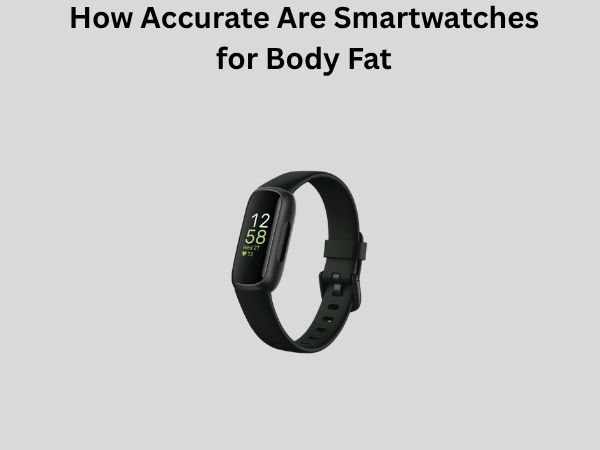
How Accurate Are Smartwatches for Body Fat? A Realistic Look at Modern Wearable Technology
You’ve probably seen them on the wrists of fitness enthusiasts everywhere—those sleek smartwatches that promise to track everything from your heart rate to your body fat percentage. But here’s the question that keeps most of us up at night: can you actually trust these readings? Are smartwatches really accurate when it comes to measuring body fat, or are they just fancy guesswork wrapped in expensive technology?
I’m going to be honest with you right from the start. The answer is more nuanced than a simple yes or no. Smartwatches have made incredible strides in recent years, but when it comes to body fat measurement, there are some important limitations you need to understand. Let’s dive deep into this topic and separate fact from fiction.
Understanding Body Fat Measurement Technology
Before we can talk about smartwatch accuracy, we need to understand how these devices actually measure body fat in the first place. Think of it like trying to understand the weather by looking at a single thermometer—you’re getting one piece of information, but that doesn’t tell you the whole story.
The Science Behind Smartwatch Body Fat Calculations
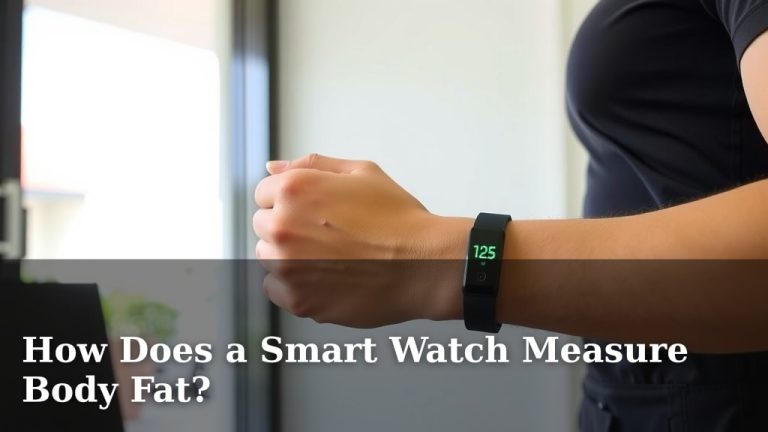
Most smartwatches use bioelectrical impedance analysis, often abbreviated as BIA. Sound fancy? It actually is, but let me break it down for you. These devices send a tiny electrical signal through your body. Now, don’t worry—you won’t feel it. This signal travels at different speeds depending on what it encounters. Muscle tissue and water conduct electricity differently than fat tissue does. By measuring how quickly the signal passes through, the smartwatch can estimate how much of your body is made up of fat versus muscle and water.
It’s like sending a sonar ping through your body instead of through the ocean. The device listens to the echo and tries to figure out what’s inside based on how the signal bounces back and travels through.
Other Methods Smartwatches Might Use
Some premium smartwatches combine bioelectrical impedance with additional data points. They might factor in your age, height, weight, gender, and activity level to create a more complete picture. It’s like adding more weather stations instead of relying on just one thermometer.
How Smartwatch Body Fat Measurements Compare to Traditional Methods
Let’s talk about what we know works really well for measuring body fat, then we can see how smartwatches stack up against these gold standards.
DEXA Scans: The Gold Standard
If body fat measurement were an Olympic sport, DEXA scans would be wearing the gold medal. These use dual-energy X-ray absorptiometry to create incredibly detailed images of your body composition. They’re the most accurate method available, with a margin of error around one to three percent. The downside? They’re expensive, you need an appointment at a medical facility, and you’re exposing yourself to radiation, even if it’s minimal.
Hydrostatic Weighing: The Water Tank Method
This is another highly accurate method that’s been around for decades. You sit in a specialized tank of water while sensors measure your body density. Since fat floats and muscle sinks, this gives you a pretty accurate reading. The error rate is similar to DEXA scans—around two to three percent. Again, though, it requires specialized equipment and trained professionals.
Bod Pod Technology
If you’re claustrophobic, the Bod Pod might be your nightmare. You sit inside an egg-shaped chamber while air displacement measures your body volume. It’s quick, safe, and reasonably accurate with error rates of two to three percent. But like the other professional methods, it requires special equipment and expert supervision.
Bioelectrical Impedance at Professional Clinics
Here’s something interesting: the same bioelectrical impedance technology that your smartwatch uses is also available in clinical settings. When performed by trained professionals using calibrated equipment, BIA can achieve accuracy rates within two to four percent. So the technology itself isn’t the problem. The issue is how it’s implemented in a device you’re wearing on your wrist.
Why Smartwatches Struggle with Body Fat Accuracy
The Hydration Factor
This is probably the biggest culprit when it comes to smartwatch inaccuracy. Remember how bioelectrical impedance relies on how electricity travels through your body? Water is an excellent conductor of electricity. This means that your hydration level at any given moment can dramatically affect your readings.
Let’s say you measure your body fat first thing in the morning after not drinking water all night. Your body is dehydrated. The electrical signal won’t travel as efficiently, and your smartwatch might overestimate your body fat percentage. Now measure again after drinking a big glass of water and going for a run. Your readings might be completely different—not because your body composition changed, but because your hydration status did.
Placement and Contact Issues
A wrist-worn smartwatch is measuring from a very limited point on your body. Professional bioelectrical impedance devices use multiple contact points—usually at your hands and feet—to get a more complete picture of your entire body composition. Your smartwatch is trying to estimate your whole body based on signals from just your wrist. It’s like trying to understand the temperature of your entire house by checking just one room.
The Algorithm Problem
Smartwatch manufacturers have to use algorithms that work for the broadest possible audience. These algorithms can’t account for all the individual variations in human physiology. Maybe you have unusually dense muscle tissue. Perhaps your body stores fat in different proportions than the average person. Maybe you have certain medical conditions that affect electrical conductivity. The algorithm doesn’t know any of this—it just applies a general formula to your data.
Electrode Quality and Contact
Professional BIA devices use high-quality electrodes with perfect contact. Your smartwatch relies on metal contacts on the back of the device that might be dirty, oxidized, or not making optimal contact with your skin. Think of it as the difference between a studio microphone and a broken headset microphone—the technology is the same, but the equipment quality makes a huge difference.
Real-World Studies on Smartwatch Accuracy
What Research Actually Shows
Several independent studies have tested popular smartwatches against gold-standard body fat measurement methods. The results are mixed, but generally show that smartwatches aren’t reliable for absolute accuracy. However, they might be okay for tracking trends over time.
One interesting finding from multiple studies is that smartwatch readings can vary significantly from day to day—sometimes by five to ten percentage points—even when your actual body composition hasn’t changed. That’s a huge swing and makes it difficult to trust a single reading.
Margin of Error You Should Expect
If professional-grade bioelectrical impedance has an error rate of two to four percent, you should probably expect smartwatch body fat measurements to have an error rate somewhere between five and ten percent. Some devices might do better, some might do worse. Think of it like this: if a smartwatch says you’re 25% body fat, your actual body fat could realistically be anywhere from 15% to 35%.
Factors That Influence Smartwatch Body Fat Readings
Time of Day Matters More Than You Think
Your hydration levels, electrolyte balance, and even food digestion change throughout the day. Morning readings before breakfast and water will look different from evening readings. If you want to track trends, measure at roughly the same time each day under similar conditions.
Menstrual Cycle in Women
Women’s water retention and electrolyte balance fluctuate significantly during their menstrual cycle. This can cause body fat readings to swing by several percentage points month to month, even if actual fat mass hasn’t changed.
Recent Exercise
Working out affects your hydration, electrolyte levels, and even skin conductivity. Measuring your body fat immediately after exercise will give you inaccurate results. Wait at least a few hours.
Caffeine and Alcohol Consumption
Both of these affect hydration status and electrolyte balance. If you’re measuring body fat after drinking coffee or alcohol, you’re not getting an accurate picture.
Skin Temperature and Wetness
Cold skin or skin that’s slightly damp can affect electrical conductivity and sensor contact. Make sure your skin is dry and at a normal temperature when taking measurements.
Can You Use Smartwatches for Body Fat Tracking?
The Case for Tracking Trends
Even though absolute accuracy is questionable, smartwatches might still be useful for one specific purpose: tracking relative changes over time. If your smartwatch consistently reads your body fat as 28% one week and 26% the next week, that downward trend might be meaningful—even if the absolute numbers aren’t perfectly accurate.
The key word here is “consistently.” If you measure under roughly the same conditions at roughly the same time, you might be able to detect directional changes in your body composition.
The Case Against Relying on Smartwatch Numbers
If you’re trying to hit a specific body fat percentage for health or aesthetic reasons, smartwatch numbers probably shouldn’t be your primary reference point. The variation and potential error are too large. You’d be better off using mirror checks, how your clothes fit, or professional measurements every few weeks to gauge progress.
Better Alternatives to Smartwatch Body Fat Measurement
Bathroom Scale with BIA Built In
These are more accurate than smartwatches because they use multiple contact points and more stable electrode placement. You’re not getting absolute accuracy, but you’ll get better consistency than a smartwatch.
Skinfold Calipers
A trained professional using calipers can give you a reasonable body fat estimate. The accuracy depends on the technician’s skill, but results are usually within three to five percent of actual body fat.
Visual Assessment and Mirror Checks
This might sound low-tech, but how your body looks and how your clothes fit are actually pretty reliable indicators of body composition changes. Combined with regular photos, this is often more useful than any number.
Professional Measurements When It Matters
If you really need to know your body fat with high accuracy, invest in a DEXA scan or hydrostatic weighing every few months. Yes, it costs money, but you get reliable data.
How to Get the Most Accurate Smartwatch Body Fat Reading
Standardize Your Measurement Conditions
- Measure at the same time each day, preferably in the morning
- Ensure you’re adequately hydrated but not excessively so
- Avoid measuring immediately after exercise, eating, or drinking caffeine
- Make sure your skin is clean and dry
- Ensure the smartwatch electrodes are clean
Take Multiple Readings
Don’t rely on a single reading. Take three or four measurements under identical conditions and average them. This reduces the impact of random fluctuations.
Track Changes, Not Absolutes
Focus on whether your readings are trending up or down rather than worrying about the exact number. A consistent downward trend is more meaningful than whether you’re at 24% or 26%.
What the Future Holds for Smartwatch Body Composition Tracking
Technology continues to improve. Newer smartwatches are incorporating additional sensors and more sophisticated algorithms. Some manufacturers are experimenting with multi-frequency bioelectrical impedance, which provides better accuracy than single-frequency methods. Others are adding temperature sensors and other data points to refine their calculations.
However, the fundamental limitations—wrist-only measurement and reliance on BIA technology—probably won’t be overcome without making smartwatches much bulkier and more intrusive. So while accuracy will likely improve somewhat, don’t expect smartwatches to match professional-grade measurements anytime soon.
The Bottom Line on Smartwatch Body Fat Accuracy
Here’s what you need to know: smartwatch body fat measurements are approximate at best and potentially quite inaccurate. The margin of error is probably somewhere between five and ten percent, which is significantly larger than professional methods.
That doesn’t mean your smartwatch is useless for body composition tracking. It might give you useful relative information if you measure consistently under standardized conditions. But if you’re trying to hit a specific body fat percentage or you need accurate data for health reasons, smartwatch readings alone aren’t sufficient.
Think of your smartwatch body fat measurement like a weather forecast from a single weather station. It gives you directional information and might help you plan your week, but it’s not precise enough to bet serious money on. For critical decisions, you want better data from more reliable sources.
Conclusion
Smartwatches have become incredibly sophisticated tools that provide useful health and fitness data. However, when it comes to body fat measurement specifically, they fall short of the accuracy that many users expect. The technology relies on bioelectrical impedance analysis, which is sound in principle but faces significant limitations when deployed in a wrist-worn device.
Multiple factors—hydration status, placement limitations, algorithm generalization, and electrode quality—combine to create readings that can vary wildly from day to day and may differ significantly from your actual body fat percentage. Studies consistently show that smartwatch body fat measurements have error rates of five to ten percent or more, compared to two to four percent for professional-grade equipment.
Your best approach is to use smartwatch body fat data as one piece of a larger puzzle rather than as your primary source of truth. Track trends over time under consistent conditions, but supplement with other methods like mirror checks, how your clothes fit, progress photos, and occasional professional measurements. If you need accurate body fat data for specific health goals, invest in a DEXA scan or professional bioelectrical impedance assessment. Your smartwatch is a fantastic tool for many things—just don’t expect it to be your definitive body fat measurement device.
Frequently Asked Questions
Can smartwatch body fat measurements ever be as accurate as professional methods?
In their current form, smartwatches cannot match the accuracy of professional measurements like DEXA scans or clinical-grade bioelectrical impedance. The wrist-only measurement point and limitations of sensor technology prevent the accuracy level needed to match professional methods. While future improvements might narrow the gap slightly, fundamental limitations will likely remain.
Is it better to measure body fat with a smartwatch or a smart scale?
Smart scales that measure body composition are generally more accurate than smartwatches because they use multiple contact points for the electrical current to travel through. However, neither device is as accurate as professional methods. If forced to choose between the two, a smart scale would be the slightly better option, but neither should be your only source of body composition data.
How often should I measure my body fat with a smartwatch?
If you’re using a smartwatch for body fat tracking, measuring once per week under consistent conditions is typically sufficient. Measuring more frequently often leads to frustration because daily fluctuations due to hydration, food consumption, and hormonal changes can be quite large. Weekly measurements help reduce the noise and make trends more apparent.
Why does my smartwatch give me different body fat readings each day?
Your body’s hydration status changes daily based on your water intake, exercise, diet, and even your sleep. Since bioelectrical impedance relies on how electricity travels through water and electrolytes, these fluctuations cause significant variations in readings. This is why you shouldn’t obsess over day-to-day