
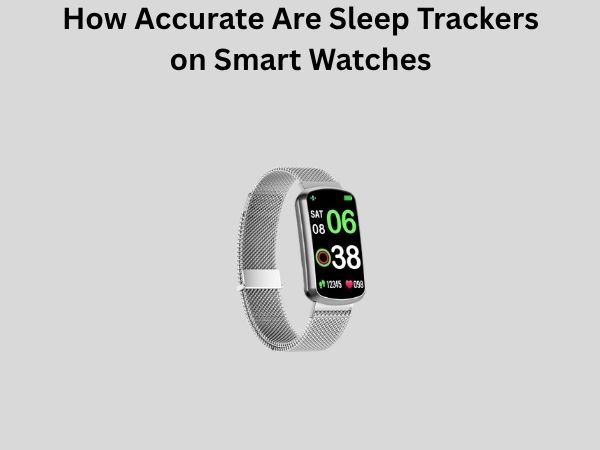
How Accurate Are Sleep Trackers on Smart Watches? Science vs. Reality
You wake up in the morning and glance at your smartwatch. It tells you that you slept for seven hours and forty-three minutes, with ninety-two percent deep sleep. But did you really? That’s the million-dollar question that millions of smartwatch users are asking themselves every single day. Sleep tracking has become one of the most popular features on wearable devices, yet most people have no idea how reliable these measurements actually are.
The truth is, the accuracy of sleep trackers on smartwatches is far more complicated than the simple numbers displayed on your screen. It’s like reading a weather forecast—it gives you a general idea, but it’s not always spot-on. In this comprehensive guide, we’re going to dive deep into the science behind sleep tracking, explore the limitations of current technology, and help you understand what those sleep statistics really mean.
Understanding Sleep Tracking Technology
Before we can assess accuracy, we need to understand how sleep trackers actually work. Most smartwatches use a combination of sensors to monitor your sleep patterns, and knowing these methods is crucial for interpreting the data you receive.
How Smartwatches Monitor Your Sleep
The primary sensor in most smartwatches is an accelerometer. Think of it as a tiny motion detector that measures movement throughout the night. When you’re still, the device assumes you’re sleeping. When you’re moving around, it registers wakefulness. It sounds simple, right? But here’s where things get tricky—your smartwatch doesn’t actually know if you’re sleeping or just lying perfectly still while watching a movie.
Some advanced smartwatches also include heart rate monitors and pulse oximeters. These sensors can detect changes in your heart rate variability and blood oxygen levels, which do correlate with different sleep stages. When your heart rate drops and becomes more variable, you’re typically in deeper sleep. When it spikes, you might be waking up or in lighter sleep phases.
A few premium models have even started experimenting with skin temperature sensors and respiratory rate monitors, attempting to get closer to clinical-grade sleep detection. However, even with all these sensors combined, none of them are measuring brain activity, which is what actually defines sleep stages.
The Gold Standard: Polysomnography
In sleep labs, doctors use a test called polysomnography to measure actual sleep. This involves attaching multiple electrodes to your scalp to measure brain waves, along with sensors for eye movement, muscle activity, heart rate, and breathing. It’s the real deal—the actual scientific gold standard for sleep measurement.
Your smartwatch, by comparison, is making educated guesses based on limited data. It’s like trying to understand what’s happening inside a locked room by only listening at the door. You might get some useful information, but you’re definitely missing the full picture.
The Accuracy Question: What Does Research Show?
Multiple scientific studies have compared smartwatch sleep tracking to laboratory polysomnography, and the results are… well, mixed.
What Studies Reveal About Sleep Tracking Accuracy
A comprehensive review published in sleep medicine journals found that most consumer-grade smartwatches and fitness trackers tend to be fairly accurate at detecting whether you’re sleeping or awake. The overall agreement between devices and polysomnography typically ranges from seventy to eighty-five percent. That might sound decent, but it means that roughly one in five to one in four measurements could be wrong.
Here’s where it gets more concerning: when researchers looked at how accurately smartwatches identified different sleep stages—light sleep, deep sleep, and REM sleep—the accuracy dropped significantly. Most devices performed poorly at distinguishing between light sleep and REM sleep, often confusing the two. They were somewhat better at detecting deep sleep, but still far from perfect.
One particularly interesting study found that different smartwatch brands and models showed wildly different levels of accuracy. Some devices were correct about seventy percent of the time, while others were barely better than flipping a coin. This variation matters because it means your specific device might be more or less reliable than average.
Why Certain Brands Perform Better
Premium smartwatches from well-known manufacturers generally perform better than budget alternatives. This makes sense because companies with larger research budgets invest more in developing sophisticated algorithms. However, even expensive smartwatches aren’t as accurate as clinical equipment.
Devices that use proprietary sleep tracking technology, developed specifically by the manufacturer, often outperform those using generic algorithms. The companies that gather more sleep data have better machine learning models, which improve accuracy over time. Think of it as the difference between a doctor who sees one patient a week versus one who sees fifty—experience matters.
Where Smartwatch Sleep Trackers Fall Short
Understanding the limitations of your sleep tracker is just as important as knowing its strengths. Let’s explore the significant gaps between what your smartwatch claims and what’s actually happening while you sleep.
Mistaking Stillness for Sleep
This is perhaps the biggest weakness of accelerometer-based tracking. Your smartwatch can’t tell the difference between you being asleep and you lying in bed with your eyes closed, thinking about your to-do list. If you spend thirty minutes in bed before falling asleep, or if you wake up at three in the morning and remain still while worrying, your device might count these as sleep.
Conversely, if you move around a lot during deep sleep—some people do, especially if they have restless leg syndrome—your smartwatch might incorrectly register this as wakefulness. You could actually be in the deepest, most restorative phase of sleep while your device thinks you’re awake.
Sleep Stage Differentiation Problems
Your sleep isn’t just one continuous state. You cycle through light sleep, deep sleep, and REM sleep multiple times each night. These stages are crucial because they serve different functions. REM sleep is where dreaming happens and emotional processing occurs. Deep sleep is when your body repairs itself and consolidates memories.
Smartwatches struggle mightily with this distinction. Most devices are essentially guessing about sleep stages based on heart rate patterns and movement. But here’s the problem: a racing heart during REM sleep looks similar to a racing heart during light sleep. The algorithm has to make assumptions, and those assumptions are often wrong.
Some research suggests that smartwatches might overestimate deep sleep and underestimate REM sleep, or vice versa. This means your device might tell you that you had an excellent night of deep restorative sleep when, in reality, you had more light sleep and less deep sleep than reported.
Individual Variability and Baseline Differences
Here’s something crucial that many people don’t realize: sleep trackers work best when they have a baseline of your normal sleep patterns. They’re not very good at absolute measurements, but they’re better at relative comparisons. Your device might not accurately measure your total sleep time, but it can probably tell you whether you slept better or worse than usual.
Individual differences complicate matters further. Someone with a naturally high resting heart rate might be misidentified as being awake when they’re actually in deep sleep. Someone with a sleep disorder like sleep apnea might confuse the tracker’s algorithms entirely.
Environmental and Behavioral Factors That Affect Accuracy
Your smartwatch doesn’t exist in a vacuum. Many factors can influence how accurately it tracks your sleep.
How Sleeping Position Impacts Readings
If you’re a side sleeper, your smartwatch might get more accurate accelerometer data because you’re less likely to move around. Back sleepers might experience more movement artifacts. Stomach sleepers could have the device pressing into their body differently, affecting sensor readings. These positional differences can introduce variability into measurements.
The Effect of Caffeine, Alcohol, and Medications
Substances that affect your sleep don’t necessarily show up differently in smartwatch data. You might have a terrible, fragmented night because you drank coffee at four in the afternoon, but your device might report that you slept fine because you moved around less. Conversely, alcohol might make you less mobile while you sleep, causing the device to think you had excellent sleep when you actually had poor-quality sleep.
Temperature and Environmental Conditions
Your bedroom temperature, humidity, and even light exposure affect your sleep quality, but most smartwatches can’t detect these environmental factors. A cold bedroom might cause you to move around more, while a hot room might make you less mobile. Your device can’t distinguish between restless sleep and perfectly normal sleep-related movements.
Comparing Different Smartwatch Brands
Not all sleep trackers are created equal. Let’s look at how different popular devices stack up against the science.
Apple Watch Sleep Tracking Capabilities
Apple’s approach to sleep tracking is relatively conservative. The device focuses on detecting whether you’re asleep or awake, rather than claiming to identify specific sleep stages with high precision. Research suggests it’s reasonably accurate for detecting sleep onset and wake times, though not perfect. Apple has been cautious about making claims regarding sleep stage accuracy, which is actually refreshing compared to other manufacturers.
Fitbit and Garmin Performance
Fitbit has invested heavily in sleep tracking research and has published studies showing their accuracy. They tend to perform better than many competitors at sleep stage classification, though still with notable limitations. Garmin, particularly their higher-end devices, has shown good performance in independent testing, especially for detecting overall sleep duration.
Budget Smartwatch Reliability
Budget-friendly smartwatches often use generic sleep tracking algorithms that perform poorly in independent testing. These devices might look pretty and offer basic functionality, but their sleep data should be taken with a grain of salt. The cheaper the device, the less likely it has undergone rigorous accuracy testing.
What Sleep Data Can and Cannot Tell You
This might be the most important section of this entire article. Understanding what your sleep tracker data actually means is critical for using it wisely.
The Reliability of Sleep Duration Measurements
Smartwatches are reasonably good—though not perfect—at measuring total sleep duration. Studies show they typically have an accuracy of plus or minus thirty minutes. So if your device says you slept seven hours, you probably slept somewhere between six and a half and seven and a half hours. That’s useful information, but it’s not precise.
However, if you’re comparing night to night, the relative accuracy is often better. If your device says you slept one hour less tonight than last night, that’s probably more accurate than the absolute numbers.
The Questionable Nature of Sleep Stage Data
Here’s my honest take: be skeptical of the specific percentages your device reports for sleep stages. When your smartwatch tells you that you had twenty-five percent deep sleep, that number could easily be off by ten or fifteen percentage points. It’s a rough approximation, not a precise measurement.
This doesn’t mean the data is worthless, though. If you notice a trend—like consistently getting less deep sleep on nights when you exercise—that trend might be real and meaningful. But the absolute numbers? Take them with considerable skepticism.
Sleep Score and Overall Sleep Quality Assessments
Many smartwatches generate an overall sleep score. These scores are proprietary calculations that vary by manufacturer and often consider factors like sleep duration, consistency, and estimated sleep stages. While these scores can be useful for motivation and general awareness, they’re not based on any universally accepted medical standard. One device’s eight out of ten might be another device’s six out of ten.
How to Use Sleep Tracker Data Effectively
Given all these limitations, how should you actually use your smartwatch sleep data? Here are some practical suggestions.
Focus on Trends Rather Than Absolute Values
Instead of obsessing over the exact percentage of deep sleep last night, look at weekly or monthly trends. Are you consistently getting less sleep on weeknights? Is your sleep quality better after exercise? These patterns are likely more accurate than individual night measurements.
Use Sleep Data as a Starting Point for Awareness
Your smartwatch can help you become more aware of your sleep habits. Maybe you realize you’re averaging only five hours on weekdays. That awareness alone might motivate you to make changes. But don’t stop there—combine the data with how you actually feel.
Cross-Reference with Your Own Experience
The best sleep tracker is your own body. If your device says you slept great but you feel exhausted, trust your body. If it says you slept poorly but you feel refreshed, something’s off with the measurement. Your subjective experience is valuable data that your smartwatch can’t capture.
When You Should Get Professional Sleep Assessment
Smartwatch data can be motivating and interesting, but certain situations warrant professional evaluation.
Signs You Might Need a Sleep Study
If you consistently feel exhausted despite your device saying you’re getting enough sleep, if you snore loudly, if you experience gasping or choking at night, or if you have other sleep concerns, talk to your doctor about getting a formal sleep study. A smartwatch is not a substitute for medical diagnosis.
How Professional Sleep Testing Compares
Professional polysomnography provides a level of detail and accuracy that no consumer device can match. If you have a suspected sleep disorder, professional testing is absolutely worth pursuing. Your smartwatch data might even help your doctor understand your sleep patterns, but it’s not sufficient for diagnosis.
The Future of Smartwatch Sleep Tracking
Technology is advancing rapidly. What can we expect from future smartwatches?
Emerging Technologies in Development
Researchers are exploring new sensor technologies, including non-contact sensors that could measure sleep without being worn on your wrist. Some companies are experimenting with radar-based sleep tracking that doesn’t require any wearable device at all. Others are developing more sophisticated algorithms powered by artificial intelligence and machine learning.
We’re also seeing interest in multi-sensor fusion, where devices combine data from multiple sensors to improve accuracy. As algorithms learn from more data and manufacturers invest more resources, accuracy will likely improve.
What Realistic Improvements Might Look Like
In the near future, we’ll probably see smartwatch sleep trackers become moderately more accurate at overall sleep detection and perhaps somewhat better at sleep stage classification. However, don’t expect consumer devices to match laboratory polysomnography anytime soon. The fundamental limitation is that smartwatches can’t measure brain activity, which is essential for true sleep stage identification.
Common Misconceptions About Smartwatch Sleep Tracking
Let me address some myths that circulate about sleep trackers.
Myth: Your Smartwatch Knows Your Sleep Stages Precisely
This simply isn’t true. Your device is making educated guesses based on peripheral data. It’s never going to be as accurate as direct brain monitoring.
Myth: More Expensive Always Means More Accurate
While premium devices generally perform better, the relationship isn’t always linear. A mid-range smartwatch from a reputable manufacturer might outperform a much more expensive device from a company that hasn’t invested in sleep research.
Myth: All Sleep Tracker Data Is Equally Unreliable
While all smartwatch sleep trackers have limitations, some are substantially more accurate than others. The difference between a well-researched algorithm and a generic one can be significant.
Practical Tips for Improving Sleep Tracking Accuracy
If you want to get the most accurate measurements from your smartwatch, here are some practical steps.
- Wear your smartwatch snugly but not too tight—sensor contact matters for heart rate accuracy
- Keep your device updated with the latest firmware and software
- Let the device establish a baseline—it gets
![7 Best Smart Watch For Counting Steps [2026]](https://smartwatchbest.com/wp-content/uploads/2026/08/7-best-smart-watch-for-counting-steps-2026-featured-768x432.jpg)
![7 Best Smart Watch For Beginners [2026]](https://smartwatchbest.com/wp-content/uploads/2026/08/7-best-smart-watch-for-beginners-2026-featured-768x432.jpg)
![7 Best Smart Watch For Running And Swimming [2026]](https://smartwatchbest.com/wp-content/uploads/2026/09/7-best-smart-watch-for-running-and-swimming-2026-featured-768x432.jpg)