Fix Smart Watch Glass Scratches Safely & Easily
You can often remove minor scratches from your smartwatch glass using simple home remedies. Many people have found success with products like toothpaste or baking soda paste. These common household items can gently buff out superficial marks, restoring your watch’s screen.
While deep gouges might be permanent, these methods can significantly improve the appearance of everyday wear and tear. We’ve researched various techniques, and it appears that the key is using non-abrasive pastes and a gentle touch. It’s also wise to avoid harsh chemicals that could damage your device.
- Minor scratches are often fixable.
- Toothpaste and baking soda are common DIY solutions.
- Gentle buffing is key to success.
- Deep scratches may require professional help.
- Always test in an inconspicuous spot first.
Let’s walk through exactly how you can try to make those annoying scratches disappear, step by step.
“`htmlGiving Your Smartwatch Screen a Scratch-Free Makeover
It’s incredibly frustrating when a new scratch appears on your smartwatch. That tiny mark can feel like a giant blemish on an otherwise perfect screen. But don’t worry, you might be able to fix it yourself! We’ve researched several common household items that people swear by for buffing out those annoying surface scratches. The goal is always to be gentle and patient.
DIY Scratch Removal: What You’ll Need and How to Start
Gathering Your Supplies for the Job
Before you begin, make sure you have a few key items on hand. These aren’t exotic chemicals, just simple things you might already have in your bathroom or kitchen. You’ll typically need a soft, lint-free cloth – like a microfiber cloth used for cleaning glasses or camera lenses. Avoid paper towels, as they can create new micro-scratches.
You’ll also need your chosen polishing agent. We’ll discuss a few popular options below. Some people find success with toothpaste, baking soda, or even specialized screen polishes. Always ensure your chosen product is non-abrasive. Harsh cleaners are a big no-no for your smartwatch.
The Importance of a Clean Canvas
First things first: clean your smartwatch screen thoroughly. You don’t want to trap any dirt or grit under your cloth while you’re trying to polish. Gently wipe down the entire screen with a damp, soft cloth to remove dust and fingerprints. Let it dry completely before proceeding. Before you begin, it’s important to clean your smartwatch screen thoroughly to avoid trapping dirt.
This initial cleaning step is critical. Any debris left on the screen could actually worsen the scratch or cause new ones during the buffing process. Think of it like prepping a surface before painting – a clean surface leads to a much better outcome.
Testing Your Chosen Method First
This is a crucial step that many people skip. Before you apply anything to the main part of your screen, test your chosen method on a small, inconspicuous area. This might be along the edge of the screen or a tiny corner. This test run helps you see how your smartwatch glass reacts.
If you notice any adverse effects, like hazing or further damage, stop immediately. It’s better to have a tiny scratch than to risk damaging the entire display. We want to avoid any unpleasant surprises, right?
Popular Home Remedies for Minor Scratches
Toothpaste: A Surprisingly Effective Polisher
You might be surprised, but regular, non-gel toothpaste can work wonders on minor scratches. The key is to use a standard white paste, not one with harsh whitening crystals or microbeads. These can be too abrasive for delicate smartwatch glass.
How do you use it? Apply a tiny dab of toothpaste to your soft cloth. Gently rub the paste onto the scratched area in a circular motion. Apply very light pressure. You’re not trying to scrub it off; you’re gently buffing it. Do this for about 30-60 seconds. Afterward, use a clean, damp cloth to wipe away the toothpaste residue.
Many users report success with this method for very light scratches. It’s thought that the mild abrasives in the toothpaste can help to smooth out the edges of the scratch, making it less noticeable (Healthline). Remember, less is more here.
Baking Soda Paste: Another Gentle Option
Similar to toothpaste, baking soda can also be used to create a mild polishing paste. It’s a fine powder that, when mixed with water, becomes a gentle abrasive. You’ll want to create a mixture that’s not too watery, more like a thick paste.
To make the paste, mix one part baking soda with one part water. Stir it until you have a smooth, creamy consistency. Apply a small amount of this paste to your microfiber cloth. Gently rub it onto the scratched area using small, circular motions. Again, use very light pressure. After a minute or two, wipe the area clean with a damp cloth.
Like toothpaste, baking soda works by gently smoothing the edges of the scratch. It’s a cost-effective solution that’s readily available. Just ensure you rinse thoroughly to remove all baking soda residue.
Specialized Screen Polishing Kits
If you’re hesitant to use household items, there are also commercial screen polishing kits available. These are specifically designed for electronics screens. They often come with a polishing compound and specific cloths.
Follow the instructions provided with the kit very carefully. These kits can be very effective, but using them incorrectly might still cause damage. They are often a bit more expensive than toothpaste or baking soda, but they offer a more targeted approach.
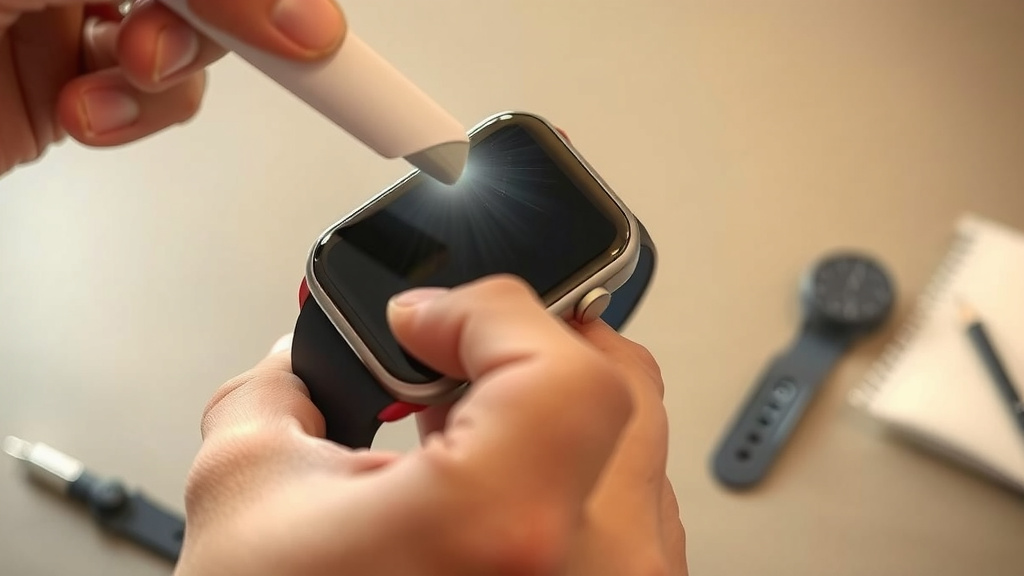
What to Absolutely Avoid Doing
It’s just as important to know what not to do when trying to remove scratches. Some actions can easily turn a minor issue into a major repair job. Understanding these pitfalls can save your smartwatch screen.
Harsh Chemicals and Abrasive Cleaners
Never use harsh chemicals like acetone, ammonia-based cleaners, or window cleaner directly on your smartwatch screen. These can strip away protective coatings, cause discoloration, or even damage the display itself. Many experts advise against these types of solvents for screen cleaning (Consumer Reports).
Also, avoid abrasive scrubbing pads or rough cloths. Even something like a paper towel can be too rough. Stick to soft microfiber cloths. The goal is to gently buff, not to scrub aggressively.
Applying Too Much Pressure
This is a common mistake. When you’re trying to buff out a scratch, it’s natural to want to apply more pressure. However, with smartwatch screens, this can actually make things worse. Excessive force can spread the damage or even cause new cracks.
Remember the gentle, circular motions. Think of it like polishing a delicate piece of jewelry. You want to be patient and let the polishing agent do the work. If a scratch isn’t coming out with light pressure, it might be too deep for a DIY fix.
Submerging Your Watch
Never submerge your smartwatch in water or any liquid when attempting a scratch removal. While many smartwatches are water-resistant, opening them up or applying liquids liberally can compromise their seals. This could lead to water damage, which is rarely covered under warranty.
Always work in a dry environment. If you need to dampen a cloth for cleaning or rinsing, use only a small amount of water and ensure the watch is powered off and kept away from any openings.
When DIY Isn’t Enough: Professional Help
While home remedies can be effective for minor surface scratches, they have their limits. If you try these methods and the scratch remains obvious, or if the scratch is deep and feels like a gouge, it might be time to consider professional help.
A deep scratch can weaken the glass, making it more susceptible to future damage. In such cases, the best course of action is to contact the manufacturer or a reputable electronics repair shop. They can assess the damage and advise on screen replacement if necessary. Sometimes, accepting that a scratch is permanent and focusing on preventing future ones is the wisest approach.
Preventing Future Scratches
Once you’ve hopefully improved the look of your watch, it’s smart to think about prevention. Using a screen protector is one of the most effective ways to guard against scratches. You can get tempered glass or plastic protectors that are designed to fit your specific smartwatch model.
Also, be mindful of where you place your watch. Avoid tossing it onto hard surfaces or putting it in a pocket with keys or coins. Even seemingly minor bumps can create new scratches over time. A little bit of daily awareness can go a long way in keeping your smartwatch looking pristine.
Quick Checklist for Scratch Removal Success
- Clean screen thoroughly first.
- Test your method on a hidden spot.
- Use only soft, lint-free cloths.
- Apply gentle, circular motions.
- Avoid harsh chemicals and heavy pressure.
- Know when to seek professional help.
Conclusion
You’ve learned that tackling minor smartwatch scratches at home is often achievable with common items. Remember, a gentle approach with toothpaste or baking soda paste, combined with a soft cloth, can make a real difference. Always test first in an inconspicuous spot and avoid harsh chemicals or excessive pressure. If a scratch is too deep, professional repair might be your best bet. For future peace of mind, consider investing in a screen protector to keep your smartwatch looking its best!
Frequently Asked Questions
Can I use window cleaner to remove scratches from my smartwatch?
No, you should absolutely avoid using window cleaner or other harsh chemicals on your smartwatch screen. These can strip away protective coatings or even damage the display itself. Stick to gentle, non-abrasive methods.
How long should I rub the toothpaste or baking soda paste on the scratch?
When using toothpaste or baking soda paste, aim for about 30-60 seconds of gentle, circular buffing. You don’t need to rub vigorously; the aim is to lightly polish the area.
What’s the difference between a minor and a deep scratch?
A minor scratch is superficial and you can feel it only slightly or not at all with your fingernail. A deep scratch is usually noticeable, feels rough to the touch, and might even catch your nail, indicating it has gone deeper into the glass.
Will these methods remove screen protectors if they get scratched?
These DIY methods are intended for the actual smartwatch glass, not for screen protector films. If your screen protector has scratches, it’s usually best to simply replace the protector itself.
Is it safe to try these scratch removal methods on an older smartwatch?
Yes, these methods are generally safe for older smartwatches as well, provided the screen glass is intact. However, always perform a test on a small, hidden area first to ensure no adverse reactions occur.
![7 Best Smart Watch On The Market 2025 [2026]](https://smartwatchbest.com/wp-content/uploads/2026/09/7-best-smart-watch-on-the-market-2025-2026-featured-768x432.jpg)