What Is a Cellular Smart Watch and How Does It Work
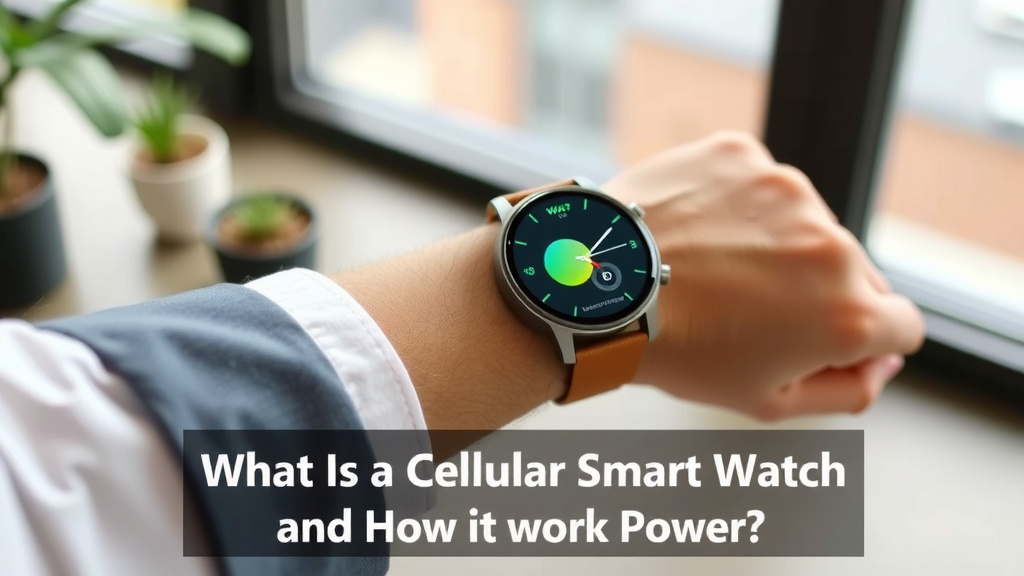
A cellular smartwatch is like a smartphone for your wrist. It can make calls, send texts, stream music, and use apps all on its own. This is possible because it has its own mobile data connection, just like your phone. You don’t need your phone nearby for most of these functions.
Think of it as having two smart devices, but one is super convenient and always accessible. Many people find it helpful for fitness tracking and staying connected without always needing to pull out their phone. It really lets you stay in touch and get things done on the go.
- It’s a smartwatch with its own data plan.
- It can make calls and send texts independently.
- No need to keep your phone super close for many features.
- Great for fitness and staying connected easily.
Let’s dive in and see exactly what makes a cellular smartwatch tick and what it can do for you.
Understanding Your Cellular Smartwatch’s Power
So, you’re curious about what makes a cellular smartwatch so special? It’s all about having its own independent connection to the mobile network. Unlike standard smartwatches that rely on your phone’s Bluetooth or Wi-Fi, a cellular model has its own SIM card or eSIM. This tiny component allows it to connect directly to cellular towers, just like your smartphone.
Think of it as a mini-phone strapped to your wrist. This independence means you can leave your phone at home without missing out on a lot of important stuff. You can make calls, send texts, stream music, and use many apps without being tethered to your primary device. It’s about freedom and convenience.
The Core Technology: What’s Inside?
At its heart, a cellular smartwatch packs some impressive tech. The main ingredient is the cellular modem. This is the component that handles the communication with the mobile network. It needs a data plan, usually activated through your phone carrier, just like your smartphone.
SIM vs. eSIM: How It Connects
You’ll find cellular smartwatches use one of two methods to connect: a physical SIM card or an eSIM. A physical SIM is similar to what you’d find in older phones. An eSIM, on the other hand, is a digital SIM embedded directly into the watch. It’s programmed remotely by your carrier.
- Physical SIM: Requires inserting a small card.
- eSIM: Digital, no physical card needed.
Both achieve the same goal: giving your watch its own phone number and data connection. Many newer models prefer eSIMs because they save space inside the watch and are easier to manage digitally.
Powering the Connection: Battery Life Considerations
Having its own cellular connection means the watch uses more power than a Bluetooth-only model. Cellular radios consume energy when they’re actively searching for or using a signal. This is why cellular smartwatches often have slightly shorter battery life when disconnected from Wi-Fi or your phone.
Manufacturers are constantly improving battery efficiency, though. You can often extend your watch’s battery by managing settings. Turning off continuous heart rate monitoring or limiting background app refresh can help. It’s a trade-off between features and longevity. Many experts suggest checking your carrier’s recommendations for optimal settings (AT&T, Verizon).
Key Features and Benefits: What Can You Do?
The real question is, what can a cellular smartwatch actually do for you? The possibilities are quite broad, especially when your phone isn’t nearby.
Independent Communication: Calls and Texts on Your Wrist
This is perhaps the most significant advantage. You can make and receive phone calls directly from your wrist. You can also send and reply to text messages. Imagine going for a run and leaving your bulky phone behind. You can still take an important call or reply to a text without breaking stride.
This feature is a lifesaver for parents who want to stay in touch with their kids. Or for anyone who needs to be reachable but wants to disconnect from their phone for a bit. It offers a level of freedom many people appreciate.
Fitness Tracking and Health Monitoring
Cellular smartwatches excel at fitness tracking. They can monitor your heart rate, steps, and workouts. Some advanced models even track your blood oxygen levels or perform ECGs (Electrocardiograms). The cellular connection allows these watches to sync data instantly, even when your phone isn’t present.
This means your workout data is always up-to-date in your fitness apps. For example, if you go for a hike, your route can be recorded accurately using the watch’s GPS and cellular data. This data syncs in near real-time (NIH).
Streaming Music and Podcasts
Love listening to music or podcasts on the go? A cellular smartwatch allows you to stream directly from services like Spotify or Apple Music. You’ll need a compatible subscription and headphones, of course. But the convenience of not carrying your phone is immense.
This is perfect for gym sessions or long commutes. You can leave your phone in your locker or bag and still enjoy your favorite audio content. The watch streams directly via its cellular connection.
Using Apps Without Your Phone
Many apps are designed to work independently on cellular smartwatches. This includes navigation apps, payment apps (like Apple Pay or Google Pay), and even some productivity tools. You can check the weather, get directions, or pay for your coffee without ever pulling out your phone.
The app selection varies by operating system (watchOS for Apple, Wear OS for others). But generally, you’ll find apps that offer standalone functionality. We found that using these apps is often very straightforward.
Cellular vs. Non-Cellular Smartwatches: What’s the Difference?
It’s important to know how a cellular smartwatch stacks up against its non-cellular counterpart. The primary distinction lies in connectivity and cost.
| Feature | Cellular Smartwatch | Non-Cellular Smartwatch |
|---|---|---|
| Independent Connectivity | Yes (via cellular data) | No (relies on Bluetooth/Wi-Fi to phone) |
| Phone Required Nearby | No, for many functions | Yes, for most functions |
| Monthly Service Plan | Yes, typically required | No |
| Cost of Device | Often higher | Generally lower |
| Battery Life (under similar usage) | Can be shorter due to cellular use | Typically longer |
As you can see, the cellular version offers more freedom. But it comes with additional costs and potential battery life trade-offs. Choosing between them depends on your lifestyle and how much you want to rely on your watch independently.
Who Needs a Cellular Smartwatch?
So, is a cellular smartwatch the right choice for you? Let’s consider a few scenarios. If you’re a serious runner or cyclist who loves to train without your phone, it’s a great fit. If you have a job that requires you to be reachable at all times but you can’t always carry your phone, it’s a good option.
Parents who want an easy way to stay in contact with their children could find it very useful. It’s also fantastic for anyone who enjoys the idea of a simplified digital life. Imagine running errands with just your watch for payments, communication, and music.
Considerations Before You Buy
Before you jump in, there are a few things to think about. Firstly, you’ll need to check if your mobile carrier supports cellular smartwatches. Not all carriers offer plans for them. Secondly, you’ll incur an extra monthly fee for the service plan. This fee varies by carrier and plan. We found plans typically range from $5 to $10 per month.
Finally, think about your actual daily needs. Do you truly need to make calls or stream music from your wrist without your phone? If the answer is yes, then a cellular model is likely a great investment for you. If not, a standard Bluetooth smartwatch might be more than enough.
Here’s a quick checklist to see if a cellular smartwatch fits your life:
- Do you often exercise or go out without your phone?
- Do you need to be reachable even when your phone isn’t with you?
- Are you comfortable with an additional monthly service fee?
- Do you plan to stream music or make calls directly from your wrist?
- Is your mobile carrier compatible with cellular smartwatches?
- Do you prefer minimal device carrying when possible?
Conclusion
You now know that a cellular smartwatch is your wrist’s personal mini-phone. It offers freedom by connecting to mobile networks independently. This means you can leave your main phone behind more often. Whether for calls, texts, fitness, or streaming, it keeps you connected. We found it’s a fantastic tool for active lifestyles or anyone wanting more convenience. Before buying, check carrier compatibility and understand the extra monthly cost for this freedom. Consider if this independence truly fits your daily routine.
Frequently Asked Questions
Do I have to pay extra for a cellular smartwatch?
Yes, you will need an additional monthly service plan from your mobile carrier. This plan activates the cellular connection for your watch. The cost typically ranges from $5 to $10 per month, depending on your carrier and plan. It’s similar to adding a line for another device.
Can a cellular smartwatch replace my smartphone entirely?
For many daily tasks like calls, texts, and quick app uses, a cellular smartwatch can reduce your reliance on your phone. However, it doesn’t have the same screen size or typing capabilities. Most people will still find their smartphone essential for more complex tasks and prolonged use.
Will my cellular smartwatch work if my phone is off or out of range?
Yes, that’s the main benefit! As long as your smartwatch has its own cellular connection active and is within a cellular service area, it will function for calls, texts, and app data use. Your phone does not need to be on or nearby for these functions.
How much does a cellular smartwatch typically cost compared to a regular one?
Cellular smartwatches usually have a higher upfront purchase price than their non-cellular counterparts. You’re paying for the added cellular modem and technology. Add to this the ongoing monthly service fee, which is not required for standard smartwatches.
Is a cellular smartwatch good for kids?
Yes, many parents find them very useful for keeping in touch with children without giving them a full smartphone. You can set up approved contacts for calls and texts. This provides a safety net and communication channel while limiting distractions.
![7 Best Budget Smart Watch Blood Pressure [2026]](https://smartwatchbest.com/wp-content/uploads/2026/08/7-best-budget-smart-watch-blood-pressure-2026-featured-768x432.jpg)
![7 Best Cheap Waterproof Smart Watch [2026]](https://smartwatchbest.com/wp-content/uploads/2026/08/7-best-cheap-waterproof-smart-watch-2026-featured-768x432.jpg)
![7 Best Smart Watch For Android [2026]](https://smartwatchbest.com/wp-content/uploads/2026/06/7-best-smart-watch-for-android-2026-featured-768x432.jpg)