
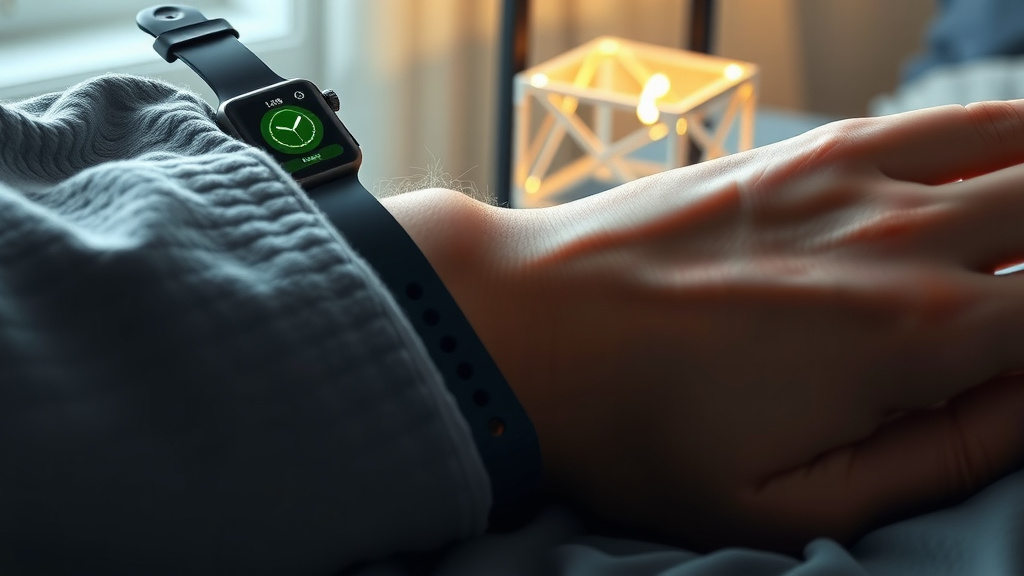
How Smartwatches Accurately Track Your Sleep
Your smartwatch tracks your sleep using a clever combination of sensors. It measures your heart rate and movement to determine your sleep stages. This technology allows you to see how much deep, light, and REM sleep you get each night.
These devices are pretty good at estimating your sleep patterns. They analyze subtle changes in your body, like how your heart rate slows down during sleep. Many experts agree that this data can offer a useful overview of your sleep quality.
- Smartwatches use sensors to track sleep.
- Key data points include heart rate and movement.
- They identify different sleep stages like deep and REM.
- This provides a general picture of your sleep health.
Let’s walk through exactly how your smartwatch measures your sleep, step by step.
How Your Smartwatch Becomes Your Sleep Detective
You slip on your smartwatch at night, and while you’re dreaming of far-off lands, it’s busy working. It’s not magic; it’s smart science. Your watch uses a mix of sensors to paint a picture of your sleep. Think of it as a tiny, wrist-worn sleep lab. We’ll break down the tech that makes this happen.
The Sensors at Play: What’s Inside?
Your smartwatch relies on a few key sensors to gather data. These are usually the same ones that track your daily steps and workouts. The most important ones for sleep are the accelerometer and the heart rate sensor.
The Accelerometer: Catching Your Every Move
You might be wondering how a watch knows if you’re tossing and turning. The accelerometer is the answer. This sensor measures acceleration and deceleration. When you sleep, your body naturally moves. You might shift positions or even get up for a drink of water. The accelerometer detects these movements. It helps the watch understand if you’re restless or settled.
Researchers found that movement patterns are a good indicator of sleep stages. Less movement often means deeper sleep. More frequent or larger movements can signal lighter sleep or being awake. It’s like your watch is a silent observer of your nightly fidgets.
The Heart Rate Sensor: Your Pulse’s Secret Story
Your heart rate is another big clue. When you fall asleep, your heart rate typically slows down. It beats less frequently. During certain sleep stages, like REM sleep, your heart rate can become a bit more irregular. It might even pick up slightly. Your smartwatch tracks these subtle changes.
Many smartwatches use optical heart rate sensors. These shine lights into your skin and measure how much light is reflected back. This tells the watch how much blood is flowing through your wrist at any given moment, giving it your pulse. This data is key to understanding your body’s state during sleep.
Decoding Your Sleep Stages
Now, how does all this sensor data translate into the sleep stages you see on your app? Your watch uses algorithms to interpret this information. These algorithms are trained on data from laboratory sleep studies. They look for patterns associated with different sleep stages.
Wakefulness: The Obvious Stage
This is the easiest one for your watch to detect. If your accelerometer picks up a lot of movement, or your heart rate is high and variable, it’s likely you’re awake. Sometimes, even if you’re lying still, if your heart rate is close to your waking rate, the watch might classify it as awake time.
Light Sleep: The Majority of Your Night
Most of your sleep time is spent in light sleep. During this stage, your heart rate slows, and your body temperature drops. Your brain waves also slow down. The accelerometer will show minimal movement. Your watch looks for a combination of slowed heart rate and low movement to identify light sleep.
Deep Sleep: The Restorative Phase
This is the crucial stage for physical recovery. During deep sleep, your body repairs tissues and builds muscle. Your heart rate and breathing are at their slowest. Your brain waves become very slow. Your watch identifies deep sleep by looking for very low heart rates and minimal to no movement detected by the accelerometer. It’s a very still period.
REM Sleep: The Dreaming Stage
REM stands for Rapid Eye Movement. This is when most vivid dreaming occurs. Your brain activity actually increases, becoming more like when you’re awake. Your heart rate and breathing can become irregular and faster. Interestingly, your body becomes temporarily paralyzed during REM sleep to prevent you from acting out your dreams. Your smartwatch detects REM sleep by looking for a rise in heart rate variability and a slight increase in heart rate, combined with very little body movement.
The Role of Algorithms and Learning
It’s important to remember that your smartwatch isn’t a medical device. It uses sophisticated algorithms to make educated guesses about your sleep. These algorithms are constantly being updated by the companies that make the watches. They learn from vast amounts of sleep data collected from users.
Companies like Fitbit, Apple, and Samsung invest a lot in research. They often collaborate with sleep scientists. This helps them refine their algorithms to be more accurate. However, there can still be errors. Sometimes, a very still period of light sleep might be misclassified as deep sleep, or vice versa. For the most part, though, they provide a good overview of your sleep patterns.
Putting It All Together: A Typical Night
Let’s imagine your night. You fall asleep, and your watch detects your heart rate dropping and movement ceasing. This is likely the start of light sleep. As the night progresses, you’ll cycle through light sleep, deep sleep, and REM sleep. You might have brief awakenings, which your watch can also track if you move enough or your heart rate jumps significantly.
Here’s a simplified look at how your watch might process your night:
| Time Period | Accelerometer Data | Heart Rate Data | Inferred Sleep Stage |
|---|---|---|---|
| 11:00 PM – 11:30 PM | Minimal, occasional shifts | Slowing down steadily | Light Sleep |
| 11:30 PM – 12:15 AM | Very still | Slowest, steady rate | Deep Sleep |
| 12:15 AM – 12:45 AM | Minimal, some restless leg movement | Slightly elevated, variable | REM Sleep |
| 12:45 AM – 1:00 AM | Slight movement, perhaps turning | Slowing again | Light Sleep |
| 1:00 AM – 1:30 AM | Still | Slowest | Deep Sleep |
| 1:30 AM – 2:00 AM | Very little movement | Slightly elevated, variable | REM Sleep |
| 2:00 AM – 6:30 AM | Cycling through minimal to moderate movement | Cycling from slow to slightly elevated | Mix of Light, Deep, and REM Sleep |
| 6:30 AM – 7:00 AM | Increased movement, stirring | Increasing steadily | Awake / Light Sleep transition |
The exact patterns and durations vary wildly from person to person and night to night. Your watch tries to make sense of these fluctuating signals.
What Your Smartwatch Data Tells You
So, what’s the point of all this tracking? Your smartwatch data can give you valuable insights into your sleep habits. You can see if you’re getting enough deep sleep or REM sleep. You might notice if certain nights lead to more restless sleep.
Many sleep experts suggest using this data as a guide. It can help you identify patterns. For example, if you notice consistently poor sleep after a late-night meal, that’s a helpful clue. You can then try adjusting your habits. The data is best used to spot trends over time, rather than focusing on a single night’s report.
Tips for Getting the Most Accurate Readings
While smartwatches are smart, a little help from you can improve accuracy. Here are a few things to keep in mind:
- Wear it snugly: Make sure your watch is snug but not too tight on your wrist. This helps the heart rate sensor get a clear reading.
- Keep it charged: A dead watch can’t track your sleep. Ensure it’s charged enough for the whole night.
- Consistent wear: Try to wear your watch every night. This helps the algorithms learn your personal sleep patterns better.
- Check for updates: Keep your watch’s software and app updated. Companies often release improvements to their sleep tracking technology.
- Understand its limits: Remember it’s an estimate. If you have serious sleep concerns, consult a doctor.
Conclusion
Your smartwatch is a surprisingly capable sleep tracker. It uses your heart rate and movement to estimate your time in different sleep stages. While not a medical-grade device, it offers a useful overview of your sleep habits. By understanding how it works, you can use the data to spot trends. Pay attention to how your nightly habits might affect your sleep. The best way to use your watch is to wear it consistently and adjust your lifestyle based on the patterns you observe. Start making small changes tonight for better rest tomorrow.
Frequently Asked Questions
How accurate are smartwatches at tracking sleep stages?
Smartwatches provide a good estimation of your sleep stages, but they aren’t perfect. Researchers have found that while they are good at distinguishing between wakefulness and sleep, they can sometimes misclassify light sleep and deep sleep. For general awareness of your sleep patterns, they are quite helpful.
Can my smartwatch tell me if I have a sleep disorder?
No, your smartwatch cannot diagnose sleep disorders. It’s designed to track general sleep patterns and offer insights into your habits. If you have concerns about your sleep quality or suspect a disorder like sleep apnea or insomnia, you should always consult a medical professional.
Why does my smartwatch sometimes say I was awake when I don’t remember waking up?
This often happens during periods of very light sleep or brief awakenings that you don’t recall. Your watch might detect slight movements or changes in heart rate during these times and classify them as awake periods. It’s common for everyone to have minor awakenings throughout the night.
Does wearing the watch too loosely affect sleep tracking?
Yes, wearing your watch too loosely can impact accuracy. A snug fit is essential for the heart rate sensor to get a clear reading of your pulse. If the watch slides around, it might not capture your physiological data effectively, leading to less reliable sleep stage estimations.
Should I worry if my deep sleep or REM sleep percentages change a lot each night?
It’s normal for your deep sleep and REM sleep percentages to vary from night to night. Factors like stress, diet, exercise, and even illness can influence these stages. Focus on the overall trends over weeks or months rather than fixating on the numbers for a single night.
![7 Best Smart Watch Sale [2026]](https://smartwatchbest.com/wp-content/uploads/2026/10/7-best-smart-watch-sale-2026-featured-768x432.jpg)
![7 Best Smart Watch For Reminders [2026]](https://smartwatchbest.com/wp-content/uploads/2026/09/7-best-smart-watch-for-reminders-2026-featured-768x432.jpg)
![7 Best Android Smart Watch Battery Life [2026]](https://smartwatchbest.com/wp-content/uploads/2026/06/7-best-android-smart-watch-battery-life-2026-featured-768x432.jpg)
![7 Best Smart Watch For Youth [2026]](https://smartwatchbest.com/wp-content/uploads/2026/09/7-best-smart-watch-for-youth-2026-featured-768x432.jpg)