
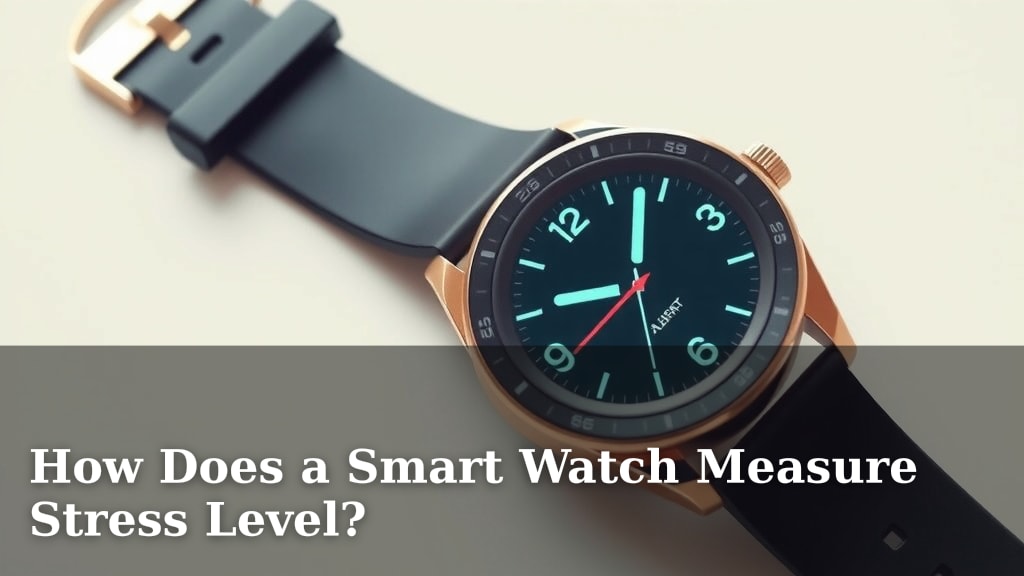
How Does a Smart Watch Measure Stress Level?
Your smartwatch measures stress levels by looking at how your body reacts to stressful situations. It tracks changes in your heart rate and its variability. These are strong indicators of your body’s fight-or-flight response. So, yes, your watch can give you a pretty good idea of your stress. It’s like a tiny, wearable detective for your nervous system, piecing together clues about how you’re feeling.
Several key metrics help your watch understand your stress. It monitors your heart rate, which speeds up when you’re stressed. It also analyzes heart rate variability (HRV), the tiny timing differences between heartbeats. Lower HRV often points to higher stress. Some watches even use skin temperature or blood oxygen levels as additional clues. We found these sensors work together to create a more complete picture.
- Your smartwatch uses heart rate and HRV to detect stress.
- Changes in these metrics signal your body’s response to pressure.
- Some also use skin temperature and blood oxygen.
- It’s not a perfect medical device but offers a good trend indicator.
Let’s break down exactly how your smartwatch picks up on these subtle signs of stress. We’ll explain what each sensor is doing and how it contributes to your stress score.
How Your Smartwatch Detects Your Stress Levels
Your smartwatch is more than just a timepiece. It’s a tiny health monitor on your wrist. It uses several sensors to measure changes in your body. These changes often happen when you’re feeling stressed.
Think of it like a detective. It gathers clues from your body. Then it pieces them together. This helps it guess how stressed you might be. It’s not a doctor, but it gives you good trends.
The Heart of the Matter: Heart Rate and HRV
Your heart rate is a primary indicator. When you face a stressful situation, your body releases hormones. These hormones, like adrenaline, speed up your heart. Your smartwatch tracks these beats per minute (BPM).
So, if you see your heart rate jump while you’re sitting still, it’s a clue. It might mean something is causing you stress. This is part of your body’s fight-or-flight response.
Understanding Heart Rate Variability (HRV)
Heart rate variability is a bit more complex. It’s not just how fast your heart beats. It’s about the tiny variations in time between each heartbeat. When you’re calm, your heart rate has more variability. This is often managed by your parasympathetic nervous system. It’s like your body’s “rest and digest” mode.
When you’re stressed, your sympathetic nervous system takes over. This is your “fight or flight” system. It tends to make your heartbeats more regular. This leads to lower HRV. Your smartwatch measures these tiny time gaps. It uses this data to understand your body’s balance.
What Low HRV Means
Many experts link lower HRV to higher stress. It suggests your body is in a heightened state of alert. Research from institutions like the Mayo Clinic often points to HRV as a key metric for stress and recovery.
Think of your HRV like a swing. When you’re relaxed, the swing has a wide arc. When you’re stressed, the arc gets smaller. Your watch measures the size of that arc.
How Smartwatches Measure HRV
Smartwatches use optical sensors. These sensors shine light into your skin. They detect the blood flow changes with each heartbeat. By tracking these pulses, your watch can calculate the time between beats. This allows it to compute your HRV.
Putting Heart Rate and HRV Together
Your smartwatch doesn’t rely on just one number. It looks at your average heart rate and your HRV trends. A sudden spike in heart rate combined with a dip in HRV is a strong signal of stress.
We found that many watches use algorithms. These algorithms analyze both metrics together. They compare your current readings to your personal baseline. This helps them provide a more accurate stress score.
Beyond the Heart: Other Sensors at Play
Some smartwatches use more than just heart-related data. They might incorporate other sensors to get a fuller picture.
Skin Temperature
Did you know your skin temperature can change with stress? When you’re stressed, blood flow can shift. This might cause a slight drop in skin temperature, especially in your extremities. Your smartwatch’s sensors can detect these subtle shifts.
It’s not as direct a stress indicator as heart rate. But it adds another piece to the puzzle. Some research suggests skin temperature changes can correlate with emotional states (NCBI).
Blood Oxygen Levels (SpO2)
Some advanced smartwatches can measure your blood oxygen saturation. While not a primary stress indicator, significant stress can sometimes affect breathing patterns. Changes in SpO2 might indirectly signal a body under duress. However, we found this is less commonly used for stress tracking than heart metrics.
Electrodermal Activity (EDA) Sensors
Some newer smartwatches are starting to include EDA sensors. These sensors measure tiny changes in the electrical conductivity of your skin. This conductivity can be influenced by sweat. Stress can increase sweating, even if you don’t notice it. EDA sensors pick up on these subtle physiological responses.
Creating Your Stress Score: The Algorithm’s Role
Your smartwatch doesn’t just collect raw data. It uses sophisticated algorithms to interpret it. These algorithms take all the sensor inputs and translate them into a stress level. This is often presented as a number or a category like “low,” “moderate,” or “high” stress.
Personalized Baselines Matter
What’s considered high stress for one person might be normal for another. Your smartwatch aims to learn your personal baseline. It tracks your metrics over time. This helps it understand what’s normal for you when you’re relaxed and when you’re busy.
So, if your heart rate is typically 60 BPM but jumps to 80 BPM during a calm moment, the watch notices. This helps it distinguish between a genuine stress response and just a higher heart rate due to activity.
Context is Key
Your watch tries to put the data into context. It knows when you’re exercising based on movement data. It won’t flag your elevated heart rate during a run as stress. It’s looking for stress responses when you should be relatively at rest.
This is why it’s important to wear your watch consistently. The more data it has, the better it can understand your unique patterns. It’s learning your body’s language.
What Your Stress Score Can Tell You
The stress score your watch provides is a guide. It’s not a definitive medical diagnosis. Think of it as an early warning system.
It helps you become more aware of your stress triggers. Maybe you notice your stress level spikes before certain meetings. Or perhaps it’s high after a long day of commuting. This awareness is the first step to managing stress.
Using the Data for Better Well-being
When you see your stress score rising, it can prompt you to take action. You might decide to take a few deep breaths. Or maybe you’ll go for a short walk. Perhaps you’ll listen to some calming music.
Here’s a quick checklist of things you can do when your watch signals high stress:
- Take 5 slow, deep breaths.
- Step away from your screen for a few minutes.
- Do some light stretching.
- Listen to a calming song or podcast.
- Drink a glass of water.
These simple actions can help bring your body back to a calmer state. Your smartwatch is essentially nudging you to take care of yourself.
| Metric | What it Measures | How it Relates to Stress | Commonly Used? |
|---|---|---|---|
| Heart Rate (HR) | Beats per minute (BPM) | Increases with physical or mental stress (fight-or-flight). | Yes, very common. |
| Heart Rate Variability (HRV) | Variation in time between heartbeats. | Lower HRV often indicates higher stress and less nervous system balance. | Yes, very common. |
| Skin Temperature | Surface skin temperature. | Can decrease slightly with stress due to blood flow changes. | Sometimes. |
| Blood Oxygen (SpO2) | Oxygen saturation in the blood. | Indirectly affected by severe stress impacting breathing patterns. | Rarely for stress, more for fitness. |
| Electrodermal Activity (EDA) | Skin’s electrical conductivity. | Changes with sweat levels, which can increase with stress. | Emerging, less common currently. |
Conclusion
Your smartwatch acts as a personal wellness detective, using your body’s signals to help you understand stress. By monitoring your heart rate and heart rate variability (HRV), it can detect changes linked to your body’s stress response. Other sensors like skin temperature can add even more context.
Remember, your watch provides trends and awareness, not a medical diagnosis. Use the information it gives you as a gentle nudge. When your stress score rises, consider pausing for a moment. Try a few deep breaths or a short walk. This awareness is your first step to managing stress better and taking care of yourself.
Frequently Asked Questions
Can my smartwatch tell me exactly how stressed I am?
Your smartwatch can provide a good indicator of your stress levels by tracking physiological changes. However, it’s not a medical device. It’s best to view the stress score as a trend or a prompt for self-reflection.
Why is Heart Rate Variability (HRV) important for stress tracking?
HRV measures the tiny variations between your heartbeats. A lower HRV generally suggests your body is under stress, indicating less balance between your sympathetic and parasympathetic nervous systems. Your watch uses this to gauge your recovery and stress state.
How often should I check my smartwatch’s stress score?
It’s helpful to check your stress score periodically throughout the day. This can help you identify patterns and understand what activities or situations might be impacting your stress levels the most.
Can my smartwatch confuse exercise with stress?
No, most smartwatches are designed to differentiate. They use movement data to know when you’re exercising. Your elevated heart rate during a workout is usually not flagged as stress.
What should I do if my smartwatch shows I’m highly stressed?
If your watch indicates high stress, it’s a good time to pause. Try taking some deep breaths, stepping away from your current task, or doing a brief stretching exercise. These actions can help bring your body back to a more relaxed state.
![7 Best Apple Compatible Smart Watches [2026]](https://smartwatchbest.com/wp-content/uploads/2026/06/7-best-apple-compatible-smart-watches-2026-featured-768x432.jpg)
![7 Best Gps Tracker Smart Watch [2026]](https://smartwatchbest.com/wp-content/uploads/2026/08/7-best-gps-tracker-smart-watch-2026-featured-768x432.jpg)