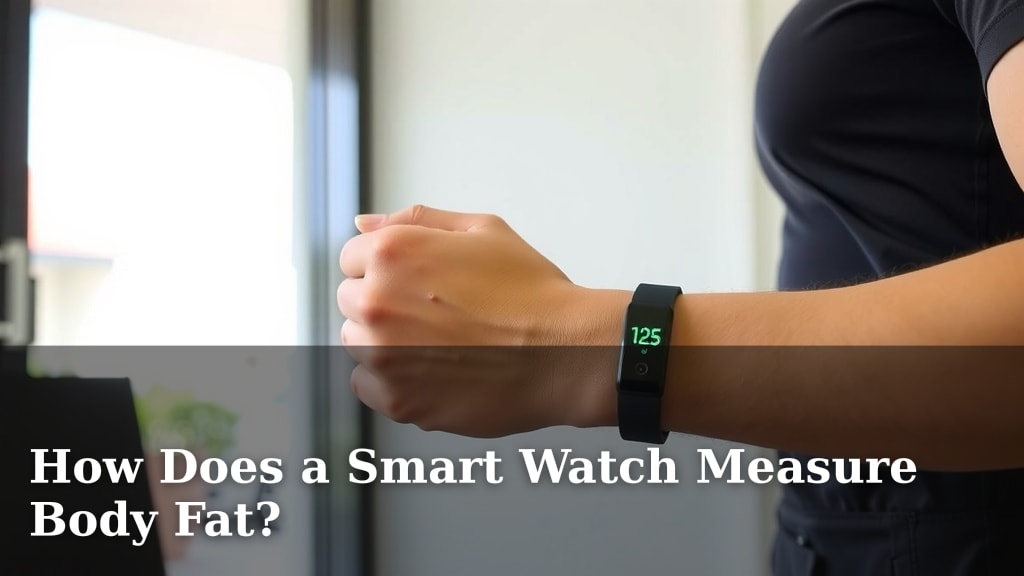
How Does a Smart Watch Measure Body Fat?
Smartwatches measure body fat using a technology called bioelectrical impedance analysis. This works by sending a tiny, harmless electrical current through your body. The watch then measures the resistance to this current to estimate your body fat percentage. It’s a quick and convenient method right on your wrist!
While not as precise as clinical methods, this smartwatch technology offers a helpful trend-tracking tool. Many smartwatches have incorporated this feature because people are increasingly interested in their body composition beyond just weight. We found that accuracy can vary based on factors like hydration levels and electrode contact.
- Smartwatches use bioelectrical impedance analysis (BIA).
- A small electrical current passes through your body.
- Your watch measures the resistance to this current.
- This helps estimate your body fat percentage.
- It’s convenient for tracking trends over time.
Let’s walk through exactly how your smartwatch figures out your body fat percentage step by step.
Understanding How Your Smartwatch Gauges Body Fat
Your smartwatch has a neat trick up its sleeve for estimating your body fat. It uses something called bioelectrical impedance analysis, or BIA for short. Think of it like a tiny, harmless electrical handshake with your body. The watch sends a very small electrical current through you and then measures how that current travels.
The Science Behind the Measurement
So, how does this electrical current tell us about body fat? It all comes down to resistance. Different tissues in your body conduct electricity differently. Lean muscle tissue and water are good conductors, meaning the electrical current passes through them easily. Fat tissue, on the other hand, is a poor conductor and creates more resistance.
How the Electrical Current Works
Your smartwatch has sensors, usually on the back where it touches your skin. When you place your finger on the side of the watch or when the watch is worn correctly on your wrist, it completes a circuit. A very low-level electrical current is sent through your arm and across your body.
Measuring the Resistance
The watch then measures the resistance your body offers to this electrical current. The higher the resistance, the more fat tissue is likely present. This is because fat has a higher impedance than lean mass. Your smartwatch uses this resistance data, along with other information like your age, height, and weight, to calculate an estimated body fat percentage.
Why Different Tissues Matter
It’s like trying to walk through a crowded room versus an empty one. The electrical current can “walk” through water and muscle with little effort. When it hits fat, it slows down. Your watch detects this slowdown. Researchers found that the BIA method is quite effective at distinguishing between fat and lean mass (NCBI).
Getting the Best Results from Your Smartwatch
For your smartwatch to give you the most accurate readings, a few things can help. It’s not just about having the technology; it’s about how you use it. Even small factors can make a difference in the numbers you see.
Hydration is Key
One of the biggest influencers on BIA readings is your hydration level. When you’re well-hydrated, your body has more water, which helps conduct electricity better. This means your resistance might be lower, potentially leading to a lower body fat estimate. Conversely, if you’re dehydrated, there’s less water to conduct the current, increasing resistance and possibly a higher fat estimate. Experts suggest drinking water a couple of hours before taking a measurement (Cleveland Clinic).
Proper Sensor Contact
Make sure the sensors on your watch have good contact with your skin. If the watch is too loose, or if there’s dirt or sweat blocking the sensors, the electrical current might not pass through reliably. Some smartwatches require you to touch a specific part of the watch with your other hand to complete the circuit. Ensure your fingers are clean and dry.
Consistency is Your Friend
To truly use your smartwatch as a body fat tracking tool, consistency is vital. We found that taking measurements at the same time of day and under similar conditions gives you the best picture of trends. For example, try measuring first thing in the morning, after you’ve used the restroom, but before eating or drinking anything.
Why Consistency Matters So Much
Your body composition can fluctuate throughout the day due to meals, exercise, and even stress. By measuring at the same time, you minimize these variables. This allows you to see genuine changes in your body fat percentage over weeks and months, rather than daily noise. It helps you track your progress toward your fitness goals.
Understanding Smartwatch Limitations
While smartwatches offer amazing convenience, it’s important to be realistic about their accuracy. They are designed for trend tracking, not as clinical-grade diagnostic tools. Professional methods like DEXA scans or hydrostatic weighing are more precise. Your smartwatch’s BIA is an estimation.
Factors Affecting Accuracy
We found that several factors can influence BIA readings. Besides hydration, these include:
- Recent exercise: Working out can affect fluid levels.
- Food intake: Digestion can alter body water distribution.
- Body temperature: Being too cold or too hot can impact readings.
- Electrode placement: Where the sensors are on your skin matters.
Is Your Smartwatch Body Fat Reading Reliable?
So, can you trust your smartwatch to tell you your body fat percentage? For most people, the answer is yes, with a caveat. It’s a fantastic tool for monitoring changes over time. If your reading consistently goes down week after week, that’s likely a good sign your efforts are paying off.
A Tool for Motivation
Think of your smartwatch reading as a helpful nudge. Seeing the numbers change can be incredibly motivating. It adds another layer to your fitness journey beyond just the number on a scale. It helps you understand your body composition better.
When to Consult a Professional
If you have specific health concerns or need very precise body composition data, it’s always best to consult with a healthcare professional or a certified fitness expert. They can guide you on the most accurate methods available and help you interpret the results in the context of your overall health.
Quick Checklist for Better Readings
To get the most out of your smartwatch’s body fat feature, remember these tips:
- Measure at the same time daily.
- Stay hydrated, but don’t overdo it right before measurement.
- Ensure clean and dry skin on your wrist.
- Check for good sensor contact.
- Avoid measuring right after a workout or a heavy meal.
- Use the readings to track trends, not absolute precision.
Conclusion
Your smartwatch is a smart tool for keeping an eye on your body fat percentage. By using bioelectrical impedance analysis (BIA), it sends a tiny current through you and measures resistance to estimate your fat levels. Remember, consistency in how and when you measure is key to tracking meaningful trends.
While it’s not a medical-grade device, it offers a convenient way to monitor your progress. Focus on the trends your watch shows you over time rather than single readings. For truly precise measurements or health concerns, always consult a professional.
Ready to get a clearer picture of your body composition? Start by establishing a consistent routine for taking your smartwatch measurements today!
Frequently Asked Questions
Can I rely on my smartwatch for an exact body fat percentage?
Your smartwatch provides an estimate, which is great for tracking trends over time. For highly precise measurements, clinical methods like DEXA scans are more accurate. Think of your watch as a helpful guide, not a definitive diagnostic tool.
What’s the best time of day to measure body fat with my watch?
The best time is usually first thing in the morning. Measure after using the restroom but before eating or drinking. This helps minimize daily fluctuations caused by food intake or hydration changes.
How important is hydration for smartwatch body fat readings?
Hydration is very important. When you’re well-hydrated, your body conducts electricity better, potentially lowering the resistance reading. Being dehydrated can lead to higher resistance readings, making your body fat percentage appear higher.
What should I do if my smartwatch readings seem inaccurate?
Ensure you have good sensor contact with your skin and that your skin is clean and dry. Also, try to be consistent with measuring times and avoid measuring right after exercise or a large meal. If you consistently see odd numbers, re-check your watch’s fit and sensor cleanliness.
Can recent exercise affect my smartwatch’s body fat reading?
Yes, recent exercise can affect your readings. Working out can change your body’s fluid levels and distribution. It’s generally best to wait a bit after exercising before taking a measurement to get a more stable reading.

![7 Best Smart Watch For Health Accuracy [2026]](https://smartwatchbest.com/wp-content/uploads/2026/09/7-best-smart-watch-for-health-accuracy-2026-featured-768x432.jpg)
![7 Best Casio Smart Watch [2026]](https://smartwatchbest.com/wp-content/uploads/2026/08/7-best-casio-smart-watch-2026-featured-768x432.jpg)