
How Do Smart Watches Detect Stress?
Your smartwatch can detect stress by monitoring several key physiological signals. It looks at your heart rate, specifically its variability, and how much you’re sweating. These are common indicators that your body is experiencing stress. Many smartwatches use these combined metrics to estimate your stress level.
Stress affects your body in many ways, and smartwatches are designed to pick up on these subtle changes. They measure things like your breathing rate and even your skin’s electrical activity. This information helps paint a clearer picture of your body’s response to stress throughout the day. It’s like having a tiny wellness tracker on your wrist!
- Smartwatches use heart rate variability.
- They also track sweating levels.
- Breathing rate is another key indicator.
- Skin’s electrical activity can also be measured.
So, how exactly do these devices turn that data into a stress score you can understand? Let’s walk through the science behind your watch’s stress detection.
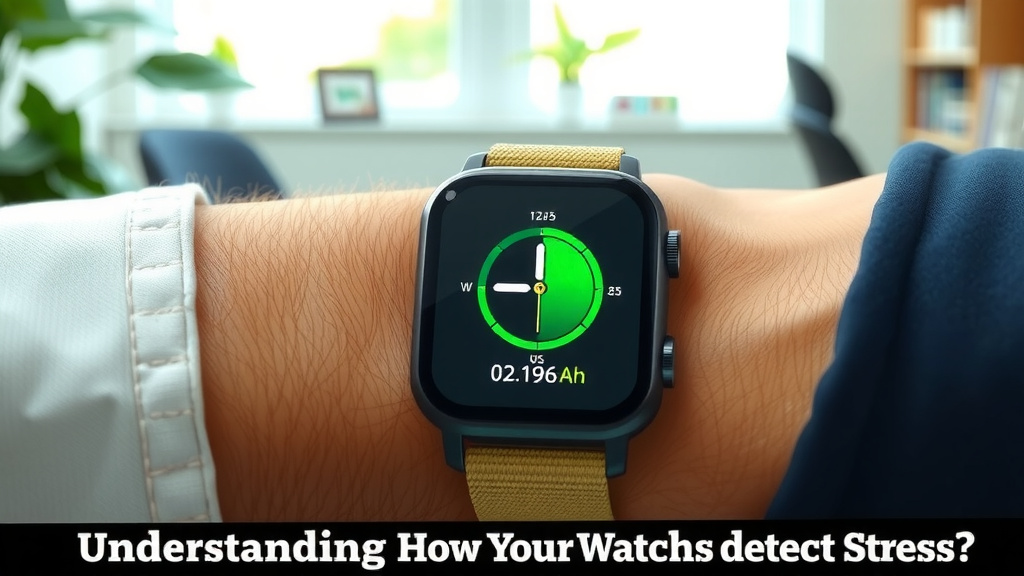
Understanding How Your Watch Gauges Stress
Your smartwatch is smarter than you might think when it comes to your well-being. It’s constantly gathering data from your body to understand what’s going on. When it comes to stress, it’s not just guessing. It’s looking at a few key physiological signals that reliably indicate your body’s stress response.
These devices use sensors to pick up on changes that happen almost automatically when you’re feeling stressed. Think of it like your body’s alarm system going off. Your watch is essentially listening for the subtle hums and vibrations of that alarm. We’re going to break down exactly what those signals are and how your watch interprets them.
The Science Behind Stress Signals
Heart Rate Variability (HRV): Your Body’s Inner Clock
One of the most important metrics your smartwatch uses is heart rate variability, or HRV. This isn’t just about how fast your heart is beating. It’s about the tiny variations in time between each heartbeat. Yes, your heart doesn’t beat like a perfectly steady metronome.
This variability is actually a good thing! A higher HRV generally suggests your body is in a more relaxed state. It means your autonomic nervous system, which controls automatic functions like your heart rate and breathing, is flexible and can respond well to different situations. Research from institutions like the Mayo Clinic often points to HRV as a key indicator of overall health and stress resilience.
When Stress Hits HRV
When you experience stress, whether it’s a deadline at work or a frustrating commute, your body prepares for “fight or flight.” This triggers the sympathetic nervous system. It tends to make the time between heartbeats more consistent, leading to a lower HRV.
Your smartwatch measures these beat-to-beat intervals using its optical heart sensor. By analyzing the pattern over time, it can infer whether your nervous system is leaning more towards the stressed “fight or flight” mode or the relaxed “rest and digest” mode. A consistently low HRV can be a signal that you might be experiencing higher levels of stress.
Electrodermal Activity (EDA): Reading Your Sweat
Ever notice how your palms get a little clammy when you’re nervous? That’s a direct result of your sweat glands becoming more active. Your smartwatch can actually detect these subtle changes through something called electrodermal activity, or EDA. It’s also sometimes called galvanic skin response (GSR).
Your skin has tiny amounts of sweat even when you don’t feel like you’re sweating much. These sweat glands have a role in regulating body temperature, but they also respond to emotional stimuli. When you’re stressed, your sympathetic nervous system signals these glands to produce more sweat, even if it’s just a tiny, imperceptible amount.
How Your Watch Reads Sweat
Your smartwatch uses electrodes, often built into the underside of the band, to measure the electrical conductivity of your skin. Water conducts electricity. When you sweat more, your skin becomes a better conductor. This leads to a measurable change in the electrical signal your watch detects.
A higher electrical conductivity on your skin suggests increased sweat gland activity. This is a strong indicator that your body is responding to a stressor. Many experts say this metric, when combined with heart rate data, provides a more complete picture of your body’s stress response (National Institutes of Health).
Breathing Rate: The Pace of Your Breath
Your breathing is another powerful indicator of your stress level. When you’re calm, your breathing is typically slow, deep, and regular. It’s a sign your body is in a balanced state.
However, when stress kicks in, your breathing often becomes faster, shallower, and more erratic. This is part of that “fight or flight” response, designed to get more oxygen into your system quickly. Think about how you breathe when you’re startled versus when you’re lounging on the couch.
Tracking Your Respiratory Rhythm
Some advanced smartwatches can actually estimate your breathing rate without needing a separate sensor. They can do this by analyzing the subtle changes in your heart rate that are linked to your breathing patterns. This technique is called heart rate-based respiration estimation.
By observing the rhythm and depth of these fluctuations, your watch can infer how fast you are breathing. A quickened or irregular breathing pattern detected this way often correlates with increased stress. It’s another piece of the puzzle your watch uses.
Putting the Data Together: The Stress Score
Algorithms at Work
So, how does your watch turn all this data – HRV, EDA, and breathing rate – into a number you see on your screen? It’s all thanks to sophisticated algorithms. These are sets of rules and calculations that the watch’s software uses.
The algorithm takes all the raw data it collects throughout the day and compares it against established patterns. It learns your personal baseline when you’re feeling calm and then identifies deviations from that baseline when your physiological signals change. These algorithms are often developed and refined based on extensive research into how the human body responds to stress (Cleveland Clinic).
A Holistic View
No single metric tells the whole story. That’s why your smartwatch doesn’t rely on just one sensor. By combining the information from your heart rate variability, your skin’s electrical activity, and your breathing patterns, it builds a more holistic view of your stress levels.
For example, if your HRV drops, your EDA increases, and your breathing rate quickens, the algorithm has strong evidence that you’re experiencing stress. If only one of these metrics changes slightly, it might not be enough to register a significant stress event. This multi-sensor approach helps make the stress detection more accurate.
What Your Stress Score Means for You
Once your watch has processed the data, it typically assigns a stress score or level. This score can range from low to high. A low score usually means your body is in a relaxed state. A high score indicates that your body is experiencing a significant stress response.
Understanding these scores is the first step. It helps you become more aware of your body’s reactions. Seeing a high stress score might prompt you to take a break, practice some deep breathing, or engage in a calming activity. It’s like a gentle nudge from your watch, reminding you to check in with yourself.
Using Your Stress Data Wisely
It’s important to remember that these stress scores are estimates. They are a tool to help you understand your body, not a definitive diagnosis. Factors like illness, intense exercise, or even caffeine can affect your physiological signals.
However, over time, tracking your stress levels can help you identify patterns. You might notice certain situations or times of day consistently lead to higher stress. This awareness is incredibly powerful. It allows you to make informed choices about managing your stress and improving your overall well-being.
Here’s a quick checklist to help you get the most out of your watch’s stress tracking:
- Wear your watch consistently: For the best accuracy, wear your watch as much as possible, especially overnight if it tracks sleep.
- Keep it snug: Ensure the watch band is snug but comfortable for optimal sensor readings.
- Sync regularly: Sync your watch with its companion app to ensure data is saved and analyzed properly.
- Note your feelings: When you see a high stress score, pause and consider what you were doing or feeling at that moment.
- Experiment with calming techniques: Use your stress score as motivation to try deep breathing, meditation, or short walks.
- Consult a professional: If you experience consistently high stress or feel overwhelmed, talk to your doctor or a mental health expert.
Conclusion
Your smartwatch acts as your personal wellness companion by skillfully interpreting your body’s stress signals. By tracking your heart rate variability, skin’s electrical activity, and breathing rate, it builds a picture of your internal state. These metrics, analyzed by smart algorithms, provide an estimated stress score. Use this score not as a judgment, but as a gentle prompt to check in with yourself. The next step is to consciously use this awareness to introduce small, calming changes into your day. Start by trying a few minutes of deep breathing the next time your watch indicates higher stress. You’ve got this!
Frequently Asked Questions
Can my smartwatch detect stress accurately?
Your smartwatch uses several physiological signs that are scientifically linked to stress. While these devices have become quite accurate, they provide an estimate. Factors like illness or exercise can also influence these readings, so it’s best to view the stress score as a helpful guide rather than a definitive diagnosis.
How often should I wear my watch for stress tracking?
For the most reliable stress tracking, you should wear your smartwatch as consistently as possible. This allows the device to establish your personal baseline and accurately detect deviations. Wearing it overnight can also provide valuable data, especially for sleep quality, which is closely tied to stress levels.
What does a low stress score from my watch mean?
A low stress score generally indicates that your body is in a state of calm. Your heart rate variability is likely higher, and your sweat gland activity is lower. This suggests your autonomic nervous system is balanced, allowing your body to efficiently manage its functions.
Can my smartwatch detect stress if I’m exercising?
Smartwatches can detect physiological changes during exercise, but they usually differentiate between stress and physical exertion. Most devices have modes for workouts that adjust how they interpret your heart rate and other metrics. If you notice high stress readings during intense activity, it might be worth checking the watch settings or consulting the app’s data.
What should I do if my watch shows a high stress score regularly?
If your smartwatch consistently shows high stress scores, it’s a sign to pay closer attention to your well-being. Start by noting what you were doing or feeling when these scores appear. Consider introducing stress-management techniques like mindfulness or short breaks throughout your day. If high stress persists, it’s always a good idea to consult with a healthcare professional.
![7 Best Android Smart Watch For Fitness [2026]](https://smartwatchbest.com/wp-content/uploads/2026/06/7-best-android-smart-watch-for-fitness-2026-featured-768x432.jpg)
![7 Best Cheap Waterproof Smart Watch [2026]](https://smartwatchbest.com/wp-content/uploads/2026/08/7-best-cheap-waterproof-smart-watch-2026-featured-768x432.jpg)
![7 Best Smart Watch For Sports Tracking [2026]](https://smartwatchbest.com/wp-content/uploads/2026/09/7-best-smart-watch-for-sports-tracking-2026-featured-768x432.jpg)
![7 Best Smart Watch For Small Wrist Men [2026]](https://smartwatchbest.com/wp-content/uploads/2026/09/7-best-smart-watch-for-small-wrist-men-2026-featured-768x432.jpg)